

How does this fever break? | SONDERMANN

We have seen this play too many times and with increasing frequency. A news alert pops up or a text appears from a friend with a report of some new, shocking, horrific act of political violence.
We then dial up our favorite news sources or jump on social media in search of what happened and the latest update. Did he or she survive; was the assailant captured; is the motive apparent?
The day goes on and social media becomes the modern water cooler where we congregate, albeit without direct face-to-face interaction, to process, lament and vent. Sadly, inevitably, too many hear the siren call and rush almost out of instinct to their political corner on the left or right.
Sure, there are abundant calls for free speech rights, civility, respect, healing and turning down the political thermostat. But as the minutes or hours go by, those sentiments are joined by others from fringier types, full of partisan vim, outrage and righteous indignation, and pointing the finger of blame, always, always in the other direction.
On Wednesday, at almost the same hour as another all-too-ordinary school shooting in nearby Evergreen, the scene was a university campus in Orem, Utah and the target was youthful conservative voice Charlie Kirk. It was a political assassination, nothing less.
There should be no need to dance around our feelings. I disagreed with many of his viewpoints and certainly do not share his near total faith in our current president.
But so what of those differences? There is no doubting Kirk’s impact and resonance. He served as a beacon for vast numbers of young people desperately seeking meaning and belonging.
To state what should be obvious, he had every bit as much right to speak his mind and hold his rallies as I do to pen this column.
Moreover, he had the right to go home Wednesday evening, and for countless evenings into the future, to hug his wife and daughters.
As Wednesday unfolded, I perused Facebook while trying my best to stay off the cesspool of Twitter (or X or whatever it is now called). Sure, there were plenty of appropriate pleas for a return to civil discourse and an end to the violence. But those posts were accompanied by no shortage of others rife or at least tinged with a far more problematic tone.
Those aggrieved on the left implied or outrightly stated that Kirk had it coming. Or as if somehow more polite, they asserted concern while withholding any sympathy.
From one left-wing activist who I am sure fancies himself a model of tolerance and humanity: Kirk “was a (expletive) and he reaped what he sowed. His family and friends should be ashamed of the life he lived.”
Too many others simply posted, “Thoughts and prayers,” reeking of dismissal, derision and ever-present moral superiority.
Is it not possible to disagree with Kirk on gun control and second amendment issues, as did I, and still consider his very public assassination utterly repugnant?
On the other extreme, the sense of great loss went along with darker messages. “Reaping and sowing” was frequently cited as well, though here in the sense of vengeance and retribution aimed at Democratic and progressive leaders.
A side dish to much of this online commentary was the fact-free notion that such violence is exclusively a left-wing tactic directed at conservatives. From the Facebook page of a former Colorado congressman, one person commented as if with authority, “The left has been the catalyst in all of this violence.” Another response directed to me read, “There are not attacks on Democrats. Be serious.”
As a society, how do we deal with such ideologically-driven delusion? I am looking for answers.
For the record, violent political fury in America does not have a left or right tilt. There are far too many examples on both ends. Republicans point to the two attempts on President Trump’s life while he was a candidate last year, one a very near miss; the shooting of Rep. Steve Scalise on a baseball diamond; the threat to Justice Brett Kavanaugh; and now, of course, the murder of Charlie Kirk.
But that is hardly the totality of it. Democrats targeted have included the shooting of Gabby Giffords; the hammer attack on the husband of Nancy Pelosi; the plot to kidnap Michigan Gov. Gretchen Whitmer; and the killing this summer of the Minnesota House Speaker and wounding of one of her legislative colleagues.
On a related, quasi-political note, we have recently witnessed the execution of the United Healthcare CEO and of a New York finance executive, both incidents appallingly applauded by too many. Newly-revived antisemitism has resulted in other deaths and close calls, from Washington D.C. to Boulder, Colorado to Harrisburg, Pennsylvania.
Can we please dispense with the fiction that one side or the other has any kind of exclusive claim to grievance and victimhood?
Like the abysmal epidemic of school shootings, political tumult similarly feeds on itself. Each incident makes the next one more likely.
Virtually everywhere, people ask what is to be done to stop this. The answers, I am afraid, are in short supply.
I am confident that the vast, overwhelming bulk of Americans of all political stripes rejects such violence. But this is not the only case in which a deranged few can spoil everything. And let there be no mistake that severe mental illness is a factor in many of these instances.
Moreover, though the numbers still represent a small minority, surveys have shown a growing endorsement or, at least, acceptance of political mayhem on both the left and right.
While there is no foolproof or guaranteed prescription, the response must start with reducing the fuel that feeds this near-constant political blaze. The all-or-nothing, black-and-white, good-versus-evil, tribal polarization that defines this era has to be reversed.
Good faith must be reclaimed. Respectful, civil discourse must again assert itself. Those on both flanks preaching hate and division must be deprived of political oxygen. All of us should put real, engagement and connection ahead of amped-up, online battles enabled by our impersonal, addictive screens.
Yes, America has weathered other contentious and violent times. But it is a mistake to minimize the fragility of our current state. The escalating division, fragmentation and political toxicity of these years is not sustainable.
Will the calculated killing of Charlie Kirk, love him or critique him, galvanize us to do better and treat this spreading cancer of violence? Or will it only serve to exacerbate the split, accelerate the non-stop grudge match and produce a further cycle of hate and violent turmoil?
I wish I could say I am optimistic.
Eric Sondermann is a Colorado-based independent political commentator. He writes regularly for ColoradoPolitics and the Gazette newspapers. Reach him at EWS@EricSondermann.com; follow him at @EricSondermann.


Indian Health Service to phase out dental fillings containing mercury by 2027 | OUT WEST ROUNDUP
The Associated Press
the-associated-press@coloradopolitics.com
Updated 2 weeks ago
NEW MEXICO Indian Health Service phases out mercury fillings ALBUQUERQUE — The federal agency that provides health care to Native Americans and Alaska Natives has announced it will phase out the use of dental fillings containing mercury. The Indian Health...
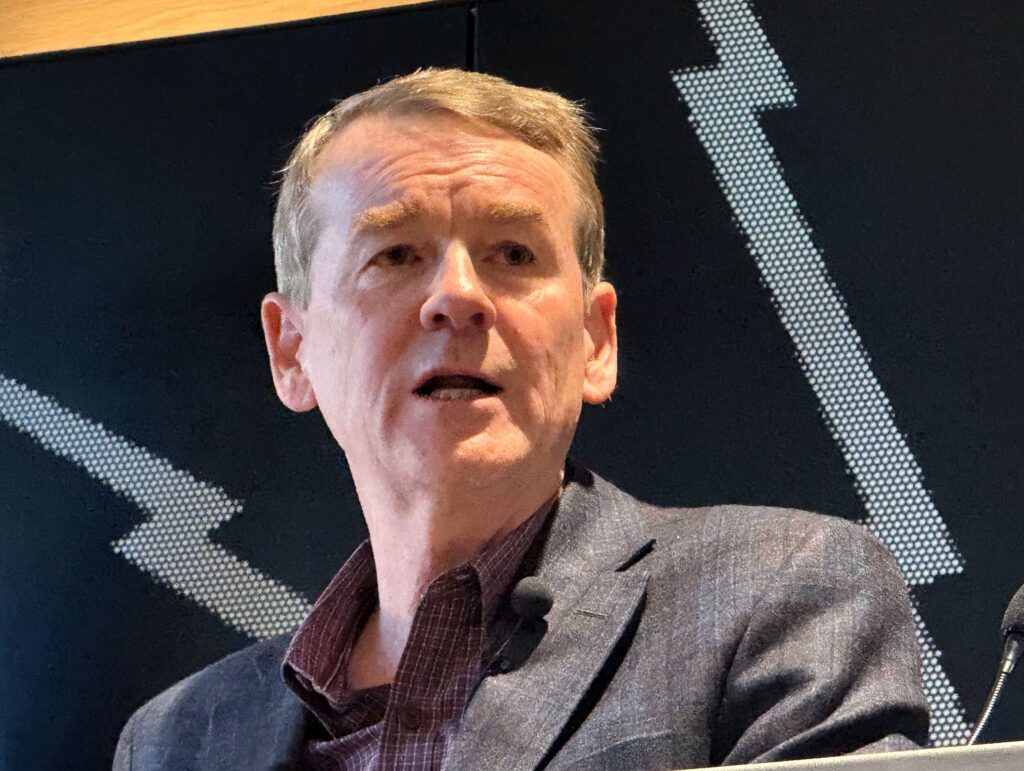
Democrat Michael Bennet turns in petitions for Colorado’s gubernatorial primary, plans to skip caucuses
Ernest Luning
ernest.luning@coloradopolitics.com
Updated 15 hours ago
U.S. Sen. Michael Bennet, a Democratic candidate for governor, submitted nominating petitions for Colorado’s June primary ballot on Friday, his campaign and the Colorado Secretary of State’s Office said. Bennet plans to rely on his petitions to get on the...
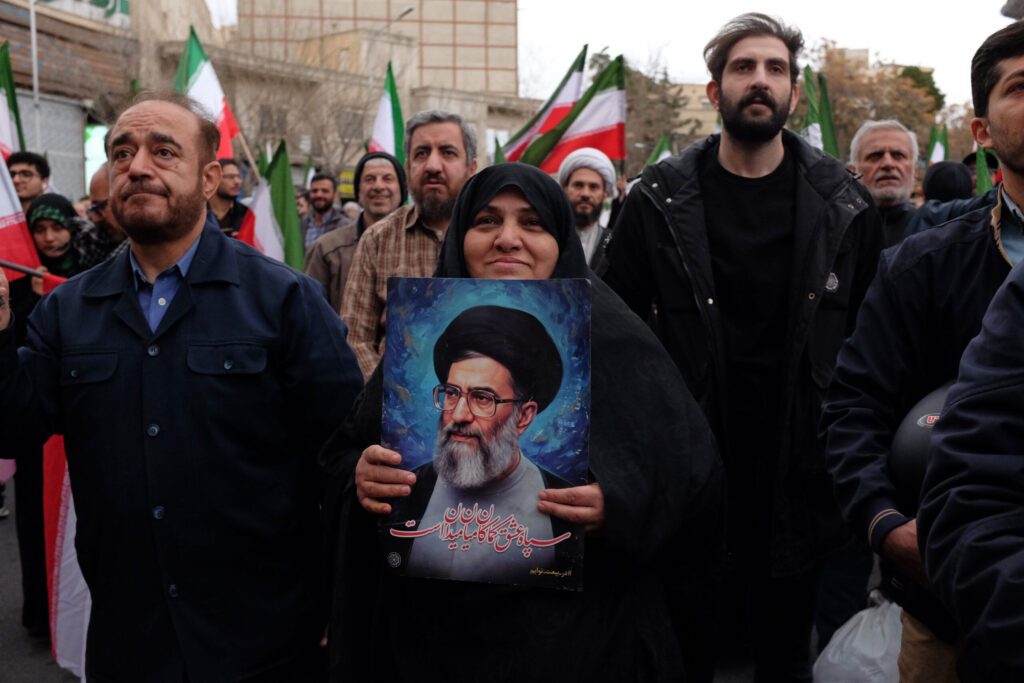
Israeli officials say Iran’s Supreme Leader Khamenei is dead. No word from US or Iran
Aamer Madhani
aamer.madhani@associatedpress.com
Updated 17 hours ago
DUBAI, United Arab Emirates (AP) — Supreme Leader Ayatollah Ali Khamenei has died in a major attack on Iran launched by Israel and the United States, Israeli officials told The Associated Press on Saturday. There was no immediate comment from...
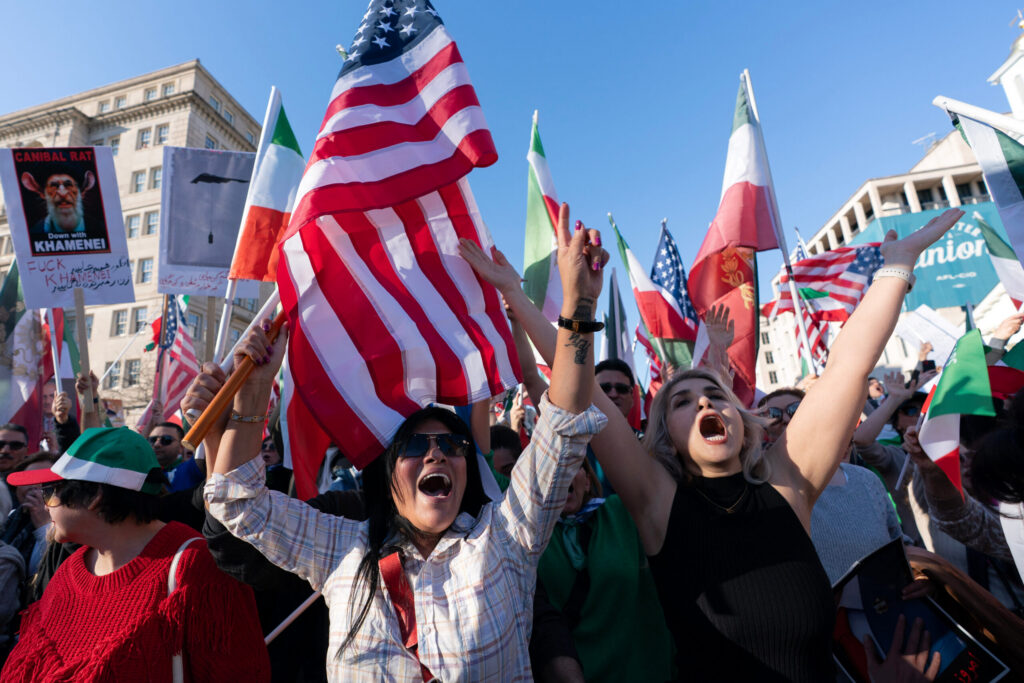
Colorado Republicans, Democrats clash over Iran military operation
Thelma Grimes
thelma.grimes@coloradopolitics.com
Updated 12 hours ago
Colorado’s congressional delegation split sharply along party lines Saturday after the U.S. and Israel attacked Iran, triggering a fresh debate in America over presidential war powers. Trump announced early Saturday morning that U.S and Israeli forces had begun “Operation Epic...

What to know about U.S.-Israel attacks on Iran
The Associated Press
the-associated-press@coloradopolitics.com
Updated 16 hours ago
The attack The U.S. and Israel attacked Iran on Saturday in what President Donald Trump said was a massive operation to destroy the country’s military capabilities and eliminate the threat of it creating a nuclear weapon. Iran’s Foreign Ministry said it would...
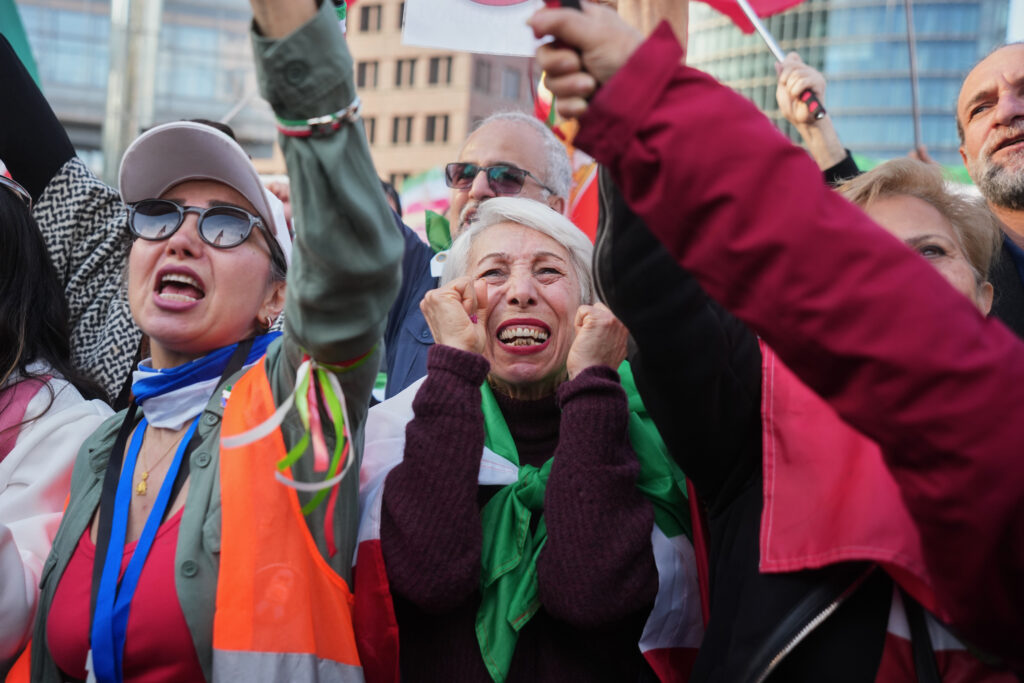
World leaders react cautiously to US and Israeli strikes on Iran
The Associated Press
the-associated-press@coloradopolitics.com
Updated 16 hours ago
BRUSSELS • World leaders reacted warily to U.S. and Israeli strikes on Iran on Saturday that triggered worries of a broader conflict. European leaders held emergency meetings and took measures to protect their citizens in the Middle East, with key leaders calling...
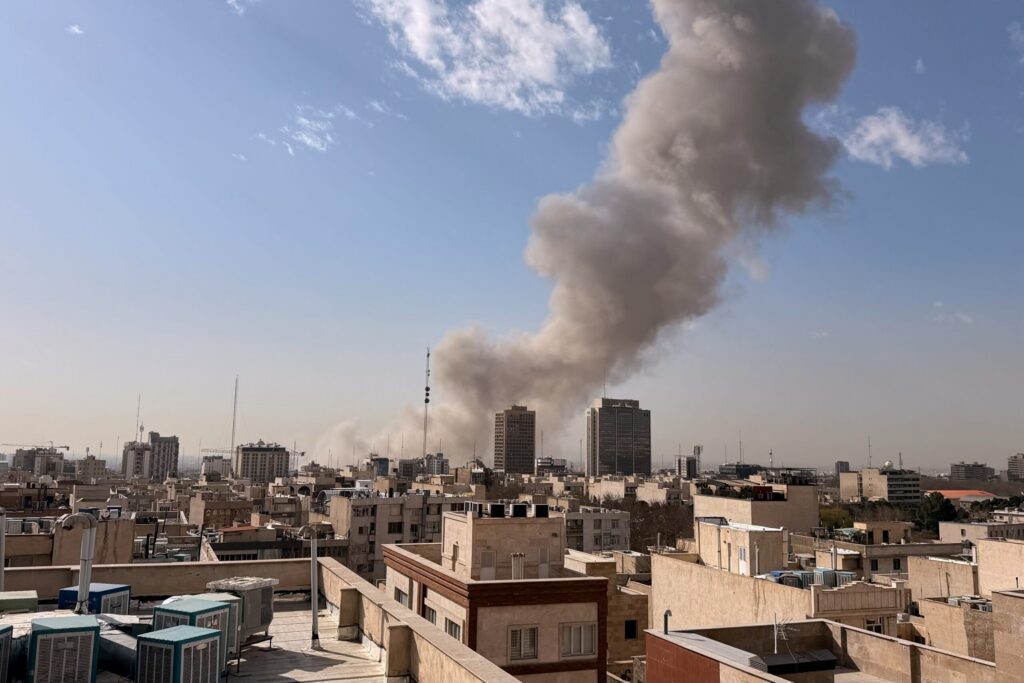
US and Israel launch a major attack on Iran and Trump urges Iranians to ‘take over your government’
The Associated
the-associated@gazette.com
Updated 1 day ago
The U.S. and Israel launched a major attack on Iran on Saturday, and President Donald Trump called on the Iranian public to “seize control of your destiny” by rising up against the Islamic leadership that has ruled the nation since 1979. Some of the first...
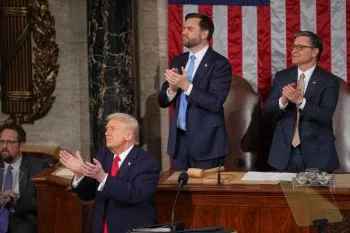
Additional thoughts on State of the Union address/rally | Cronin and Loevy
Tom Cronin Bob Loevy
tom-cronin-bob-loevy@coloradopolitics.com
Updated 1 day ago
The U.S. Constitution’s Article II states that “He (the president) shall from time to time give to the Congress Information of the State of the Union, and recommend to their Consideration such Measures as he shall judge necessary and expedient...
Colorado Politics Calendar Mar. 2-9
Rachael Wright, Special to Colorado Politics
rachael.wright@coloradopolitics.com
Updated 4 days ago
CoPo’s weekly political calendar will help you find political and public-policy events throughout Colorado. It includes candidate and issue campaign events, public policy meetings, court hearings, state and local party conventions, assemblies, debates, rallies, parades, speaking engagements, traveling dignitary appearances,...

First reapportionment commission meeting held after passage of Amendment 9 | A LOOK BACK
Rachael Wright, Special to Colorado Politics
rachael.wright@coloradopolitics.com
Updated 4 days ago
Forty-Five Years Ago This Week: 1981 marked the first year, following the passage of Amendment 9 years earlier, that the newly formed reapportionment commission would meet. According to the amendment, the commission had to hold its first meeting no later...
PREV
PREVIOUS

Denver backs legal challenge to Trump's use of National Guard
Denver has joined 26 other local governments in an amicus brief supporting California Gov. Gavin Newsom’s legal challenge to President Donald Trump’s deployment of the National Guard and Marines in Los Angeles. “In Denver, our residents are connected with police who live on the same streets they patrol and with officers who grew up in the same […]

Choice alone not the answer for Colorado's education inequities | NOONAN
Autumn is always welcome. The heat drops but it’s still warm; trees brighten but the leaves hold; tomatoes redden and late garden greens come up. In odd years like 2025, fall also means school board elections which have turned into brawls in certain parts of the state. Denver Public Schools’ board elections are always contentious. […]