

Divided Colorado Supreme Court says defendants liable for possessing others’ debit cards even if unusable
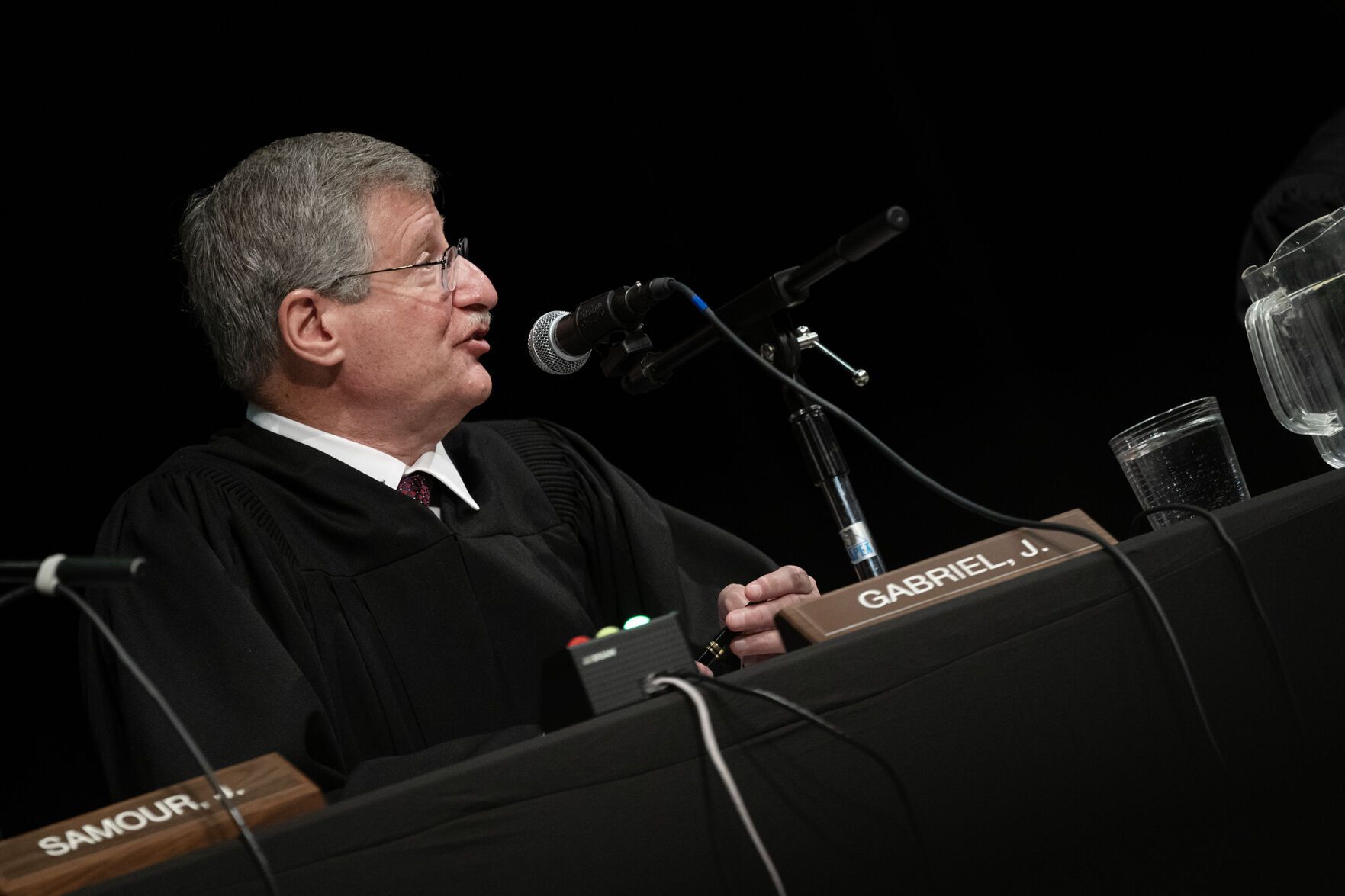
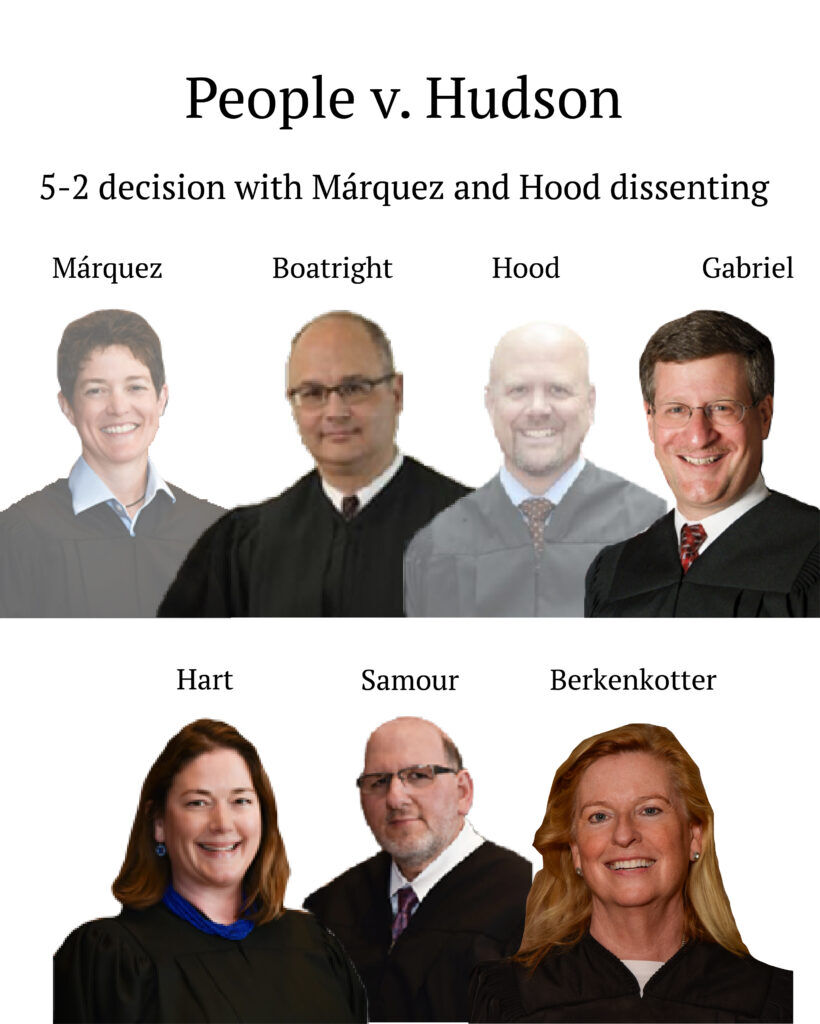
The Colorado Supreme Court, by 5-2, rejected the idea on Monday that prosecutors need to prove a debit card is functional in order to convict a defendant of unlawfully possessing someone else’s “financial device.”
The majority believed Colorado law was straightforward: Legislators outlawed the unauthorized possession of a financial device, and debit cards were specifically listed as a type of financial device.
“As this language makes clear,” wrote Justice Richard L. Gabriel in the Sept. 8 opinion, “a debit card is an enumerated example of a financial device, and the legislature did not include any qualifiers.”
Chief Justice Monica M. Márquez, in dissent, argued the law was equally clear in the other direction. Legislators also specified a financial device is that which “can be used” to obtain a “thing of value.” In other words, a nonfunctional debit card cannot be it.
“The majority’s reasoning means, however, that a person in possession of a patently unusable enumerated item (such as an obviously expired debit card, a credit card damaged beyond use, or a voided check) can be held criminally liable,” she wrote for herself and Justice William W. Hood III.
Jefferson County jurors convicted Garry Allen Hudson of multiple offenses related to his possession of counterfeit bills and other people’s identification cards. Hudson appealed his convictions and a three-judge panel for the Court of Appeals largely sided against him.
However, by 2-1, the majority overturned one of Hudson’s convictions for possession of a financial device. The underlying charge involved two debit cards belonging to other people that police found when they arrested Hudson. Law enforcement was unable to locate the owners and there was no evidence about whether the cards were active or whether there was money in the corresponding bank accounts.
Under Colorado law, committing the crime required Hudson to knowingly possess another person’s financial device, meaning “any instrument that can be used” to obtain cash or something of value. The law provides a list of included examples, and debit cards are among them.
Based on that understanding, the appellate panel’s majority vacated Hudson’s conviction because there was no proof Hudson could have actually used the debit cards for anything. Writing in dissent, Judge W. Eric Kuhn believed the explicit inclusion of debit cards in the law was sufficient to sustain a conviction, regardless of whether a specific card is usable.
“For purposes of the criminal possession of a financial device statute, it makes sense that a person is on notice that any of these common financial devices can be used to obtain a thing of value,” he wrote.

The Colorado Attorney General’s Office appealed to the Supreme Court, arguing the listed items, if possessed by a defendant, should trigger a conviction without any further proof.
The Court of Appeals’ reasoning meant “a person would be absolved of criminal liability when the debit card owner cancels the card after realizing it was lost or stolen, while a person in possession of a debit card that has not been cancelled would remain subject to criminal liability,” wrote Senior Assistant Attorney General Megan C. Rasband, “despite both people committing the same act.”
“So, what if the debit card on its face is expired?” asked Gabriel during oral arguments, adding there was a concern about over-criminalizing certain conduct.
Ultimately, the majority believed the fact the legislature listed debit cards specifically among the examples definitively showed lawmakers intended for debit cards to be deemed financial devices. Even if it were debatable, wrote Gabriel, the legislature’s enactment of the law amid a push to address identity theft suggested a desire to criminalize the possession of even unusable debit cards.
“Whether expired, cancelled, or active, a debit card generally contains the cardholder’s name, financial institution, and signature. This information could be used to steal the cardholder’s identity, even if the card has been deactivated,” he explained. “And were Hudson correct that to prove criminal possession of a debit card, the prosecution must establish that the card is capable of being used to obtain a thing of value at the time of possession, then many acts of criminal possession of a debit card would evade prosecution simply because the cardholder acted diligently to report a missing card.”
Márquez deemed it illogical that possessing a financial device that is obviously unusable can be the basis for a criminal conviction, in light of the law’s specific language about usability. Because Hudson’s prosecutors had not proven the cards he possessed could obtain anything of value, she would have overturned his conviction for that offense.
The case is People v. Hudson.


10th Circuit rules cognitively impaired man’s risk of lobotomy, mistreatment in Mexico not ‘torture’
Michael Karlik
michael.karlik@coloradopolitics.com
Updated 3 hours ago
The Denver-based federal appeals court concluded last month that a man’s risk of mistreatment or forced lobotomy in his native Mexico did not amount to “torture” that should shield him from deportation. A three-judge panel of the U.S. Court of...
Colorado justices side with news organizations for disclosure of high-level child abuse data
Michael Karlik
michael.karlik@coloradopolitics.com
Updated 2 hours ago
The Colorado Supreme Court ruled on Monday that the state must disclose the number of child abuse reports at individual group living facilities in response to an open records request, as the addresses are already in the public domain. The...
Divided Colorado Supreme Court finds Denver detective did not violate defendant’s Miranda rights
Michael Karlik
michael.karlik@coloradopolitics.com
Updated 2 hours ago
The Colorado Supreme Court determined on Monday that a Denver detective did not improperly resume questioning of a defendant in custody after he invoked his right to counsel. By 4-3, the justices reversed a trial judge’s order that found a...

Out-of-state judges address ex-discipline director’s lawsuit, Colorado justices accept federal invitation | COURT CRAWL
Michael Karlik
michael.karlik@coloradopolitics.com
Updated 10 hours ago
Welcome to Court Crawl, Colorado Politics’ roundup of news from the third branch of government. A pair of out-of-state judges got down to business in a lawsuit brought by Colorado’s former judicial discipline director, plus the state Supreme Court has...
Federal judge upholds constitutionality of Colorado campaign contribution limits
Michael Karlik
michael.karlik@coloradopolitics.com
Updated 3 days ago
A federal judge upheld Colorado’s individual campaign contribution limits as constitutional on Thursday, finding that three Republican plaintiffs failed to prove the campaign finance framework violates their First Amendment rights. U.S. District Court Senior Judge John L. Kane recognized that...

Appeals court rejects theory that existing tax revenue undermines need for new fees
Michael Karlik
michael.karlik@coloradopolitics.com
Updated 3 days ago
Colorado’s second-highest court rejected a plaintiff’s claim on Thursday that the tax revenue generated by an existing activity should prevent local governments from imposing new fees aimed at regulating the activity. The question stemmed from Colorado’s unique constraints on taxation...
Appeals court finds no illegal sentence when defendants forfeit time-served credit
Michael Karlik
michael.karlik@coloradopolitics.com
Updated 2 days ago
Colorado’s second-highest court ruled on Thursday that criminal defendants may agree to relinquish the credits they earned while incarcerated pending trial, despite a state law guaranteeing that such time “shall be deducted” from a person’s sentence. Kerry Ellis Endsley pleaded...
Appeals court reinstates Garfield County arson charge
Michael Karlik
michael.karlik@coloradopolitics.com
Updated 1 day ago
Colorado’s second-highest court reinstated a Garfield County defendant’s arson charge on Thursday, concluding a trial judge improperly credited a witness’s claim that she alone was responsible for starting the fire. A sheriff’s deputy responded to a brush fire near Parachute...
Federal judges rebuke ex-Colorado judicial discipline director for conduct in lawsuit
Michael Karlik
michael.karlik@coloradopolitics.com
Updated 4 days ago
A pair of federal judges expressed a desire on Thursday to break the logjam on a lawsuit by Colorado’s former judicial discipline director against the state Supreme Court and related entities, while simultaneously showing little tolerance for the plaintiff’s scorched-earth...

Democratic bill would let recipients of ‘conversion therapy’ sue Colorado providers with no statute of limitations
Marissa Ventrelli
marissa.ventrelli@coloradopolitics.com
Updated 4 days ago
Colorado lawmakers have advanced a proposal that would allow people who underwent conversion therapy to sue licensed providers for damages, moving the measure forward on a party-line vote in the House Judiciary Committee. House Bill 1322, proposed by Democratic Reps....
PREV
PREVIOUS

Colorado justices, 5-2, say police money used for drug deals not subject to crime victim restitution
The Colorado Supreme Court, by 5-2, ruled on Monday that the state’s crime victim restitution law does not obligate defendants to repay law enforcement agencies for unrecovered money they use to buy drugs undercover. The government maintained the restitution law authorized the repayment of “buy money” because it was either “money advanced by law enforcement […]

Colorado justices side with medical malpractice victim in calculating damages owed
The Colorado Supreme Court on Monday rejected a doctor’s argument that would have limited the amount of money a patient severely injured at birth would receive for his successful medical malpractice lawsuit two decades later. Under state law, damages in medical malpractice cases are generally capped at $1 million as part of a 1988 reform […]