

Republican-turned libertarian stricken from ballot by SOS, GOPers jump on Romer bandwagon | A Look Back
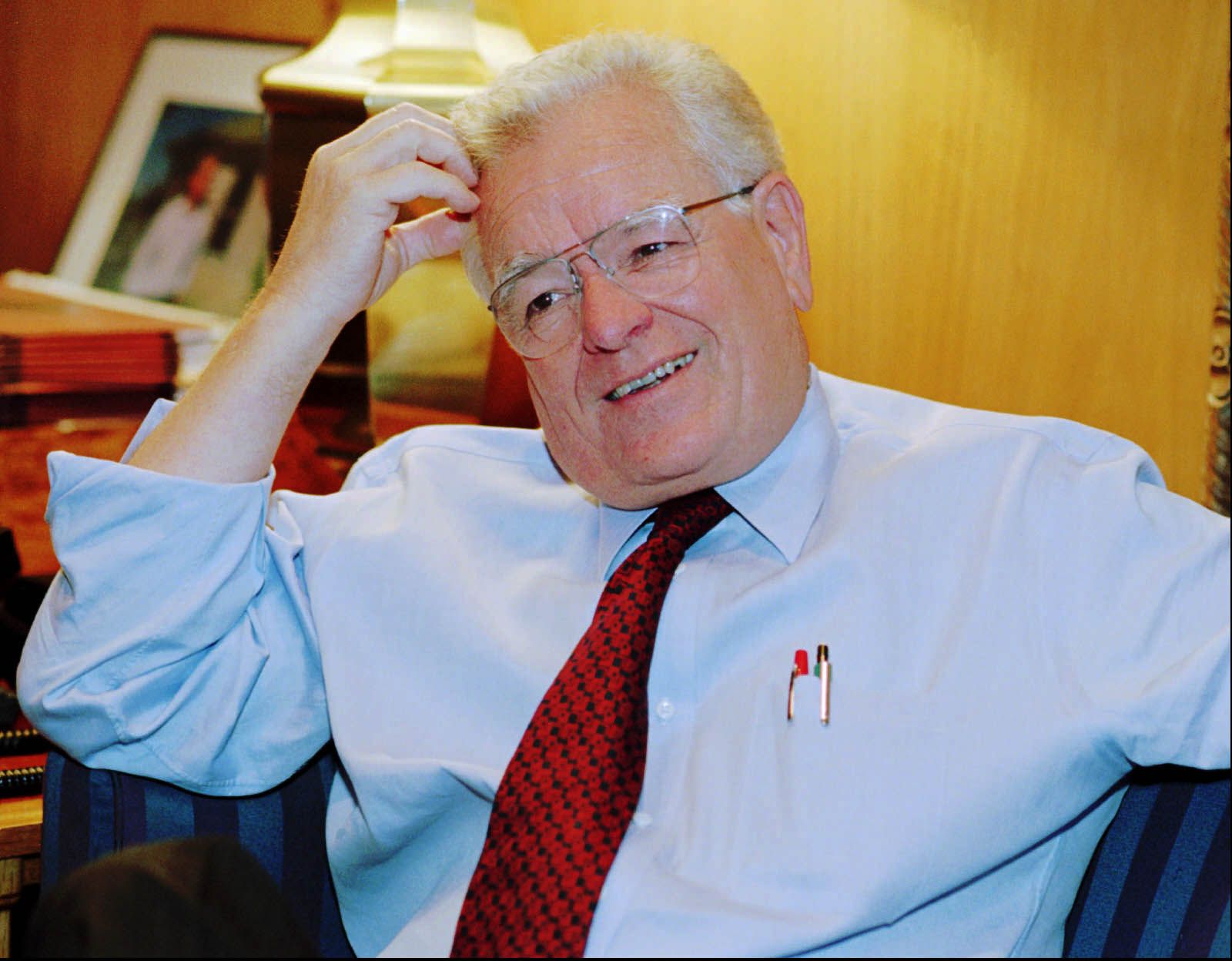
Thirty-Five Years Ago This Week: Libertarian gubernatorial candidate Robin Heid’s campaign to petition onto the November ballot was brought to an abrupt halt when state elections officer Donetta Davidson ruled him ineligible.
Davidson said that while Heid had successfully submitted his 1,000 signatures before the August deadline, he was still registered as a Republican and, according to election law, candidates must be either registered within their party or else unaffiliated.
Heid spoke out vociferously on the ruling, stating that Secretary of State Natalie Meyer was “arrogant” and exhibited “blatant disregard of both state and federal rulings.”
“Even if the law is wrong, we can’t disregard it,” said Davidson in response to Heid’s accusations. “Robin Heid is off the ballot but the Libertarian Party can still fill his gubernatorial slot if with another candidate if they choose someone by Sept. 12.”
In other news, “Certain Republicans want Andrews/Bickel to go light on Romer,” Republican gubernatorial candidate John Andrews argued at a luncheon meeting of the Denver Lions Club.
Andrews was referring to a significant swath of high-powered Republicans and much of the business community who had thrown their support behind Democratic Gov. Roy Romer. While in previous years Romer had enjoyed the support of a smaller cohort of Republicans, his base of support had expanded substantially in response to Amendment One.
Amendment One to Article X of the Colorado Constitution would have required voter approval for certain state and local government revenue increases, would restrict property, income, and other taxes, and would limit increases in state spending.
Romer publicly attacked the proposed amendment, saying that it would give the power to waive any tax increase to the electorate and thereby forever change the landscape of representative government in Colorado.
On a plane ride down to the Colorado State Fair, Senate President Ted Strickland, R-Westminster, told The Colorado Statesman, Andrews “is not my type of candidate. I disagree with him on several issues.”
Senate Al Meiklejohn, R-Arvada, chairman of the Senate Education Committee, voiced his support for Gov. Romer as well as his opposition to Andrews’ support of the voucher system as a part of his platform for “educational reform.”
Vocal Republican businessman Jim Sullivan, CEO of SullivanHayes brokerage and development company, had also just declared his support for Romer when he very publicly said, “God bless the Governor.”
Andrews didn’t mince words when calling out Republican leaders for jumping on the Romer “bandwagon.”
“It neutralizes the effect of the two-party system,” Andrews quipped, “and melds the two parties into a murky mess.”
Andrews’ confusion and frustration at the party were partially warranted. At the June state assembly, delegates had voted for, by a two-thirds majority, a resolution in support of Amendment One.
“Tax limitation is just what we need for this economy,” Andrews said. “I have faith in the people that they will correctly decide when taxes should be raised. What are they so afraid of?”
It had become apparent to Andrews that 1990 may not have been “his year,” but he likened the 1990 gubernatorial race to the Johnson/Goldwater election of 1964.
“Like Goldwater, I don’t mind being identified as more right than the bigs can accept,” Andrews said. “I’m ahead of my time just like Goldwater was ultimately shown to be several years ahead of his time.”
Rachael Wright is the author of several novels including The Twins of Strathnaver, with degrees in Political Science and History from Colorado Mesa University, and is a contributing columnist to Colorado Politics, the Colorado Springs Gazette and the Denver Gazette.

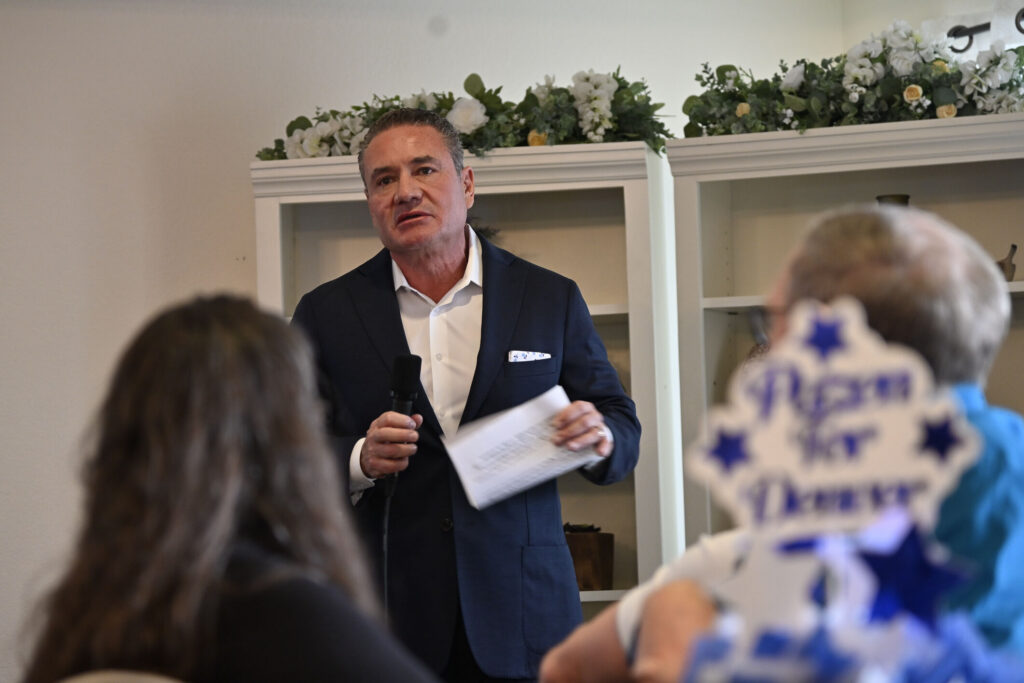
Paul Pazen, a former police chief, launches bid for Denver City Council
Deborah Grigsby
deborah.smith@denvergazette.com
Updated 4 hours ago
Former Denver Police Chief Paul Pazen announced his bid for the District 2 City Council seat to be vacated by Kevin Flynn in 2027. Flynn is term-limited. Pazen, who began his law enforcement career in 1995 with the Denver Police...
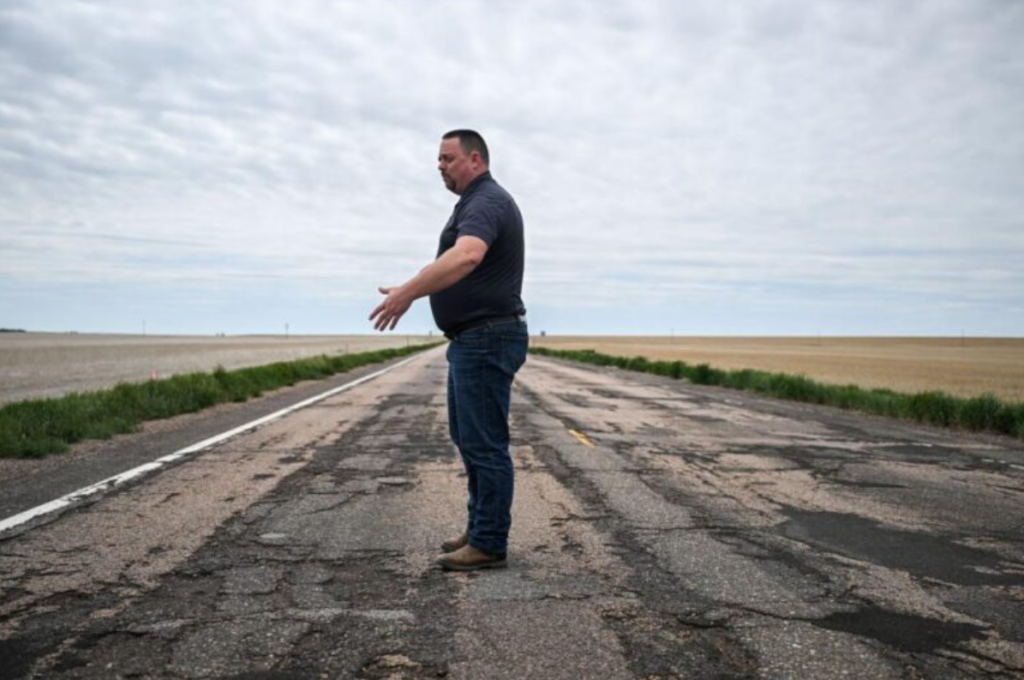
Resolution calling for increased road funding clears Colorado Senate committee
Marissa Ventrelli
marissa.ventrelli@coloradopolitics.com
Updated 6 hours ago
A Republican legislator said he was pleasantly surprised on Wednesday when the state Senate’s transportation panel advanced a resolution brought to him by county commissioners urging the Colorado Department of Transportation to invest more money to fix roads. Road maintenance...

Hail drives up to 54% of homeowners’ insurance premiums in parts of Colorado
Marissa Ventrelli
marissa.ventrelli@coloradopolitics.com
Updated 4 hours ago
Hail is the largest cost driver of homeowners’ insurance spikes in many parts of the state, according to data collected by the Colorado Division of Insurance. The department requested data from 20 homeowners’ insurance carriers to calculate average premiums and...

Denver advances face covering ban for law enforcement
Deborah Grigsby
deborah.smith@denvergazette.com
Updated 4 hours ago
A Denver City Council committee on Wednesday advanced a proposed ordinance banning law enforcement officers, including federal immigration agents, from covering their faces during an arrest or detainment or inside a city facility. The proposed ordinance also establishes a minimum...
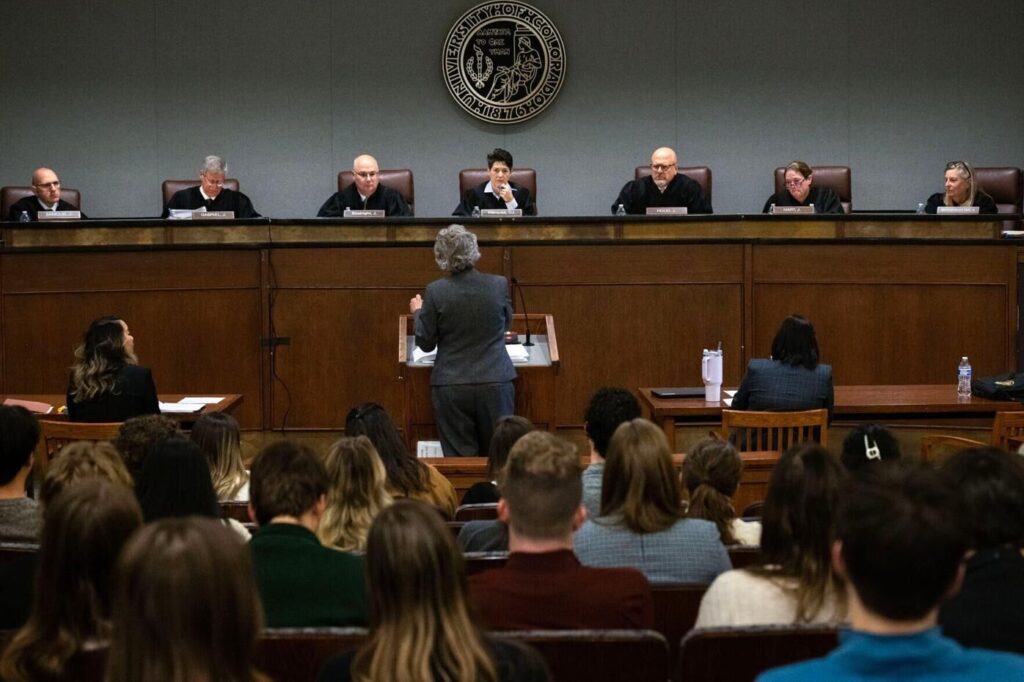
Colorado Supreme Court blocks ‘child-to-parent violence’ testimony in Boulder County case
Michael Karlik
michael.karlik@coloradopolitics.com
Updated 7 hours ago
The Colorado Supreme Court concluded on Friday that a Boulder County judge incorrectly green-lit a psychologist’s expert testimony when the defendant had not laid the necessary groundwork for the evidence. State law requires criminal defendants to provide notice and undergo...
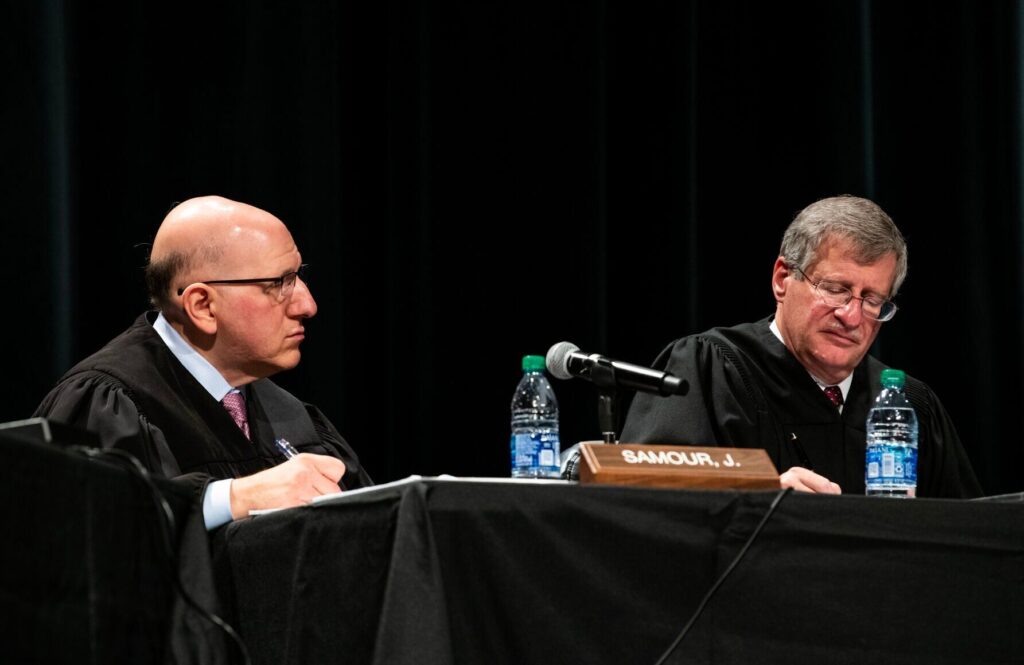
Colorado justices concerned about retrying defendant after jury signaled acquittal
Michael Karlik
michael.karlik@coloradopolitics.com
Updated 4 hours ago
Some members of the Colorado Supreme Court appeared uncomfortable on Tuesday with allowing a criminal defendant to stand trial a second time after a Larimer County jury signaled it was deadlocked on some counts but found him not guilty of...

Colorado budget gets clean opinion from Office of the State Auditor
Marissa Ventrelli
marissa.ventrelli@coloradopolitics.com
Updated 6 hours ago
Colorado’s state auditor issued a “clean” opinion on the financial statements prepared by the government and higher education institutions, concluding they met generally accepted accounting principles and the documents were presented fairly. The state’s financial statements reported total assets of...
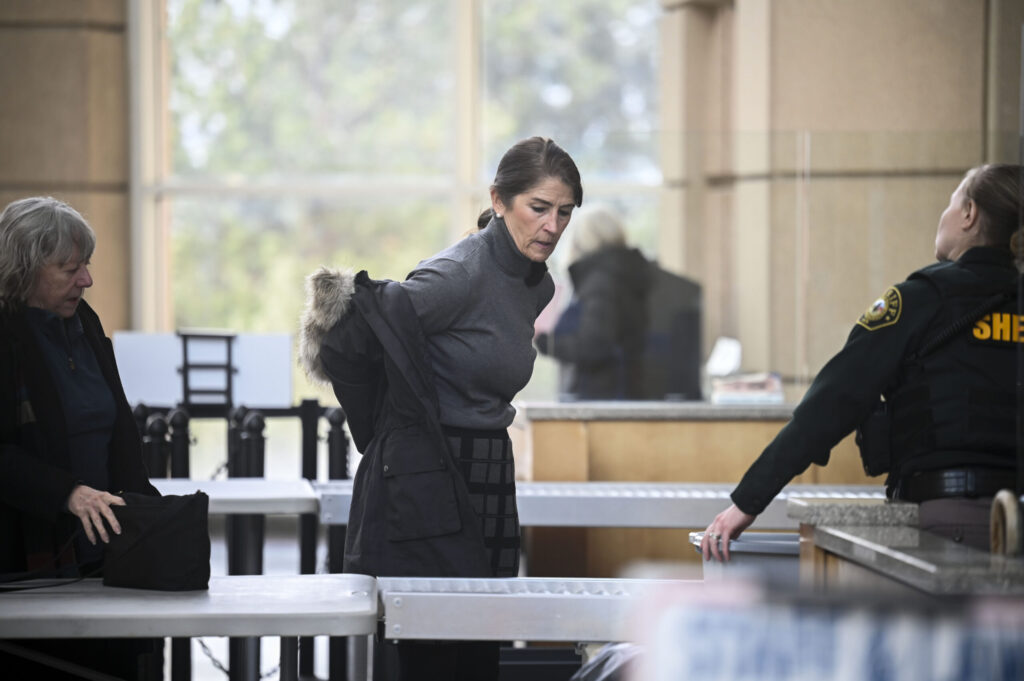
Missy Woods pleads not guilty; trial set for fall
Jenny Deam
jenny-deam@coloradopolitics.com
Updated 5 hours ago
The former Colorado Bureau of Investigation DNA expert charged with more than 100 felonies entered a plea of not guilty to all of them Wednesday in a packed Jefferson County courtroom. The plea was entered by her defense attorney Tom...
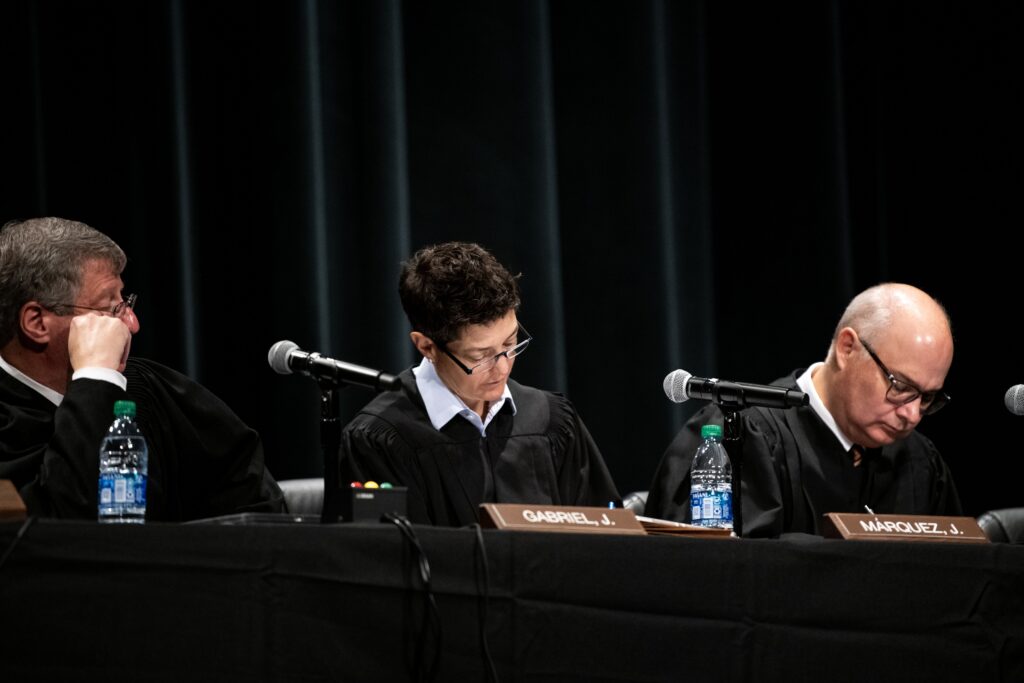
Colorado justices question process for parole board appeals
Michael Karlik
michael.karlik@coloradopolitics.com
Updated 11 hours ago
The Colorado Supreme Court considered on Tuesday whether criminal defendants whose parole is revoked must appeal the decision internally to the state’s parole board before seeking review by a judge. The process for returning someone to incarceration for violating the...
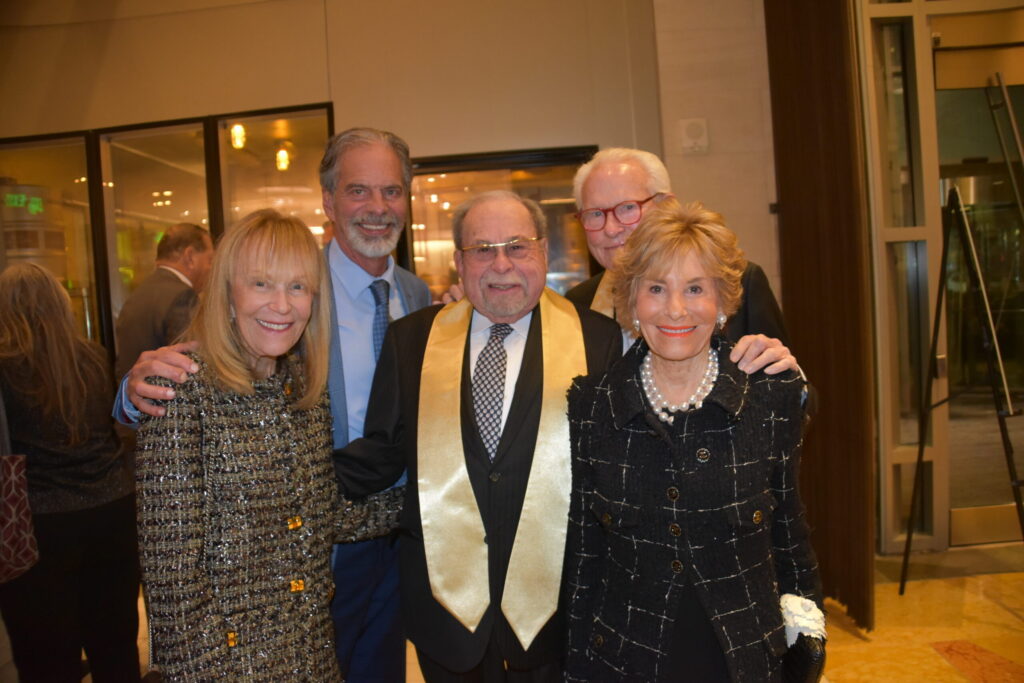
Leaders, past and present, inducted into Colorado Business Hall of Fame | NONPROFIT REGISTER
Joanne Davidson Special to Colorado Politics
joanne-davidson-special-to-colorado-politics@coloradopolitics.com
Updated 12 hours ago
JUNIOR ACHIEVEMENT ROCKY MOUNTAIN DENVER METRO CHAMBER OF COMMERCE Denver News: The men and women who were inducted into the Colorado Business Hall of Fame this year made their marks in different ways, yet they had this in common: They dared to...
PREV
PREVIOUS

CO PO Calendar | Sept. 8-14
CoPo’s weekly political calendar will help you find political and public-policy events throughout Colorado. It includes candidate and issue campaign events, public policy meetings, court hearings, state and local party conventions, assemblies, debates, rallies, parades, speaking engagements, traveling dignitary appearances, water meetings, book signings, county commission hearings, city council meetings and more. As a subscriber, […]

Grand Canyon mascot Brighty the Burro recovered from rubble after wildfire | OUT WEST ROUNDUP
ARIZONA Grand Canyon mascot recovered Missing an ear and his front legs detached, Brighty the Burro certainly has seen better days. The 600-pound bronze statue used to greet visitors at the Grand Canyon Lodge on the national park’s North Rim. The nearly century-old building was reduce to rubble this summer when a wildfire swept through […]