

Colorado Supreme Court orders Denver County Court to let man pay for eviction appeal
The Colorado Supreme Court on Thursday ordered the Denver County Court to let a tenant use his rental assistance checks to pay for the appeal of his eviction.
In an unsigned order, the justices noted a trial judge incorrectly denied Justin Soliz’s motion to halt his imminent eviction after the clerk’s office refused to accept Soliz’s payment that would enable him to appeal.
On April 10, Soliz represented himself in an eviction trial and lost. By that time, Soliz had qualified for the Colorado Emergency Rental Assistance program and received approval for $10,000 to cover the amount he owed his landlord.
In order to appeal, Soliz needed to pay $7,300, plus his monthly rent of $1,300 directly to the court. Now represented by counsel, Soliz attempted to deposit the assistance check with the clerk’s office. The need to act was urgent because Soliz had received notice from the sheriff’s department that he should vacate his unit “immediately.”
However, according to Soliz’s lawyers, the clerk’s office for the court rejected the payment, saying the appeal bond and the monthly rent needed to be paid separately. The office allegedly clarified afterward that it would also not accept separate payments if they were in the form of a cashier’s check.

Soliz’s attorneys, seeking to halt, or stay, their client’s eviction until it could be appealed, filed an emergency motion for the clerk’s office to accept the $10,000 check.
“Only due to unexpected and arbitrary administrative barriers is Mr. Soliz being prevented from obtaining a stay,” wrote lawyer Spencer Bailey.
On April 23, County Court Judge Brian C. Williamson denied the motion. He later added there was a “payment structure and accuracy issue,” not a problem with the form the payment took.
Soliz quickly sought review in Denver District Court, but Judge Karen L. Brody also rejected the motion because she concluded it was the county court’s role to halt the proceedings once the appeal bond was paid.
Finally, Soliz turned to the Supreme Court, arguing “unwritten or nonpublic internal administrative policies” may cause Soliz to lose his home.
The Denver City Attorney’s Office responded by acknowledging the clerk could accept cashier’s checks. But it blamed Soliz for trying to pay with checks that were slightly more than the amount of the appeal bond, which city policy required the clerk to reject.
“In no sense could the county court have acted manifestly arbitrary, unreasonable, or unfair in complying with required Fiscal Accountability Rules when it declined to accept a check in excess of the amount required to be paid,” wrote the office.
“Rather than ensure Mr. Soliz had access to the courts and a meaningful right to appeal,” countered Bailey, “the county court failed to exercise its discretion and left Mr. Soliz to be evicted from his home despite his good faith efforts to obtain a stay pending appeal.”
Without elaboration, the Supreme Court concluded Williamson incorrectly denied the motion to halt Soliz’s eviction after his lawyers were “informed in error that the clerk’s office would not accept two separate cashier’s checks as payment.” It ordered the county court to give Soliz “the opportunity to tender payment in the correct amounts of the appeal bond and the rent payment by two separate cashier’s checks or other acceptable form of payment.”
Soliz told Colorado Politics he has since relocated so that he can avoid the “constant fear of being thrown out” of his home, but said he would still pursue an appeal so the eviction will not be on his rental record. He also characterized his landlord’s eviction as retaliatory.
“Thankful that the Supreme Court came to this determination, I just wish that it would have led to them looking into my case and seeing that Denver County Court allowing the eviction to proceed in the first place was also wrong,” Soliz said.
The case is Shockcor Inc. v. Soliz.


Federal judge hears ICE agents’ confusion about law, injunction on warrantless arrests
Michael Karlik
michael.karlik@coloradopolitics.com
Updated 4 hours ago
A federal judge heard testimony on Tuesday from U.S. Customs and Immigration Enforcement agents in Colorado, who had trouble describing the requirements of his recent injunction and the training they received on making warrantless arrests pursuant to the law. On...

10th Circuit dismisses challenge to Colorado legislature’s decorum rules
Michael Karlik
michael.karlik@coloradopolitics.com
Updated 11 hours ago
The Denver-based federal appeals court concluded on Tuesday that Colorado lawmakers cannot be sued for creating and enforcing rules of decorum that circumscribe the public commentary allowed at legislative committee hearings. A three-judge panel of the U.S. Court of Appeals...
Colorado Supreme Court blocks ballot initiative defining ‘fees’
Michael Karlik
michael.karlik@coloradopolitics.com
Updated 1 day ago
The Colorado Supreme Court blocked a proposed ballot initiative on Monday that would have required voter approval for new fees above a certain threshold, while also enshrining a definition of “fee” into the state constitution for the first time. Chief...

Colorado justices, by 5-2, say Longmont detective did not violate suspect’s Miranda rights
Michael Karlik
michael.karlik@coloradopolitics.com
Updated 1 day ago
The Colorado Supreme Court’s majority ruled on Monday that a Longmont detective did not coerce a suspect into talking by making references to how a judge would look at his character, and by suggesting he may get out of prison...
Colorado justices find Fort Collins police lacked probable cause to arrest suspect in park
Michael Karlik
michael.karlik@coloradopolitics.com
Updated 2 days ago
The Colorado Supreme Court agreed on Monday that Fort Collins police lacked probable cause to arrest a man for a child sex offense based on his presence in a public park around the time they intended to meet with their...

Supreme Court to hold oral arguments, discipline commission releases report | COURT CRAWL
Michael Karlik
michael.karlik@coloradopolitics.com
Updated 2 days ago
Welcome to Court Crawl, Colorado Politics’ roundup of news from the third branch of government. The state Supreme Court is holding oral arguments this week, plus Colorado’s judicial discipline commission released its annual report. Colorado Supreme Court news • The Supreme...
Federal judge dismisses developer’s challenge to Denver affordable housing ordinances
Michael Karlik
michael.karlik@coloradopolitics.com
Updated 4 days ago
A federal judge dismissed a homebuilder’s constitutional challenge on Tuesday to a pair of Denver ordinances that impose obligations on developers related to the affordable housing demands created by new construction. Two related companies, redT Homes and redT Capital Partners,...
10th Circuit distances itself from prior decision making it easier to toss prisoner lawsuits
Michael Karlik
michael.karlik@coloradopolitics.com
Updated 5 days ago
The Denver-based federal appeals court distanced itself on Wednesday from its own recent decision that made it easier for prison officials to end civil lawsuits by transferring incarcerated plaintiffs between facilities. A three-judge panel of the U.S. Court of Appeals...

Appeals court overturns Douglas County vehicular homicide conviction due to faulty jury instructions
Michael Karlik
michael.karlik@coloradopolitics.com
Updated 2 days ago
Colorado’s second-highest court overturned a defendant’s vehicular homicide conviction and 12-year prison sentence on Thursday after determining a Douglas County judge omitted key language from the jury instructions that could have resulted in a different outcome. James Paul McDonald was...
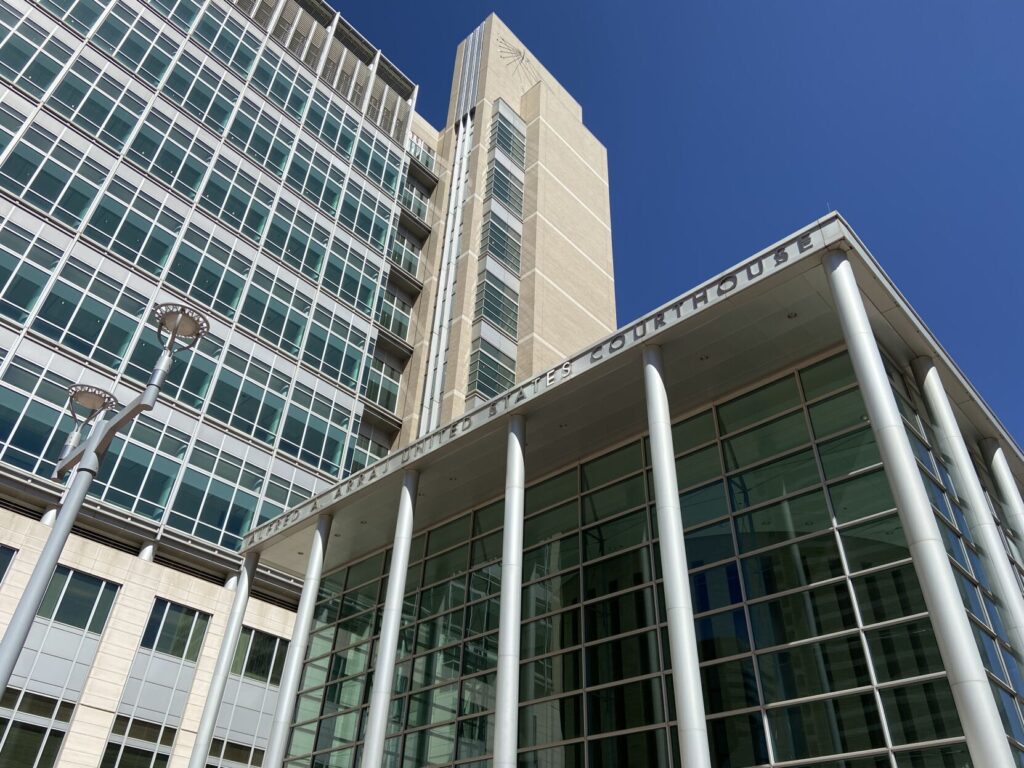
Federal judge dismisses malicious prosecution claim against former Denver prosecutor
Michael Karlik
michael.karlik@coloradopolitics.com
Updated 4 days ago
A federal judge concluded on Monday that a former Denver prosecutor could not be sued for allegedly causing the arrests of two plaintiffs after they failed to appear for trial on the scheduled date, even though the trial had been...