

Lakewood must release police body cam footage of teen’s fatal shooting, appeals court rules
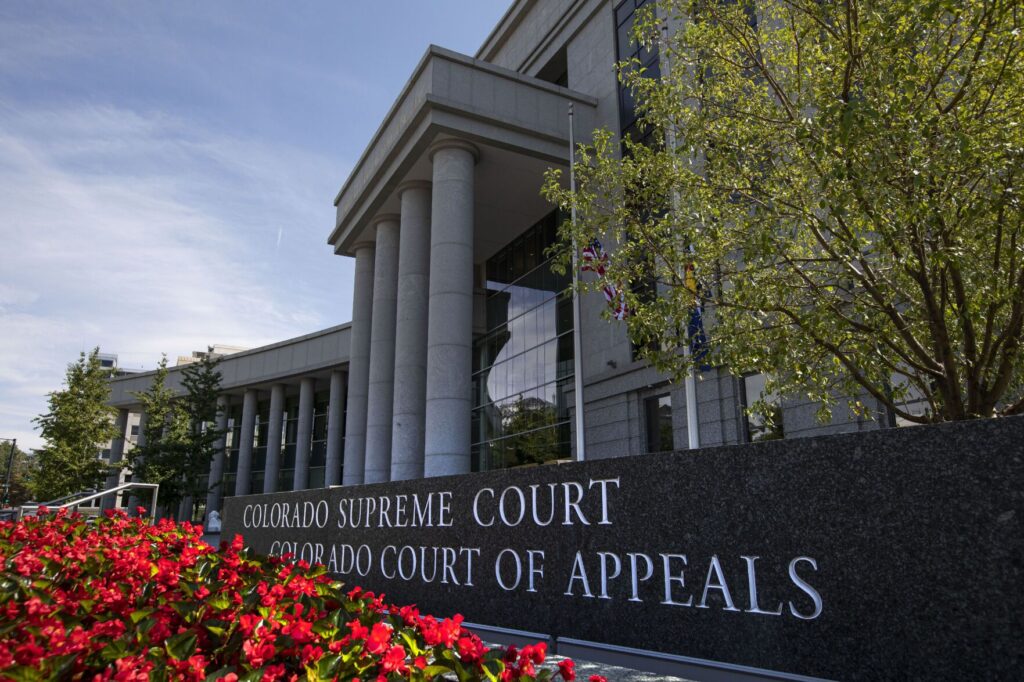
Colorado’s second-highest court ruled last week that Lakewood is obligated to release body-worn camera footage of police fatally shooting a 17-year-old girl, notwithstanding her surviving family’s objections.
A three-judge Court of Appeals panel interpreted a key transparency requirement in Colorado’s landmark police accountability law from 2020. Judge Timothy J. Schutz wrote that legislators crafted “a delicate balance” in directing the public release of body cam videos that capture a person’s death.
On the one hand, “the recordings depicting deaths in high-profile cases have profoundly impacted the public’s perceptions and spurred legislative action surrounding law enforcement’s use of force. On the other hand, the cost of releasing graphic and disturbing recordings includes the intrusion into the privacy interest of those depicted,” he wrote in the July 10 opinion. “But it is the General Assembly’s purview to draw those lines.”
On March 27, 2023, three Lakewood police agents pursued Mariana Martinez, a teenager suspected of armed robbery. According to an inquiry by District Attorney Alexis King, the agents cornered her at an auto shop, saw her draw and point a handgun, and opened fire on her. The agents fatally injured Martinez. King cleared the agents of wrongdoing, finding deadly force was reasonable under the circumstances.
Months later, Martinez’s family notified the city of their intent to file a civil claim. A reporter for Scripps News then sought release of the agents’ body cam footage pursuant to Senate Bill 217, a comprehensive accountability law enacted in the wake of George Floyd’s killing in Minneapolis. Among other things, the law mandates the release of audio or video recordings when agencies receive complaints of officer misconduct.
Lakewood denied the request for the footage. Senior Assistant City Attorney Patrick Freeman alerted Martinez’s family that Lakewood had received “a number of requests” but that Martinez’s “privacy interests are vested with you, her family, and you can ultimately decide whether you want the video footage released to the media and made public.” The family confirmed it did not want the footage released.

Scripps News then petitioned for the videos’ disclosure pursuant to SB 217. At a May 2024 hearing, Jefferson County District Court Judge Chantel Contiguglia concluded the family’s wishes were not the driving force under the law.
“Folks, I don’t see that there is a choice. I see that it has to be disclosed,” she said.
Contiguglia explained that SB 217 designated juveniles as having “substantial privacy concerns,” for which the remedy was to blur the footage.
Freeman asked what would become of the audio, which was “pretty tragic and pretty awful.”
“I share the same concerns. And just as a human, what I’ve heard on the video, the last moments, the last breaths of life of Ms. Martinez are incredibly difficult for someone to hear,” responded Contiguglia. But because SB 217 said nothing about withholding the audio, “I don’t have authority that suggests that muting it at any portion is authorized.”
The city turned to the Court of Appeals, arguing body cam video depicting the death of a juvenile should not be disclosed publicly against the wishes of the surviving family.
“Given that not just the face but the entire head of the juvenile was ordered to be blurred, why does that not provide adequate protections?” asked Judge Terry Fox during oral arguments.
“The issue is identity,” echoed Judge Elizabeth L. Harris. “If you’re a minor, they don’t want your identity broadcast out to the world. … It sounds like your argument is whenever police officers shoot and kill a kid, (we are) not releasing the body cam.”

Ultimately, the panel upheld Contiguglia’s order to release the videos while blurring Martinez. Schutz wrote that the family did not have veto authority in this situation, nor did the footage amount to a “juvenile record” that was subject to confidentiality. He added that SB 217 did not appear to authorize judges to allow for the redaction of audio. But even if it did, the panel did not discern Martinez to say anything as she was dying.
“Rather her sounds were limited to gasps for breath and expressions of pain. The audio portion reveals the physical act of dying,” Schutz wrote. SB 217 “clearly contemplates the release of BWC video and audio recordings that depict the death of an individual.”
The case is Ion Media Networks, Inc. v. West.
Colorado Politics Must-Reads:

Federal judge sanctions Pueblo for destroying evidence in lawsuit
Michael Karlik
michael.karlik@coloradopolitics.com
Updated 10 hours ago
A federal judge imposed sanctions on the city of Pueblo last week after it disposed of a key piece of evidence shortly after the plaintiffs filed suit seeking damages for the destruction of their home. On June 25, 2022, a...
10th Circuit orders lawyer to pay $1,000 for faulty AI citations
Michael Karlik
michael.karlik@coloradopolitics.com
Updated 20 hours ago
The Denver-based federal appeals court ordered a lawyer on Monday to pay $1,000 to the opposing side for submitting a legal filing with fake case citations generated by artificial intelligence. A three-judge panel of the U.S. Court of Appeals for...

Supreme Court finalists selected, federal judges slash backlogs | COURT CRAWL
Michael Karlik
michael.karlik@coloradopolitics.com
Updated 2 days ago
Welcome to Court Crawl, Colorado Politics’ roundup of news from the third branch of government. Coloradans learned who the three finalists are for a state Supreme Court vacancy, and new data show that Colorado’s federal trial judges reduced their backlog...
Federal judge blasts government for violating court order, confiscating man’s property
Michael Karlik
michael.karlik@coloradopolitics.com
Updated 3 days ago
A federal judge gave the government three hours on Friday to return the property of a man released from immigration detention, which it allegedly retained in violation of her previous order. “At its most benign, this failure is an unforced...
DA’s withdrawal from veterans treatment court not judge’s problem, ethics panel says
Michael Karlik
michael.karlik@coloradopolitics.com
Updated 5 days ago
There are no ethical concerns from a judge continuing to participate in a specialty veterans treatment court if the district attorney’s office has withdrawn from the program, the Colorado Supreme Court’s ethics committee advised on Wednesday. Colorado law permits chief...
Divided appeals court orders insurance company to pay $35,600 for delayed disclosure of policy
Michael Karlik
michael.karlik@coloradopolitics.com
Updated 4 days ago
Colorado’s second-highest court concluded on Thursday that an insurance company violated state law when it refused to disclose an automobile policy to an injured motorist for nearly one year after she requested it. By 2-1, a three-judge Court of Appeals...
Judge expected to decide Monday whether to accept latest plea agreements for Hallfords
Mackenzie Bodell
mackenzie-bodell@coloradopolitics.com
Updated 5 days ago
An El Paso County judge is expected to decide Monday whether to accept new negotiations that would extend the prison sentence for Jon and Carie Hallford, coming on the heels of the court rejecting the original plea agreements for the...
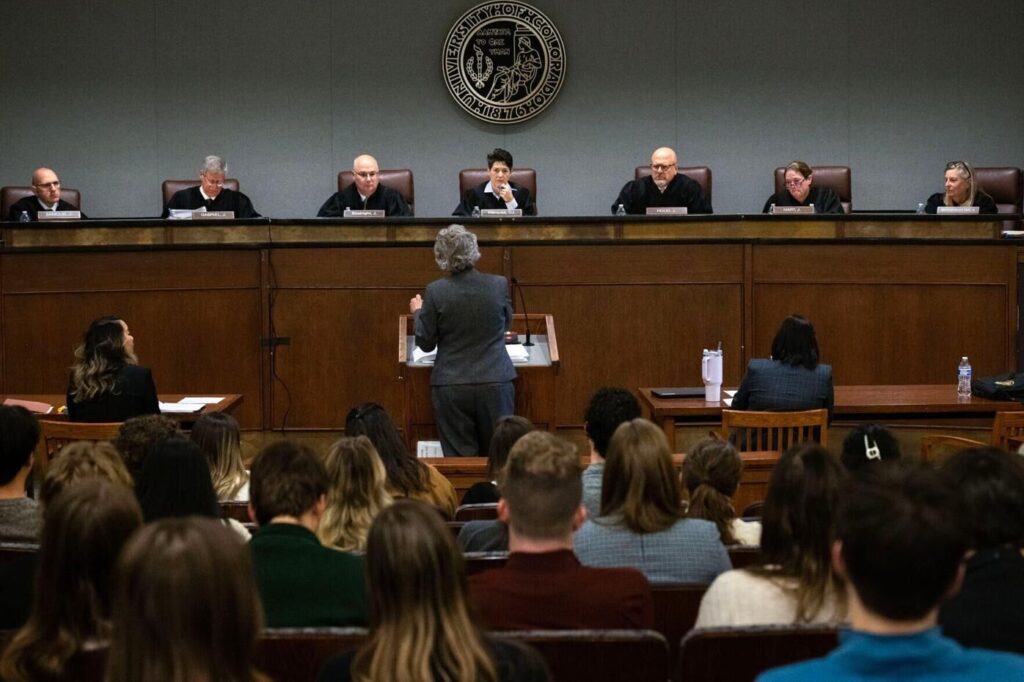
Who are the 3 finalists for the Colorado Supreme Court?
Michael Karlik
michael.karlik@coloradopolitics.com
Updated 6 days ago
A citizen-led nominating commission has chosen the finalists for a vacancy on the Colorado Supreme Court, the first opening in five years on the seven-member court. The vacancy arose after the unexpected resignation of Justice Melissa Hart, who formally departed...
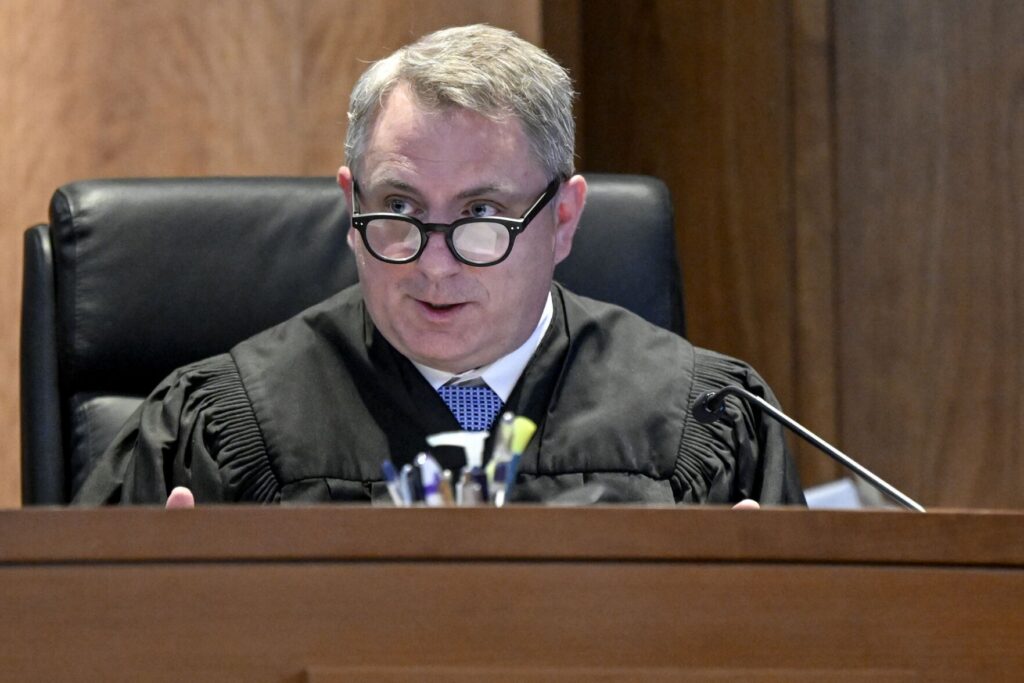
Christopher Zenisek, trial judge experienced with high-profile cases | SUPREME COURT FINALISTS
Michael Karlik
michael.karlik@coloradopolitics.com
Updated 6 days ago
After the Marshall fire burned through Boulder County in the final days of 2021 and wound up destroying more than 1,000 homes, the sprawling 4,000-plaintiff litigation was assigned to District Court Judge Christopher Zenisek of Jefferson County. Zenisek would go...
Andrea Wang, water and energy expert | SUPREME COURT FINALISTS
Michael Karlik
michael.karlik@coloradopolitics.com
Updated 6 days ago
When the late Chief Justice Mary Mullarkey authored a 2002 opinion in the complex and long-running Taylor Ranch case involving landowners’ claims to access a 77,000-acre tract in the San Luis Valley, she worked with her law clerk, Andrea S....
PREV
PREVIOUS

Colorado Supreme Court term in review: Restitution, racial bias, rescinded opinion and more
The Colorado Supreme Court’s most visible decision of its recently concluded term may actually be the one it made five years ago. In 2020, with the retirement of then-Chief Justice Nathan B. Coats, the court’s other members decided to switch to a rotational method of filling the seat, with the judicial branch’s top job term-limited […]
Prosecutors plan to drop charges against man accused of trying to kidnap boy from school playground
The man accused of trying to kidnap a child from the playground of Black Forest Hills Elementary School in Aurora last year is expected to have charges against him dropped, according to Arapahoe County prosecutors. Prosecutors said Solomon Galligan remains, in the eyes of the courts, mentally incompetent to proceed to trial. He will not […]