

Colorado Supreme Court committee solidifies revisions to magistrate rules
The Colorado Supreme Court’s civil rules committee approved a set of revisions on Friday to the protocols governing magistrates, in response to the justices’ specific concerns about the attempt to streamline rules that court decisions have long called out as confusing.
Magistrates are judicial employees who are not judges but who handle aspects of cases in the trial courts. Litigants may consent to magistrates being the final decision maker in certain proceedings, but judicial rules also permit magistrates to address matters without consent. In those circumstances, before there can be an appeal to the Court of Appeals, a litigant will need to seek review from a district judge.
Following a September 2024 hearing on a set of revisions, the Supreme Court asked its Committee on the Rules of Civil Procedure to perform further work. Among the issues the court flagged: Is it really a good idea, as proposed, for magistrates’ final decisions to always go to a district judge first before they reach the Court of Appeals?
“Years of debate have transpired about this issue,” wrote Jefferson County Magistrate Marianne Tims, who led the subcommittee reviewing the rules, in a March 30 memo. “Lively debate continued in this group about whether there should be a single exit from the magistrate division or if we should keep the consent/no consent distinction.”

However, at the rules committee’s June 27 meeting, Tims announced the subcommittee had generated a new idea based on the Supreme Court’s concerns about the “extreme and untenable” workload for district judges in reviewing all magistrate appeals. The proposal would still require district judges to be the first stop.
“But if it was a matter that required consent,” Tims said, “what the judge would be doing is a cursory review — did it require consent? Did the parties give consent after they were advised? And if so, what the district court judge would be issuing is an order that says you’ve got 49 days to appeal downtown” to the Court of Appeals.
Relatedly, the rules committee decided to give district judges 91 days to rule on magistrate appeals. After that, the appeal would be deemed denied and litigants can go to the appellate court.
Court of Appeals Judge Jerry N. Jones, who chairs the rules committee, warned about giving an overly lengthy window for district judges to act.
“My concern is, and I mean to insult nobody by this, we seem to be focused on the judges here,” he said. “And the parties are being put on hold. And I think we need to really, seriously consider whose interests are paramount. And I would respectfully submit it is the parties’ interests that are paramount.”
Bradley A. Levin, a civil litigator on the committee, said he believed 91 days was appropriate. He noted there is no decision-making deadline in the federal courts, which results in “folks’ rights just getting abandoned by the courts because of a motion that’s just been out there.”
As far back as 2009, one member of the Court of Appeals deemed the magistrate rules a “confusing appellate labyrinth” that most endanger self-represented litigants in domestic relations and juvenile matters who are unsure of the proper steps for challenging a magistrate’s order.

Tims acknowledged her subcommittee was mindful of how to keep appeals of magistrates’ rulings inexpensive and quick, while preserving the legal rights of litigants.
“People in certain areas are entitled to a constitutionally vetted judicial officer,” Tims said, referring to someone who the governor appoints and voters have the opportunity to retain. “How do we make sure they know they have that right? How do we make sure they are waiving it only when they understand it? How do we ensure the rules are easy follow for pro se (self-represented) people?”
Among other tweaks the civil rules committee approved were an allowance for district judges to remand cases back to the magistrates with instructions to perform further work. Last summer, the Court of Appeals ruled that the existing structure only gives district judges three options: adopt, reject or modify the magistrate’s decision themselves.
Tims said district judges and magistrates have long been operating in a way that is contrary to the Court of Appeals’ interpretation.
“I’ve been a magistrate for 21 years and for 21 years, they have remanded it back to the magistrates. And that’s true all over the state,” she said. “If there is judicial review and the district court has to keep it, that’s an unbearable amount of judicial resources that they would have to start over.”
Finally, the committee declined the Supreme Court’s invitation to possibly include a “carve out” in the magistrate rules for domestic relations cases.
“We decided that was a pretty slippery slope,” said Tims. “Why only domestic relations cases? Why not a civil case? Why not a probate case?”
The civil rules committee will forward the revisions to the Supreme Court.
Colorado Politics Must-Reads:
-
Denver Public Schools, which has taken on billions in debt, depends on bond measures for repairs
-
Surveillance is not safety — embrace solutions that actually work | PODIUM
-
Trump throws executive orders at constitutional wall, consequences be damned | NOONAN
-
Two cheers for the ‘One Big Beautiful Bill’ | SLOAN


Federal judge recommends dismissing trans athletics lawsuit by area school districts
Eric Young
eric.young@gazette.com
Updated 2 hours ago
A judge has recommended dismissing a federal lawsuit filed by multiple school districts against the Colorado Attorney General’s and Civil Rights Offices over their policies dictating students’ participation in athletics and activities based on their biological sex rather than gender...
Appeals judge asks Colorado Supreme Court to once again clarify magistrate rules
Michael Karlik
michael.karlik@coloradopolitics.com
Updated 3 hours ago
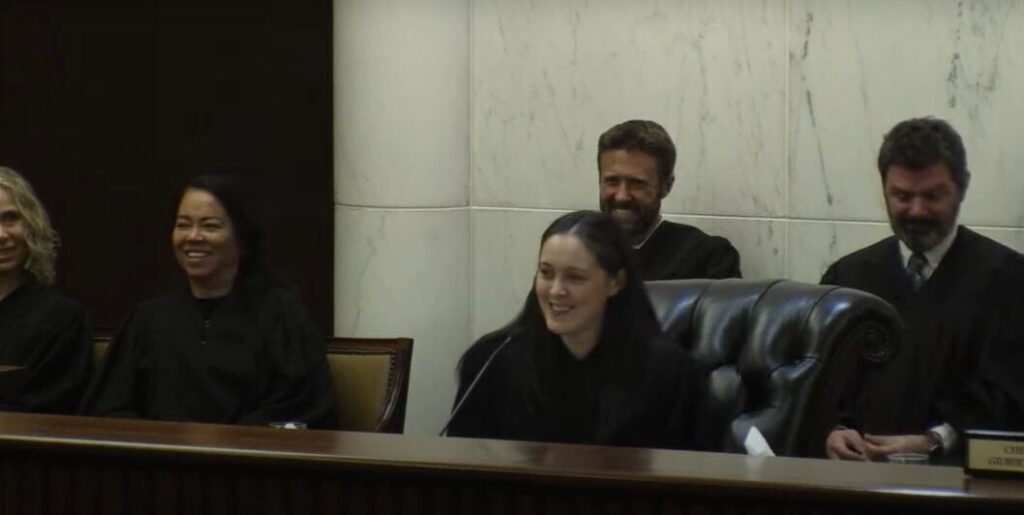
A member of Colorado’s second-highest court urged the state Supreme Court last week to revise confusing language in the rules governing magistrates, less than two weeks after an attempted cleanup of the rules took effect. Magistrates are judicial employees who are...

10th Circuit dismisses paralyzed man’s claims against Colorado Springs, officer
Michael Karlik
michael.karlik@coloradopolitics.com
Updated 10 hours ago
The Denver-based federal appeals court upheld the dismissal last week of a man’s excessive force claims against the city of Colorado Springs and the officer who tased him, causing him to fall down a sloped surface and break his neck....
Colorado justices weigh overlap between child prostitution offenses
Michael Karlik
michael.karlik@coloradopolitics.com
Updated 35 minutes ago
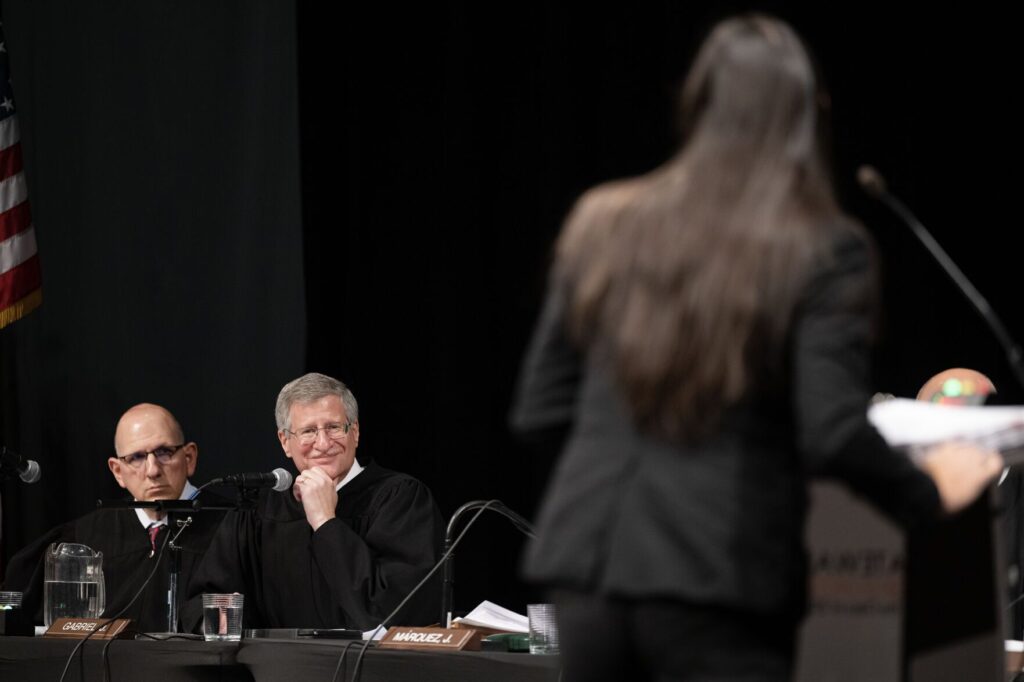
Members of the Colorado Supreme Court last week appeared willing to uphold a man’s conviction for an attempted child prostitution offense, which the state’s second-highest court previously found to be a violation of his right to equal protection under the...

State Supreme Court holds oral arguments, 10th Circuit revives dormant initiative | COURT CRAWL
Michael Karlik
michael.karlik@coloradopolitics.com
Updated 1 day ago
Welcome to Court Crawl, Colorado Politics’ roundup of news from the third branch of government. The state Supreme Court heard oral arguments last week in multiple civil and criminal cases, plus the Denver-based federal appeals court is doing something unusual...

Is a pardon for Tina Peters coming? Colorado governor confirms he is weighing options
The Denver Gazette
the-denver-gazette@coloradopolitics.com
Updated 1 day ago
Gov. Jared Polis on Friday strongly indicated he is considering clemency for Tina Peters, the former county clerk convicted of a security breach at her election office. When pressed about the matter, Polis didn’t offer an explicit answer, but he...
10th Circuit oral arguments to feature trial judges for first time in 12 years
Michael Karlik
michael.karlik@coloradopolitics.com
Updated 4 days ago
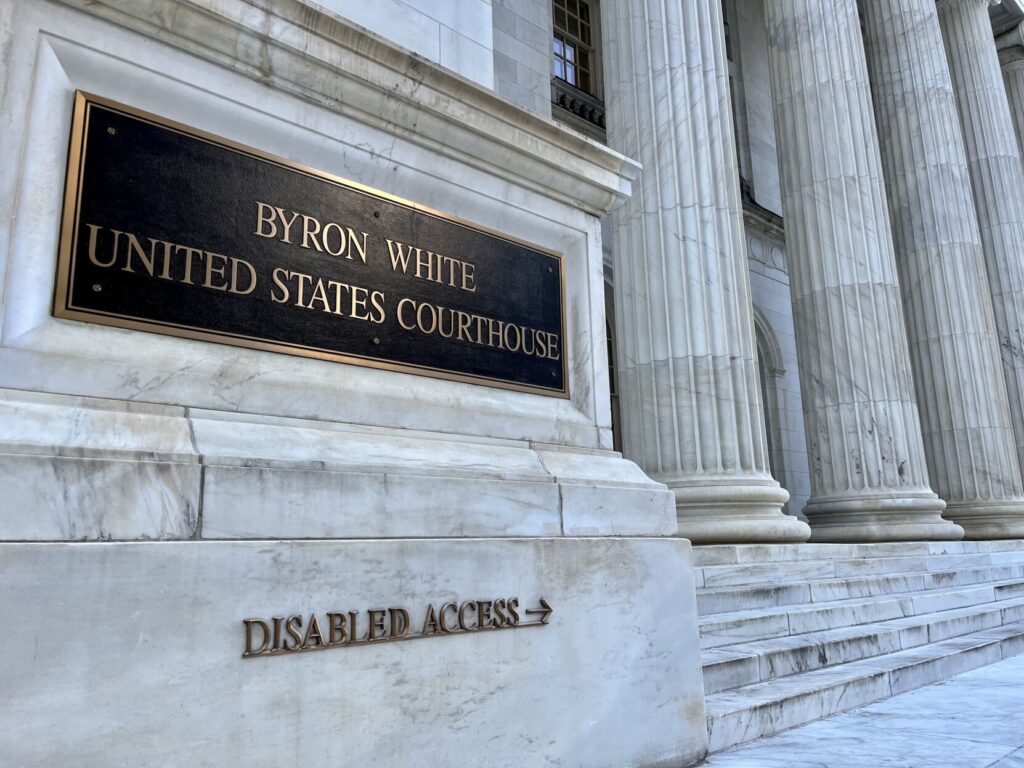
When the Denver-based federal appeals court convenes next week to hear oral arguments, six new faces will be staring down from the bench. No, the U.S. Court of Appeals for the 10th Circuit has not added six new members. It...

Federal judge says ICE cannot impose monitoring conditions beyond immigration judge’s order
Michael Karlik
michael.karlik@coloradopolitics.com
Updated 4 days ago
A federal judge told U.S. Immigration and Customs Enforcement on Thursday that it cannot impose additional restrictions or monitoring conditions beyond those ordered by an immigration judge when releasing a person on bond. In November, U.S. District Court Judge Gordon...
Colorado justices weigh constitutionality of student backpack search based on confidential tip
Michael Karlik
michael.karlik@coloradopolitics.com
Updated 3 days ago
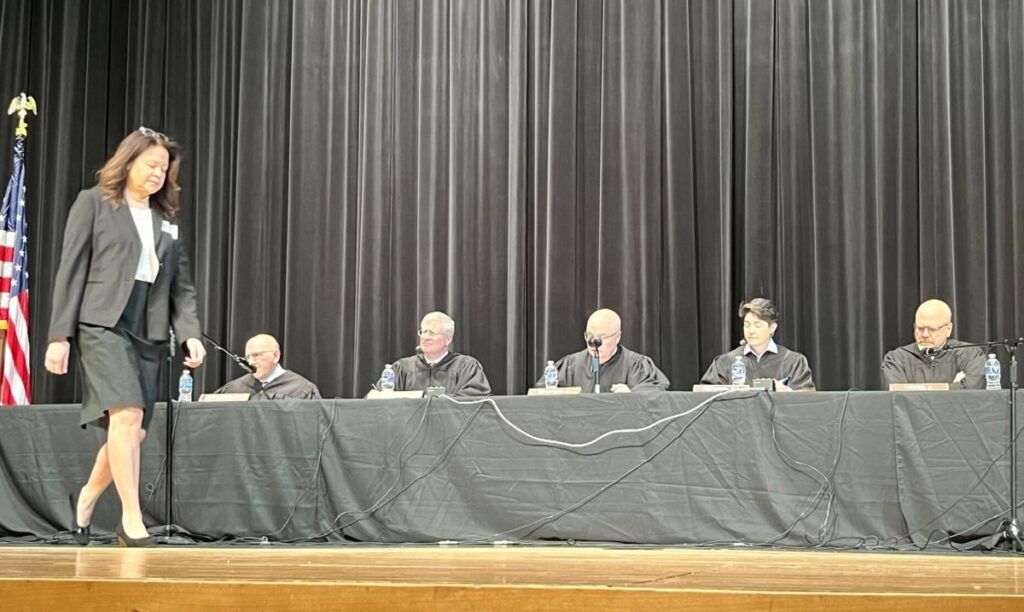
The Colorado Supreme Court considered on Wednesday whether a tip submitted through the state’s confidential school safety system provided a Douglas County administrator with reasonable suspicion to search a student’s backpack for drugs. A trial judge blocked evidence from the...
10th Circuit rebuffs Jeffco’s attempt to expand immunity footprint
Michael Karlik
michael.karlik@coloradopolitics.com
Updated 4 days ago
The Denver-based federal appeals court confirmed on Wednesday that it would not treat a judge’s decision to move a civil case forward as the automatic equivalent of denying immunity to governmental officials. The order from the U.S. Court of Appeals...