

State Supreme Court issues several restitution decisions, judges speak about appointment process | COURT CRAWL
Welcome to Court Crawl, Colorado Politics’ roundup of news from the third branch of government.
The state Supreme Court released a package of decisions fine-tuning its landmark ruling about Colorado’s restitution law, and the judicial branch sponsored an event for people who are interested in becoming state judges.
Crime victim restitution
• Readers are probably aware that four years ago, the Colorado Supreme Court broadcast its concern that trial judges and prosecutors had gotten into the groove of awarding crime victim restitution in a way that ignored the clear deadlines and process in state law. That decision, People v. Weeks, said judges lose authority to award restitution if they a.) don’t do so within 91 days of sentencing or b.) find good cause exists to extend the deadline.
• In the years since, questions have arisen about the specific circumstances in which Weeks applies. For instance, what if the defense asks for a restitution hearing to be held after the 91-day deadline? Or what about restitution orders that are faulty, but have been final for years?
• In a set of five decisions, the Supreme Court made a few clarifications. While it stood by its original interpretation in Weeks, the justices significantly narrowed who could challenge a restitution order and when. If the defense causes the judge to consider the restitution amount outside the deadline, that’ll generally insulate the order from a challenge. Likewise, years-old restitution orders whose only violation is an untimely determination of the amount are not open to challenge.

• “This series of cases undercuts the holding in Weeks, ensures many people whose rights were violated now have no remedy, and imposes no consequences for courts and prosecutors who habitually violated the requirements of (the restitution law). Justice Samour opened the opinion in Weeks by lamenting that ‘Old habits die hard.’ These cases make it harder to challenge violations of the restitution statute by courts and prosecutors who disregard the deadlines.” —Charles Testa, defense attorney
Other Supreme Court news
• The court confirmed that defendants are not entitled to time-served credit for non-residential community corrections sentences, even if a 1991 ruling may have suggested otherwise.
• By 5-2, the Supreme Court ruled a defendant wasn’t “seized” by police when he ran into a group of officers by chance and immediately agreed to be patted down.
• The Durango & Silverton tourist railroad is subject to La Plata County’s land-use code for a set of physical changes to an intermediate station, the court decided.

• The Supreme Court barred a man from continuing to make filings by himself after numerous judges found his arguments meritless.
• By 5-2, the Supreme Court decided a positive drug test alone on a newborn could lead to a finding of child neglect, even though the legislature changed the law five years ago to seemingly avert that outcome.
• “We were part of the legislative effort — which was many years in the making — and the majority decision is definitely contrary to the legislative intent.” —Indra Lusero, founder and director of the nonprofit Elephant Circle
Heard on appeal
• A judge wrongly allowed a child witness to testify remotely due to concern about the defendant’s parents, but the error didn’t affect the outcome, the state’s Court of Appeals decided.
In federal news
• The U.S. Court of Appeals for the 10th Circuit ruled that a Denver sheriff’s deputy will face a civil trial for punching a restrained man and pushing him into the ground in response to his spitting.
• The 10th Circuit decided a man’s prior conviction, which would not have allowed for sentence of more than a year in prison, didn’t prohibit him from owning a gun.
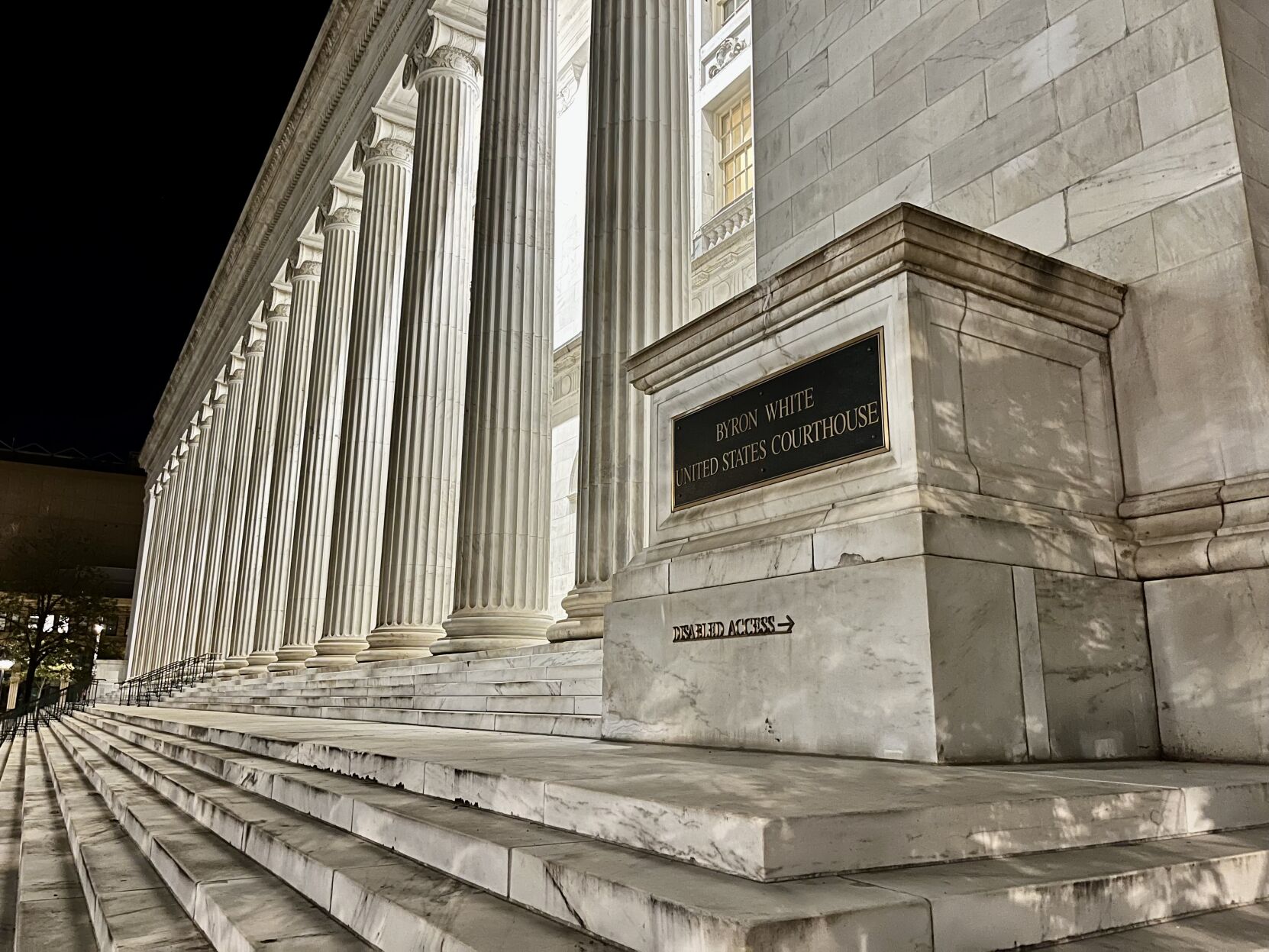
• A federal judge green-lit a jury trial for 13 plaintiffs who claim Denver’s response to 2020 protests violated their constitutional rights.
• A judge dismissed a $50 million defamation lawsuit from a plaintiff who was allegedly called a “prostitute” during a social gathering.
Vacancies and appointments
• The governor has appointed Baca County Court Judge Lyudmyla “Milla” Lishchuk to the Morgan County Court to succeed retiring Judge Dennis L. Brandenburg.
• There are three finalists for a newly created seat on the La Plata County Court: Shane Edwin Goranson, Douglas J. Reynolds and Richard Eugene Schmittel.
• There are also two finalists to succeed District Court Judge Justin B. Haenlein in the 13th Judicial District (Kit Carson, Logan, Morgan, Phillips, Sedgwick, Washington and Yuma counties): David Wayne Bute and Phillips County Court Judge Kimbra Leigh Killin.
• The deadline is June 17 to apply for a part-time judgeship on the Baca County Court to succeed Lishchuk. The position does not require a law degree.
Miscellaneous proceedings
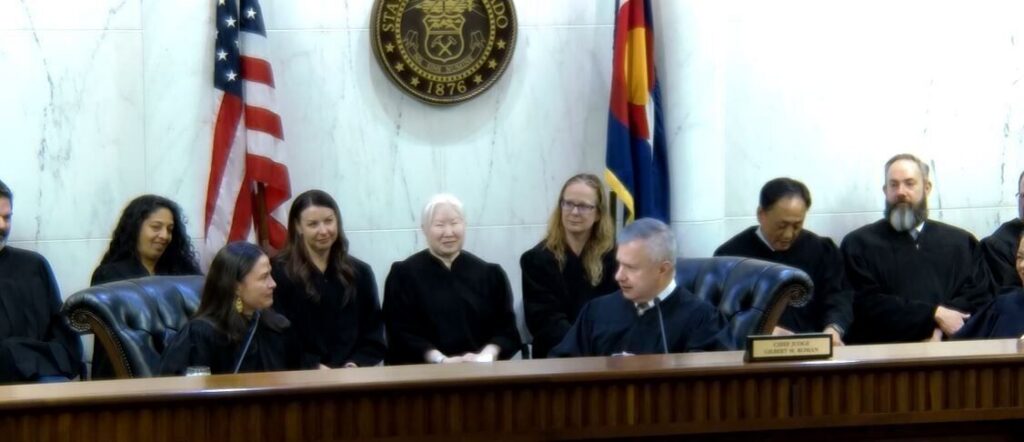
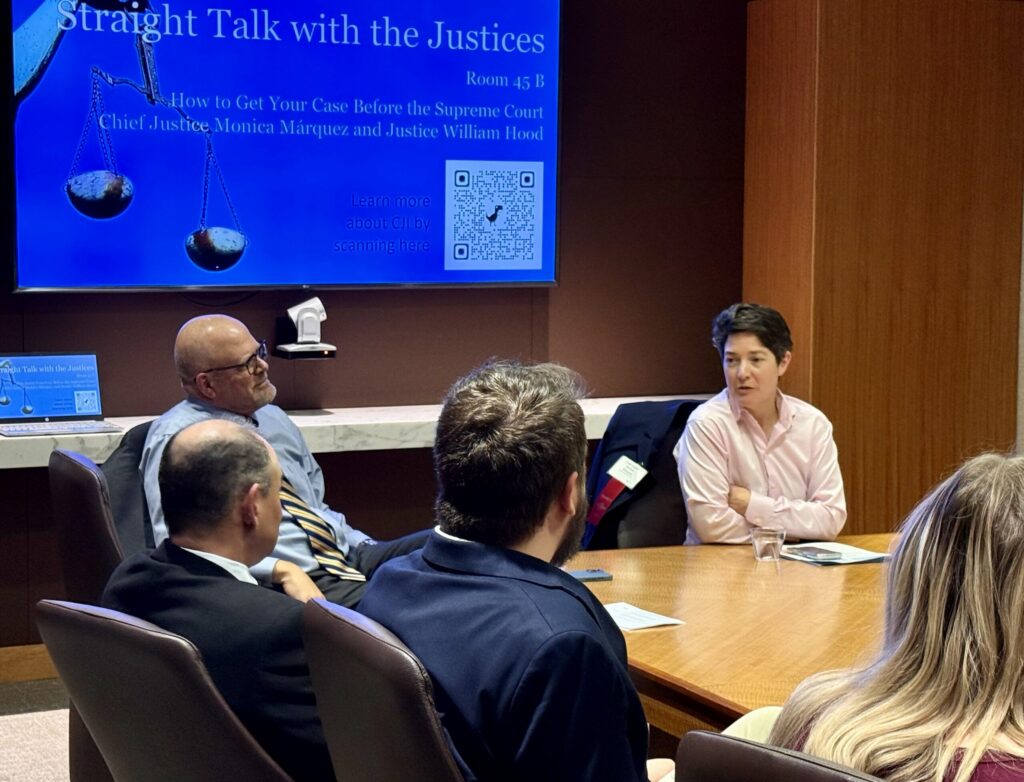
• Several sitting judges, including a couple of Supreme Court justices, spoke with people who are thinking about applying to the bench. The event, sponsored by the judicial branch and the Colorado Women’s Bar Association Foundation, also included the governor’s chief legal counsel, Kara Veitch.
• “You can tell when people are answering the question in the way they think we want them to answer it. These are not political interviews,” she said. “We’ve had some people come in and say, ‘I want to be in this job to help advance Gov. Polis’ agenda.’ We are like, ‘Whoa! That is not this job.'”
Colorado Politics Must-Reads:

Federal judge to consider sanctioning ex-Colorado judicial discipline director
Michael Karlik
michael.karlik@coloradopolitics.com
Updated 1 hour ago
A federal judge ordered Colorado’s former head of judicial discipline on Wednesday to explain why she should not sanction him for making inaccurate statements about the defendants in his lawsuit against the Colorado Supreme Court and related entities. U.S. District...

Federal judge green-lights trial against Denver officer over race-based enforcement
Michael Karlik
michael.karlik@coloradopolitics.com
Updated 22 hours ago
A federal judge green-lit a jury trial last week on a man’s claim that a Denver police officer engaged in racially selective enforcement of the law by arresting him for video recording at a police station, while not arresting a...
Federal judge says 8 years in solitary confinement not grounds to reduce man’s sentence
Michael Karlik
michael.karlik@coloradopolitics.com
Updated 22 hours ago
A federal judge concluded earlier this month that a man’s eight years allegedly spent in solitary confinement did not justify granting his request for a sentence reduction. However, U.S. District Court Senior Judge William J. Martínez signaled his willingness to...

10th Circuit rejects ‘potential for violence’ when police arrest vehicle occupant’s romantic partner
Michael Karlik
michael.karlik@coloradopolitics.com
Updated 1 day ago
The Denver-based federal appeals court rejected the idea on Tuesday that a vehicle occupant poses a danger to police solely because they are romantically involved with another occupant who officers are arresting. By 2-1, a three-judge panel of the U.S....

Colorado justices grill debt collector about compliance with law
Michael Karlik
michael.karlik@coloradopolitics.com
Updated 19 hours ago
The Colorado Supreme Court repeatedly pressed a debt collection company last week to explain how its lawsuit against a Boulder woman for an unpaid credit card balance complied with the specific requirements that state lawmakers have created. Portfolio Recovery Associates,...
Appeals court agrees defendant’s speech constitutionally protected against El Paso County judge
Michael Karlik
michael.karlik@coloradopolitics.com
Updated 1 day ago
Colorado’s second-highest court agreed last week that a defendant’s critical statements toward an El Paso County judge were constitutionally protected and could not form the basis of a retaliation charge. A three-judge Court of Appeals panel concluded that, in context,...
Colorado justices, 4-3, order new murder trial due to wrongfully excluded evidence
Michael Karlik
michael.karlik@coloradopolitics.com
Updated 2 days ago
The Colorado Supreme Court agreed on Monday that a trial judge incorrectly faulted a defendant for refusing to cooperate in a mental health examination, even though the state’s hospital was the entity that botched its responsibility to evaluate her during...

Overdose deaths from opioids dip in America — but not in Colorado, study says
Jacob Mauk
jacob.mauk@denvergazette.com
Updated 2 days ago
Overdose deaths from opioids rose in Colorado, diverging from the national trend, which has been decreasing, according to a new study from a think tank. In its new report, the Common Sense Institute said synthetic opioid overdose deaths in Colorado...
Error-prone Douglas County judge triggers another reversal of criminal convictions
Michael Karlik
michael.karlik@coloradopolitics.com
Updated 2 days ago
Colorado’s second-highest court overturned a defendant’s Douglas County convictions on Thursday due to the error of a judge whose actions have triggered a disproportionate number of reversals to convictions and sentences in recent years. Since 2021, the Court of Appeals...

Federal judge formalizes injunction blocking USDA’s ‘pilot project’ for Colorado food assistance
Michael Karlik
michael.karlik@coloradopolitics.com
Updated 1 day ago
A federal judge formalized his order on Monday to prevent the U.S. Department of Agriculture from requiring Colorado to participate in a food assistance “pilot project,” finding that it violates the law, the U.S. Constitution, and “the bounds of reasoned...