

Kratom regulation bill dies despite support from Colorado Senate
As tempers flared and frustrations became apparent in the final days of this year’s legislative session, a bill to add more restrictions to a federally legal substance detected in hundreds of deaths in Colorado died in a House committee, despite strong support from the state Senate.
The bill deals with Kratom, a herbal substance that can produce opioid- and stimulant-like effects, according to the National Institutes of Health. As usage in Colorado continues to increase, the U.S. Drug Enforcement Administration has labeled it a “drug of concern.”
The House sponsor of Senate Bill 72, Rep. Mandy Lindsay, D-Aurora, said she was told the House Appropriations Committee would not hear the measure and that the message came from Rep. Emily Sirota, D-Denver, the panel’s chair.
“This is a public health issue that we need to take seriously,” added a frustrated Sen. Kyle Mullica, D-Thornton, the bill’s Senate sponsor. He said the bill’s demise means more people dying.
The bill won unanimous support in two Senate committees, a 30-4 vote by the full Senate, and the backing of a long list of some in the kratom industry and municipalities looking for regulatory help. Lindsay and Mullica both said the bill had the votes to pass, both in appropriations and on the House floor.
Colorado ranks high on list for use of "drug of concern"
Kratom is legal and accessible in grocery stores and convenience stores. Still, the U.S. Food and Drug Administration has not approved its use. The NIH has cited anecdotal reports that it can help with drug withdrawal systems, especially related to opioid use, as well as pain management. However, the NIH also said there are other medications and treatments better suited for those purposes.
According to the Centers for Disease Control, the active ingredient in kratom, known as mitragynine, was detected in nearly 200 deaths in Colorado between 2020 and 2023 and more than 4,000 deaths nationwide in the same period.
Kratom products are banned in three Colorado communities, including Greenwood Village, Parker and Monument.
A deadly mix
Dave Bregger of New Hampshire knows all too well those dangers. His son, Dan, died in a kratom-related overdose in Colorado in August 2021.
Dan, who lived in Colorado for the last nine years of his life, was an active mountain biker who loved fly fishing. While Dan struggled with alcohol, he never touched hard drugs. Then he bought two five-ounce bottles of a kratom product, and the autopsy said he died of the combined toxicity of kratom and the active ingredient in Benadryl.
Dave Bregger, who looked into its regulation, said he he learned the combination has surfaced in other overdose deaths. There were no dosing instructions on the bottles, he told Colorado Politics. He looked at a ban, but said the “toothpaste is out of the tube” and that prohibition doesn’t work.
He would like the industry to allow only leaf-based kratom and not the rapidly growing market for synthetic versions. Every person he’s met uses the leaf-based product, and there’s so much fiber in it that it’s impossible to overdose, he said. He described the synthetics as a race to the top and “ours is the most powerful” kinds of advertising, he said.
Bregger testified on SB 72 in both House and Senate committee hearings. Had it passed, the bill would have been named the “Daniel Bregger Act.”
Colorado has been looking at Kratom regulation for several years, but legislation has failed to cross the finish line.
The only successful legislative effort occurred in 2022, when lawmakers tasked the Department of Revenue with a study on the feasibility of kratom regulation, those who manufacture it, and those who sell it.
The 2022 legislation started the state on the path to regulation, but even one of the industry groups said that’s not enough.
Currently, the state bars the sale or production of a kratom product that contains fentanyl or any other controlled substance, as well as its sale to those under 21 years of age. It’s also illegal to display kratom products in a retail location that could make it accessible to someone under the age of 21. Finally, it requires labels that identify the manufacturer and a complete list of ingredients.
Experts, industry seeks to ban 7oH
The legislative study made 10 recommendations on further regulation of kratom products, but they have yet to be made into law. They included stricter labeling requirements, testing, adherence to manufacturing standards like dietary supplements, and assessing a fee for the regulatory program.
Those recommendations made it into a bill in 2023 that met a quick demise in the state Senate.
Meanwhile, kratom products are becoming a bigger problem in Colorado, particularly with the advent of what’s known as 7oH, a semi-synthetic form of kratom, marketed as a standalone ingredient but not considered to be kratom.
Experts, including those who authored a letter to the editor of the medical journal, Addiction, last year, said, “Apart from toxicity risks from acute exposure, chronic 7-hydroxymitragynine product use could result in opioid-like physical dependence and possibly addiction.”
The lead author on the letter, Dr. Kirsten Smith, an assistant professor in the Department of Psychiatry and Behavioral Sciences at Johns Hopkins University School of Medicine, told Supply Side Supplement Journal last December, “I can’t tell you how they are making this stuff or where they are making it.”
In 2025, and with growing concerns over 7oH, the Global Kratom Coalition, an industry group, is backing SB 72, which would establish most of the regulatory structure recommended in the 2022 study and also ban 7oH. The initial cost would be covered by tapping into the state’s tobacco litigation settlement fund, which has caused lawmakers a bit of heartburn.
Lindsay, the House sponsor, said she believes that it would be worked out in its next hearing with the House Appropriations Committee and that the bill had the votes to pass. She said she’s running the bill to protect Coloradans from a potentially dangerous product.
Bregger said the “curve ball” in the bill, which surfaced in the House, was testimony in opposition from the Department of Revenue in an April 29 House Finance Committee hearing.
Michelle Stone-Principato, director of the Liquor and Tobacco Enforcement Division at the Department of Revenue, asked whether the tobacco money could be used for this purpose.
But the bigger issue is that the bill doesn’t go far enough, she said.
Stone-Principato told the committee that the division will have difficulty regulating the industry under SB 72. She explained that it only creates a registry without licensing or enforcement mechanisms.
She said the division does not have the ability to seize unregistered products or set penalties, which is the standard for age-restricted products. In addition, the bill only requires product registration and sets a penalty for non-compliance. She said retailers would not be held accountable if they sold products to minors.
Others within the kratom industry also opposed the bill, at least partly on its attempt to ban 7oH.
Mullica said Monday that Sirota has no authority to “single-handedly” kill a bill, especially one with broad support and the votes to pass.
“It’s unacceptable when we have people who are dying from this product because we’re not regulating it the right way,” he told Colorado Politics. “You can still buy this product at the convenience store countertop.”
He said the votes are there to pass this legislation, but that one person is holding it up “for reasons unknown to me.”
“For one person and a chair of a committee to single-handedly stop something, that’s just not the way that this building operates and nor should it,” he said.
Regarding the Department of Revenue’s objections, Mullica questioned whether the agency’s solution is to do nothing at all.
“You can still take steps in the right direction,” he said.
Lindsay and Mullica told Colorado Politics they would continue to work on the issue during the next session.


Judicial performance evaluations released, Montezuma County judge disciplined | COURT CRAWL
Michael Karlik
michael.karlik@coloradopolitics.com
Updated 4 hours ago
Welcome to Court Crawl, Colorado Politics’ roundup of news from the third branch of government. Colorado’s citizen-led judicial performance commissions released their voter narratives for the judges standing for retention in November, plus a disciplinary panel imposed consequences on a...

Colorado House Democrats’ caucus finances under scrutiny as ethics case against leader advances
Marianne Goodland
marianne.goodland@coloradopolitics.com
Updated 5 hours ago
Democratic lawmakers told a legislative ethics panel that a leader’s management of caucus finances left them with unanswered questions, disputed reimbursements and a breakdown in communication that ultimately triggered a formal complaint. The House Ethics Committee is examining a complaint...

Federal judge holds off on dismissing formerly bankrupt medical contractor from Jeffco jail death lawsuit
Michael Karlik
michael.karlik@coloradopolitics.com
Updated 7 hours ago
A federal judge declined on Monday to dismiss the formerly bankrupt medical contractor from a lawsuit over a detainee’s death in Jefferson County jail, but indicated she would do so if the plaintiffs’ attorneys go through the process to ensure...

Here are the 10 oldest members of Congress running for reelection
Lauren Green
lauren-green@coloradopolitics.com
Updated 8 hours ago
Capitol Hill has long been called a “retirement home,” as well over 100 House members and half the Senate are over the age of 65. That reputation doesn’t look due to change anytime soon — there are currently more than...
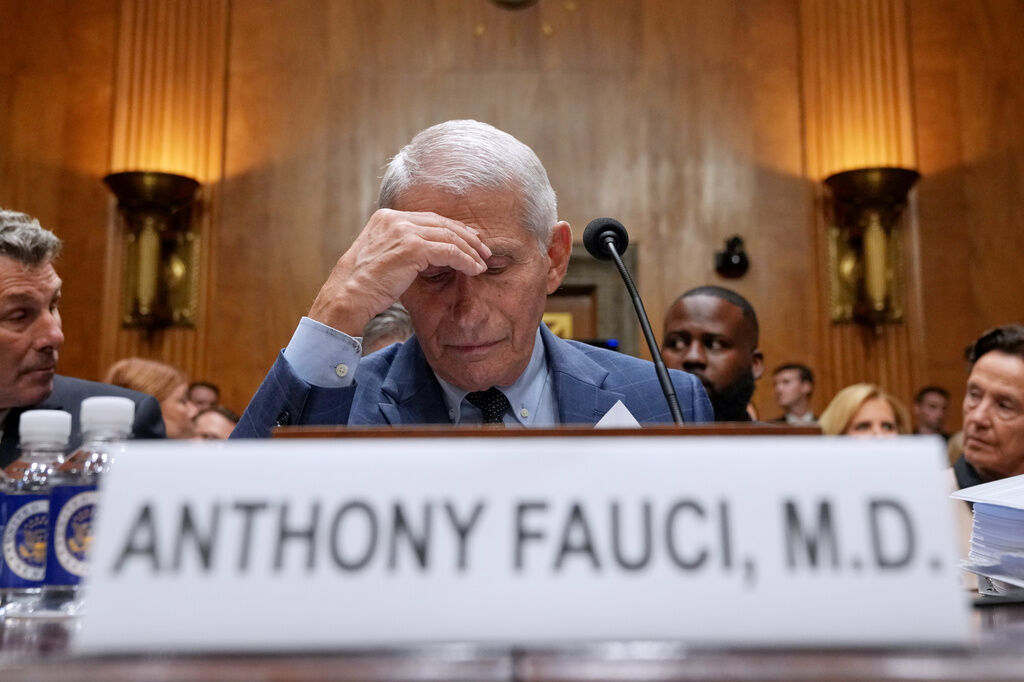
Fauci ignored reports of COVID vaccine side effects, new documents show
Gabrielle M. Etzel
gabrielle-m-etzel@coloradopolitics.com
Updated 9 hours ago
Dr. Anthony Fauci was made aware of possible COVID-19 vaccine complications by other senior-level public health officials in early 2021, according to new emails and text messages released by Senate Republicans on Sunday. Documents released by Sens. Rand Paul (R-KY)...

Majority of Americans say they’re worse off financially since Trump took office again: Poll
Emily Hallas
emily-hallas@coloradopolitics.com
Updated 9 hours ago
The majority of the public believes they are worse off financially than when President Donald Trump won a second term nearly two years ago, according to a new poll that painted an ominous picture of Republicans’ electability in the 2026...

Colorado River crisis: Lake Mead, Lake Powell inch closer to ‘dead pool’
Marianne Goodland
marianne.goodland@coloradopolitics.com
Updated 4 hours ago
In the past 10 days, both Lake Mead on the Arizona-Nevada border and Lake Powell roughly 300 miles northeast on the Utah-Arizona line have recorded their lowest water levels since the reservoirs were first filled. Lake Mead, the nation’s largest...

Colorado lieutenant governor candidate Markert says early discipline and key mentors set his course
Marianne Goodland
marianne.goodland@coloradopolitics.com
Updated 11 hours ago
Editor’s note: This is the first installment in a three-part series examining Colorado’s candidates for lieutenant governor. In this piece, Colorado Politics speaks with George Markert, the Republican running mate to gubernatorial candidate Victor Marx. Marx is competing against Democrat...

The hidden politics of time: How clocks, calendars — and now-contentious time zones — came to be
The Associated Press
the-associated-press@coloradopolitics.com
Updated 14 hours ago
NEW YORK (AP) — It flies. It heals all wounds. It can be of the essence, and it can be money. We thrill in the best of it, lament the worst. We’re warned not to waste it, since we can’t...

1 killed in flash flooding in Beulah: Pueblo County Sheriff’s Office
O'Dell Isaac
odell.isaac@gazette.com
Updated 12 hours ago
One person was killed in Beulah on Sunday after floodwaters swept him downstream, according to a news release from the Pueblo County Sheriff’s Office. The male victim, whose name was not released, was standing near Colorado 78 and Central Avenue...
PREV
PREVIOUS

Stephen Miller could be next national security adviser, Trump says
President Donald Trump floated his deputy chief of staff, Stephen Miller, as an option to be his next national security adviser after he ousted Mike Waltz from the role last week. Speaking to reporters aboard Air Force One, Trump revealed that Miller, a stalwart of his administration who has made frequent, sometimes fiery appearances before […]
Two 'complementary' bills to reform Colorado's 340B program win preliminary House votes
Update: Senate Bill 124 passed on a vote of 42-23; Senate Bill 71 passed on a vote of 57-8. SB 124 must head back to the Senate for review of amendments; SB 71 heads to the governor. Two one-time competing bills attempting to reform Colorado’s 340B, a discount federal drug program, both won preliminary votes […]