

Colorado Senate and House have 128 bills to consider before 2025 General Assembly session ends
The 2025 General Assembly session will wrap up no later than midnight on Wednesday, with 657 bills introduced as of last Friday. If no more bills are introduced on Monday, the last day a bill can be introduced, that will leave the 2025 session with 48 fewer bills than in 2024.
As of Monday, the House and Senate had 128 bills left on their calendars, with exactly 64 bills left in each chamber.
As of Monday’s start, 29 bills in the House were still awaiting committee hearings, and 16 in the Senate were awaiting committee action.
That’s the first sign of bills that might not make it to the final day. Of those 29 bills in the House, 20 are House bills. In the Senate, six of the 16 are Senate measures. That leaves just the bare minimum amount of time for those measures to get to the finish line by Wednesday.
The governor has signed 186 bills; another 64 are awaiting his decisions.
Some of the biggest issues still awaiting final decisions in the final days of the 2025 session include:
- Senate Bill 5, the bill to remove the second election for unions, won preliminary approval from the House Monday and heads to a final vote as soon as Tuesday. The governor has threatened to veto a bill that did not bring forth a compromise between business and labor, and that compromise never happened. The bill sponsors decided to move the bill ahead, which was considered a challenge to the governor.
- House Bill 1312, likely to be the biggest of the remaining bills in the session, is a transgender bill of rights. Republicans have vowed to do everything in their power to kill the bill. It is expected to come up for second reading in the Senate Monday afternoon.
- House Bill 1291 would put more teeth into the regulation of ride-share companies, although one of those companies, Lyft, has threatened to pull out of the Colorado market should the bill pass. Lyft is being sued by a state lawmaker who was allegedly sexually assaulted by a driver who was borrowing a Lyft driver account and did not have authority under the rideshare platform. HB 1291 would prohibit account sharing, require more frequent criminal background checks on drivers, and require audio/video monitoring of ride shares.

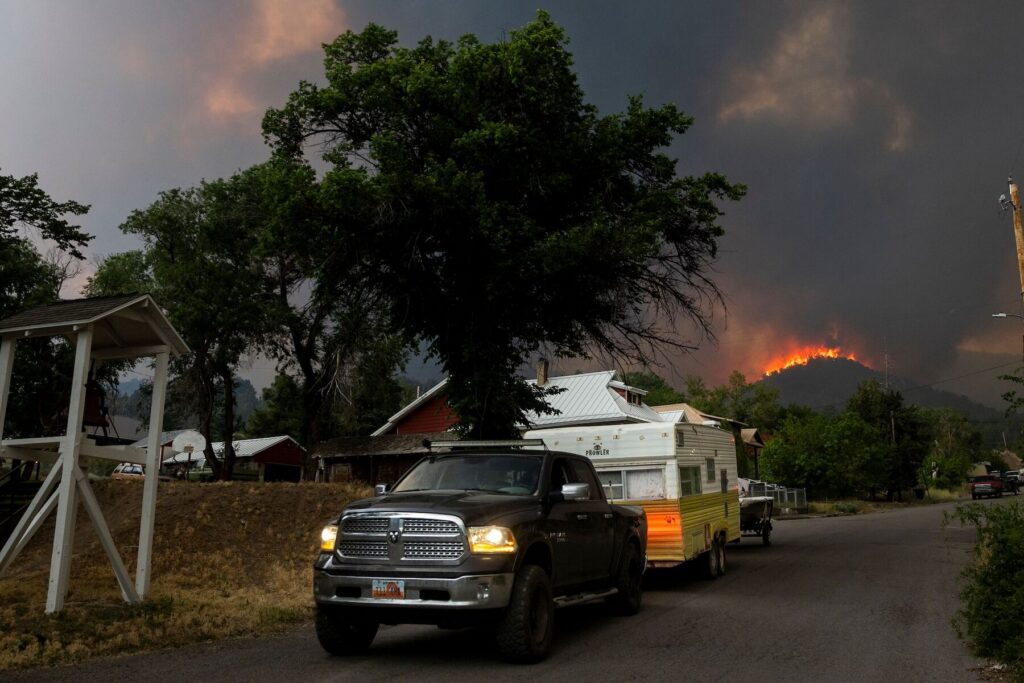
Heat, wind and drought conditions spark wildfires across US West | OUT WEST ROUNDUP
Ernest Luning
ernest.luning@coloradopolitics.com
Updated 4 days ago
Heat, drought spark wildfires Extreme heat and dry, windy conditions fueled several wildfires in the West on June 21, including an uncontained blaze in Utah that forced the evacuation of a small town southwest of Salt Lake City. The Iron...

Crank challenger Jessica Killin signs on to new centrist Democratic group’s ‘Promise to America’
Ernest Luning
ernest.luning@coloradopolitics.com
Updated 10 hours ago
Jessica Killin, one of the Democrats running in Tuesday’s primary for the chance to challenge U.S. Rep. Jeff Crank in Colorado’s 5th Congressional District, joined with more than a dozen incumbent Democratic lawmakers and candidates this week signing on to...

Colorado Politics Calendar June 29-July 5
Rachael Wright, Special to Colorado Politics
rachael.wright@coloradopolitics.com
Updated 4 days ago
CoPo’s weekly political calendar will help you find political and public-policy events throughout Colorado. It includes candidate and issue campaign events, public policy meetings, court hearings, state and local party conventions, assemblies, debates, rallies, parades, speaking engagements, traveling dignitary appearances,...
Gov. Lamm’s GOP challenger gives insights into his campaign | A LOOK BACK
Rachael Wright, Special to Colorado Politics
rachael.wright@coloradopolitics.com
Updated 4 days ago
Forty-five years ago this week: “I see Gov. (Richard) Lamm is fairly popular in general,” said gubernatorial candidate and state Sen. Bill Hughes, R-Colorado Springs. “ … And he’ll be hard to beat.” Hughes was on a whirlwind campaign trail...

Giving credit to Polis where credit is due | SONDERMANN
Eric Sondermann
eric-sondermann@coloradopolitics.com
Updated 4 days ago
It is an understatement to suggest that Gov. Jared Polis has had a tough couple of months. The bloom was already off the rose and Coloradans were paying far more attention to the choice of his replacement than they were...

Bennet, Hickenlooper to vote against Trump’s 10th Circuit nominee from Colorado
Michael Karlik
michael.karlik@coloradopolitics.com
Updated 21 hours ago
Colorado’s two Democratic senators will not vote to confirm President Donald Trump’s nominee to a vacancy on the Denver-based federal appeals court. Trump has selected U.S. District Court Chief Judge Daniel D. Domenico, who he appointed as a federal trial...
Who’s spending in Colorado to get your vote?
Marianne Goodland
marianne.goodland@coloradopolitics.com
Updated 22 hours ago
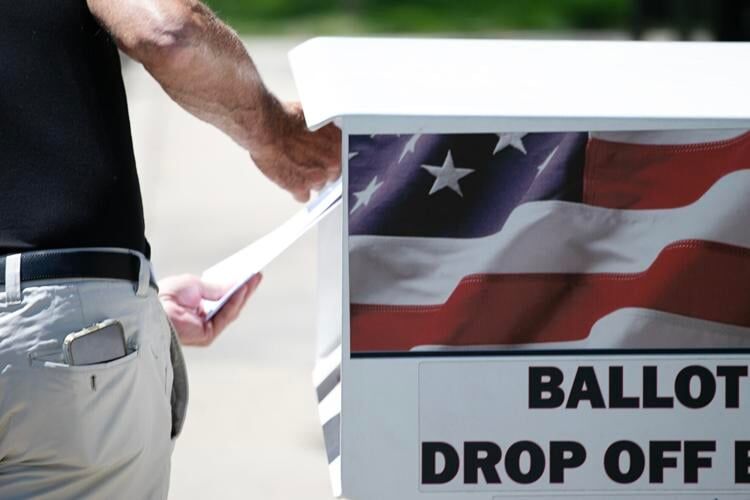
Groups that raise unlimited amounts of money have spent about $20 million in May and June to try and influence Colorado voters’ choices in the upcoming June 30 primaries. By law, these groups cannot coordinate with the candidates they support....

U.S. government declines to oppose multiple challenges to immigration detention in Colorado
Michael Karlik
michael.karlik@coloradopolitics.com
Updated 2 days ago
Multiple federal judges in Colorado granted petitions from people challenging the lawfulness of their immigration detention this week after the government took the unusual step of declining to submit arguments in opposition. Colorado’s federal trial court is facing a flood of...

Tina Peters tells supporters to ‘stand up and fight back’ at Castle Rock event
Marissa Ventrelli
marissa.ventrelli@coloradopolitics.com
Updated 2 days ago
Tina Peters, the former Mesa County clerk recently released from prison, warned supporters that what happened to her could happen to them, too, if they did not “stand up and fight back” at an event at the Douglas County Fairgrounds....

Iran strikes cargo ship in Strait of Hormuz, endangering Trump’s peace
Christian Datoc
christian-datoc@coloradopolitics.com
Updated 2 days ago
Iran attacked a cargo ship traveling through the Strait of Hormuz on Thursday, possibly upending President Donald Trump‘s diplomatic end to the war with Iran. A U.S. official confirmed to the Washington Examiner that the Islamic Revolutionary Guard Corps “struck...