

Michael Clark released after spending 12 years for murder he maintains he didn’t commit
Michael Clark was released from custody on Monday after spending 12 years in prison for a murder he has said for 30 years he did not commit.
He remains charged with the 1994 Boulder murder of Marty Grisham and it is now up to the Boulder County district attorney’s office whether to retry him.
His release on $100,000 bond comes after his original murder conviction was set aside Friday, making it the first vacated conviction in the wake of the continuing scandal at the Colorado Bureau of Investigation’s forensic lab.
Clark, 49, wearing a black hoodie and sweatpants, walked out of the Boulder County Jail at 7:44 p.m. and immediately enveloped his wife, Amy, his son Kernan, 16, and daughter, Kylie, 19, into a group hug and wept. His other daughter is out of state at a college.
As they clung together in the twilight, few words were spoken between them except, “I love you.”
Earlier Monday Clark was released from Fremont Correctional Facility in Florence and arrived at the county jail around 4 p.m. His wife, children, and other family members and friends waited nervously in the lobby of the jail for more than three hours.
Around 7:30 p.m., the group, including his defense attorney, Adam Frank, moved outside to gather around a door they expected him to emerge from. Then, in a comical moment, he strolled up on the group, having exited from another door.
“I don’t have the vocabulary to say what I’m feeling right now,” Clark told reporters, adding that he is grateful for the love and support from “everybody who has stuck with us through the years.”
Clark was arrested and convicted years after the 1994 Boulder murder of Marty Grisham, in large part on the strength of a DNA analysis by Yvonne Woods, the former CBI forensic scientist in the middle of the lab scandal.
Woods, who goes by the nickname Missy, concluded and testified at Clark’s 2012 trial that his DNA was found in a small jar of Carmex lip balm found outside Grisham’s apartment, placing him at the scene of the crime.
Last month, a retest of that evidence by an independent lab in Virginia revealed different results and that he could be, in fact, “statistically excluded,” according to a court filing by the Boulder County district attorney’s office on Friday.
With new results, the prosecution said it no longer objected to having Clark’s conviction set aside. Boulder District Judge Nancy Salomone then quickly ruled to vacate it.
Woods is accused — and has partly admitted — to years of mishandling DNA evidence, skipping steps in her analysis and manipulating results. She is now awaiting trial on 102 felony counts of cybercrime, perjury, forgery and attempting to influence a public servant.
CBI acknowledged it has identified 1,003 problems in the more than 10,780 criminal cases Woods has worked on in her 29-year career at the lab, or roughly one in 10.
The Clark case was not among those identified with problems by CBI.
Frank, Clark’s attorney, said Monday, that alone raises serious questions about the true toll of her alleged misconduct.
“The scope of cases that were impacted by Missy Woods goes well beyond the 1,003 cases CBI has identified which means we’re only scratching the surface,” he said.
Clark, a teenager at the time, was a prime suspect in the 1994 slaying, but authorities did not arrest him then because the case was circumstantial and seen as potentially shaky. While Clark admitted to stealing some checks from the victim, and he once owned the same kind of gun used in the crime, there were no witnesses, no physical evidence and the murder weapon was never found.
The case went cold for 15 years. Boulder police then revisited it in 2009 and eventually sent the jar of Carmex that had been tucked away in evidence to CBI where Woods tested it.
She said her analysis showed that Cark’s DNA was consistent and a major contributor to what she had found within the jar of Carmex.
Prosecutors used that finding as a key piece of new evidence, saying it put Clark at the scene of the crime — something he has long denied.
Clark was convicted and sentenced to life without parole.
His lawyer, though, argued as far back as 2019 — four years before the CBI scandal broke — that Woods’ conclusions were wrong and that her testimony misled jurors.
That argument was bolstered by an affidavit from a University of Denver forensic genetics professor, who reviewed Woods’ work and testimony for the defense and found both to be flawed.
But the judge back then denied the defense’s request for a hearing to introduce the questioning of the DNA results, as well as the allegations of juror misconduct. The Colorado Court of Appeals overturned the denial in 2023 and ordered a hearing which had been scheduled for late May.
As the CBI scandal unfolded throughout 2024, Boulder County District Attorney Michael Dougherty agreed to have the DNA retested. The results by Bode Technology, an independent lab in Virgina, was unable to replicate Woods’ findings in two of three tests, seen as crucial in science.
A decision on whether to retry Clark is expected by summer. Frank said he will push to have all charges dropped.
After his release Monday, when asked what he would do first once he got home, Clark grinned and said, “whatever they want,” nodding towards his family.


Federal judge declines to order Denver to let police critic apply for review board
Michael Karlik
michael.karlik@coloradopolitics.com
Updated 23 hours ago
A federal judge declined on Friday to order that Denver permit a longtime police critic to apply to join the board tasked with reviewing officers’ use of force. Regan Benson sought to become one of the two community members on...
Colorado Supreme Court to hear case on ballot measure disclosure requirements
Marissa Ventrelli
marissa.ventrelli@coloradopolitics.com
Updated 3 days ago
The Colorado Supreme Court has agreed to hear a case challenging whether the state can require ballot measure committees to disclose the names of their registered agents in election communications. The case stems from a complaint filed during the 2020...
Divided 10th Circuit orders pretrial release of defendant facing drug charges
Michael Karlik
michael.karlik@coloradopolitics.com
Updated 3 days ago
The Denver-based federal appeals court overturned a judge’s order keeping a defendant in custody pending trial on Friday, ruling 2-1 that she was entitled to release under the law. Erika Esmeralda Garcia stands accused of two charges related to the...
Judge denies motion from Gov. Jared Polis to dismiss ICE lawsuit from former state employee
Marianne Goodland
marianne.goodland@coloradopolitics.com
Updated 4 days ago
A Denver District Court judge has denied a request by Gov. Jared Polis to dismiss a lawsuit filed by a former state employee over disclosure of information to federal immigration authorities. The lawsuit filed against the governor by Scott Moss,...

Colorado High School Activities Association reaches settlement with D-49, other school districts in trans athletics lawsuit
Eric Young
eric.young@gazette.com
Updated 3 days ago
Months after adopting new policies restricting students to athletic participation based on their biological sex and filing a federal lawsuit, School District 49 and other Colorado school districts have reached a settlement with the Colorado High School Activities Association (CHSAA)...
Trump calls Jared Polis a ‘sleazebag’ for keeping ‘elderly woman’ Tina Peters in jail, governor responds
The Washington Examiner
the-washington-examiner@coloradopolitics.com
Updated 4 days ago
President Donald Trump took to Truth Social on Wednesday to lambast Colorado Gov. Jared Polis over the case involving former Mesa County Clerk Tina Peters, who was sentenced to nine years in prison in 2024 for charges of giving unauthorized...
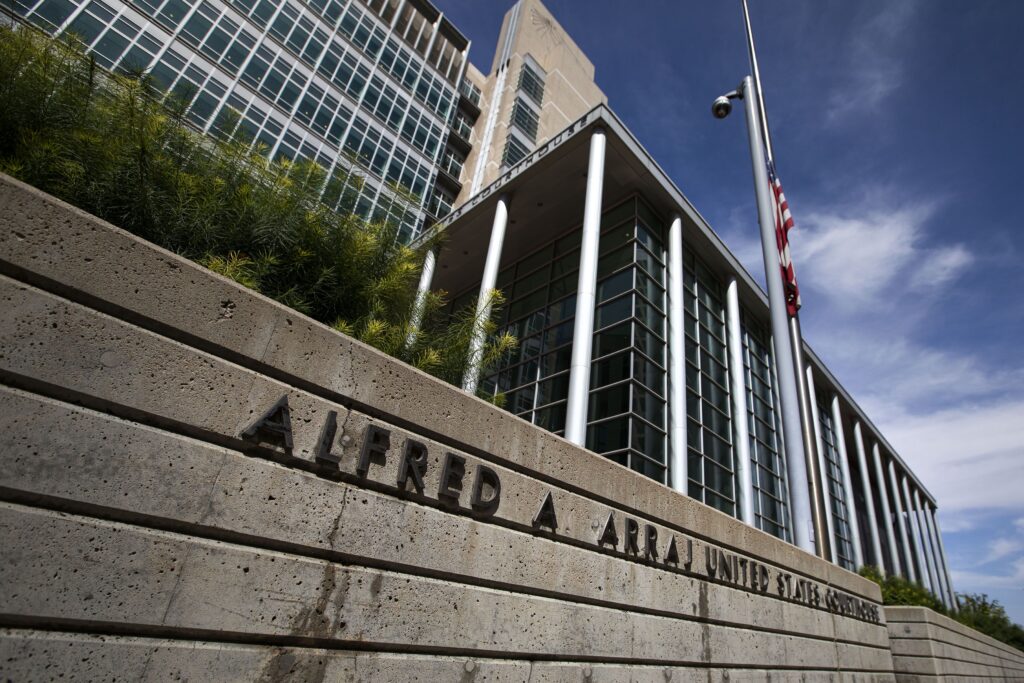
Federal judge recommends sanctions on plaintiffs for faulty case citations
Michael Karlik
michael.karlik@coloradopolitics.com
Updated 23 hours ago
A federal judge recommended that a pair of self-represented plaintiffs be subject to a range of sanctions for including flawed and non-existent case citations in their filings, potentially by using artificial intelligence. “A federal court is not a workshop for...
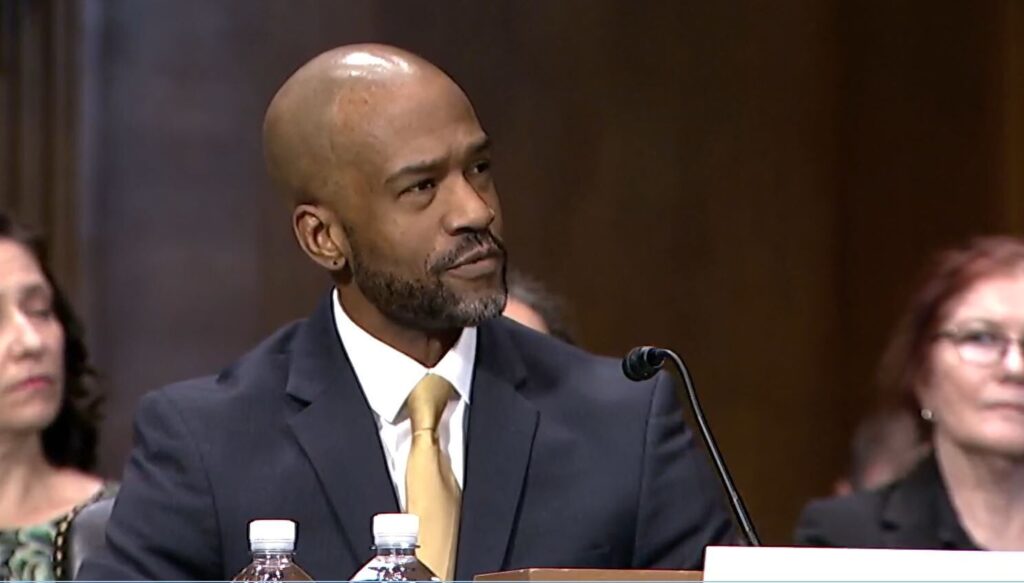
Federal judge deems Jeffco’s appeal ‘frivolous’ in jail death case
Michael Karlik
michael.karlik@coloradopolitics.com
Updated 4 days ago
A federal judge declared Jefferson County’s appeal of his evidentiary decision “frivolous” on Thursday, which enables him to continue handling the civil rights litigation even as an appellate court separately addresses the appeal. The order from U.S. District Court Judge...
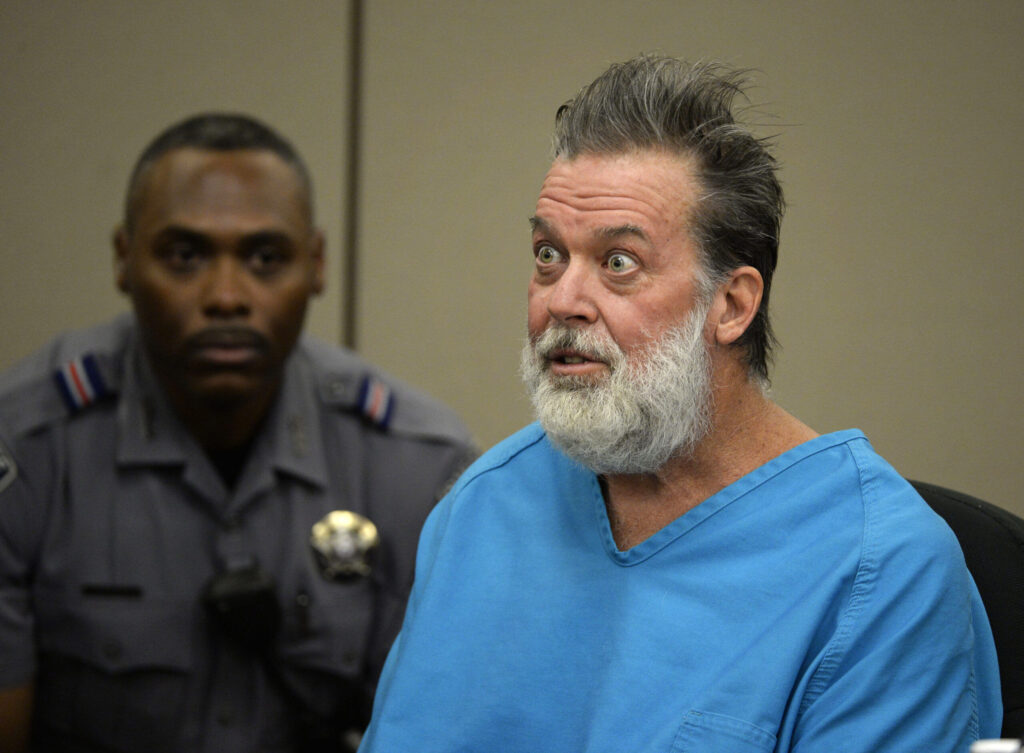
Cause of death revealed for self-proclaimed Planned Parenthood gunman
Mackenzie Bodell
mackenzie-bodell@coloradopolitics.com
Updated 4 days ago
The self-proclaimed gunman in the Planned Parenthood shooting in Colorado Springs in November 2015 died from congestive heart failure and other related medical conditions, the Federal Bureau of Prisons said in a recent court filing. The Federal Bureau of Prisons...
Federal judge lets ex-Castle Rock employee’s discrimination lawsuit proceed
Michael Karlik
michael.karlik@coloradopolitics.com
Updated 5 days ago
A federal judge rejected the town of Castle Rock’s effort to dismiss an ex-employee’s age and gender discrimination lawsuit on Wednesday, while deeming the case a close call. Carl E. Filler, who was in his mid-60s when the town hired...