

Colorado Democrats seek to penalize ‘misgendering’ and ‘deadnaming’
Colorado Democrats are pushing legislation to penalize “deadnaming” and “misgendering” as discriminatory actions and to mandate the courts to include such claims in determining the allocation of parenting time in custody cases.
The bill is the latest salvo in America’s cultural war over transgender issues. It implicates parenting responsibilities, notably when they are in dispute over a child’s gender transition, as well as schools. Additionally, the bill compels “publishers” to use a person’s chosen name when asked. Under the proposal, refusing to comply is evidence of the intent to discriminate.
Broadly speaking, “misgendering” means not using an individual’s preferred pronoun or honorific, while “deadnaming” refers to using transgender persons’ birth names, instead of their preferred names.
Transgender activists view both as demeaning and denying a transgender person’s self-expression, while conservatives counter that compelling people to use preferred names via laws violates free speech rights.
At the state Capitol, Democrats have introduced a bill they called the “Kelly Loving Act,” named after a transgender woman who was killed in the Club Q shooting in Colorado Springs in 2022.
House Bill 25-1312 seeks the following:
-
Define “deadnaming” and “misgendering” as discriminatory acts under the Colorado Anti-Discrimination Act
-
Define “coercive control” to include threatening to publish materials related to a person’s gender services in child custody cases
-
Prohibit the courts from applying other states’ laws that permits removal of a child because the parent or guardian assisted in providing gender services
-
Bar schools from adopting dress codes based on gender and instead allow students to abide by the variations of that dress code
-
Define as discriminatory the act of publishing materials that “misgender” or “deadname” a person
“I think it was really important to shore up some of these protections because so many people from around the country are coming to Colorado to receive care and be safe and live in a state that supports and affirms who they are,” said Rep. Rebekah Stewart, D-Lakewood, who sponsored the measure alongside Rep. Lorena Garcia, D-Denver, Sen. Faith Winter, D-Westminster, and Sen. Chris Kolker, D-Centennial.
Transition ‘made it worse’
Opponents and proponents of the bill testified for 10 hours in the House Judiciary Committee, with lawmakers wrapping up their final comments well past midnight on Wednesday morning.
Several formerly transgender individuals described what they said was the irreversible effects of gender transition surgeries had on their bodies. They urged parents not to allow their children to make the life-changing decisions at such a young age.
Evan de la Cruz went through countless surgeries to transition from female to male but came to regret the decision, de la Cruz said, adding the damage is for life.
“It didn’t repair any of the undiscovered trauma that I was actually suffering from, and it made it worse,” de la Cruz said. “Now, I’m sterilized and mutilated. My body was a battlefield for gender medicine. I’ll suffer with the long-term damage from testosterone and surgeries with a body riddled with scars.”
De la Cruz urged parents to carefully consider their child’s future before seeking gender transition services.
“Please, please think of who these kids will be in the next 10 or 15 years,” De la Cruz said. “Please let my testimony serve as an example that this overcorrection of care is leading to people suffering like I did and still do.”
Mia Hughes of the British “gender-critical” think tank Genspect said it might be easy to tell a little boy who likes wearing dresses and playing with Barbies that he can be a girl, but it could come at an “enormous cost” as he grows older.
Hughes argued against “social transitioning,” in which an individual begins expressing their gender identity in social settings, often by changing their name, pronouns, and clothing — but without yet any medical intervention.
“All the scientific literature from the era before social transition and puberty suppression shows that most children will desist and reconcile with their birth sex during or after puberty, but this natural process is interrupted if one or more parent chooses to affirm the child’s cross-sex identity,” she said. “Socially transitioning children sets off a chain reaction that can lead to becoming a lifelong medical patient.
Hughes added: “Therefore, this bill has got it backwards: socially transitioning a child is a form of coercive control that strips away the child’s sense of self, robs them of their bodily integrity, and violates their right to go through puberty.”
Critics of medically transitioning minors have said America is now an outlier and many European countries, after embracing “gender affirming care,” now emphasize psychological care over the transition of young people. In particular, the National Health Service in England said it will no longer prescribe “puberty blockers” — drugs that suppress sex hormones during puberty — to children and other young people seeking gender transitions, saying there is “not enough evidence of safety and clinical effectiveness.”
Supporters of affirming transgender identity have often pointed to an Education Week report in 2022, citing research that showed efforts to “out” LGBTQ+ students, especially transgender students, make those students “feel less safe at school, have higher rates of suicide ideation, and are disproportionately represented among unhoused youth, at least partly due to rejection at home. Conversely, affirming transgender students can improve their mental health and academic outcomes.”
Garcia, one of the sponsors, urged her fellow committee members to consider the “humanity” behind the policy, adding that transgender people are “incredibly strong, resilient, and powerful individuals” who represent “the best of us.”
“This bill is the bare minimum of what we can do as a state, and the fact that we have to legislate for people to not bully and misgender and deadname people because of whatever insecurities they might have is sad to me,” she said. “Why can’t we just respect one another? Why can’t we just understand that someone else’s identity has nothing to do with me or you?”
The bill passed through committee on a party-line vote and will next be heard on the House Floor on April 4.
Bill prohibits limiting ‘gender-affirming’ care
A second measure, House Bill 1309, codifies “gender-affirming care” in statute and prohibits health insurance providers from denying or limiting such care as prescribed by a physical or behavioral healthcare provider.
“Gender-affirming care” includes social, psychological or medical interventions for transgender children and adults, such as hormone therapy and surgical procedures, notably double mastectomies and genital surgeries.
The bill, sponsored by Reps. Kyle Brown, D-Louisville, and Brianna Titone, D-Arvada, along with Sens. Lisa Cutter, D-Littleton, and Julie Gonzales, D-Denver, also exempts prescriptions for testosterone from the tracking requirements of the state’s prescription drug monitoring program.
In 2023, Colorado became the first state in the nation to include “gender-affirming care” in its Affordable Care Act Benchmark Health Insurance Plan.
Because the changes were made administratively and not by the legislature, it’s essential to codify them into state law so they cannot be easily overturned in cases of changes at the federal level, Brown said.
The bill also extends coverage for “gender-affirming” care to large-group insurance plans.
Both Brown and Titone said they have spoken to transgender individuals who are scared about what the future holds with President Donald Trump in the White House.
Brown noted the series of executive orders and administrative actions from the Trump administration which he described as an “attack” on the “trans community.”
“It’s important for us in Colorado to say that that’s not necessarily consistent with our values, and we think that health care should be determined by a patient and their doctor and not in a freeform sort of political interference,” Brown said.
Titone said the federal actions are “casting a long shadow.”
“We don’t know what the future holds, and there are real possibilities that access to essential care could be restricted for transgender folks. Passing this bill is about us here in Colorado saying no — we’re not going to let that happen in our state,” Titone, who is transgender, told the House Health and Human Services Committee on Wednesday.
“You have no idea what it’s like to be a trans person and what that lived experience is like but imagine finally seeing yourself in the mirror or feeling comfortable in your skin for the first time. That’s what this care can provide,” Titone said.
‘Secretly transitioned’
Critics expressed worries that HB 1309 would infringe upon the rights of parental.
Erin Lee, a Larimer County mother who said her daughter was “secretly transitioned” by her school, criticized the bill for using the “very real pain” of gender dysphoria to push an agenda.
“In what universe is a behavioral therapist qualified to determine what physical mutilation of healthy bodies is medically necessary?” she asked, adding that the bill should also also include coverage for transgender people who wish to de-transition.
In his first few weeks in office, Trump issued four executive orders related to transgender people, including a declaration that there are two genders — male and female. The order also directed federal agencies to stop using taxpayer money to promote “gender ideology.”
“These sexes are not changeable and are grounded in fundamental and incontrovertible reality,” the order reads. “Under my direction, the Executive Branch will enforce all sex-protective laws to promote this reality.”
Trump also moved to ban transgender people from serving in the military.
In one of his orders, Trump said medical professionals are “maiming and sterilizing” impressionable young children by performing irreversible surgical and chemical interventions by providing them with “puberty blockers” — drugs that suppress sex hormones during puberty — or performing sex change operations.
“This dangerous trend will be a stain on our nation’s history, and it must end,” said the order, which mandated federal agencies that provide grants to medical institutions, including schools and hospitals, to take steps to ensure the latter end their gender transition programs for individuals 19 years and younger.
Another executive order signed in early February bans transgender women from playing in women’s sports.
“In recent years, many educational institutions and athletic associations have allowed men to compete in women’s sports,” the order reads. “This is demeaning, unfair, and dangerous to women and girls, and denies women and girls the equal opportunity to participate and excel in competitive sports.”
Courts have blocked some of these orders.


Trump faces first domestic test on Iran conflict with Senate war powers vote
Ramsey Touchberry, Washington Examiner
ramsey.touchberry.washington.examiner@gazetteedit.wpenginepowered.com
Updated 1 hour ago
Administration officials are scrambling to sell members of Congress on President Donald Trump’s military operations in Iran ahead of bipartisan attempts to limit his war powers in the Middle East without approval from lawmakers. The Senate and House are set...
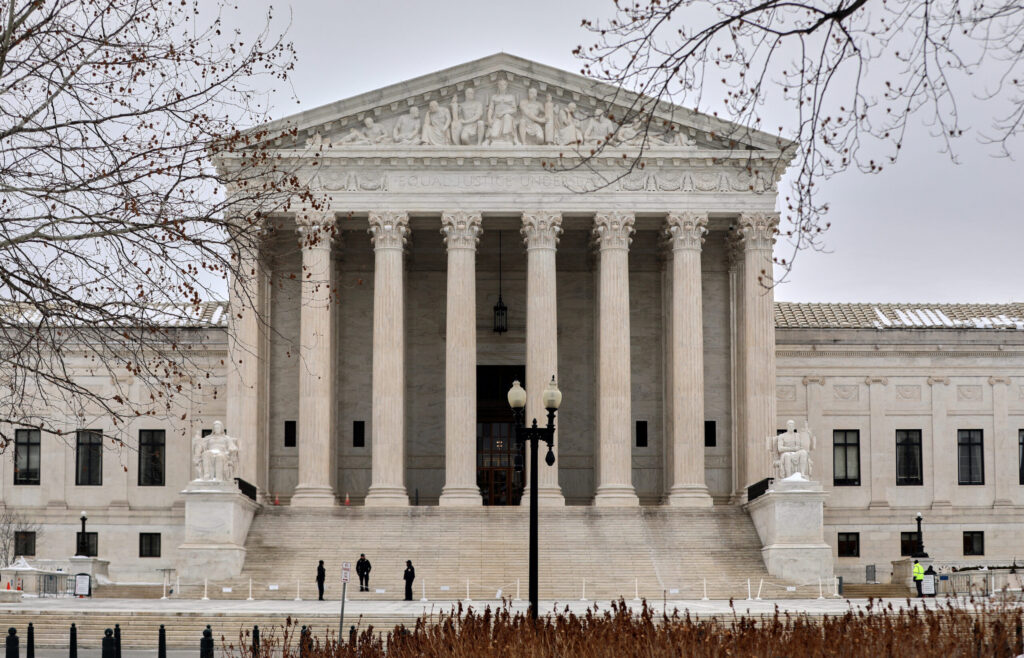
Supreme Court hands California parents win over secret gender transition policy
Jack Birle, Washington Examiner
jack.birle.washington.examiner@gazetteedit.wpenginepowered.com
Updated 1 hour ago
The Supreme Court gave California parents a significant victory late Monday when it kept in place a lower court’s block of the Golden State’s public school policy hiding students’ gender identity and preferred pronouns from parents. A 6-3 majority on...

Judge nixes latest policy requiring 7 days’ notice for Congress members to visit ICE facilities
Michael Kunzelman
michael.kunzelman@associatedpress.com
Updated 1 hour ago
WASHINGTON (AP) — A federal judge agreed on Monday to temporarily suspend the latest version of a Trump administration policy that requires members of Congress to provide a week’s notice before they can visit immigration detention facilities. U.S. District Judge...
Judge nixes latest policy requiring 7 days’ notice for Congress members to visit ICE facilities
Michael Kunzelman
michael.kunzelman@associatedpress.com
Updated 1 hour ago
WASHINGTON (AP) — A federal judge agreed on Monday to temporarily suspend the latest version of a Trump administration policy that requires members of Congress to provide a week’s notice before they can visit immigration detention facilities. U.S. District Judge...

Gov. Polis, Upper Basin states criticize federal draft plan for managing the Colorado River
Marianne Goodland
marianne.goodland@coloradopolitics.com
Updated 2 hours ago
With no agreement among the seven Colorado River states and federal deadlines now passed, the Upper Colorado River Commission on Monday sharply criticized the U.S. Department of the Interior’s draft plan for managing the river after current guidelines expire this...

Ballot access, dual-office ban bills move swiftly through Colorado legislature
Marianne Goodland
marianne.goodland@coloradopolitics.com
Updated 3 hours ago
With an eye on the 2026 election cycle and mounting tensions with the Trump administration, Colorado lawmakers are fast-tracking a pair of election bills they say will protect the state’s mail ballot system and tighten rules for elected officials. The...

Colorado GOP chair Brita Horn loses ‘no-confidence’ vote, vows to refocus on ‘mending that divide’
Ernest Luning
ernest.luning@coloradopolitics.com
Updated 3 hours ago
The Colorado Republican Party’s state central committee approved a resolution expressing “no confidence” in state chair Brita Horn in a landslide late Monday night near the end of an online meeting marked by rancor and confusion. Almost 80% of the...

Trump to attend White House Correspondents’ Dinner for first time as president
Washington Examiner Staff, Washington Examiner
washington.examiner.staff.washington.examiner@gazetteedit.wpenginepowered.com
Updated 5 hours ago
President Donald Trump announced on Monday that he accepted an invitation to this year’s White House Correspondents’ Dinner. It would mark the first time Trump has attended the dinner, in either term, since he’s been president. Trump announced the decision...
Primary rival sues to prevent Democrat Eileen Laubacher from going through assembly in Colorado’s 4th CD
Ernest Luning
ernest.luning@coloradopolitics.com
Updated 8 hours ago
Democratic congressional candidate Trish Calvarese on Monday asked a judge to prevent one of her primary rivals, Eileen Laubacher, from participating in the caucus and assembly process to seek the nomination to challenge Republican U.S. Rep. Lauren Boebert in Colorado’s...

Colorado lawmakers tackle legislation on sexual assault
Jenny Deam
jenny-deam@coloradopolitics.com
Updated 10 hours ago
A panel of Colorado lawmakers on Monday unanimously approved a bill that supporters say will offer protections and support to victims of domestic violence, stalking, sex trafficking and sexual assault, including mandatory training for law enforcement on trauma. The measure,...