

Senators question Air Force Academy superintendent, others about civilian faculty
After the Secretary of Defense Pete Hegseth called for more service members to teach at the military academies, senators closely questioned the schools’ superintendents about their civilian faculty at a hearing this week.
Air Force Academy Superintendent Tony Bauernfeind, the leaders of the U.S. Military Academy at West Point and the Naval Academy in Annapolis, Md., faced questions during a Senate Armed Services Subcommittee on Personnel hearing about how many civilians they employ, whether they offer tenure and if they have the authority to fire tenured faculty.
The military academy leaders also faced questions about how they implemented President Donald Trump’s recent executive order calling for the end to diversity, equity and inclusion programs across the federal government.
The pointed questions at the hearing followed Hegseth’s statement during his confirmation hearing in January about civilians pushing “woke” ideas at the academies.
“We need more uniformed members going back into West Point, the Air Force Academy and the Naval Academy, as a tour-to-teach, with their wisdom of what they have learned in uniform, instead of just more civilian professors that came from the same left-wing, woke universities that they left, and then try to push that into service academies,” Hegseth said.
Air Force Academy reverses decision, allows Muslim cadets to forego physical training during Ramadan
The superintendents told the senators that the civilian faculty bring important expertise to their institutions, particularly in technical fields.
“The civilian faculty bring a depth of knowledge within disciplines that we are able to use for the benefit of the education of our cadets,” said Lt. Gen. Steven Gilland.
At West Point, civilians make up 26% of the faculty and uniformed members make up 74%, he said. More than half of the civilian professors work in science, technology, engineering, or mathematics fields, also known as STEM fields.
The Air Force Academy employs a faculty composed of 40% civilians, and at the Naval Academy, it’s close to a 50-50 split, the superintendents said.
Vice Adm. Yvette Davids, who leads Annapolis, defended both the mix of civilian and uniformed instructors and current hiring and tenure practices. All three institutions offer tenure, which helps with recruiting top teaching talent, she said. All three can fire tenured professors, they said.
“We have a proven formula that works,” she said.
Trump appoints Charlie Kirk, Michael Flynn to military academy advisory boards
Subcommittee chairman Sen. Tommy Tuberville, R-Ala., asked the superintendents if the Senate should weigh in on civilian hires in the same way they confirm military promotions. Tuberville was recently appointed to the Air Force Academy’s Board of Visitors.
Bauernfeind said he is comfortable with the current process that does not require confirmation, but he would be open to a Senate review.
“If our elected leaders want to have a voice in that I am also very comfortable working with our elected leaders to detail a process,” he said.
Lawmakers also asked the academy leaders about ending diversity, equity and inclusion efforts.
Gilland said two classes have ended at West Point, a history class called Race, Ethnicity and Nation and an English course called Power and Difference out of the 600 classes offered.
The Naval Academy ended Gender Matters, a leadership course, and an English class on gender and sexuality studies, Davids said. The school also modified 18 other classes, of its 870, to come into compliance.
Bauernfeind said the Air Force’s 735 classes are still under review, but only three could be suspended. He did not name them, since he has not made a decision on ending them.
While the senators steered clear of political comments on the DEI orders, they offered opposing views, particularly on their value in an academic setting.
Air Force Academy graduate pilots SpaceX mission to International Space Station, known as ‘focused’
Sen. Richard Blumenthal, D-N.Y., said he hoped the military’s history would be passed on to cadets and midshipmen.
“The military has an extraordinary and proud record of leading our nation on desegregation. … We should be teaching that history so that our military can be not only proud but continue to lead the nation.”
On the other side of the aisle, Sen. Dan Sullivan, R-Alaska, said he was concerned about diversity, equity and inclusion efforts or “critical race theory” leading to anti-Americanism in service academies.
“We want our military service academies focused on warfighting, lethality patriotism,” Sullivan said.
Former Air Force Academy football player acquitted of sexual assault charges

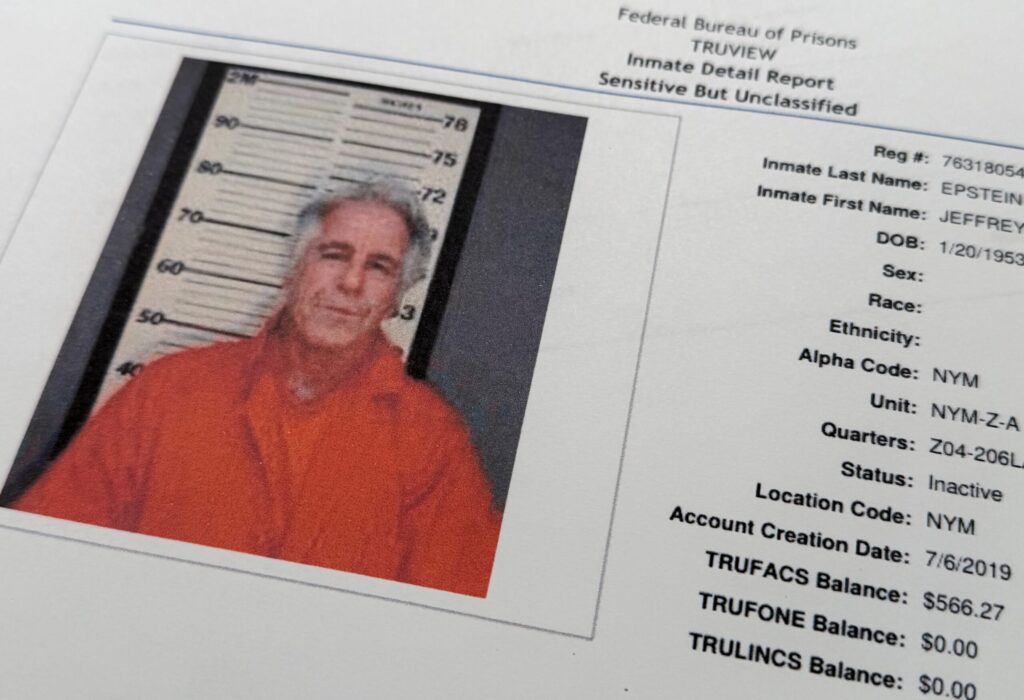
DOJ publishes more Epstein documents mentioning Trump after initial omission
Rena Rowe, Washington Examiner
rena.rowe.washington.examiner@gazetteedit.wpenginepowered.com
Updated 9 hours ago
The Justice Department released additional Epstein files on Thursday, including uncorroborated accusations from a woman claiming she was sexually assaulted by President Donald Trump. Last week, Rep. Robert Garcia (D-CA), the top Democrat on the House Oversight and Government Reform...
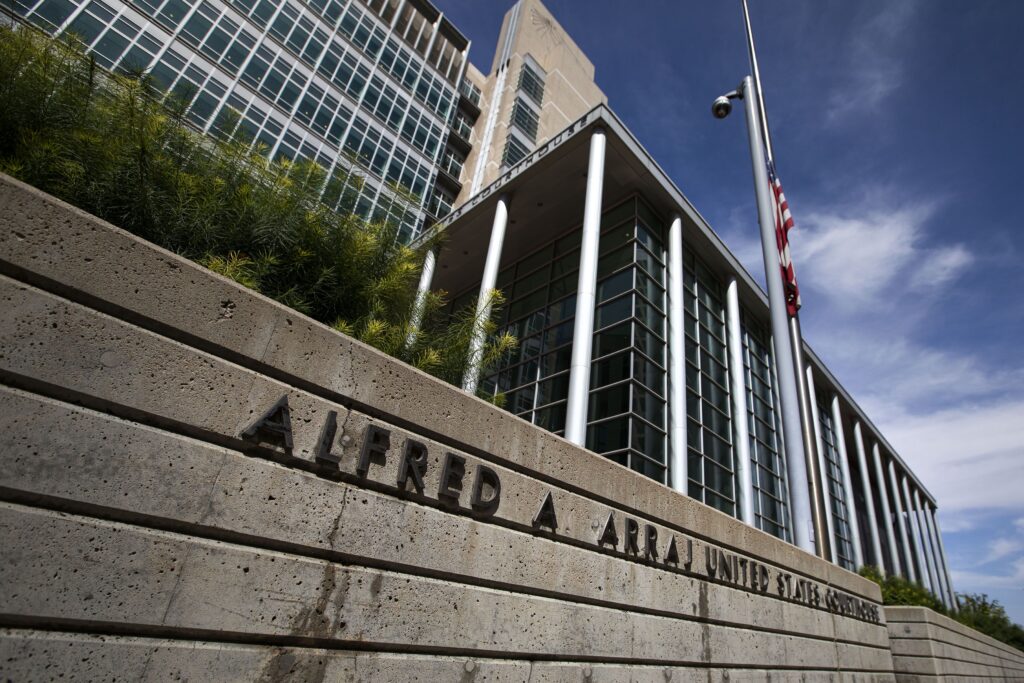
Federal judge dismisses developer’s challenge to Denver affordable housing ordinances
Michael Karlik
michael.karlik@coloradopolitics.com
Updated 4 hours ago
A federal judge dismissed a homebuilder’s constitutional challenge on Tuesday to a pair of Denver ordinances that impose obligations on developers related to the affordable housing demands created by new construction. Two related companies, redT Homes and redT Capital Partners,...

Another TABOR fight: Democrats plan to redirect refunds to Colorado residents
Marianne Goodland
marianne.goodland@coloradopolitics.com
Updated 3 hours ago
Colorado voters could decide this fall whether billions of dollars that would otherwise be returned as refunds under the Taxpayer’s Bill of Rights should instead go to public schools under a ballot measure unveiled Thursday by Democrats. Supporters say the...

Analysis: Colorado legislators introduce 18 energy bills amid debate over emissions goals
Scott Weiser
scott.weiser@gazette.com
Updated 9 hours ago
Colorado legislators have introduced 18 energy-related bills so far in the 2026 session, with Democrats sponsoring 14 and Republicans four, highlighting the sharp partisan split over how aggressively the state should pursue its greenhouse gas reduction goals while protecting affordability...

Colorado House committee advances bills regulating AI in therapy, insurance decisions
Marissa Ventrelli
marissa.ventrelli@coloradopolitics.com
Updated 10 hours ago
Colorado lawmakers are moving to place guardrails on the growing use of artificial intelligence in mental health care and insurance decisions. The House Health and Human Services Committee on Thursday approved two bills that would limit how therapists and insurers...

Colorado Democrats, Republicans fight over ballot fiscal information
Marissa Ventrelli
marissa.ventrelli@coloradopolitics.com
Updated 7 hours ago
Republicans and Democrats clashed anew over legislation that would require identifying which programs would see a funding reduction if a ballot measure passed, with the former saying it’s yet another way for the government to control the campaign narrative and...
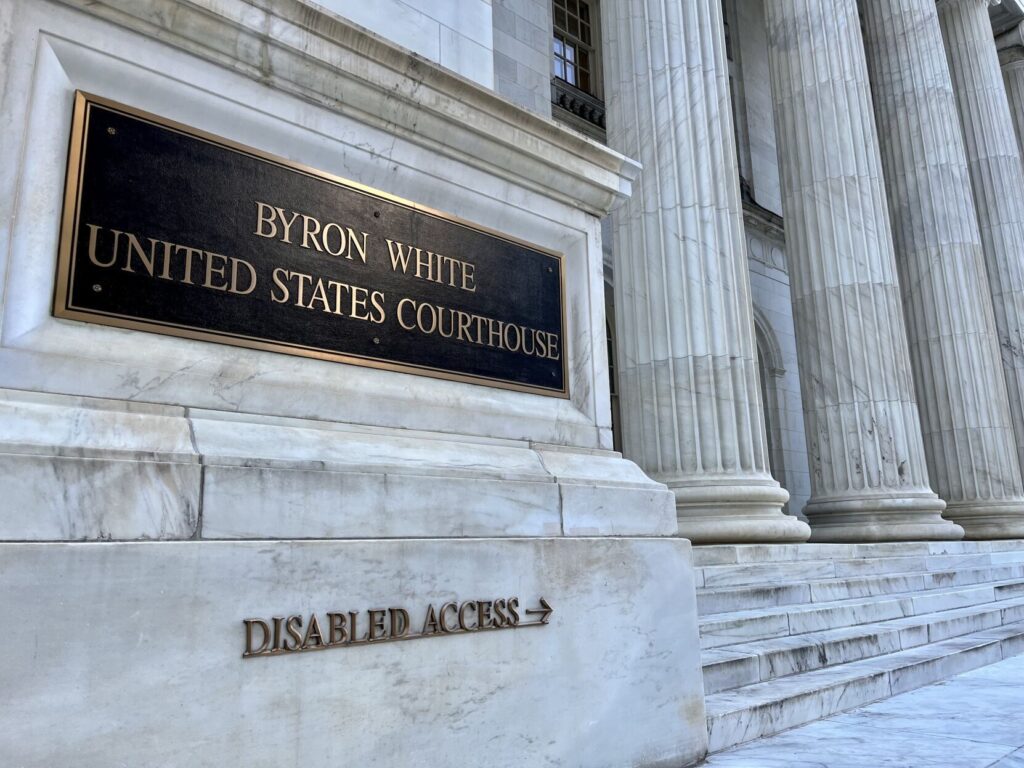
10th Circuit distances itself from prior decision making it easier to toss prisoner lawsuits
Michael Karlik
michael.karlik@coloradopolitics.com
Updated 13 hours ago
The Denver-based federal appeals court distanced itself on Wednesday from its own recent decision that made it easier for prison officials to end civil lawsuits by transferring incarcerated plaintiffs between facilities. A three-judge panel of the U.S. Court of Appeals...

Legal war over Trump tariffs still raging despite Supreme Court ruling
Jack Birle, Washington Examiner
jack.birle.washington.examiner@gazetteedit.wpenginepowered.com
Updated 13 hours ago
The war in the courts over tariff refunds took a key step forward this week as President Donald Trump’s newly implemented tariffs are facing a new legal challenge, less than a month after the Supreme Court struck down Trump’s sweeping...

Democrat Dwayne Romero jumps in primary to challenge Republican Jeff Hurd in Colorado’s 3rd CD
Ernest Luning
ernest.luning@coloradopolitics.com
Updated 15 hours ago
The Democrat who has been running for nearly a year to unseat Republican U.S. Rep. Jeff Hurd in Colorado’s 3rd Congressional District got some company in the primary this week. Dwayne Romero, a Snowmass Village business owner and decorated Army...

Proposed changes to wildfire code would add protections to eastern edge of Colorado Springs
Brennen Kauffman
brennen-kauffman@coloradopolitics.com
Updated 16 hours ago
New construction rules may be coming to the higher-risk wildfire areas around Colorado Springs, including the grassland on the city’s eastern side. Colorado Springs Fire Marshal Kris Cooper presented an early draft of the proposed changes to the city’s wildfire...