

U.S. engineers’ chase of drone through Ukraine exposes problem, shows opportunity
When San Diego-based Shield AI employees arrived in Ukraine initially, their aircraft flew for an hour in the wrong direction.
“We’re chasing this thing over highways and through cornfields,” said Ryan Tseng, the company’s CEO, likening it to the scene from “Interstellar.” He shared the story during the recent Air and Space Forces Association’s Warfare Symposium in Aurora. Tseng was among the experts on a panel discussing the lessons learned in Ukraine, where drones are responsible for 70% to 80% of the casualties, according to recent New York Times reporting. The aircraft themselves face intense electromagnetic defense aimed at disrupting their flight.
The Shield AI drone took off in the wrong direction because the company engineers had been told they would have GPS up to 200 feet. But the drone lost GPS at 3 feet because the Ukrainians were jamming GPS signals to protect themselves, Tseng said.
Once the problem was understood, he said, the company was able to develop software to fix the problem in 24 hours so the drone would not rely on GPS.
“The idea of pushing software from nothing to combat operations in 24 hours is something that really breaks the way a lot of programs operate in the United States,” Tseng said. “We need to think about how we achieve that level of agility in software to be competitive in environments that might be similar to Ukraine.”
In a March 6 memo, Defense Secretary Pete Hegseth acknowledged that the slow acquisitions process for software is a problem and directed the military to use the Software Acquisition Pathway, which was set up during the first Trump administration to obtain software in a more expedited fashion.
“The Department of Defense has been slow to recognize that software-defined warfare is not a future construct, but the reality we find ourselves operating in today,” the memo said.
A defense official said in a news release the acquisitions pathway will shorten the process to less than a year from allocation of funds to minimum viable product.
When it comes to drones, better software could help keep far more of them on the battlefield, Tseng said, and help cut down on the number that need to be built.
“You put the right software on these vehicles, your attrition rate can be cut by a factor of 10,” he said.
Investing in software can also help companies stand apart, Tseng said.
“Those companies that disrupted the incumbents, were the ones that over invested in software compared to the hardware,” he said.
The company said in a news release that during January it was training with Ukrainian forces to operate its V-BAT, a 9-foot-long surveillance drone that can take off and land vertically. It’s also opened an office in Kyiv.
The high cost of purchasing drones for the U.S. military was also a point of discussion with panel moderator, retired Maj. Gen. Charles Corcoran, pointing out the Army plans to pay $260 million for 11,000 short-range reconnaissance drones. The drones are $20,000 each, Corcoran said, while Ukraine has manufactured similar drones for a fraction — 1/120th — of the price.
Purchasing drones in higher volumes and lowering the overhead costs of production could help bring down costs, the experts said, in addition to diversifying the market.
“I think that competitiveness will eventually drive down the cost,” said panel member Kyle Woo, counter-unmanned aerial systems program manager for Zone 5 Technologies.

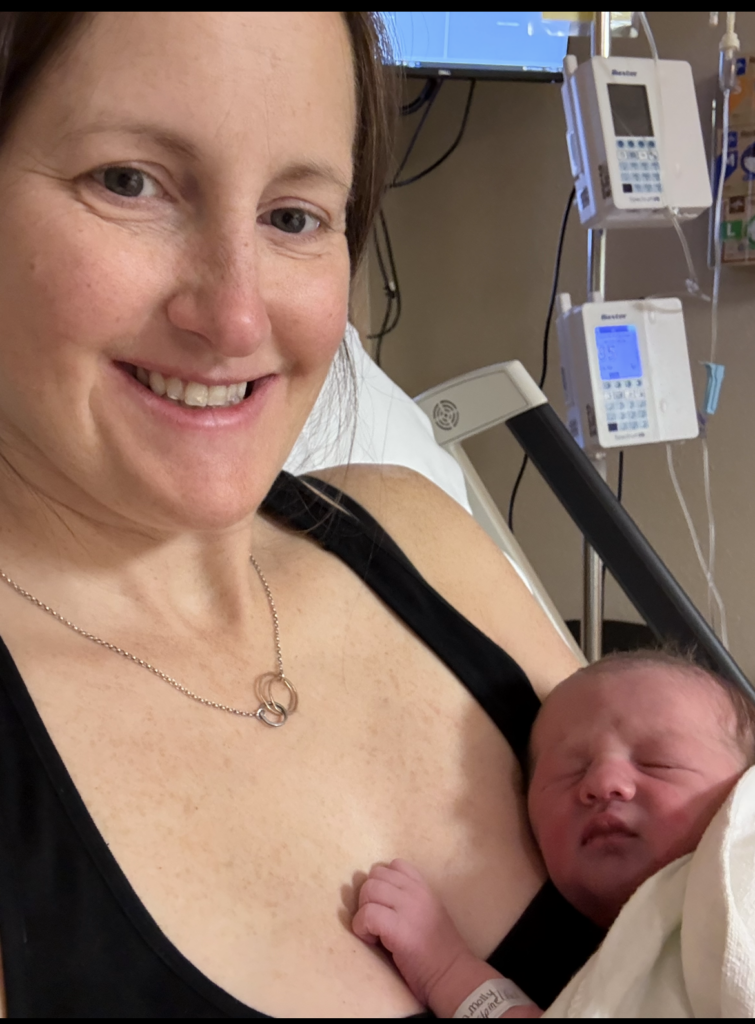
Healthcare Freefall: Telluride mother’s roadside birth underscores shrinking access to OB care in Colorado
Rachael Wright, Special to Colorado Politics
rachael.wright@coloradopolitics.com
Updated 5 minutes ago
Editor’s Note: Colorado’s healthcare system is entering a period of accelerating instability — a “tsunami,” as multiple leaders describe it — driven by collapsing hospital finances, shrinking Medicaid reimbursements, disappearing services and a political fight over who is responsible for...

Appeals court upholds Park County trophy hunting conviction
Michael Karlik
michael.karlik@coloradopolitics.com
Updated 1 hour ago
Colorado’s second-highest court clarified on Thursday that a defendant may stand convicted under the state’s trophy hunting laws if he abandons a bear carcass but returns later to remove the meat. Under Colorado law, it is a felony to detach...

Healthcare Freefall: Longer drives, fewer options for maternity care in Colorado
Thelma Grimes
thelma.grimes@coloradopolitics.com
Updated 1 day ago
Editor’s Note: Colorado’s healthcare system is entering a period of accelerating instability — a “tsunami,” as multiple leaders describe it — driven by collapsing hospital finances, shrinking Medicaid reimbursements, disappearing services and a political fight over who is responsible for...

Healthcare freefall: Breast cancer survivor shares strain of rural treatment travel
Hap Fry, Special to The Gazette
hap-fry@gazette.com
Updated 7 minutes ago
Editor’s Note: Colorado’s healthcare system is entering a period of accelerating instability — a “tsunami,” as multiple leaders describe it — driven by collapsing hospital finances, shrinking Medicaid reimbursements, disappearing services and a political fight over who is responsible for...

Judge grants partial injunction to GEO in fight against state health inspection law
Kyla Pearce
kyla.pearce@gazette.com
Updated 16 hours ago
A judge ruled Thursday that The GEO Group does not have to follow parts of a new state law requiring more frequent health and safety inspections at the U.S. Immigration and Customs Enforcement processing center in Aurora. Under the order...

Parker man faces 20 years to life for serial sexual assaults
Nicholas Fogleman
nicholas.fogleman@denvergazette.com
Updated 18 hours ago
A 25-year-old Parker man who sexually assaulted three women in 2025 pleaded guilty Wednesday and will serve 20 years to life in prison. Javier Rodriguez-Andrade pleaded guilty to charges stemming from three sexual assaults involving women ages 19 to 24. ...

Buttigieg performs best among Democrats against Rubio or Vance in possible 2028 contest: Poll
David Zimmermann
david-zimmermann@coloradopolitics.com
Updated 20 hours ago
Former Transportation Secretary Pete Buttigieg appears to be the Democratic Party’s best chance at winning the presidency against Secretary of State Marco Rubio or Vice President JD Vance in 2028, according to a poll released on Thursday. In hypothetical matchups...

Douglas County moves to Stage 1 fire restrictions following recent rain
Nicholas Fogleman
nicholas.fogleman@denvergazette.com
Updated 18 hours ago
Douglas County has downgraded its fire restrictions from Stage 2 to Stage 1 on Thursday following recent rainfall and moderate fire conditions, according to the Douglas County Sheriff’s Office. The change applies to unincorporated Douglas County, as well as the...

Divided appeals court upholds warrantless DNA collection in Colorado cold case, cautions of government overreach
Michael Karlik
michael.karlik@coloradopolitics.com
Updated 17 hours ago
Colorado’s second-highest court upheld the warrantless collection of a suspect’s DNA from a discarded soda can as constitutional on Thursday, while warning about potential abuse of DNA privacy in the absence of further guardrails. By 2-1, a three-judge Court of...

Democratic gubernatorial candidate Phil Weiser promises to appoint rural outreach director, water adviser
Marianne Goodland
marianne.goodland@coloradopolitics.com
Updated 17 hours ago
Democratic gubernatorial candidate and current Attorney General Phil Weiser told the Colorado Water Congress Thursday he intends to appoint a rural outreach director and a water policy adviser should he win the election in November. Weiser’s speech at the Steamboat...
PREV
PREVIOUS
Colorado's wild horse management efforts may be at risk due to funding shortage
March is Colorado Wild Horse Protection Month and Gov. Jared Polis recently issued a proclamation recognizing the state’s efforts to help better manage its wild horse populations, in conjunction with the federal Bureau of Land Management. But celebrating Colorado’s efforts to protect the wild horses may hit a snag due to the state’s lack of […]

House Democrat introduces measure to censure Lauren Boebert over 'pimp cane' remarks
A House Democrat wants lawmakers to censure Republican U.S. Rep. Lauren Boebert for allegedly making “racist and derogatory” comments about a Texas Democrat who interrupted President Donald Trump’s address to a joint session of Congress last week. U.S. Rep. Chrissy Houlahan, a Pennsylvania Democrat, introduced a resolution Monday that would condemn the Colorado lawmaker for […]