

SBA confirms it will move six offices out of Denver, other ‘sanctuary cities’
The Small Business Administration confirmed it is moving its office out of Denver and five other “sanctuary cities.”
SBA Administrator Kelly Loeffler disclosed that decision in February, though she didn’t specifically mention Denver or any other city in her memo.
On Thursday, Loeffler said the SBA will relocate its regional offices out of municipalities that do “not comply with U.S. Immigration and Customs Enforcement.” The Atlanta, Boston, Chicago, Denver, New York City, and Seattle offices will move to “less costly, more accessible locations that better serve the small business community and comply with federal immigration law.”
“Today, I am pleased to announce that this agency will cut off access to loans for illegal aliens and relocate our regional offices out of sanctuary cities that reward criminal behavior,” she said. “We will return our focus to empowering legal, eligible business owners across the United States — in partnership with the municipalities who share this Administration’s commitment to secure borders and safe communities.”
This week, Republican U.S. Rep. Jeff Crank said he wants the SBA to move its Denver office to Colorado Springs.
Crank, who represents Colorado Springs and El Paso County, extended the invitation in a letter to Loeffler.
“Sanctuary state and city policies have consequences, and moving the SBA out of Denver is a prime example,” Crank said in a statement. “It is important that SBA offices are located not in major cities-dominated by large corporations and run-away governments — but in locations where safety is prioritized, and innovation propels the local economy.”
Crank had questioned Denver Mayor Mike Johnston in a tense exchange during a House committee hearing Wednesday that focused on the city’s policies related to federal immigration enforcement.
Johnston denies Denver is a “sanctuary city.” Still, Crank and other Colorado Republicans say there’s no other way to describe the city’s refusal to cooperate fully with Immigration and Customs Enforcement agents and other officials seeking to enforce federal immigration law.
In his letter to Loeffler, Crank said Denver was a prime example of the cities whose policies the Trump administration was targeting.
“These cities, like Denver, are more interested in appeasing far-left radicals than protecting their constituents and refuse to cooperate with reasonable federal immigration policies,” Crank wrote. “It would be irrational for the federal government to continue forcing public servants to come to work in cities that are uninterested in keeping them safe.”
Crank added that Colorado Springs, the state’s second-largest city, was a “short move” from Denver, so relocating SBA operations there would minimize service lapses or staffing turnover. With its large military presence, the location would also give the agency a chance to recruit employees from the area’s large pool of military spouses, Crank added, in line with a Trump administration priority to hire military spouses.
A national group that works with small business urged Loeffler to reconsider the decision.
“Closing the Denver office of the SBA would likely make it more difficult for Denver’s robust entrepreneurial community to access valuable resources,” said Hunter Nelson, the Colorado director for Small Business Majority. “It’s also not clear why a city’s policies toward immigrants would disqualify it from serving small businesses well.”
The Small Business Administration operates regional offices in 56 states, territories and the District of Columbia, with most states — including Colorado — having a single office but a handful, including California and Texas, home to several.
Ernest Luning and Luige del Puerto contributed to this article.


The Latest: US military launches strikes against Iran in response to downing of American helicopter
The Associated Press
the-associated-press@coloradopolitics.com
Updated 7 hours ago
The U.S. military announced that it has begun strikes against Iran following the crash of a U.S. Army Apache helicopter off the coast of Oman. In a statement posted to social media, U.S. Central Command said the strikes would be...
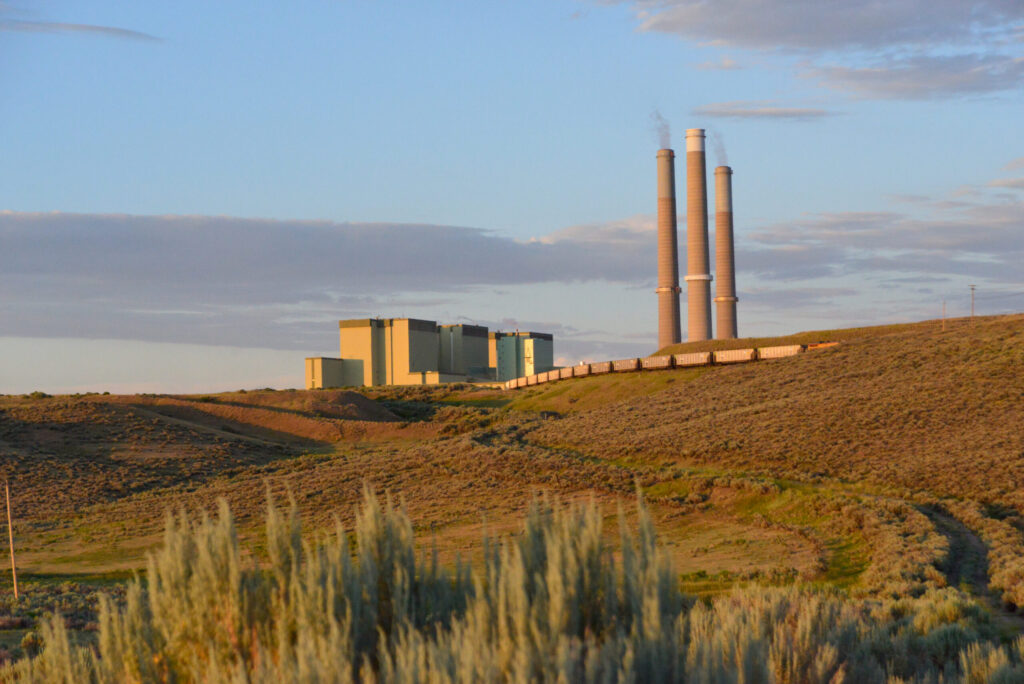
Colorado governor signs bill requiring pollution controls, cost reporting for extended coal operations
Scott Weiser
scott.weiser@gazette.com
Updated 8 hours ago
Gov. Jared Polis signed into law a bill in reaction to orders from the U.S. Department of Energy to keep older coal units online. The federal government’s instructions applied to Craig Unit 1 in Colorado, one of five coal units...

Mental Health Colorado names 2026 legislators of the year
Marissa Ventrelli
marissa.ventrelli@coloradopolitics.com
Updated 7 hours ago
Six state lawmakers have received recognition from the advocacy organization Mental Health Colorado for their work during the 2026 legislative session. “Mental Health Colorado’s work to pass laws, change practices, and build a movement depends on courageous advocates and bipartisan...
Colorado justices say judges can nearly eliminate parenting time without it being a ‘restriction’
Michael Karlik
michael.karlik@coloradopolitics.com
Updated 6 hours ago
The Colorado Supreme Court concluded last month that judges can reduce the number of days a parent spends with their child post-divorce to just above zero without it rising to the level of a “restriction” that requires more rigorous justification...

Geo Group sues Colorado over new immigration detention facility inspection law
Marissa Ventrelli
marissa.ventrelli@coloradopolitics.com
Updated 7 hours ago
The private prison company that operates the U.S. Immigration and Customs Enforcement center in Aurora has filed a lawsuit against Colorado to stop the enforcement of a new law requiring additional health and safety inspections of immigration detention facilities. The...

Trump will get another pick on influential federal appeals court
Jack Birle, Washington Examiner
jack.birle.washington.examiner@gazetteedit.wpenginepowered.com
Updated 9 hours ago
President Donald Trump will have the opportunity to nominate another judge to a key federal appeals court after one of the judges announced this week that he would take senior status. Circuit Judge Kurt Engelhardt, who was nominated to the...
Senate GOP cool to House push for third party-line budget bill: ‘Really not an option’
Ramsey Touchberry, Washington Examiner
ramsey.touchberry.washington.examiner@gazetteedit.wpenginepowered.com
Updated 9 hours ago
Senate Republicans are unlikely to take up a third budget reconciliation bill to advance more of President Donald Trump’s agenda. The development is sure to be unwelcome news for their counterparts in the House, who have advocated a third bill....

Cigna to pull out of individual health market, affecting thousands in Colorado
Marianne Goodland
marianne.goodland@coloradopolitics.com
Updated 11 hours ago
Another firm is withdrawing from the individual health insurance market, including for Colorado, effective Jan. 1, 2027. The move by Cigna Healthcare is part of the company’s overall plan to withdraw entirely from the Affordable Care Act market. It will...

Museum’s spring fundraiser lived up to its name | NONPROFIT REGISTER
Joanne Davidson Special to Colorado Politics
joanne-davidson-special-to-colorado-politics@coloradopolitics.com
Updated 11 hours ago
DENVER ART MUSEUM Denver News: One simple word – Delight — served as both the name and the vibe for the Denver Art Museum’s spring fundraiser. The June 5 indoor/outdoor bash was chaired by Christopher K.M. Leach, president of Contract Furnishings, and Chad Skrbina, president of Mad...

Dustin Zvonek pinpoints Colorado’s housing-first homelessness failures | The OpEdge Podcast
Tony Olivero
tony.olivero@gazette.com
Updated 11 hours ago
As homelessness continues to persist across Colorado, former Aurora City Councilman Dustin Zvonek paints a compelling picture of how the primary policy prescription may be enabling the root cause more than providing a permanent solution. In this OpEdge Podcast conversation...