

‘Sanctuary’ city hearing: Denver mayor faces Congressional oversight committee | LIVE UPDATES
Denver Mayor Mike Johnston, along with officials from Boston, Chicago and New York, will testify before the U.S House Oversight and Government Reform Committee at 10 a.m. EST (8 a.m. MST) today in Washington, D.C.
Jeff Hurd closes hearing with questions about Denver’s approach
A third Colorado Republican who doesn’t sit on the Oversight committee but got permission to join for Wednesday’s inquiry closed the roughly six-hour hearing with less confrontational questions than those posed by most of his GOP colleagues.
U.S. Rep. Jeff Hurd, a freshman lawmaker from Grand Junction, spent his allotted time asking Johnston about the effects of Denver’s migrant policies and whether the mayor thought some immigrants had moved into Western and Southern Colorado.
Johnston noted that the city has focused on connecting immigrants to work opportunities and asked Congress to help facilitate the process.
“So those folks that arrive, we think the most important thing is for them to be able to work and support themselves, pay their own taxes, pay their own rent, and so we’ve run work authorization clinics to help people get legal work authorization,” Johnston said.
Asked whether Johnston thinks Denver could be “reaching a breaking point” soon, Johnston said the city was in much better shape than last year.
“We actually are seeing dramatic drops in the arrivals since June of 2024, so we are not in a moment of crisis right now,” Johnston said. “We don’t have migrant encampments. We’ve closed all of our shelters. We’ve actually dropped our spending on migrant supports by 90% from 2024 to 2025, so our expenditures are down dramatically, and we’d love to see it stay that way.”
Johnston maintained that the city’s policies haven’t made Denver more vulnerable to crime, boasting that even as more than 42,000 immigrants have arrived in the city, crime has fallen dramatically.
In the last year, Johnston said, “Shootings are down 24%, homicide is down 17%, auto theft is down almost 30% — so we’ve seen all those major drivers go down at the same time we’ve had new folks arrive,” Johnston said.
Hurd said that constituents had expressed concern that immigrants who arrived in Denver have taken up residence in the 3rd Congressional District he represents and asked Johnston if that might be the case.
Johnston said it was entirely possible.
“Obviously, as you know, when folks arrive to Denver, whether they come from Carbondale or Grand Junction or Chicago, we don’t track where they go,” Johnston said. “It’s a free country. If they choose to move to Lakewood or to move to Pueblo, we wouldn’t know. We just provide the emergency services to make sure they’re not freezing in the streets. And so that’s our focus. But we don’t track anyone’s long term trajectory, whether they’re a native born or an immigrant.”
Jeff Crank calls Denver transfer policies ‘irresponsible,’ dangerous
In a heated exchange, U.S. Rep. Jeff Crank, a Colorado Springs Republican, told Denver Mayor Mike Johnston that the city’s policies around transferring detainees from the city jail to federal custody endanger law enforcement personnel and called on Johnston to change the procedures.
“In rare cases where ICE is able to apprehend an illegal immigrant in Denver jails, Denver forbids that transfer from taking place in the jail,” Crank said. He added that he recently completed a ride-along with sheriff’s deputies in El Paso County, where transfers to ICE take place in jail, with local officers present and the detainee in handcuffs.
His voice dripping with scorn, Crank said: “However, in Denver, you require that Denver Police Department release Tren de Aragua gang members to the quote, unquote streets, uncuffed, and hope that ICE agents are able to apprehend them on their own. That’s the hope.”
Added Crank: “Let’s just be honest, with no Denver Police Department officer there to assist if the situation turns violent, that’s irresponsible.”
Crank described the recent incident when an alleged Tren de Aragua gang member was transferred from Denver’s custody to immigration officials in a parking lot outside a Denver jail, which resulted in the suspect biting an ICE officer.
Johnston protested that out of more than 1,200 transfers to ICE, that was the first that resulted in violence, and said he’s meeting with immigration officials in coming weeks to discuss the policy.
Crank finished by asking Johnston if the mayor has apologized to the ICE officer who was assaulted during the transfer.
“I reached out to the ICE officers yesterday and I’ve asked to sit down with them to talk about this procedure, and how we can align systems to make sure no other officers get injured,” Johnston said.
Gabe Evans presses Johnston on statistics, city’s data gathering
U.S. Rep. Gabe Evans, a Fort Lupton Republican and former Arvada police officer, pressed Denver’s mayor on the city’s public safety record and policies with regard to keeping track of criminals’ immigration status.
Evans, who doesn’t sit on the Oversight committee but “waived on” to be able to question Mike Johnston, began by reeling off a string of statistics that portray Denver as less safe than other major cities. The lawmaker then asked the mayor if he knew how many murders in the city were committed by people who weren’t legally present in the country.
Johnston disputed Evans’ characterization of the city, saying crime is dropping, but acknowledged that Denver doesn’t keep track of immigration status when its officers interact with accused criminals.
“We don’t ask anyone’s status at point of arrest,” Johnston said. “We do not know someone’s status when they’re charged.”
Evans appeared to have been prepared for that answer, as an aide displayed an enlarged Denver Police Department training bulletin, followed by the standard FBI fingerprint form, which includes spaces for a suspect’s country of origin and citizenship status.
“I’ve heard being a cop in the Denver metro area that police officers in Denver are not are being told not to fill out those mandatory fields in the FBI fingerprint card, which could potentially indicate why you’re unsure of how many of these crimes are being committed by illegal immigrants in your city,” Evans said.
Johnston responded that the city didn’t intend to change its procedures.
“Right now, under city ordinance, we do not ask someone’s status at point of contact, and we that does not prejudice in any way our prosecution,” he said. “We believe it doesn’t matter.”
Marjorie Taylor Greene accuses mayors of treason
After delivering a lengthy speech about immigration and crime followed by asking the four mayors whether they work with federal immigration authorities, U.S. Rep. Marjorie Taylor Greene, a Georgia Republican, declared that she considers the mayors’ actions to amount to treason.
“Mayor Johnston, will you work with ICE to protect your city?” Taylor Greene asked Denver’s mayor.
“We do work with ICE right now, congresswoman,” Johnston replied, adding that the city regularly communicates with immigration agents, who pick up immigrants when they’re released from custody.
Asked whether Denver will “end sanctuary city policies,” Johnston demurred.
“We think the policies that we have right now allow us to work with ICE and to stop crime, and we’ll keep doing that,” Johnston said.
Taylor Greene elicited similar responses from the mayors of New York, Chicago and Boston before closing her turn at the microphone in dramatic fashion.
“According to the U.S. Constitution, giving aid and comfort to the enemies of the United States is an act of treason, and those that violate that should be dealt with,” she said.
Under federal law, treason is considered a capital crime and is punishable by death.
Will you work with ICE?
U.S. Rep. Marjorie Tayler Greene, R-Georgia, asked if the mayors from Denver, Chicago, Boston and New York will work with ICE.
Denver Mayor Mike Johnston, again, stressed that local authorities do work with ICE and has alerted them about immigrants more than 1,200 times.
When asked again if he will stop operating as a sanctuary city, Johnston reiterated that current policies in Denver are working and will remain in place.
The mayors of New York, Boston and Chicago also stressed their local authorities do work with ICE and other federal agencies.
Asking about immigration status
U.S. Rep. Biran Jack of Georgia asked the mayors if they see value in asking about immigration status when apprehending possible criminal suspects.
Denver Mayor Mike Johnston said, “We don’t ask someone’s status when we first contact them because it’s not relevant in the charges we are pursuing.”
Boston Mayor Michelle Wu and Chicago Mayor Brandon Johnson stressed throughout the hearing that asking immigration status prevents local law enforcement from solving crimes because it creates fear and causes illegal immigrants not to come forward to report crimes.
New York Mayor Eric Adams was the solo “yes” vote to the question.
Keeping sanctuary status?
U.S. Rep. Nick Langworth, a Republican from New York, asked the mayors if they would continue to keep the sanctuary status they currently follow.
Denver Mayor Mike Johnston said, “The system we have works and we will keep it.”
The mayors from Boston, Chicago and New York without directly responding to the question, said crime is decreasing and current policies are working.
Is it racial profiling?
U.S. Rep. Rashida Tlaib, a Democrat from Michigan, asked the panel if the deportation plans being implemented by the Trump administration is racial profiling and what they think.
Denver Mayor Mike Johnston answered that a person’s status should never be relevant when they are at a library to check out a book, at a hospital seeking treatment or in school seeking an education.
Luna says she’s referring mayors for criminal prosecution
U.S. Rep. Anna Paulina Luna, a Florida Republican, told the mayors she was referring all four to the U.S. Department of Justice for criminal prosecution based on their responses to her questions.
Waving the referral documents, Luna said: “To me, after this line of questioning, it’s very clear that these policies that you have all implicated are active and alive and well in your cities are in direct violation” of federal law
“You all speak about a broken immigration system, and yet here you guys are aiding and abetting in that entire process,” Luna said, adding that she didn’t think the mayors were “bad people” but that they are “ideologically misled.”
“I’m not doing that in an effort to bully you guys,” Luna concluded. “But I do believe that your policies are hurting the American people.”
Before dropping the boom, Luna asked Denver Mayor Mike Johnston if he said at one point that he’d be willing to go to jail to prevent the Trump administration’s deportation efforts.
“I did say that I’d be wiling to stand up for our residents,” Johnston responded. “And the context was that was the point when the administration was threatening to deploy the U.S. military to the streets of our cities to pull kids out of schools and churches.”
Luna interrupted Johnston to ask the committee chairman to enter a news article into the record that reported Johnston saying he was willing to use civil disobedience and, if necessary, go to jail to stop deportations.
‘The only one with something to answer for is Donald Trump’
U.S. Rep. Ayanna Pressley, a Democrat from Massachusetts, said the purpose of the committee is oversight. “The only one with something to answer for is Donald Trump.”
Pressley said, “A dark threat looming over Boston is the racist and xenophobic immigrant policies coming from the Trump administration.”
Boston Mayor Michelle Wu agreed that the threat of mass deportations is making people the country depends on afraid.
“Everything we do depends on immigrant residents and their contributions,” Wu said. Later she stressed that Trump’s policies are, “
having a huge impact on their daily rights as they are trying to do what’s right for their kids as they pursue the American dream.”
Questioning the Biden Administration
More than 320,000 unauthorized immigrants arrived in Chicago, Denver and New York City over the past four years, the mayors from these cities said. Boston’s Wu noted that she does not ask about an individual’s immigration status and therefore did not have a statistics to share.
The cost to New York City was a staggering $7 billion, Adams said. In Denver, those costs were roughly $90 million.
After acknowledging that these mayors had “done the best” they could, U.S. Rep. William Timmons, R-South Carolina, pressed them on whether they had ever publicly attacked former President Joe Biden and his policies.
“Going forward each of you need to cooperate to the fullest extent of your ability,” Timmons said.
Losing federal funding
U.S. Rep. Suhas Subramanyan, D-Virginia, questioned the panel on how removing grant funding to continue to maintain sanctuary city status would affect public safety.
Denver Mayor Mike Johnston said that losing funding would affect public safety, from keeping up with bridges to paying for education.
Subramanyan commended the four mayors for taking on the immigrants being bussed to the blue cities from areas such as Texas, saying they are “making the best of a difficult situation.”
Subramanyan introduced U.S. House Bill 32, which he said would allow the Trump administration to cut federal funding to sanctuary cities.
Republican Nancy Mace fires off yes-no questions
U.S. Rep. Nancy Mace, a South Carolina Republican, peppered the mayors with a series of rapid-fire, emotionally charged yes-or-no questions and cut off their responses when any attempted to elaborate.
“Do you acknowledge breaking into our country is a crime? Yes or no?” Mace asked in the first round. Denver Mayor Mike Johnston said it depended how a migrant entered the country.
“Mayor Johnston, when an illegal alien rapes a woman, do you believe you’re on the right side of history? Yes or no?” Mace asked. Johnston answered that he would “charge and prosecute them.” In response to a follow-up question about an “illegal alien who molests a kid,” Johnston said, “I proecute folks that commit crimes like that”
Asked whether his city would “honor an ICE detainer on an illegal alien who rapes kids,” Johnston replied, “If there’s a criminal warrant, we’ll help pick them up.” The distinction, between civil detainers and criminal warrants is at the core of the dispute over whether local entities are complying with federal law, with the mayors insisting that the law and courts are on their side in requiring duly executed warrants.
Johnston sidestepped a complete answer when Mace amped up the rhetoric, asking, “Do you all hate Donald Trump more than you love your country?”
“I love my country,” Johnston said, in a response similar to those from his fellow mayors.
Before zeroing in on Boston’s mayor for a series of final questions. the combative Mace — a former prosecutor — asked Johnston if he was “willing to go to jai for violating federal law,” to which he replied that Denver doesn’t violate federal law, adding that the city “explicitly” follows a statute cited by a prior Republican questioner.
‘You’ve violated the law’
U.S. Andy Biggs, R-Arizona, brought show-and-tell placards emblazoned with federal statutes, saying sanctuary city laws means all four mayors have violated the law.
“You’ve got to realize what your criminal culpability is,” Biggs said.
Biggs said in civil cases when sanctuary cities are not turning over people who have been allotted due process, they are in violation of their own sanctuary city policies.
Here on the advice of counsel
U.S. Rep. Glen Higgins, R-Louisiana, asked all the mayors if they are attending Wednesday’s hearing on advice of counsel. All four mayors confirmed they had sought legal advice ahead of the hearing.
Higgins became impassioned as he listed US citizens who have been victims of crimes committed by criminal illegal immigrants. Higgins told the four mayors their policies are helping those committing crimes, stressing that they are not working with ICE.
“We have had enough,” Higgins said. “America’s fed up with this betrayal of oath, and you’ll be held accountable. One of you said you’re willing to go to jail. We might give you that opportunity.”
Mayors should be charged with crimes
U.S. Rep. James Palmer, R-Alabama, said that he would recommend obstruction of justice charges against “sanctuary city” mayors who do not comply with federal law.
Denver Mayor Mike Johnston pushed back on questioning, reiterating that Denver does and cooperates with federal officials on a variety of law enforcement issues.
“We are absolutely upholding the laws of the United States,” Johnston said.
Johnston again stressed that when the city finds out about criminal activity, they “actively and aggressively” pursue it.
Palmer said charges against the mayors should be investigated further given they are deciding which federal laws to follow, and which ones not to
Should U.S. citizens be concerned?
U.S. Rep. Maxwell Frost of Florida said the Trump administration is intimidating members of Congress when just trying to educate people about their constitutional rights.
He asked panel member David Bier, research fellow for immigration studies at the Cato Institute, how this impacts U.S. citizens.
“I have documented over 155 US citizens who’ve been targeted by detainer request, and they want to say we’re going to just take discretion away from state and local governments over detainer requests, even when someone is clearly a US citizen,” Bier said. “’Here’s my birth certificate’. Doesn’t matter. They’re going to disregard it. And so yes, I am well aware of the threat this administration posed to come from what we saw last few weeks.
When asked if U.S. citizens should be “scared of mass deportation” capaigns, Bier responded, “Oh, absolutely.”
Honoring ICE detainers
U.S. Rep. Michael Cloud of Texas told the panel that the federal government is simply “asking you to take people already in your custody and hand them to federal law enforcement.” Cloud stressed that when sanctuary cities release immigrants in federal custody, it costs taxpayers more money because it takes time for authorities to go and “rearrest them.”
Cloud said it used to be a bipartisan issue that is now putting law enforcement lives in danger.
Cloud asked how much in FEMA dollars is going to immigration issues.
New York Mayor said $80 million. In Denver, Cloud stressed over $30 million, $32 million in Chicago and $29 million in Boston.
Should the United States have immigration laws?
Wisconsin U.S. Rep. Glenn Grotham asked all the mayors if there should be immigration laws in the United States.
While Denver Mayor Mike Johnston was cutoff in his response, he said he agrees immigration laws are needed.
“We’re serving people who are seeking asylum,” Johnston said.
New York’s Mayor Eric Adams said yes while noting the borders should be secured.
Chicago Mayor Brandon Johnson said “Our immigration system is broken with no comprehensive reform since 1986.”
Boston Mayor Michelle Wu answered, “Yes. I do believe we need, cities everywhere, need comprehensive and consistent pathways to citizenship. At the same time, I do not support mass deportation.”
How much does it cost?
When asked how much it costs to deal with illegal immigrants, Chicago’s mayor did not provide a number, but said it is is approximately 1% of the budget.
In Denver, Mayor Mike Johnston said $79 million.
In New York, the four-year costs is over $6.9 billion.
Boston’s Mayor Michelle Wu refused to provide a number, stating her city does not have that kind of accounting because the city does not ask for immigration status.
Struck by Republican positions – Federalism vs. local control
U.S. Rep. Ro Khanna, a California Democrat who represents Silicon Valley, said he was struck by the Republicans’ position on immigration enforcement considering the party otherwise privileging state and local control. He asked the mayors to describe how they enforced mask mandates during the pandemic, including whether they would have had local law enforcement turn over violators to federal authorities.
“Do you see, Mayor Wu, any difference between a federal government asking you to enforce laws like ICE is doing, versus the federal government asking you to enforce a mask mandate, or, frankly, to enforce, to enforce gun laws that may not be what your local city department is focused on,” Khanna said to Boston’s mayor.
He asked if “the real issue here” was not about immigration but about federalism.
“My view is that we ought to have local government be able to use their police officers for their priorities,” Khanna said. “That, in essence, is federalism, and it actually used to be the conservative Republican position”
Sanctuary cities are ‘welcoming cities’
Republican U.S. Rep. Scott Perry of Pennsylvania pressed Denver Mayor Mike Johnston on whether Denver is a “sanctuary city,” a label the mayor said doesn’t apply.
“We call ourselves a ‘welcoming city,'” Johnston responded.
“Who are you welcoming? Are you welcoming criminals?” Perry asked.
Johnston said the city doesn’t “vet” anyone who arrives from Chicago or elsewhere at the airport or some other way.
Johnston stressed that Denver does not call “anyone” specifically to Denver, but when “folks arrive, we provide the same services and access” for them to succeed. Again, Johnston stressed that if immigrants break the law, the city takes action.
Democratic U.S. Rep. Raja Krishnamoorthi of Illinois gave Chicago Mayor Brandon Johnson a chance to play municipal booster in response to a remark by President Donald Trump comparing the Windy City to Afghanistan.
The two Illinoisians ran through a list of accolades, including Chicago being named America’s best big city for the eighth year running and recently announcing $20 billion investments to build out a quantum hub, researching cutting-edge technology.
Denver Mayor – ‘We do not have the capacity for our law enforcement to be doing federal immigration enforcement’
In response to a question from U.S. Rep. Stephen Lynch, a Massachusetts Democrat, about the “tension” between federal and local law enforcement, Denver Mayor Mike Johnston said he believes there is a federal system that has federal obligations and state and local authorities with their own obligations.
“We think, as (Boston) Mayor Wu said, that our officers are uniquely prepared, trained and ready to enforce local law and to keep our city safe,” Johnston said. “We want to focus on that. We do not have the capacity for our law enforcement to be doing federal immigration enforcement, but we are wanting to be partners in making sure we’re pulling violent criminals off the street.”
Denver mayor faces tough questions from committee
Denver policies are clearly a target of the board, as the committee gets underway with several questions directly aimed at Denver Mayor Mike Johnston.
In a heated exchange with U.S. Rep. Jim Jordan, Johnston disclosed that a Tren de Aragua gang member held for more than a year released last week had to be tased by ICE members.
Jordan called Johnston’s testimony less than truthful when describing the Denver’s actions as an effort to keep residents safe.
“That’s a lie,” Jordan said, noting the city’s actions did not protect federal agents.
According to a 9News Report, ICE notified Denver that it wanted Abraham Gonzalez held for 48 hours in an email sent about 90 minutes before his release.
Boebert grills Mayor Mike Johnston on Denver policies
In her questioning, U.S. Rep. Lauren Boebert said Denver Mayor Mike Johnston has blamed state law for Denver’s inability to coordinate with immigration officials.
Boebert asked whether Johnston will demand that the state law be repealed, but Johnston declines.
“We do coordinate with ICE,” Johnston replied, adding that the city hands over detainees when immigration officrs have a warrant, as the law requires, but Boebert asks whether Denver works with the feds before warrants have been issued.
Boebert pressed on, asking Johnston whether a 2017 Denver ordinance prohibits city employees from coordinating with federal immigration authorities and would be fired for talking to ICE. She asked whether city employees would be fired for talking to other federal agencies, such as the Environmental Protection Agency or Health and Human Services.
“Right now, congresswoman, we don’t ask people’s status,” Johnston said.
Boebert asked whether Johnston signed a $2 million contract to pay “Joe Biden’s former lawyer to cover your ass” at this hearing. Johnston said Denver’s city council approved a contract for legal advice.
U.S. Rep. Lauren Boebert asks unanimous consent to submit news articles to the committee’s record describing Denver’s “sanctuary” status and policies.
Boebert will be among first questioners
Word from a congressional source is that Lauren Boebert, a committee member, will be among the very first lawmakers to question the mayors. According to House protocol, the three other Republicans from Colorado who were allowed to “waive on” to the committee for today’s hearing — Reps. Gabe Evans, Jeff Crank and Jeff Hurd, all serving their first term — will get their chance to grill the mayors after all the committee members present have had their chance, so might not get their time for hours.
The mayors each get five minutes for their opening statements, and House members will each get five minutes to ask their questions. Including the members added to the committee for this hearing, Chairman Jim Comer, a Kentucky Republican, said House Oversight has 60 members today. If every one of them takes their alloted time, this hearing could last for at least five hours.
Should that criminal be turned over to ICE?
In wrapping his time, Chairman James Comer said, “The point we’ve got to iron out today – Is federal law to turn over illegal criminals to ICE. Many of you have said publicly that you will obstruct that.”
‘Are you a sanctuary city?’
Chairman James Comer dives right in, asking Mayor Mike Johnston if Denver is a sanctuary city. While Johnston began to speak, saying “folks use that term differently.”
Comer cut off the mayor, “I take that as a yes.”
Boston Mayor Michelle Wu – ‘Immigrants are becoming afraid’
In her opening statement, Boston Mayor Michelle Wu said Boston is the safest city in the nation because they are safe for everyone and the Trump administration’s mass deportation plans are “undermining that trust.”
“This federal administration’s approach is undermining that trust. In the past month, I’ve met with residents and faith leaders centers and places of worship, asking my constituents what they want Congress to know, and what I heard over and over again was fear and frustration,” she said. “I spoke with pastors whose pews are half empty on Sundays, doctors whose patients are missing appointments, teachers whose students aren’t coming to class, neighbors afraid to report crimes in their communities and victims of violence who won’t call the police. This federal administration is making hard working tax paying God fearing residents afraid to live their lives.”
Cato Institute: ‘Reasonable restrictions on ICE do not increase crime rates’
David J. Bier, the director of immigration studies at the Cato Institute, criticized the administration’s mass deportation plan, arguing it poses a greater threat than any city policy.
“Reasonable restrictions on ICE do not increase crime rates,” he said, citing data that, he said, shows immigrants have a lower crime rate than the American population.
Chicago Mayor Brandon Johnson – ‘Actions that amplify fears of deportations make Chicago more dangerous’
In his opening statements to the committee, Chicago Mayor Brandon Johnson called out the Trump administration, without naming the White House, saying actions that “amplify fears of deportations make Chicago more dangerous.”
“Violent crime is down in Chicago the end in 2024 with its lowest homicide rate in five years, the city is also safer because of our welcoming city ordinance, that law makes sure that the city’s police resources are focused on our local priorities,” he said. “In fact, the 40 years of Chicago’s leaders have recognized that our policies toward civil immigration help to prevent and solve crimes. Put simply any actions that amplify fears of deportations make Chicago more dangerous. Those fears cause witnesses and victims to avoid cooperating with police, the cooperation of all people, regardless of their immigration status, is essential to achieving the city’s goals of reducing crime and pursuing justice for victims.”
Denver Mayor Mike Johnson – ‘We had to respond immediately’
With buses dropping hundreds of immigrants off daily in Denver — with little-to-no notice or coordination — Johnston wasted no time framing the humanitarian crisis in moral terms.
“Denver faced the fundamental question,” Johnston told committee members. “What our community would do with a mom and two kids dropped on the streets of our city with no warm clothes, no food, and no place to stay, while maintaining public safety in the city.
“This was not a question of immigration reform; it was a question of what was the best course forward for the people of Denver and their safety and security. It was also a question of right versus wrong.”
The city’s response, Johnston said, was about treating “every individual in our community with compassion.”
Part of that strategy was implementing programs, which have since been wound down, to expand temporary housing and assisting immigrants file asylum and work permits.
With immigrants arriving in frigid conditions wearing little more than sweatshirts and slippers, Johnston said it was not a time to debate the nation’s immigration policies.
“We had to respond immediately,” Johnston said. “We were not going to leave kids on the side of the road. It was a moment to step up and act. And we did.”
Johnston added: “Denver did not create the problem, but we developed solutions.”
New York Mayor Eric Adams addresses the committee
New York Mayor Eric Adams, the first to testify, offered a vigorous defense of his city’s “sanctuary policy,” though he qualified that it doesn’t mean New York is a “haven” for criminals and it also doesn’t mean the city will not adhere to federal immigration laws. But, he said, New York cannot have a situation in which immigrants staying in the U.S. illegally are afraid to seek medical care or report a crime. These situations will just exacerbate things, he said.
“I’m here today to testify on how New York City can continue to reduce crime, even as a sanctuary city. To be clear, a sanctuary city classification, does not mean a city will ever be a safe haven for violent criminals. It also does not give New York City the authority to violate federal immigration laws. To the contrary, New York City can continue to reduce crime, even as a sanctuary city.”
Adams said comprehensive immigration reform is long overdue.
Republicans from Colorado allowed to join committee
Freshmen U.S. Reps. Jeff Hurd, Jeff Crank and Gabe Evans have been “waived on” to the panel for the hearing.
Watch coverage from the hearing and get updates here:
Hearing is underway
At 8:03 a.m., The full committee hearing on sanctuary city is called to order by Chairman James Comer of the House Oversight Committee.
Comer said the immigration crisis is a “deliberate” choice made by the Biden Administration.
Comer said sanctuary cities are only creating “sanctuary for criminals.” Sanctuary cities are creating barriers for the Trump Administration to carry out plans to fix the country’s immigration crisis.
Republican target
As reported by the Associated Press, Republicans have primarily targeted four US cities for “sanctuary city” policies. The mayors of those cities, Mayors Michelle Wu of Boston, Brandon Johnson of Chicago, Mike Johnston of Denver and Eric Adams of New York are set to appear Wednesday in front of the House Committee on Oversight and Government Reform.
While there is no strict definition for sanctuary policies, cities and states adopting them generally limit cooperation with Immigration and Customs Enforcement. ICE enforces immigration laws, but often relies on help at the state level and from police and sheriffs.
On the hot seat
When Denver Mayor Mike Johnston joins three other big city mayors Wednesday to testify before a House committee’s looking into “sanctuary” cities, U.S. Rep. Lauren Boebert and her three Republican colleagues from Colorado plan to put the Democrat on the hot seat.
Boebert, a third-term lawmaker from Windsor and a member of the House Committee on Oversight and Investigations, is assured of a chance to grill Johnston. Additionally, the state’s other GOP representatives — freshmen U.S. Reps. Jeff Hurd, Jeff Crank and Gabe Evans — have asked to “waive on” to the panel for the hearing.
If granted, the procedure would would every Republican member of Congress from Colorado a turn at the microphone for the high-stakes inquiry.
“Tomorrow in the hearing, we are going to highlight how these sanctuary city and state policies fail public safety, make America less safe, and why we need to continue the path forward to build safe communities that we all deserve,” said Evans, an Army veteran and former Arvada police officer, at a press conference in Washington on Monday.
Singled out by Chairman James Comer, Denver mayor to appear in Congress
In a Jan. 27 letter to Johnston, Committee Chairman Rep. James Comer had called Johnston out by name.
“Denver is a sanctuary jurisdiction under Colorado law, and Mayor Mike Johnston confirmed that he was prepared to go to jail to protect illegal aliens from federal immigration authorities,” Comer said.
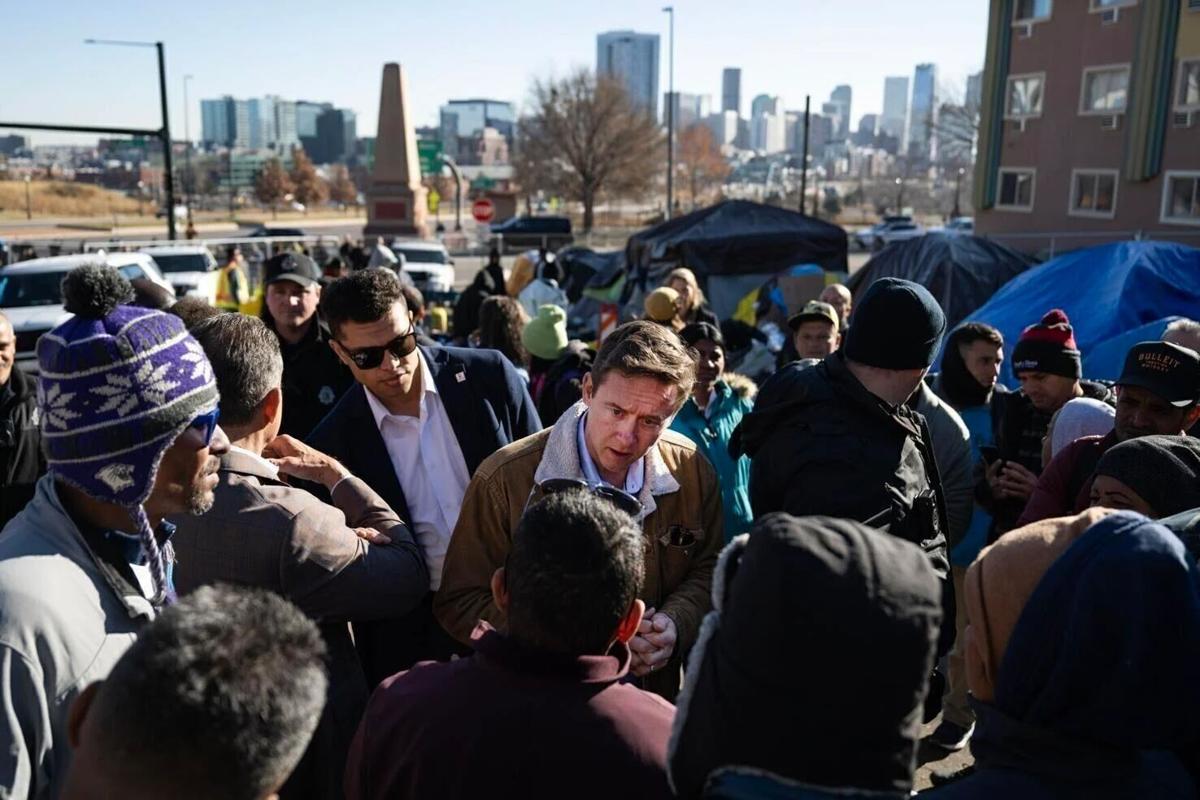
Denver Mayor Mike Johnston, center, talks with immigrants during an encampment sweep in Denver in January.
the Gazette

Along with Comer and ranking committee member Rep. Gerald E. Connolly, R-Va., the 47-member committee includes Colorado Rep. Lauren Boebert, with whom Johnston has sparred on social media regarding the city’s “Newcomers Playbook,” a guide to welcome immigrants arriving in Denver.
Sources: Johnston is optimistic about Denver’s ‘story’
Sources close to the mayor said Johnston is “optimistic” and that he looks forward to telling Denver’s “story” about how it “met a sudden immigrant crisis in a way that was faithful to all the best traditions of Denver.”
In February, Denver hired the law firm of Covington and Burling, LLP, to represent the city in the upcoming congressional inquiry. Under the one-year contract with a maximum cap of $2 million, the city will pay lawyers a “discounted” rate of $1,000 per hour.
As of yet, the city has not disbursed money to the law firm, nor does it have an estimate of the number of hours billed.
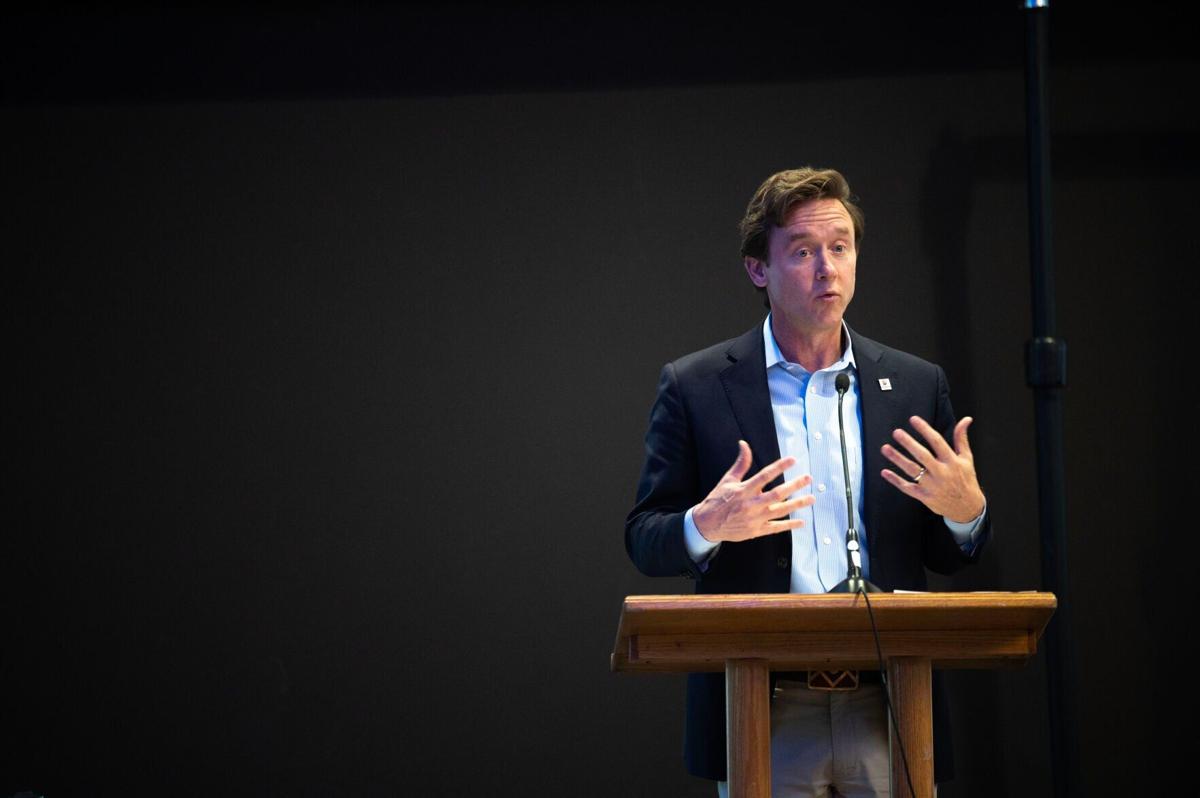
FILE PHOTO: Denver Mayor Mike Johnston gives remarks before presenting the David J. Cole Denver Public Safety Citizen’s Award at the 14th annual Public Safety Luncheon at the Curtis Hotel on Wednesday, Nov. 20, 2024. Johnston will head to Washington D.C. this week to testify before the U.S. House Oversight and Government Reform Committee. (Stephen Swofford, Denver Gazette)
Stephen Swofford,Denver Gazette

Sources also said Denver has produced a “substantial number” of documents responsive to the congressional panel’s request. The sources said none had been redacted.
The committee is reviewing those documents, the sources added.
How did Denver mayor’s get here?
Johnston’s appearance before Congress seems inevitable, given the trajectory of the unfolding crisis, the city’s response, the activities of a Venezuelan gang that had taken over two Aurora apartment complexes and Trump’s return to the White House.
Amid the crisis, Johnston took on the role as the de facto spokesperson for the interior cities, as he appeared before national TV and visited the nation’s capital to press their case.
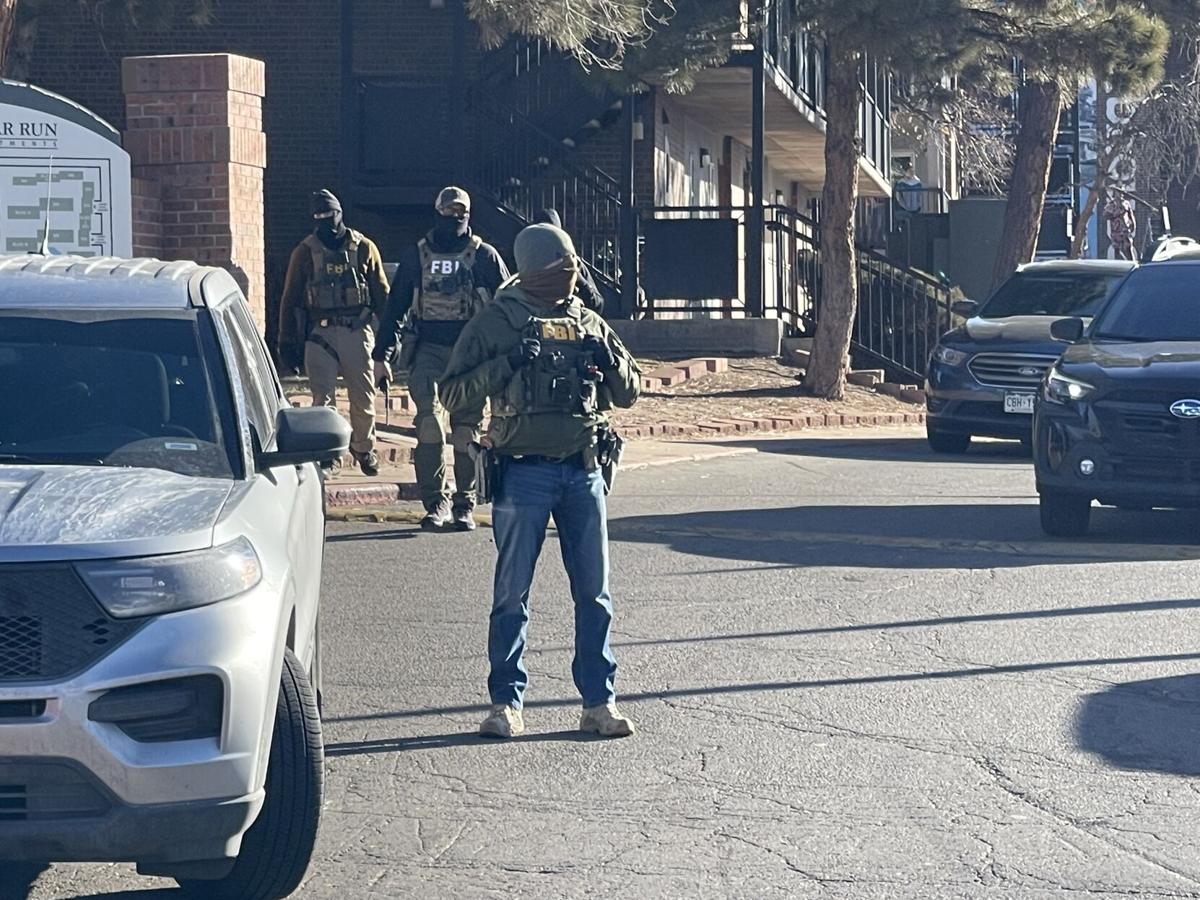
FILE PHOTO: FBI agents at the Cedar Run Apartments, 888 S. Oneida St., Denver, Feb. 5 during an ICE illegal immigration raid.
Nicole C. Brambila/Denver Gazette

In pushing for federal action on illegal immigration, Johnston often pleaded to Congress and the White House for more funding for cities grappling with the crisis, work authorization and a “coordinated entry program.”
The mayor notably stayed clear of talking about “border security,” an omission that served to underscore the ideological lenses with which Democrats and Republicans view the border crisis.
‘A border city’
In the two years since 90 immigrants were dropped off downtown and left to wander in the cold, more than 40,000 immigrants have come to Colorado’s largest city. Although the city has received some state and federal funding, Denver taxpayers have assumed the bulk of the nearly $90 million cost.
Bus, plane and train tickets purchased for immigrants to travel elsewhere suggest that about half have stayed. That’s the equivalent of adding a city the size of Golden.
Historically, immigrants typically chose gateway cities like Chicago, Los Angeles and New York City. Early on, the prevailing theory in Denver for the city’s draw was its proximity to El Paso, Texas, its pivotal transportation hub and its status as a “sanctuary city.”

Federal agents execute an ICE warrant at apartments in Denver during a sweep Feb. 5 for illegal immigrants who had committed additional crimes in the U.S.
The Denver Gazette

Generally speaking, a sanctuary city is a designation given to municipalities and counties that establish policies to discourage local law enforcement from reporting an individual’s immigration status to federal authorities.
State and city officials have long denied this.
But it’s the reason lawmakers called Johnston to Washington D.C.
While local officials were struggling to understand why Denver had emerged as a destination for immigrants at the border, authorities in El Paso Texas pointed to another reason — the Colorado city’s promise of free shelter and onward travel.
“There’s a pull factor created by this, and the policies in Denver for paying for onward destinations,” Irene Gutiérrez, executive director of El Paso County Community Services in west Texas, has said.
The seeds were planted before Johnston was sworn in as mayor roughly six months after Denver began seeing an influx of immigrants, who illegally crossed the southern border into El Paso, Texas. Under the leadership of former Denver Mayor Michael B. Hancock, city officials decided to assume the responsibility for the unfolding humanitarian crisis.
Johnston continued this policy after being sworn in to office in July 2023.
‘Caught between a rock and a hard place’
Political consultants — on both sides of the aisle — said that, given the entrenched partisanship in Washington, Johnston is unlikely to come out of the hearing unscathed.
But if he is able to hold his ground and stay cool under pressure, that could be a win, said Mike Dino, a Democratic political analyst and principal at Patton Boggs LLP.
“I don’t think he’s going to get out of it with an upper hand in what is probably a stacked deck,” said Dino.
But having already made unsuccessful attempts for Colorado governor in 2018 and the U.S. Senate in 2020, the hearing could further shape Johnston’s political stature.
“Ultimately, I think the mayor has a good story to tell,” Dino said.
With Johnston’s policies taking center stage, it remains to be seen whether he would quibble over what constitutes a “sanctuary city” or move beyond the label, Dino said and Dick Wadhams, a Republican political consultant and former Republican state chair, said.
Johnston’s administration has hired a law firm — at a cost capped $2 million for a year — to help him prepare for the hearing.
Wadhams recognized the balancing act Johnston would have to pull off.
“He’s caught between a rock and a hard place,” Wadhams said.
But Wadhams was quick to add that Denver’s welcoming stance likely worsened a problem that traditionally had been felt in border communities.
“Denver has become a border city due to the policies Mayor Johnston has implemented,” Wadhams said.
Reporters Nico Brambila, Ernest Luning and Deborah Grigsby contributed to this article.

The Latest: US military launches strikes against Iran in response to downing of American helicopter
The Associated Press
the-associated-press@coloradopolitics.com
Updated 6 hours ago
The U.S. military announced that it has begun strikes against Iran following the crash of a U.S. Army Apache helicopter off the coast of Oman. In a statement posted to social media, U.S. Central Command said the strikes would be...
Colorado governor signs bill requiring pollution controls, cost reporting for extended coal operations
Scott Weiser
scott.weiser@gazette.com
Updated 6 hours ago
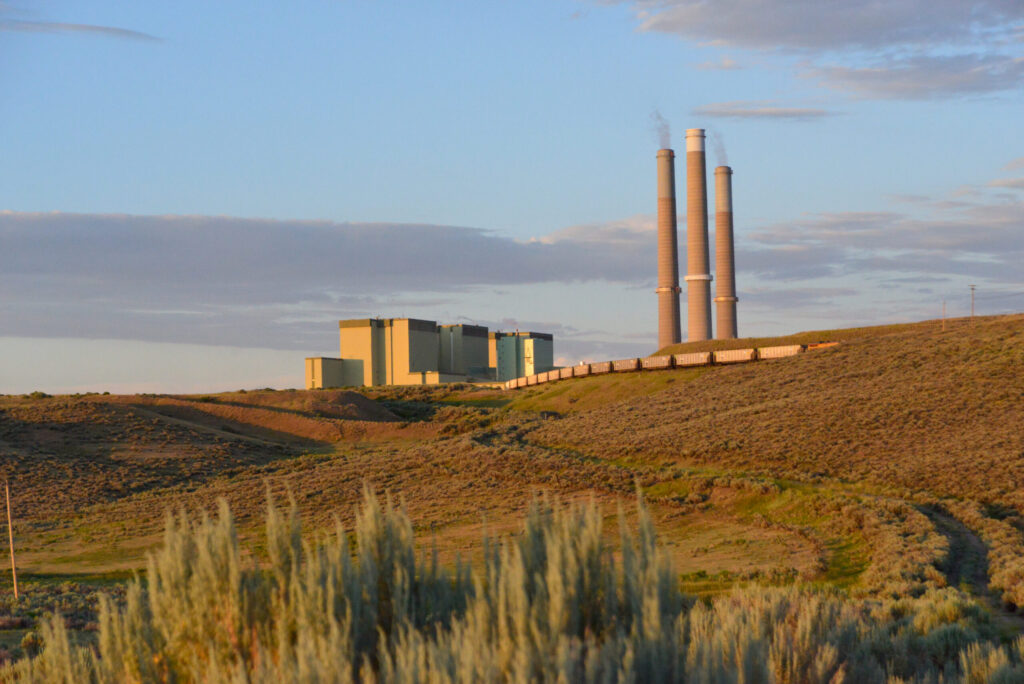
Gov. Jared Polis signed into law a bill in reaction to orders from the U.S. Department of Energy to keep older coal units online. The federal government’s instructions applied to Craig Unit 1 in Colorado, one of five coal units...

Mental Health Colorado names 2026 legislators of the year
Marissa Ventrelli
marissa.ventrelli@coloradopolitics.com
Updated 5 hours ago
Six state lawmakers have received recognition from the advocacy organization Mental Health Colorado for their work during the 2026 legislative session. “Mental Health Colorado’s work to pass laws, change practices, and build a movement depends on courageous advocates and bipartisan...
Colorado justices say judges can nearly eliminate parenting time without it being a ‘restriction’
Michael Karlik
michael.karlik@coloradopolitics.com
Updated 5 hours ago
The Colorado Supreme Court concluded last month that judges can reduce the number of days a parent spends with their child post-divorce to just above zero without it rising to the level of a “restriction” that requires more rigorous justification...
Geo Group sues Colorado over new immigration detention facility inspection law
Marissa Ventrelli
marissa.ventrelli@coloradopolitics.com
Updated 5 hours ago
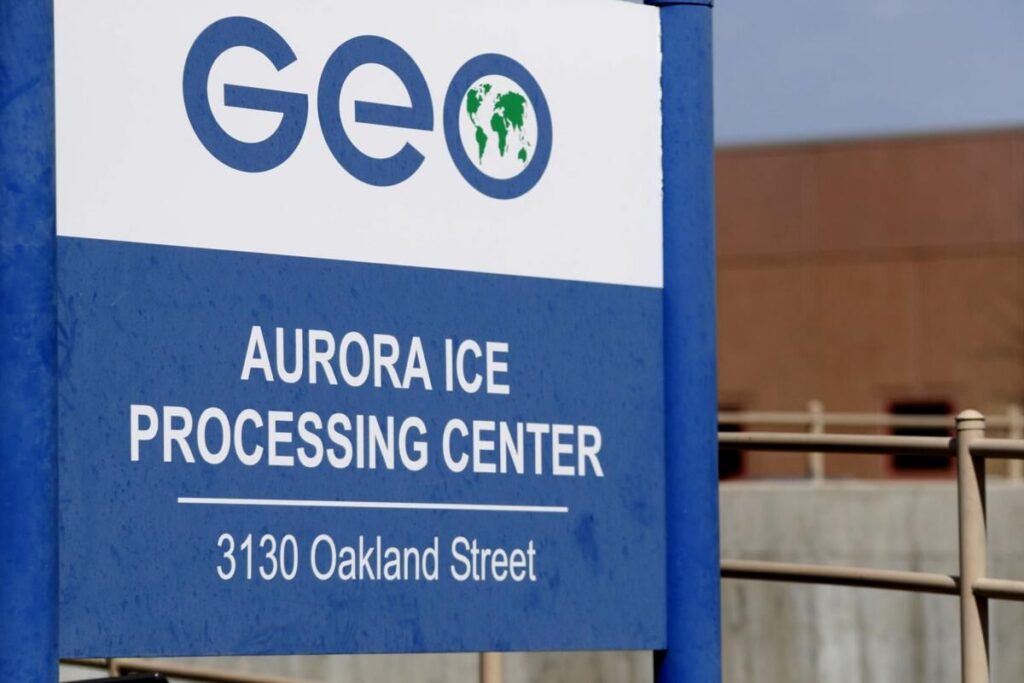
The private prison company that operates the U.S. Immigration and Customs Enforcement center in Aurora has filed a lawsuit against Colorado to stop the enforcement of a new law requiring additional health and safety inspections of immigration detention facilities. The...
Trump will get another pick on influential federal appeals court
Jack Birle, Washington Examiner
jack.birle.washington.examiner@gazetteedit.wpenginepowered.com
Updated 7 hours ago
President Donald Trump will have the opportunity to nominate another judge to a key federal appeals court after one of the judges announced this week that he would take senior status. Circuit Judge Kurt Engelhardt, who was nominated to the...
Senate GOP cool to House push for third party-line budget bill: ‘Really not an option’
Ramsey Touchberry, Washington Examiner
ramsey.touchberry.washington.examiner@gazetteedit.wpenginepowered.com
Updated 7 hours ago
Senate Republicans are unlikely to take up a third budget reconciliation bill to advance more of President Donald Trump’s agenda. The development is sure to be unwelcome news for their counterparts in the House, who have advocated a third bill....

Cigna to pull out of individual health market, affecting thousands in Colorado
Marianne Goodland
marianne.goodland@coloradopolitics.com
Updated 9 hours ago
Another firm is withdrawing from the individual health insurance market, including for Colorado, effective Jan. 1, 2027. The move by Cigna Healthcare is part of the company’s overall plan to withdraw entirely from the Affordable Care Act market. It will...

Museum’s spring fundraiser lived up to its name | NONPROFIT REGISTER
Joanne Davidson Special to Colorado Politics
joanne-davidson-special-to-colorado-politics@coloradopolitics.com
Updated 10 hours ago
DENVER ART MUSEUM Denver News: One simple word – Delight — served as both the name and the vibe for the Denver Art Museum’s spring fundraiser. The June 5 indoor/outdoor bash was chaired by Christopher K.M. Leach, president of Contract Furnishings, and Chad Skrbina, president of Mad...

Dustin Zvonek pinpoints Colorado’s housing-first homelessness failures | The OpEdge Podcast
Tony Olivero
tony.olivero@gazette.com
Updated 10 hours ago
As homelessness continues to persist across Colorado, former Aurora City Councilman Dustin Zvonek paints a compelling picture of how the primary policy prescription may be enabling the root cause more than providing a permanent solution. In this OpEdge Podcast conversation...