

‘DOGE-lite’ RTD bill masquerades as transit reform | HUDSON
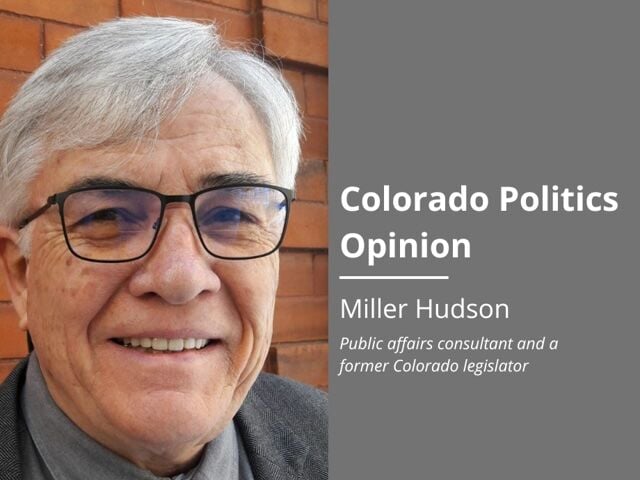
Miller Hudson

Miller Hudson
Most of us are familiar with the notion of hypocrisy. Truth be told, we each indulge in hypocritical choices every now and again. It’s politicians, however, who are the presumed masters of this skill. The word originates from the Old French, “ypocrisie”, which was recycled into ecclesiastical Latin by the Catholic Church in the 14th century while popes were resident in Avignon rather than Rome. The Oxford English dictionary provides the definition as, “falsely professing a belief to which one’s own character or conduct does not conform.” If that sounds a lot like lying, you’ve grasped the concept.
Gov. Jared Polis and four Democratic legislators who attempted to loot the fiscal reserves held at the Regional Transportation District last year, as well as replacing RTD’s elected board with appointed stooges, failed in their effort. Their assurance they wouldn’t attempt a repeat raid again this year has turned out to be a fib. Polis received five minutes in the spotlight at the Democratic National Convention this past summer brandishing a super-sized copy of the Heritage Foundation’s 900-page instruction manual for governing America in 2025. He tut-tutted about the threat its recommendations posed for American democracy. Back at home in Colorado, he was encouraging a frontal assault on RTD’s 45 years of democratic governance.
State Sens. Faith Winter and Iman Jodeh, together with state Reps. William Lindstedt and Meg Froehlich, have slipped the governor’s power grabbing agenda into SB25-161, touted as transportation reform legislation. In fact, there are several worthwhile provisions in its 26 pages, but in Section 9, buried at the end of the bill, is a resurrection of the 2021 RTD Accountability Committee conveniently housed in the Colorado Energy Office, which reports directly to the governor. With 11 members, five appointed by Gov. Polis and three each by leadership in the House and Senate with two non-voting RTD board members, the committee is charged with evaluating and making recommendations for the appropriate governance structure and executive leadership at RTD.
Stay up to speed: Sign up for daily opinion in your inbox Monday-Friday
There is no assured representation from riders, or employees, or the disabled community. Nor is there any requirement to solicit public input. Anyone with experience of interim and blue-ribbon commissions will recognize a forced march to a predetermined conclusion in the making. A final report is expected to be delivered by Jan. 30, 2026, at the same time the RTD board is asked to develop a laundry list of reports, plans, policy adoption, fiscal analysis and compliance demands that are clearly the inherent responsibility of RTD rather than the legislature. These descend into requirements for the specific content of RTD’s website and customer dashboards, micro-managing decisions best left to the board and its managers.
Apparently, the legislative sponsors are dissatisfied with RTD. So, I suspect, is the majority of its own board. Ridership has remained depressed since COVID, at least in part because so many employees remain working at home. There are simply fewer peak period trips than there were in 2018. Some serious thought will have to go into rebuilding confidence in and enthusiasm for transit. Those solutions are unlikely to spring from the legislature, however, which imagines a transit-centric future entirely divorced from reality. You only have to board light rail for a Bronco Ride to recognize when RTD meets a need, riders will squeeze aboard. Likewise, travelers fill the air trains to DIA. When voters approved an elected RTD board in 1980, the newly elected directors set aside further attempts to win voter support for transit, which had failed twice, until they “fixed” RTD’s bus service. This included providing universal wheelchair accessibility making RTD the first transit agency in the country to do so.
There is little public complaint regarding Denver’s transit service. Phones aren’t ringing off the hook at the Capitol. Yes, there is muted grumbling about the presence of homeless riders and worries about personal safety — and these concerns need to be addressed. The current board is fully aware of its image deficiencies. Replacing the democratically elected board is being advanced by a tiny chorus of voices among elected officials along US-36, from Broomfield to Boulder, who are aggrieved they never received the rail service promised at the outset of FastTracks. They have a legitimate beef, but when voter-approved revenues proved insufficient to complete the entire system, Boulder’s proposed line fell out as the least cost effective. No one is to blame for this, least of all the board of directors which has showered the “Boulder Turnpike” with additional express bus service.
A dozen years ago while I was involved in the study of high-speed transit alternatives up the central mountain corridor along Interstate 70, Jared Polis, then still in Congress, asked me what I thought could be done to extend light-rail to Boulder. My advice to him was it would be unlikely RTD could ever justify or pay for this route, but his best chance to provide a rail connection into Union Station from Boulder would be Front Range Rail. Unfortunately, this initiative appears to have been bungled and the new administration in Washington seems unlikely to offer further support — it is far more likely to claw back existing commitments.
It was disappointing to witness a number of good government nonprofits, like Common Cause, together with disability advocates support the effort to repeal the elected board last year. Promises an appointed board would direct monies to support improved services for them since appointed members would take a “system-wide” view of transit priorities were entirely bogus. They were oblivious to the sponsors covetous agenda for raiding RTD’s treasury to fund a rail extension to Boulder. Experience shows at-large representation is far more likely to disregard genuine needs, while geographically distributed directors with local knowledge, will detect them. During the past 40 years a surprising share of RTD directors have been regular transit users. Voters notice such things.
A vote for SB-161 will be cast by legislators who claim voters were smart enough to elect them but are too dumb to select RTD directors. This bill also denies write-in candidates, the only such prohibition in state elections and likely unconstitutional. Such arrogance comes from a group that lost two elections and required two special sessions to adopt a band-aid property tax remedy to a problem of their own making. RTD directors have their challenges, yet it requires astounding hypocrisy for the sponsors to school them about effectiveness. It’s DOGE-lite masquerading as transit reform.
Miller Hudson is a public affairs consultant and a former Colorado legislator.


Dan Haley on the role of oil and gas in Colorado’s energy future | The OpEdge Podcast
Tony Olivero
tony.olivero@gazette.com
Updated 5 hours ago
Dan Haley, executive director of Coloradans for Responsible Energy Development, joins The OpEdge to discuss the role of oil and natural gas in Colorado’s energy future amid the state’s aggressive push toward “net zero.” Haley tells host and investigative columnist...

Rural hospitals don’t want special treatment, just a chance to care for locals | PODIUM
Colorado Politics
colorado-politics@coloradopolitics.com
Updated 1 day ago
By Kevin Stansbury As chief executive of Lincoln Health, my responsibility is simple: ensure the people of eastern Colorado have access to high-quality healthcare close to home when they need it most. That mission has never been easy. Rural hospitals...
Blue states should avoid disasters | Hal Bidlack
Hal Bidlack
hal-bidlack@coloradopolitics.com
Updated 1 day ago
Back when I was teaching political science at the U.S. Air Force Academy (and amazingly to me, a week from this column’s publication will mark 20 years since my retirement from active duty. Where the heck did that time go?)...
Right-to-hunt ballot measure’s a cruel, anti-wildlife solution to a nonexistent problem | GUEST COLUMN
Colorado Politics
colorado-politics@coloradopolitics.com
Updated 2 days ago
By Eric Washburn I love to hunt. Every year I try to hunt big game in Colorado and waterfowl in Louisiana. This year, I applied for five Colorado big game licenses — elk, deer, pronghorn, moose and bighorn sheep. I...

Jena Griswold’s record: corruption, incompetence | Dick Wadhams
Dick Wadhams
dick-wadhams@coloradopolitics.com
Updated 5 days ago
There is no statewide elected official going back decades who is as breathtakingly corrupt and incompetent as Secretary of State Jena Griswold, who is now running for attorney general of all things. And compliant ruling Democrats know it. Their silence...

Kiros exudes why Colorado’s political times are a-changin’ at annual Denver Dems gala | Miller Hudson
Miller Hudson
miller-hudson@coloradopolitics.com
Updated 5 days ago
Among Colorado’s few remaining bipartisan rituals are county and state party dinners. I was particularly intrigued by last week’s Denver Democratic Party’s 2026 Annual Gala, a “New Deal for a New Era.” Their glossy program featured an artist’s Technicolor rendering...

Livestock grazing regulations need flexible updates | Rachel Gabel
Rachel Gabel
rachel-gabel@coloradopolitics.com
Updated 5 days ago
The Bureau of Land Management last updated their livestock grazing regulations the year I graduated from high school. I am 49. Assessing rangeland health can’t be done once and not revisited. This year is a prime example that managers must...

Taxpayers donate to tax increase campaign | Jon Caldara
Jon Caldara
jon-caldara@coloradopolitics.com
Updated 6 days ago
Give the man his due. President Donald Trump has undeniable talents. Colorado politicians are learning. Chief among The Don’s skills is taking the self-serving, ethically dubious behavior of previous politicians and putting it on steroids. Or, to borrow from the...
A summertime all-you-can-eat political buffet | SONDERMANN
Eric Sondermann
eric-sondermann@coloradopolitics.com
Updated 1 week ago
We find ourselves in the doldrums of August with a complete dearth of political news. Yeah, right. These days, that train never stops moving. It is a 24/7/365 express amplified by 24/7/365 media. Let me respond with one of my...
State money diversion scheme the unsurprising downfall of ERBOCES scam | Paula Noonan
Paula Noonan
paula-noonan@coloradopolitics.com
Updated 6 days ago
Falcon School District 49, aka El Paso County School District 49, has finally cut bait, thrown the fishing pole into the lake and sunk the canoe. The longtime enabler of the Education Reenvisioned BOCES’ (ERBOCES) schemes to fund private Christian...