

Workhorses still at work during the holidays | BIDLACK
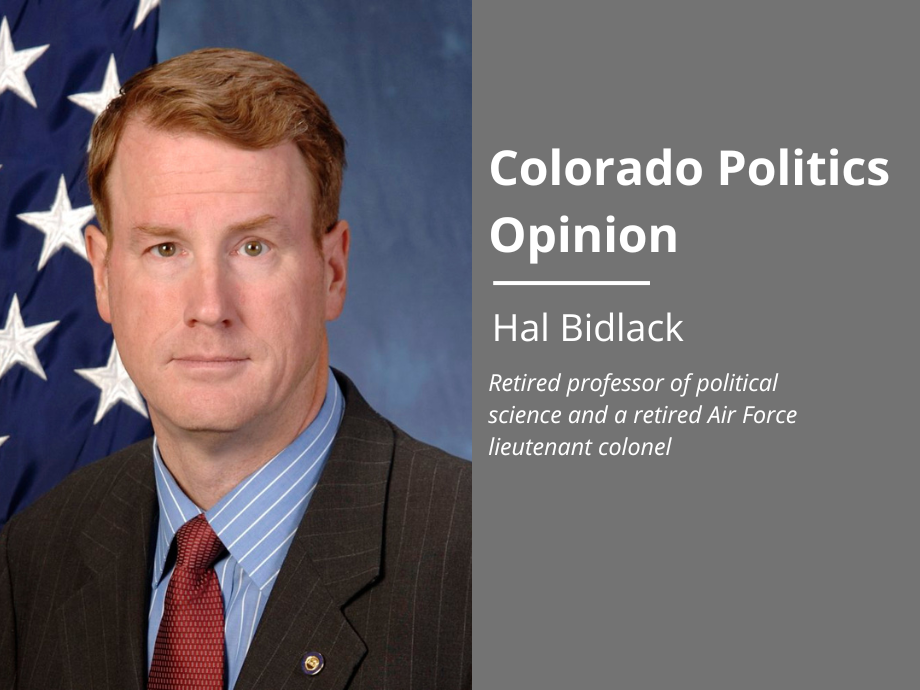
Hal Bidlack

Hal Bidlack
It takes a lot of stamina to closely watch what is going on in Washington D.C. these days, regardless of your personal partisanship. If you are a glum Democrat, like your grumpy author, it is quite frustrating to see a new administration gearing up, not so much for governance, but rather to wage war against the concept of government itself. If you are a Trumper, you are getting more and more exciting as Jan. 20 nears.
But for many, myself included, worries about how President-elect Donald Trump will govern, or not govern, are constantly on our minds. Recall, for example, Mr. Trump has selected yet another member of his own family, convicted felon Charles Kushner, the father of his son-in-law, to be ambassador to France, one of a small handful of truly vital and strategic diplomatic appointments, right up there with Russia and England.
In selecting an in-law, Trump picked a guy who had 18 in all felony convictions, including pleading guilty to hiring a prostitute to seduce his own brother-in-law secretly on camera, to later blackmail him in revenge apparently for cooperating with federal investigators. In the chaotic and waning days of Trump I, Charles Kushner was pardoned, and now four years later, he is to be our face and voice in France. Yuk.
I could go on and on about the profoundly mediocre nominees Trump has made, or has tried to make, so far. Anyone seen Matt Gaetz lately? Remember when former President Barack Obama was severely criticized for wearing a tan suit? Now being a convicted felon is OK, though perhaps not if wearing said tan suit?
So, simply put, I have very little faith in the executive branch for the next four years. It will likely be a mixture of stern talk of consequences, cozying up to Putin and then not much more. Similarly, the Supreme Court is now an entirely partisan organization, at the beck and call of a president who already appointed a third of them and will likely appoint two more before his own term ends.
So, what are we left with?
The Congress, that’s what.
You may recall from my mentioning it at every possible moment I spent a bit more than four years as a staffer in the Colorado Springs office of U.S. Sen. Michael Bennet. Now to be very clear, I am not claiming my analysis of his accomplishments this past month are representative of an average month, though I think, frankly, that it is.
As I used to teach my students at the Air Force Academy, there are three primary areas in which Congress works: passing legislation, conducting oversight of the executive branch and service constituents that contact their offices.
Certainly, there are other functions, such as declaring war, but these three: legislation, oversight and constituent service, take up the bulk of their time. My own work was primarily in constituent services, as I was charged with helping military folks and veterans who were running into brick walls in pursuit of government assistance.
When it comes to getting bills passed into laws, Sen. Bennet is quite good at his job. It gets tricky when trying to evaluate a legislator’s success, and you can’t just count the bills they signed onto. Huge numbers of bills on non-controversial subjects just pass through on voice votes or under other expedited rules. The Senate, for example, does not take much time debating naming post office buildings in other states than one’s own. Similarly, there are bills passed essentially as a courtesy, honoring Arbor Day and dozens of other such topics.
No, to really understand whether your senator is hard working or not requires a bit of digging into what bills they got to the president’s desk that involved a fight, or at least some skilled negotiation.
In a Christmas Eve email, Bennet announced the nine pieces of legislation he got to the president’s desk just in December. Among these soon-to-be new laws are actions to stop the spread of invasive mussels, which is a pretty big deal. Bennet also got passed legislation to allow a 31-acre plot of land held by the Bureau of Land Management to be sold to Mesa County. This may seem like a small thing, but it represents a significant hurtling of red tape by Sen. Bennet and in this case, fellow Colorado U.S. Sen. John Hickenlooper.
If you are a farmer, or you ever eat anything, you’ll be pleased by Bennet’s work to get control of the amount of salt in the Colorado River. Sure, that may not seem like a big deal but ask anyone who grows crops what happens if too much salt gets in the water. It’s not good.
These are but a few of the many legislative efforts made by Bennet this year, usually in cooperation with other members of the Colorado delegation, but also beyond the aisle, as Sen. Bennet often works across party lines to get the work done.
Why don’t you hear more about this? Well, that is because, in my view, Bennet is genuinely a quiet and thoughtful gentleman, with no real interest in appearing in the limelight. This is what makes Bennet, as well as others such as Hickenlooper, U.S. Reps. Jason Crow and Joe Neguse. These folks, are, in terms political science professors use, workhorses. They get up each day to get to work. Show horses, the other type seen by poli sci people like me, are those who want attention all the time, and are not especially interested in doing the hard work they should be doing. Republican U.S. Reps. Matt Gaetz (Florida) and Lauren Boebert (Colorado) would fall in that category.
Simply put, we are fortunate to have Bennet and other work horses taking care of our interests. We won’t see them on the evening news too often, but that’s because they are working hard on the actual job of being a representative of the people and are not looking over their shoulders to see if a camera might be around.
And we are the better for it.
Hal Bidlack is a retired professor of political science and a retired Air Force lieutenant colonel who taught more than 17 years at the U.S. Air Force Academy in Colorado Springs.


Rural hospitals don’t want special treatment, just a chance to care for locals | PODIUM
Colorado Politics
colorado-politics@coloradopolitics.com
Updated 18 hours ago
By Kevin Stansbury As chief executive of Lincoln Health, my responsibility is simple: ensure the people of eastern Colorado have access to high-quality healthcare close to home when they need it most. That mission has never been easy. Rural hospitals...
Blue states should avoid disasters | Hal Bidlack
Hal Bidlack
hal-bidlack@coloradopolitics.com
Updated 1 day ago
Back when I was teaching political science at the U.S. Air Force Academy (and amazingly to me, a week from this column’s publication will mark 20 years since my retirement from active duty. Where the heck did that time go?)...
Right-to-hunt ballot measure’s a cruel, anti-wildlife solution to a nonexistent problem | GUEST COLUMN
Colorado Politics
colorado-politics@coloradopolitics.com
Updated 2 days ago
By Eric Washburn I love to hunt. Every year I try to hunt big game in Colorado and waterfowl in Louisiana. This year, I applied for five Colorado big game licenses — elk, deer, pronghorn, moose and bighorn sheep. I...

Jena Griswold’s record: corruption, incompetence | Dick Wadhams
Dick Wadhams
dick-wadhams@coloradopolitics.com
Updated 5 days ago
There is no statewide elected official going back decades who is as breathtakingly corrupt and incompetent as Secretary of State Jena Griswold, who is now running for attorney general of all things. And compliant ruling Democrats know it. Their silence...

Kiros exudes why Colorado’s political times are a-changin’ at annual Denver Dems gala | Miller Hudson
Miller Hudson
miller-hudson@coloradopolitics.com
Updated 5 days ago
Among Colorado’s few remaining bipartisan rituals are county and state party dinners. I was particularly intrigued by last week’s Denver Democratic Party’s 2026 Annual Gala, a “New Deal for a New Era.” Their glossy program featured an artist’s Technicolor rendering...

Livestock grazing regulations need flexible updates | Rachel Gabel
Rachel Gabel
rachel-gabel@coloradopolitics.com
Updated 5 days ago
The Bureau of Land Management last updated their livestock grazing regulations the year I graduated from high school. I am 49. Assessing rangeland health can’t be done once and not revisited. This year is a prime example that managers must...

Taxpayers donate to tax increase campaign | Jon Caldara
Jon Caldara
jon-caldara@coloradopolitics.com
Updated 6 days ago
Give the man his due. President Donald Trump has undeniable talents. Colorado politicians are learning. Chief among The Don’s skills is taking the self-serving, ethically dubious behavior of previous politicians and putting it on steroids. Or, to borrow from the...

A summertime all-you-can-eat political buffet | SONDERMANN
Eric Sondermann
eric-sondermann@coloradopolitics.com
Updated 1 week ago
We find ourselves in the doldrums of August with a complete dearth of political news. Yeah, right. These days, that train never stops moving. It is a 24/7/365 express amplified by 24/7/365 media. Let me respond with one of my...

State money diversion scheme the unsurprising downfall of ERBOCES scam | Paula Noonan
Paula Noonan
paula-noonan@coloradopolitics.com
Updated 6 days ago
Falcon School District 49, aka El Paso County School District 49, has finally cut bait, thrown the fishing pole into the lake and sunk the canoe. The longtime enabler of the Education Reenvisioned BOCES’ (ERBOCES) schemes to fund private Christian...

Steve Schuck on the ‘magic’ of school choice | The OpEdge Podcast
Tony Olivero
tony.olivero@gazette.com
Updated 7 days ago
Parents Challenge co-founder and longtime school choice advocate Steve Schuck joins The OpEdge to discuss expanding educational opportunities and ensuring parents are in charge of their kids’ education. Schuck tells investigative columnist and host Jimmy Sengenberger why he believes Colorado...