

Could retail marijuana in Colorado Springs be decided once and for all?
As Colorado Springs voters were approving ballot questions that propose both banning recreational marijuana establishments and authorizing retail cannabis sales locally, pro-campaign representatives and city officials seemed to offer competing interpretations of which new law, if unofficial results hold, could take effect.
Non-certified returns updated by the El Paso County Clerk and Recorder’s Office at 5:50 p.m. Wednesday show the resident-backed Ballot Question 300 that proposes authorizing the city’s roughly 90 existing medical marijuana shops to also opt into selling retail cannabis was passing 53.6% to 46.4%, with 273,704 — or about 55% — of returned ballots counted.
Recreational marijuana ban likely in Colorado Springs amid split vote
Similarly, the City Council-backed Ballot Question 2D, which proposes banning recreational marijuana establishments by city charter, was passing 52.4% to 47.6%.
There has been no significant change in results since they were first posted after 8 p.m. Tuesday.
Earlier Wednesday, county Clerk and Recorder Steve Schleiker reported about 100,000 ballots still need to be counted, with another 48,000 awaiting adjudication by election judges and roughly 4,000 other ballots that must be cured for things like missing signatures or an ID check.
City officials previously said during public meetings this summer that if both ballot questions passed, the ban by city charter would take precedence.
Meghan Graf, spokeswoman for Citizens for Responsible Marijuana Regulation that backed Question 300, called on the city government Wednesday to honor residents’ decision to allow sales.
“When all the votes are counted and the will of voters is given effect, responsible regulation will be law and the City Council’s cynical ploy will be defeated,” Graf said in part in a written statement. “… We know that those in municipal government will defer to the clearly expressed intent of voters to authorize recreational marijuana, and we look forward to working with city leaders over the coming months to create a responsible regulatory framework.”
Is Colorado paying enough attention to marijuana’s toll? | Vince Bzdek
Colorado Springs officials said Wednesday the ban of recreational marijuana establishments by charter would generally supersede voter-approved ordinances to authorize retail cannabis sales.
The charter allows residents to propose ordinances to the City Council or adopt or reject ordinances by vote of the people. So long as the ordinances “are consistent and harmonious” with the charter, this acts as Colorado Springs’ legal framework for its government and enterprises, city spokesman Max D’Onofrio said by email.
While election results are not yet final, should votes hold and both questions officially pass, “Ballot Question 300 must be read, interpreted and implemented in a manner to be consistent and harmonious with Ballot Question 2D,” which would amend the city charter and ban recreational marijuana, D’Onofrio said.
“If any provision of Ballot Question 300 is in direct conflict with (the amended charter), that provision cannot be implemented. The city will be reviewing the ballot question language to determine whether any provision will need to be implemented.”
Graf did not answer a specific question this week about whether marijuana proponents could challenge the charter amendment in court.
Colorado Springs recreational marijuana sales locations limited after final council vote
Daniel Cole, who represents the Colorado Springs Safe Neighborhood Coalition that supported the charter ban, said confusion among voters was the reason both questions were passing. He blamed unclear ballot language in Question 300, which he said seemed to limit recreational marijuana sales though it would actually authorize them.
Jason Warf, executive director of the Southern Colorado Cannabis Council, said voters could have been confused by ballot language in Question 2D, but acknowledged the unofficial election results could simply reflect Colorado Springs’ traditional anti-marijuana stronghold.
Warf said election results so far “show an appetite for adult use.” If recreational sales are banned by charter, that doesn’t necessarily put the question to bed — proponents could try to reverse a charter ban by another vote in the future, and there could be a City Council that is more supportive of retail sales in order to capture additional tax revenues, he said.
“I think once that happens, it is the prime time to work with the community to bring that tax revenue back into the Springs. One important component is to include the city and work on any future issues so that we don’t have competing ballot questions,” Warf said.
Cole said unofficial election results show otherwise: Colorado Springs voters don’t welcome recreational sales.
“Colorado Springs likes (that we don’t have) recreational marijuana stores all over the city. It sets us apart from the rest of the state. We like that we’re not Denver, and we don’t want to become Denver. It’s a selling point for us that we’re different, and people want to keep it that way. I think that’s why 2D passed. … I think it’s a closed question at this point,” he said.


Killing off the Regional Transportation District | Miller Hudson
Miller Hudson
miller-hudson@coloradopolitics.com
Updated 39 minutes ago
This column is appearing the same day state Sen. Matt Ball (D) of Denver and his legislative co-sponsors unveil legislation implementing many of the recommendations advanced by last summer’s Regional Transportation District Accountability Committee. Although it isn’t readily apparent, they...

Green energy shouldn’t come at expense of Colorado farmers, ranchers feeding us | Rachel Gabel
Rachel Gabel
rachel-gabel@coloradopolitics.com
Updated 33 minutes ago
In 2023, the Department of Energy released the National Interest Electric Transmission Corridors (NIETC) study identifying areas they speculate would experience transmission capacity constraints of congestion. The map identified more than 2 million acres or 24% of the state of...

Bill in state legislature would put large apartment projects in single-family neighborhoods | Cronin & Loevy
Tom Cronin Bob Loevy
tom-cronin-bob-loevy@coloradopolitics.com
Updated 27 minutes ago
There is an old joke that goes something like this: “When the state legislature is in session, no person and their property are safe.” That is not a joke in the older, more traditional neighborhoods that surround the downtown regions...

Unsustainable: How Colorado’s Medicaid spending exploded
Nico Brambila
nico.brambila@denvergazette.com
Updated 9 hours ago
The state’s Medicaid program — which covers about one in four Coloradans — is poised for its largest single-year jump in at least two decades, with officials proposing a $2.3 billion increase, even as lawmakers face a $1.5 billion budget...

Colorado hates its disabled citizens | Jon Caldara
Jon Caldara
jon-caldara@coloradopolitics.com
Updated 3 days ago
This is a selfish column. The legislature is about to hurt my disabled son. My son, Chance, has Down syndrome and a few years ago would have been labeled “retarded.” Then “developmentally delayed.” Now the hypersensitive prefer “intellectually disabled.” Whatever...
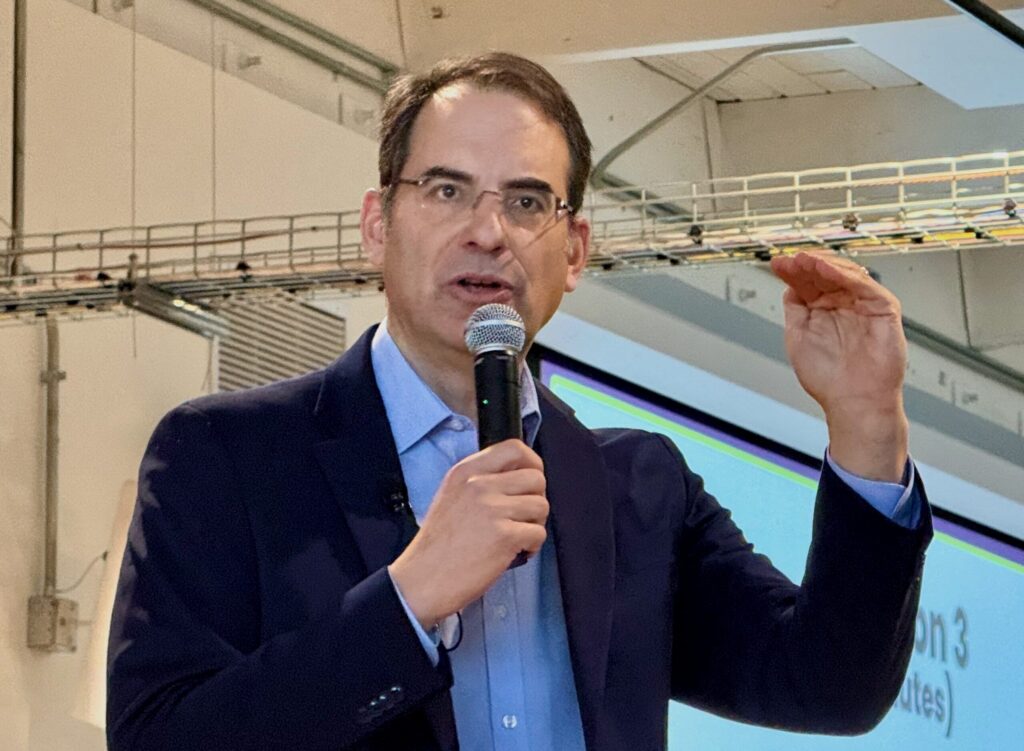
Phil Weiser wins top spot in Colorado’s Democratic gubernatorial primary at party’s state assembly
Ernest Luning
ernest.luning@coloradopolitics.com
Updated 1 day ago
Attorney General Phil Weiser’s name will appear first on Colorado’s Democratic gubernatorial primary ballot after his overwhelming win Saturday at the party’s state assembly in Pueblo. Weiser joins U.S. Sen. Michael Bennet in the June 30 primary for the office...
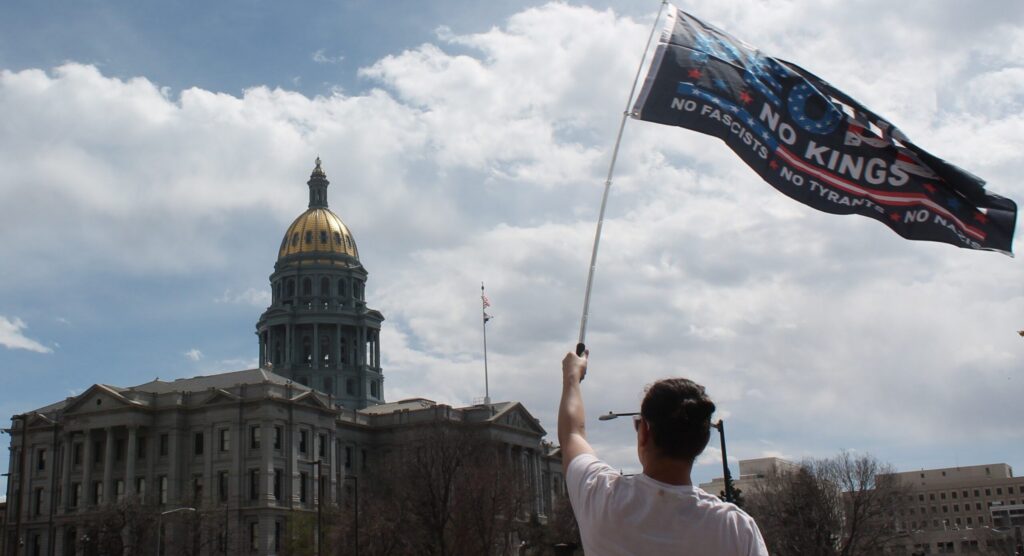
‘No Kings’ protest draws tens of thousands to Colorado state Capitol
Matt Kyle
matt.kyle@denvergazette.com
Updated 1 day ago
The third round of the national No Kings Day protests hit Denver Saturday, when tens of thousands gathered near the Colorado state Capitol to criticize the Trump administration. Organizers addressing the crowd estimated there were 30,000 present for the Saturday...
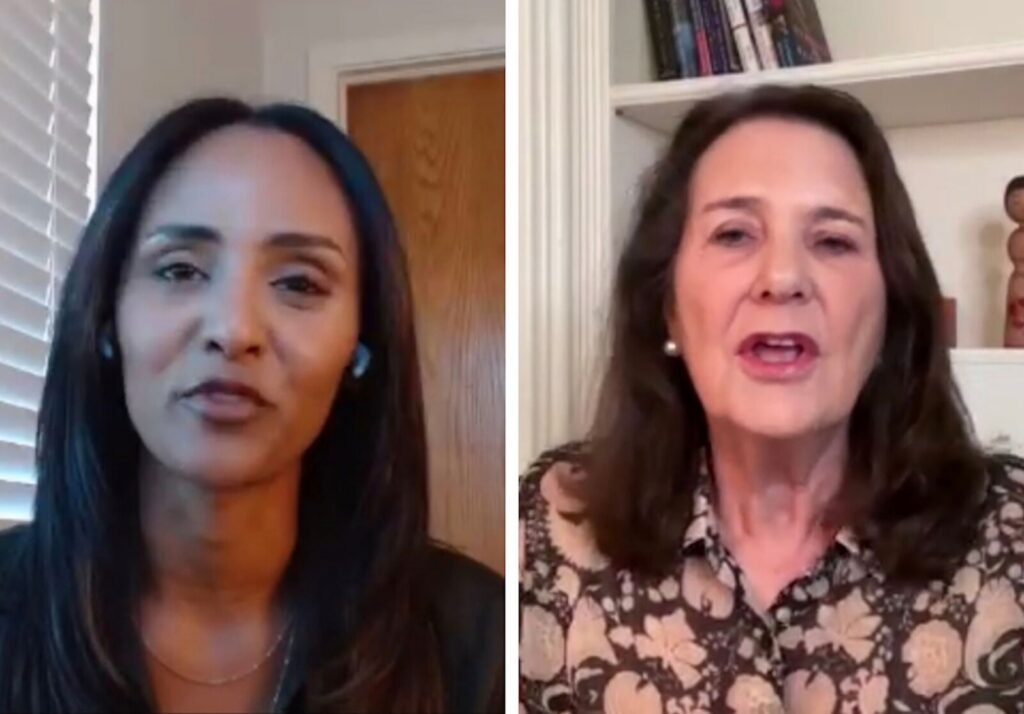
Denver Democrat Diana DeGette trails challenger Melat Kiros at assembly as both qualify for primary
Ernest Luning
ernest.luning@coloradopolitics.com
Updated 2 days ago
U.S. Rep Diana DeGette, a Denver Democrat, qualified for Colorado’s June primary by the skin of her teeth Friday at the party’s district assembly, where the 15-term incumbent received fewer than half as many delegate votes as her challenger, 28-year-old...

Colorado Politics Calendar Mar. 30-Apr. 5
Rachael Wright, Special to Colorado Politics
rachael.wright@coloradopolitics.com
Updated 3 days ago
CoPo’s weekly political calendar will help you find political and public-policy events throughout Colorado. It includes candidate and issue campaign events, public policy meetings, court hearings, state and local party conventions, assemblies, debates, rallies, parades, speaking engagements, traveling dignitary appearances,...
Colorado coal use seen as in decline in 1980s | A LOOK BACK
Rachael Wright, Special to Colorado Politics
rachael.wright@coloradopolitics.com
Updated 3 days ago
Forty-Five Years Ago This Week: “Contrary to popular belief, it appears that growth in Colorado’s coal industry during the 1980s will be surprisingly sluggish,” said the findings in the Colorado Energy Research Institute’s “Focus Series.” The institute’s conclusions on the...