

Crime and punishment on the 2024 Colorado ballot | SLOAN

Kelly Sloan

Kelly Sloan
A recent report from the Common Sense Institute lays out some pretty sobering facts about crime in Colorado. Among their findings:
- From 2011 to 2023, Colorado’s crime rate rose 26%, which includes crimes against persons (2%), crimes against society (16%) and motor vehicle thefts (225%);
- The number of police officers per 1,000 people in the state lags behind the national average;
- The percentage of employees in Colorado law enforcement agencies who are police officers decreased from 69% in 2013 to 65% in 2023;
- From 2010 to 2022, the number of uniformed police officers fielded by the Denver Police Department declined 15.1% while those fielded by the Colorado Springs Police Department rose by 5.7%; and
- At the same time, the crime rate rose in Denver rose by 32% and decreased in Colorado Springs, by 15.9%
Now those sorts of figures make extrapolation rather easy. The authors of that study include Dr. Steven Byers, who is a professional economist, and D.J. Summers, an experienced policy analyst and former investigative journalist, who together provide the requisite academic and analytical musculature to the report. Rounding it out is former Denver Police Chief Paul Pazen, who adds the experience and credibility that uniquely comes from a career spent going down society’s darkest alleys. The bottom line of the report: efforts directed toward putting more well-trained police officers on the street will most likely result in those streets being safer.
Last week this space was given over to an argument in favor of supporting a ballot measure enshrining educational choice in the constitution. I make the same plea for two public safety related measures: 128 and, especially, 130.
Stay up to speed: Sign up for daily opinion in your inbox Monday-Friday
Proposition 128 requires those convicted of violent crimes to serve at least 85% of their sentence before eligibility for parole, or considered for discretionary early release, i.e. for good behavior. Current law allows inmates to apply for parole after completing 75% of their sentence and allows for earlier discretionary release. The measure would also require anyone convicted three or more times of a violent offense to serve their entire sentence, without possibility of parole or early release.
Proposition 130 requires the state government to set aside $350 million from the general fund to create a “peace officer training and support fund” for the purposes of, one, paying for a million-dollar benefit to the survivors of law enforcement officers killed in the line of duty and, two, providing grants to police departments and sheriff’s offices for training and retention.
Prop 128’s provisions are a sort of truth-in-sentencing requirement, and are appealing on that fact alone. There is a beauty, or perhaps a sense of justice, in the simplicity of a concept that says a sentence of X-number of years means the offender will serve X-number of years. Incarceration is a complicated subject, and we ought to be open to conversations around the alternative forms of punishment — because punishment needs to remain a critical part of the equation.
But there is little room for maneuver on the fact that certain people do belong in prisons for the crimes they commit. These would include violent crimes, the ones contemplated by this measure. This would seem especially so concerning people who have committed — and been caught and successfully prosecuted for — those crimes more than twice. If John Jones is in jail rather than at liberty, he can’t commit violent crimes as regularly as he has proven disposed to.
An even easier case can be made for Prop 130. It is not a coincidence the supererogatory documentations of the rise in crime over the past few years have coincided directly with the drop in the number of police officers deployed to deal with it. This measure does not address every element of that decrease — much of it has to do with the advent of attitudes and policies driven by elected officials whose sympathies consciously or subconsciously go to the lawbreaker rather than to law enforcement. But it does address a key deficiency by providing adequate funding, not to mention setting aside a little for the families of slain officers, as a token of the tremendous debt of gratitude we as a society owe them.
There are, of course, opponents of the measure, many of whom cite fancy theoretical arguments concerning alternative approaches to justice. However, it is the person who is robbed or assaulted, and learns through the process that there is little if any hope of effective prosecution, that the odds are the offender will be released on his or her own recognizance and ultimately receive a suspended sentence, probation, or just a short time in jail — after which time the thief or assaulter will be free to rob and beat again — and ultimately despondently concludes the time and effort was hardly worth it; it is that person, more than abstract theoretical arguments, that ought to inform the discussion.
Kelly Sloan is a political and public affairs consultant and a recovering journalist based in Denver.

As education conflicts abound across Colorado, who puts the kids first? | Paula Noonan
Paula Noonan
paula-noonan@coloradopolitics.com
Updated 19 hours ago
Elected school boards and the Colorado Department of Education (CDE) have hit the headlines with fired superintendents, superintendent resignations, failures of oversight, and misdirected dollars. Cherry Creek School District’s superintendent was fired. Jefferson County Schools’ superintendent found a less stressful...

Clock is ticking on Colorado’s new AI rules | PODIUM
Colorado Politics
colorado-politics@coloradopolitics.com
Updated 19 hours ago
By Aashis Luitel On Jan. 1, organizations using covered automated systems must begin complying with Senate Bill 26-189, Colorado’s new Automated Decision-Making Technology Act. They can identify those systems and start building the processes the statute clearly requires. What they...
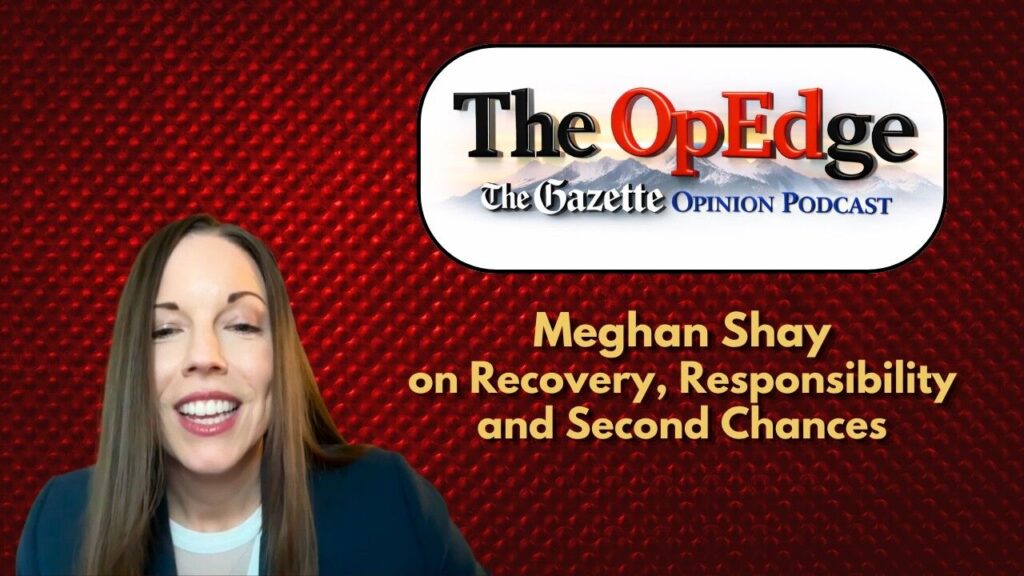
Meghan Shay on recovery, responsibility and second chances | The OpEdge Podcast
Tony Olivero
tony.olivero@gazette.com
Updated 2 days ago
Step Denver and Step Springs CEO Meghan Shay joins The OpEdge to explore addiction recovery, homelessness, and the role of accountability in lasting change. Shay tells host and investigative columnist Jimmy Sengenberger why she believes recovery is built on personal...
The outrages mount | Hal Bidlack
Hal Bidlack
hal-bidlack@coloradopolitics.com
Updated 2 days ago
My kindly and forgiving editors understand that, from time to time, I can’t help myself from leaping atop my rickety soapbox to vent. And, like many other political commentators have already done, I could easily fill this entire missive with...

Rural Colorado deserves a tax holiday | GUEST COLUMN
Eric Mulder
jstooksberry@gmail.com
Updated 3 days ago
Spend enough time in Colorado’s Eastern Plains, the San Luis Valley, or the Western Slope, and you’ll see boarded-up storefronts, schools consolidating classrooms, and small rural communities stretching every dollar to keep basic services afloat. Once the backbone of Colorado’s...

Weiser’s leadership crucial for rural win-win | Rachel Gabel
Rachel Gabel
rachel-gabel@coloradopolitics.com
Updated 6 days ago
Attorney General Phil Weiser is going to win the gubernatorial election. That said, Colorado agriculture and rural communities have a 30-year track record of finding the win-win be it for species or industries or habitat. Former Governor Roy Romer possessed...

A Colorado history lesson for Victor Marx | Dick Wadhams
Dick Wadhams
dick-wadhams@coloradopolitics.com
Updated 6 days ago
Victor Marx, who narrowly won the Republican nomination for governor by one half 1% after boasting of a massive 44-point lead, is just as misguided on Colorado political history. During the primary, Marx made a clumsy attempt to denigrate his...
‘Be prepared to march in the streets’ | Miller Hudson
Miller Hudson
miller-hudson@coloradopolitics.com
Updated 19 hours ago
It was early in 1974 when I first met Tim Wirth as he announced his candidacy for Congress, challenging Republican incumbent Don Brotzman. Although I had only resided in Colorado two years, I was drafted to serve as a Democratic...

‘CoCo’ would take taxpayers for a ride | Jon Caldara
Jon Caldara
jon-caldara@coloradopolitics.com
Updated 3 days ago
Colorado wants taxpayers to spend another $4.73 billion on passenger rail. Don’t worry. They have a plan. Which is a little like your brother-in-law announcing he’s launching another exciting restaurant venture after his last three restaurants ended in bankruptcy. Please....

The through line from Donald Trump to Victor Marx | SONDERMANN
By Eric Sondermann
by-eric-sondermann@coloradopolitics.com
Updated 1 week ago
Over 10 years ago, before Donald Trump could ever defeat Hillary Rodham Clinton, he had to first engineer a hostile takeover of the Republican Party. Prior to his descent of that golden escalator, the previous seven Republican presidential nominees had...