

Elbert County Sheriff sues County Commissioners, citing overreaching patterns of harassment and retaliation
For the second time in less than a week, the Elbert County Commissioners have been sued, adding to the growing number of legal problems facing the rural county of 28,000 residents east of Castle Rock.
On Sept. 25, the Elbert County Sheriff’s Office and Sheriff Timothy Norton, in his official capacity, filed a lawsuit in the 18th Judicial District Court challenging the authority of the Board of County Commissioners and County Manager Shawn Fletcher to interfere with Norton’s statutory right to hire, fire and oversee the activities and disciplinary actions of his law enforcement officers and departmental staff.

The lawsuit also raises questions about whether Fletcher and County Human Resources Manager Delores Grady have the power to override Norton’s authority to direct and assign responsibilities to those employed within the ECSO.
This lawsuit follows another filed on Sept. 19 by a group of Elbert County residents alleging board members violated open meeting laws by awarding Shawn Fletcher and Greer hefty employment contracts with perks and 40% pay bumps outside of public purview.
In the suit, Norton also alleges that Fletcher, with support from the BOCC, launched a campaign of harassment and a series of overreaching retaliatory measures stemming from pushback on an email from Grady demanding the Sheriff’s office comply with the county’s newly minted disciplinary policy.
After Norton informed Fletcher that law enforcement officers and associated staff under his charge were not subject to county disciplinary policies but rather the policies of the Elbert County Sheriff’s Office, Norton alleges in court documents, that his department’s access to the payroll system was denied.
“Tension between (county) sheriffs and BOCCs is nothing new in Colorado,” Elbert County BOCC Chairman Chris Richardson said in an emailed statement. “Witness the fact that the Arapahoe County BOCC recently stripped their Sheriff’s Office of all spending authority.”
In January, an Elbert County deputy was forced off a snow-covered highway while driving his patrol vehicle. No injuries or other vehicles were damaged. The incident was investigated by the Colorado State Patrol. There was no reasonable suspicion of drug or alcohol use, and no citations were issued, according to court documents.
Fletcher demanded to know why the deputy was not subject to a post-accident drug and alcohol test, per county policy. Norton reiterated that law enforcement officers under his charge were not subject to county disciplinary policy.
The Denver Gazette reached out to Fletcher for comment on the allegations, but there has been no response as of press time.
Shortly after the disagreement, court documents allege County Manager Fletcher hired two separate investigative companies, costing the county $24,000, to scrutinize the ECSO’s operations, deputies, and staff. In the end, the companies produced “no actionable results.”
Furthermore, the lawsuit asserts that Fletcher, the BOCC, and County Attorney Bart Greer intentionally withheld investigation results from Sheriff Norton despite repeated requests and subsequent open records requests from Elbert County Undersheriff David Fisher.
Interestingly, Norton’s attorney points out that two years earlier, County Attorney Bart Greer struck another employee’s vehicle on county property and then left the scene of the accident. The employee reported the accident to the ECSO. The following day, the employee confronted Greer who admitted to the incident and offered the employee $500 cash to settle the incident.
Greer was never subject to a drug or alcohol test, documents state.
Court documents also allege that “ based upon information and belief,” Mr. Greer would shortly thereafter draft the documentation for the employee’s termination.”
This case gets complicated because sheriffs and county commissioners are elected officials who are “treated as separate public entities having different powers and responsibilities.”
Local residents are closely watching both cases against the BOCC, suggesting the only way they’ve been able to get the board’s attention is through litigation.
“Elbert County citizens, as well as the elected officials in the sheriff’s office, have finally reached a point where enough is enough,” said Jill Duvall, a plaintiff in the open meetings lawsuit against the BOCC. “This county administration has become more autocratic, almost completely unresponsive to anyone who disagrees with them, as two of the three commissioners are in the final months of their terms and believe themselves to be untouchable.”
Elbert County resident Chris Hatton, a plaintiff in the open meetings lawsuit, said the board’s behavior and the need for litigation have forced them to look closely at what’s happening within their local government.
“The Elbert County citizens are tired of the BOCC antics and fed up with those who choose to support this type of behavior,” Hatton said.
But litigation is expensive.
Commissioner Richardson said it’s unfortunate that issues with the sheriff’s office could not be solved before filing a lawsuit, and the taxpayers would likely bear the costs.
“But, if this action clarifies the roles and responsibilities of both BOCCs and sheriffs in all 64 counties, that will be a long-term positive,” he said.


Colorado Supreme Court intervenes in 4 ongoing cases
Michael Karlik
michael.karlik@coloradopolitics.com
Updated 1 hour ago
The Colorado Supreme Court recently moved to intervene in four ongoing cases, including two criminal prosecutions, a civil lawsuit, and a child welfare proceeding. At least four of the court’s seven members must agree to hear a case outside of...
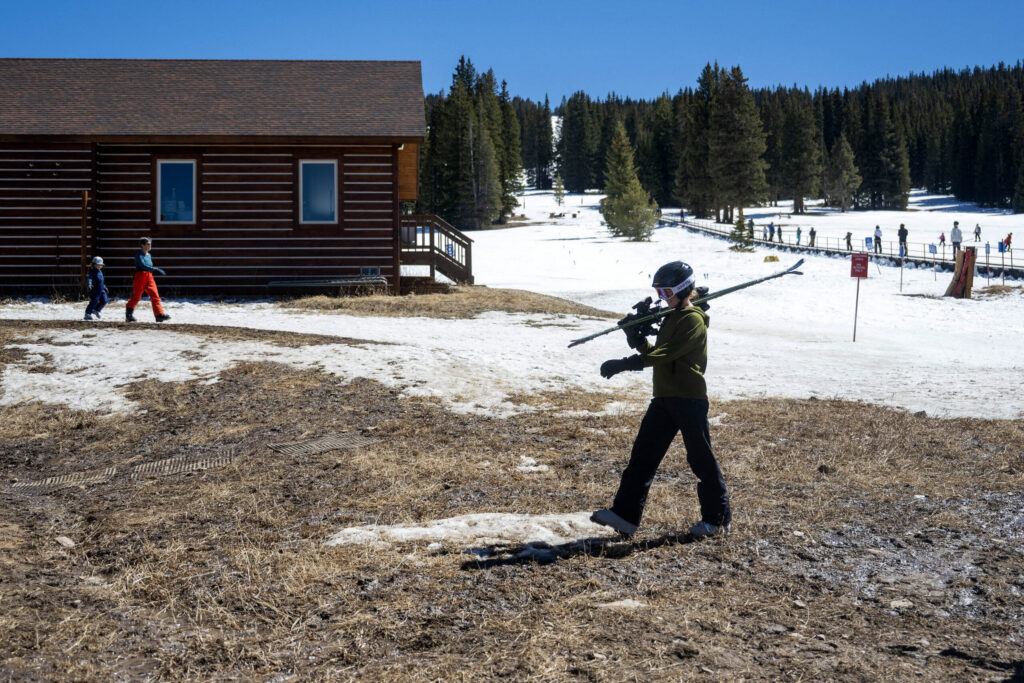
Colorado ski resorts announce early closures amid historic snowpack lows, high temperatures
Kyla Pearce
kyla.pearce@gazette.com
Updated 2 hours ago
Vail Resorts is the latest area to announce season closure Wednesday As Colorado’s historically low snowpack year comes to a close and spring conditions take over the mountains, the state’s major ski resorts are announcing closing dates — some of...

Kentucky Gov. Andy Beshear set to headline Colorado Democrats’ annual fundraising dinner
Ernest Luning
ernest.luning@coloradopolitics.com
Updated 2 hours ago
Kentucky Gov. Andy Beshear, one of the Democrats’ top 2028 presidential prospects, is scheduled to deliver the keynote address at the Colorado Democratic Party’s annual fundraising dinner in June in Denver, the party said Friday. Serving his second term as...
Gov. Polis names new leaders for Colorado health agencies in wake of Medicaid turmoil
Marianne Goodland
marianne.goodland@coloradopolitics.com
Updated 3 hours ago
Gov. Jared Polis, on Thursday, announced he was appointing Gretchen Hammer to serve as acting executive director of the Colorado Department of Health Care Policy and Financing, and deputy executive director Stephanie Beasley to become the next commissioner of the...

Federal judge releases man immediately as consequence for immigration judge disobeying orders
Michael Karlik
michael.karlik@coloradopolitics.com
Updated 1 hour ago
A federal judge ordered a man’s immediate release from immigration detention on Thursday after finding an immigration judge disregarded his prior orders requiring a bond hearing. For the past year, Colorado’s federal district court has faced a flood of “habeas corpus”...
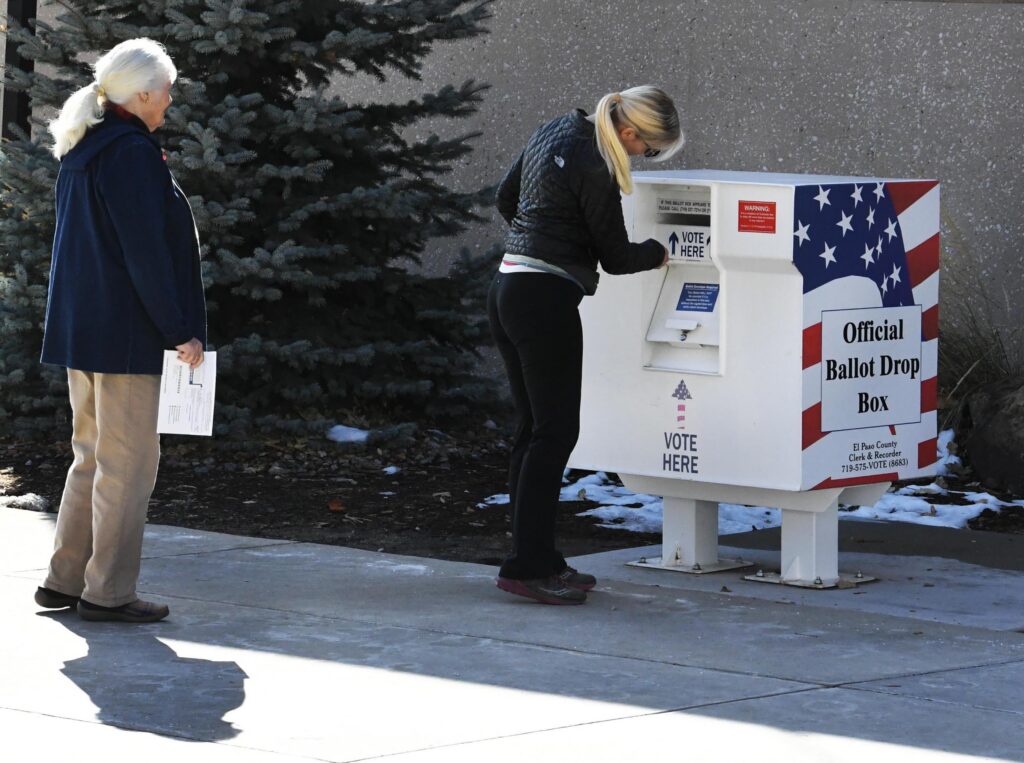
Colorado sues Trump administration, calling new election order ‘unconstitutional’
Marissa Ventrelli
marissa.ventrelli@coloradopolitics.com
Updated 5 hours ago
Colorado Attorney General Phil Weiser has joined a multistate coalition suing President Donald Trump over a new executive order on elections, arguing the directive unlawfully intrudes on states’ authority to run their own voting systems and threatens access to mail...

Trump budget seeks $1.5T in defense spending alongside cuts in domestic programs
Kevin Freking
kevin.freking@associatedpress.com
Updated 5 hours ago
WASHINGTON (AP) — President Donald Trump has proposed boosting defense spending to $1.5 trillion in his 2027 budget released Friday, the largest such request in decades, reflecting his emphasis on U.S. military investments over domestic programs. The sizable increase for...
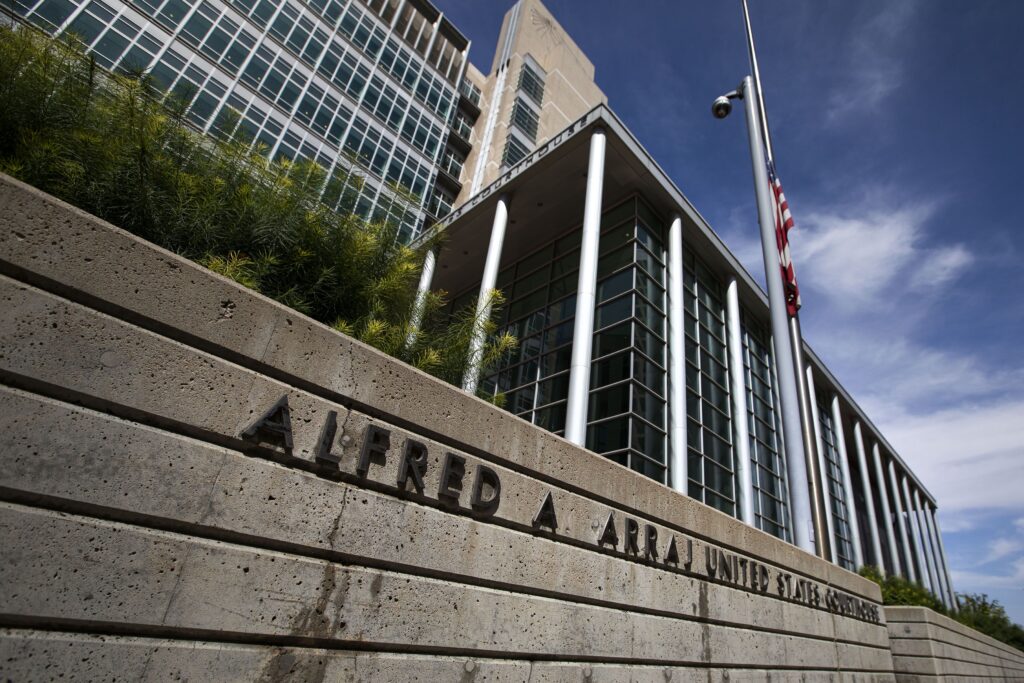
Federal judge sides with Mesa County school district in ex-student’s First Amendment claims
Michael Karlik
michael.karlik@coloradopolitics.com
Updated 6 hours ago
A federal judge concluded last week that Mesa County Valley School District 51 and three of its administrators did not violate the First Amendment rights of a former student when they imposed minor discipline in response to disruptive behavior. In...

Why Colorado’s LGBTQ laws keep getting struck down by the Supreme Court
Jack Birle, Washington Examiner
jack.birle.washington.examiner@gazetteedit.wpenginepowered.com
Updated 4 hours ago
The Supreme Court has been a house of horrors for Colorado over the past decade, with the state facing a trio of major losses over laws it claims it has enacted to protect LGBT people but that the justices found...
Denver Democrat Neal Walia lands endorsement from Ro Khanna in Colorado’s state House District 9
Ernest Luning
ernest.luning@coloradopolitics.com
Updated 1 hour ago
California Rep. Ro Khanna on Friday endorsed legislative candidate Neal Walia in the race for an open state House seat, praising the Denver Democrat’s commitment to public service and progressive goals. Walia, who mounted an unsuccessful challenge against U.S. Rep....