

Colorado senators push legislation for financial relief for Arkansas Valley Conduit
A subcommittee of the U.S. Senate Committee on Energy and Natural Resources on Wednesday got its first look at a bill sponsored by Colorado’s two senators that would help finance the Arkansas Valley Conduit.
S. 5013 is known as Finish the AVC Act. It would extend the period for repaying the federal government for the project from 50 to 100 years and waive interest payments on those federal costs to local water systems
The bill went through a “markup” — an opportunity for tweaks and changes — Wednesday with the subcommittee on water and power, chaired by Sen. Ron Wyden, D-OR.
Sen. John Hickenlooper, D-Denver, one of the bill’s sponsors, is a member of that subcommittee and the Energy and Natural Resources committee.
Wednesday’s hearing included testimony from Sen. Michael Bennet, D-Denver, and Bureau of Reclamation Commissioner Camille Calimlim Touton, who advocated for the bills the subcommittee reviewed.
Hickenlooper noted the bill would “help ensure the affordability of the Arkansas Valley Conduit, a critical infrastructure project in southeastern Colorado” that Bennet had been working on for over a decade. “These communities have been waiting for 60 years to get clean, reliable water. We’re committed to getting that done,” he added.
In his remarks, Bennet noted the decades-long history of the project, which started as a promise from President John F. Kennedy during a 1962 visit to Pueblo. The conduit is the final component of the Frying Pan-Arkansas Project, intended to bring water from the Western Slope to the Arkansas River basin, which slowed to a trickle before reaching the Colorado-Kansas state line. Part of the project included building Pueblo Reservoir.
Bennet added that the conduit will deliver clean drinking water from Pueblo Reservoir for the first time to farmers, ranchers and rural communities in the lower Arkansas River valley.
Bennet noted that the project finally broke ground last year. However, costs have doubled in just the last five years, from $640 million to $1.3 billion, due to inflation and higher labor costs.
That’s resulted in the project slipping further behind, Bennet said. Rural communities—there are 39 water providers paying into the project —are already on the hook for a significant cost share and will struggle to repay the federal government, Bennet added. “As costs continue to rise, it’s important to relieve the burden of interest payments so these underserved communities can make good on their part of the cost-sharing agreement.”
The 39 water providers are responsible for 35% of the project’s cost; the federal government covers the rest. So far, more than $450 million has been invested in the project, largely through the Bipartisan Infrastructure Act. The state of Colorado has invested $120 million in the project, with $90 million in loans and $30 million in grants.
Bennet noted the bipartisan effort to get the conduit started, pointed to the past work of Sen. Cory Gardner, R-Yuma and Reps. Ken Buck, R-Windsor and Scott Tipton, R-Cortez.
“Farmers and ranchers in Southeast Colorado need Congress’s help to get this project across the finish line and access for the first time clean, safe water for their families, for their crop, and for their livestock,” he told the subcommittee.
Touton added that she was at the project’s groundbreaking last year but is more interested in a ribbon-cutting ceremony at its completion.
That will be a while as the project will not be completed until 2039.
Wednesday’s hearing also included markup on a bill (S.4576) to reauthorize the System Conservation Pilot Program, which is directed by the Upper Colorado River Basin.
The program started out as a pilot from 2015 to 2018, to provide funding for voluntary, compensated and temporary conservation of water within the upper basin’s four states (Colorado, Utah, Wyoming and New Mexico). That water would then help shore up levels at Lake Powell and Lake Mead on the Colorado River. But the program was criticized for its cost and limited success in conserving water, including how to measure those savings.
Last year, as part of its response to Touton’s call for two to four million acre-feet of water savings in Colorado, the commission decided to give the program another try, but on a narrower basis. The 2024 program would also help inform the commission on whether to move forward with demand management. This controversial idea relies on some of the same ideas as the SCPP: voluntary, temporary and compensated water conservation by water users, primarily in agriculture.
The Colorado Water Conservation Board examined demand management several years ago but didn’t recommend whether Colorado should participate in a program of that type.
Hickenlooper, who is joined by Sen. John Barasso, R-Wyo. on the bill, said it will help states like Colorado and Wyoming investigate the best ways to take on voluntary water conservation measures between now and 2026, when the interim operating guidelines on the Colorado River expire.
“Understanding now what works best for water conservation in the Upper Basin can help us handle a drier future,” Hickenlooper added.
Both bills got through Wednesday’s hearing without any suggested changes.
The next step a committee vote and then on to the Senate floor.

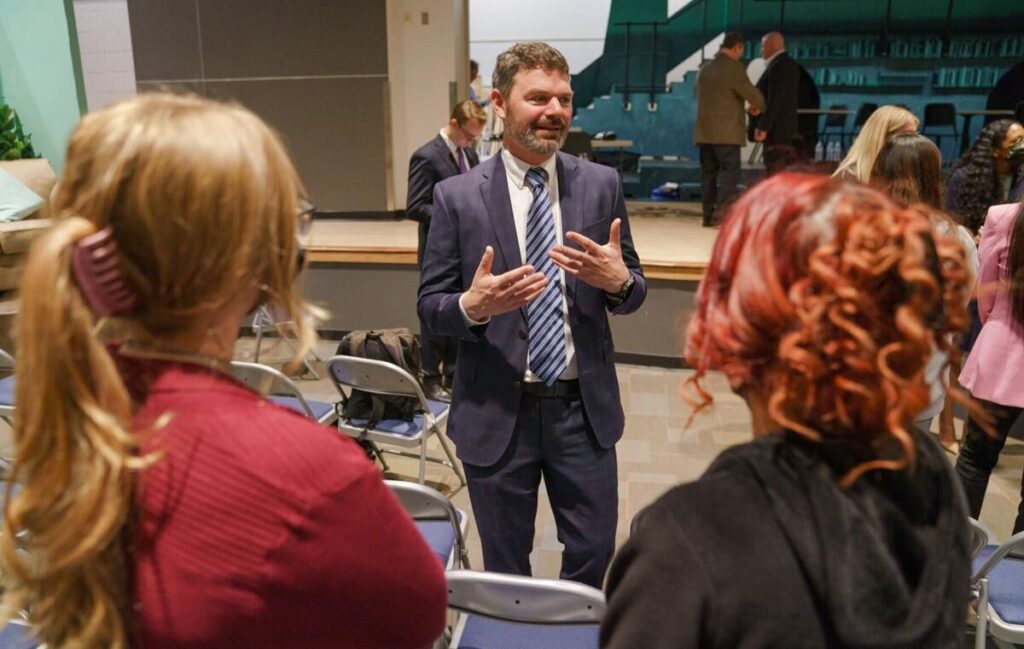
Denver murder conviction reversed for incomplete self-defense instruction
Michael Karlik
michael.karlik@coloradopolitics.com
Updated 3 hours ago
Colorado’s second-highest court reversed a defendant’s murder conviction last week because a Denver judge gave an incomplete instruction to the jury about the man’s right to self-defense. Donald R. Gonzales and Gary McLaughlin met up in a Capitol Hill parking...
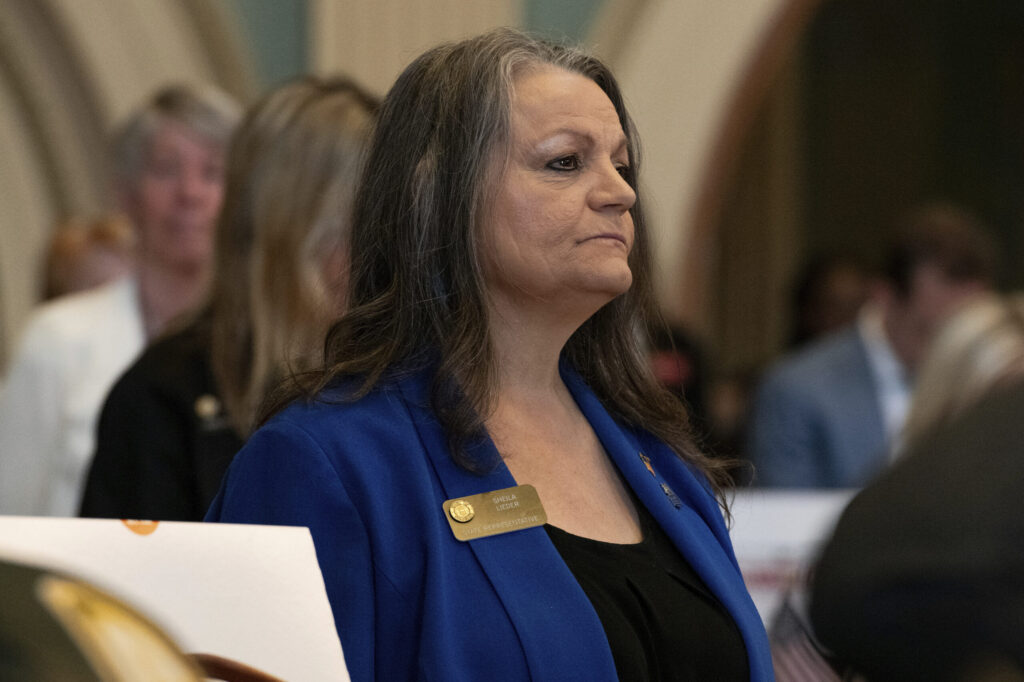
Colorado lawmaker, House leaders named in workplace-retaliation lawsuit
Marianne Goodland
marianne.goodland@coloradopolitics.com
Updated 39 seconds ago
A former legislative aide has filed a lawsuit alleging she was mistreated, illegally directed to perform campaign work and harmed by a House leadership structure she charged was fragmented, politicized and ineffective at protecting employees. The lawsuit, filed by Jennifer...

Secret Service confirms awareness of Iranian state media video threatening Barron Trump’s life
The Associated Press
the-associated-press@coloradopolitics.com
Updated 5 hours ago
WASHINGTON (AP) — The U.S. Secret Service has confirmed it is aware that Iranian state media has aired a video that appears to threaten the life of Barron Trump, President Donald Trump’s youngest son. “The U.S. Secret Service is aware...
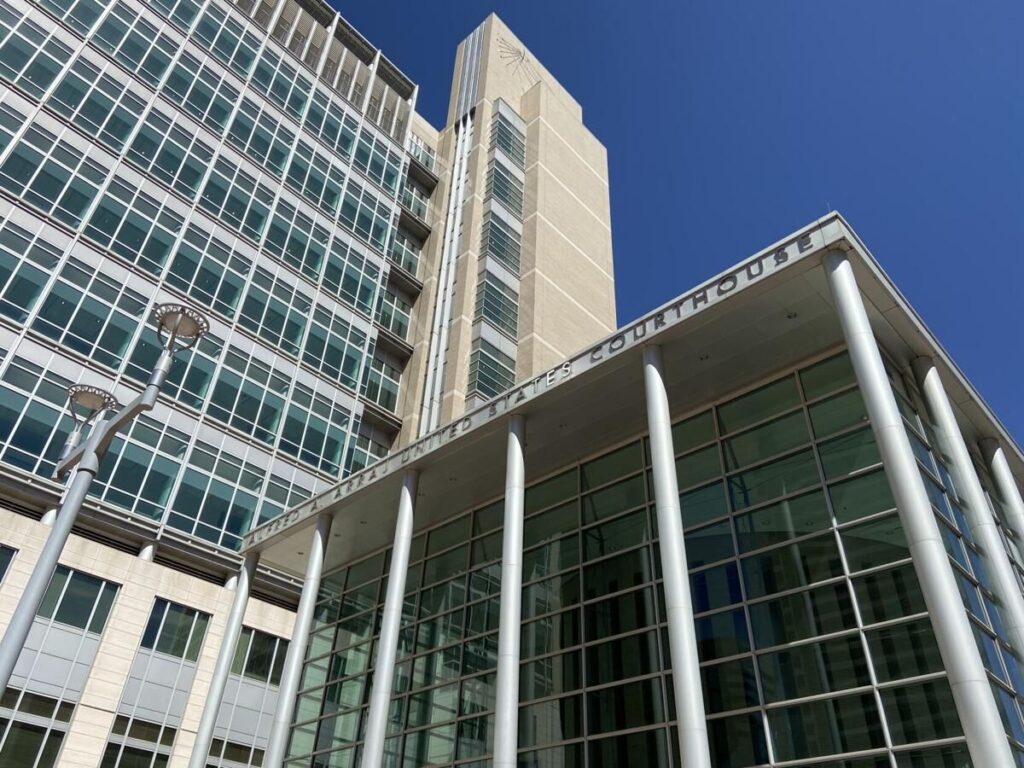
Federal judge hears arguments about Colorado’s 3-day gun purchase waiting period
Michael Karlik
michael.karlik@coloradopolitics.com
Updated 5 hours ago
A federal judge heard arguments on Monday about the constitutionality of a 2023 Colorado law that generally imposes a three-day waiting period on firearm purchases after the initiation of a background check. The test that the U.S. Supreme Court created...
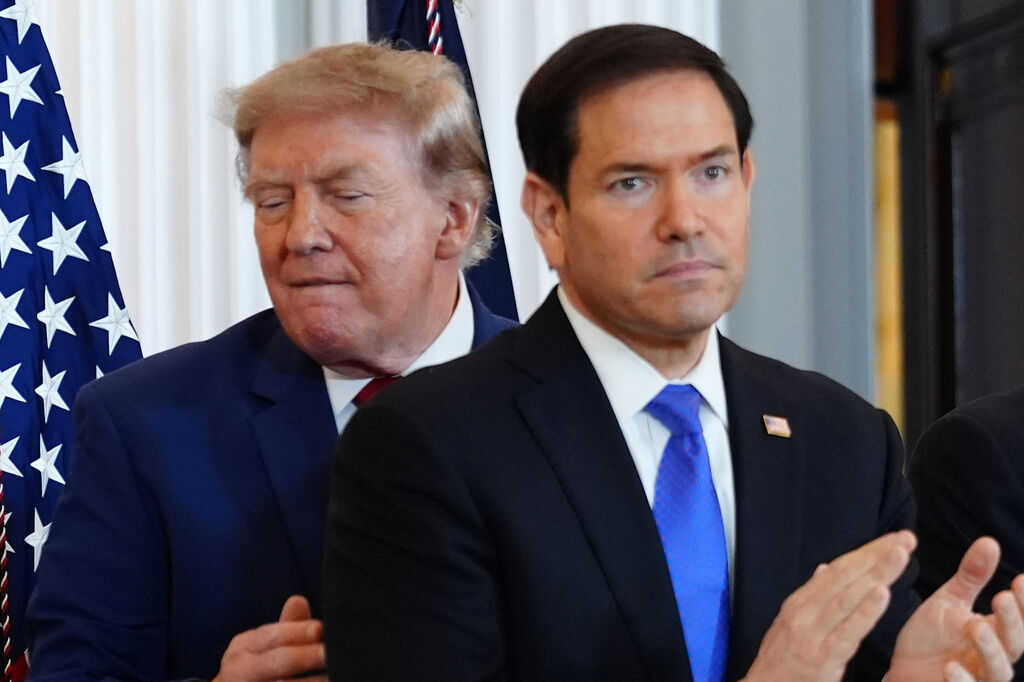
US set for largest mass visa revocation in history targeting up to 200,000 foreigners, officials say
The Associated Press
the-associated-press@coloradopolitics.com
Updated 5 hours ago
WASHINGTON (AP) — The Trump administration is preparing to revoke the business and tourism visas of up to 200,000 foreigners who have applied for or are currently seeking asylum status in the United States. If it happens, the move would...

U.S. Supreme Court clears way for Trump mail voting order in advance of midterms
Wire Services
wire-services@coloradopolitics.com
Updated 20 hours ago
WASHINGTON • The U.S. Supreme Court on Monday cleared the way for President Donald Trump to move ahead with an executive order that seeks to restrict the mailing of ballots to American citizens in an eligible voters list. The executive...
Colorado Supreme Court intervenes in Weld County prosecution dismissed due to Missy Woods misconduct
Michael Karlik
michael.karlik@coloradopolitics.com
Updated 20 hours ago
The Colorado Supreme Court ordered a Weld County trial judge last week to respond to the district attorney’s claim that he improperly dismissed a criminal case because of “outrageous” conduct by the Colorado Bureau of Investigation. Daniel Lee Eatinger stood...

Trump opens ‘economic D-Day’ offensive against Iran as war nears six-month mark
Christian Datoc
christian-datoc@coloradopolitics.com
Updated 1 day ago
President Donald Trump is seeking to increase the financial pressure on Iran with new secondary sanctions on nations and foreign actors propping up the regime’s economy as the war between the United States and Tehran nears the six-month mark. Treasury...

Trump announces 50% tariffs on Canadian cars, auto parts, and steel
Naomi Lim
naomi-lim@coloradopolitics.com
Updated 1 day ago
President Donald Trump escalated the trade war with Canada after talks collapsed last week, announcing Monday that the United States would impose 50% tariffs on cars, trucks, automotive components, and steel starting Jan. 1, 2027. “Canada has been ripping off...

Iran puts out propaganda video tracking Barron Trump’s location, offering $10 million for his assassination
Timothy Nerozzi
timothy-nerozzi@coloradopolitics.com
Updated 1 day ago
The Islamic Revolutionary Guard Corps is putting a hit out on President Donald Trump’s son, Barron Trump, with an inflammatory video claiming to track his location. State-run television in Iran is broadcasting a propaganda video claiming to show the locations...