

Colorado justices reverse murder conviction for police interrogation lacking Miranda warning
A woman convicted of murdering her husband in a Moffat County motel room will receive a new trial after the Colorado Supreme Court concluded on Monday that police failed to provide a Miranda warning before interrogating her.
Rachel Ann Niemeyer and Michael Adam Freese were intoxicated and handling a rifle when the gun went off and fatally shot Freese. Responding officers initially pursued the investigation as a suicide, but the focus turned to Niemeyer’s role. At the police station in Craig, Niemeyer repeatedly questioned whether she shot Freese before stating, “Oh, my god. I shot him.”
Only then did a detective inform Niemeyer of her constitutional rights to remain silent and to consult with an attorney pursuant to the U.S. Supreme Court’s landmark Miranda v. Arizona ruling.
The state’s Court of Appeals divided 2-1 over whether Niemeyer was interrogated in custody without the necessary warning, with the majority deciding she was not. However, the Supreme Court saw otherwise. Moreover, Niemeyer’s apparent confession likely contributed to the jury’s verdict.
“After reviewing the record, we conclude that the statements made by Niemeyer during the interrogation constituted the bedrock of the prosecution’s case,” wrote Justice Brian D. Boatright in the Sept. 9 opinion. “Her incriminating statements laid the foundation for the rest of the case.”


Central to Niemeyer’s appeal was her alleged status in custody at the time of the police questioning. “Custody” does not necessarily mean a formal arrest, but rather a restriction of freedom to the degree associated with an arrest. The failure to provide a Miranda warning generally means prosecutors cannot use a defendant’s in-custody statements as evidence in their case.
“Today’s decision is a victory for fundamental constitutional rights and recognizes the importance of making sure people are advised of their rights, particularly before they are subjected to police interrogation,” said Timothy R. Macdonald, legal director of the ACLU of Colorado, which submitted a brief supporting Niemeyer.
Police responded to the couple’s motel room around 10 p.m. and found Freese had suffered a gunshot wound to the side of his head, with Niemeyer holding him in her arms. Paramedics transported Freese to the hospital.
“Can I please just go see my husband?” Niemeyer asked.
Officer Will Roland replied that “we’ve got to take care of our stuff first.” Niemeyer would repeatedly ask to be driven to the hospital, but each time Roland demurred.


Roland then told Niemeyer he would transport her to “someplace warm” — the police station. He placed Niemeyer in an interrogation room. Once there, he affixed plastic bags around her hands and fastened them with zip ties to preserve any gunshot residue. Subsequent testing showed no gunshot residue on her hands. Freese was never tested, despite the possibility of suicide.
Around midnight, Detective Norm Rimmer entered the interrogation room and told her she was not under arrest. He then removed the plastic bags from Niemeyer and swabbed her hands.
During her conversation with Rimmer, Niemeyer made several incriminating statements: “I think I shot him.” “I think I did it.” “He said there were no bullets.” “Oh, my god. I shot him.” “I don’t remember giving it back to him.” “I thought he did it. But now that I think about it, I think I did it,” she said.
Rimmer then provided Niemeyer a Miranda warning and she immediately invoked her constitutional right to an attorney. Rimmer placed her under arrest.
On appeal, the Court of Appeals concluded Niemeyer was not effectively in custody to the point where a Miranda warning was necessary. Then-Judge John Daniel Dailey, writing for himself and then-Judge David Furman, determined the police’s “actions and statements would have led a reasonable person to believe that she would be on her way to the hospital to check on her husband as soon as the hand-bagging procedure was completed.”
Then-Judge David J. Richman would have overturned Niemeyer’s conviction. Richman noted police collected evidence from her hands and continuously gave her the “runaround” when she asked to leave — amounting to an arrest-like atmosphere, in his view.
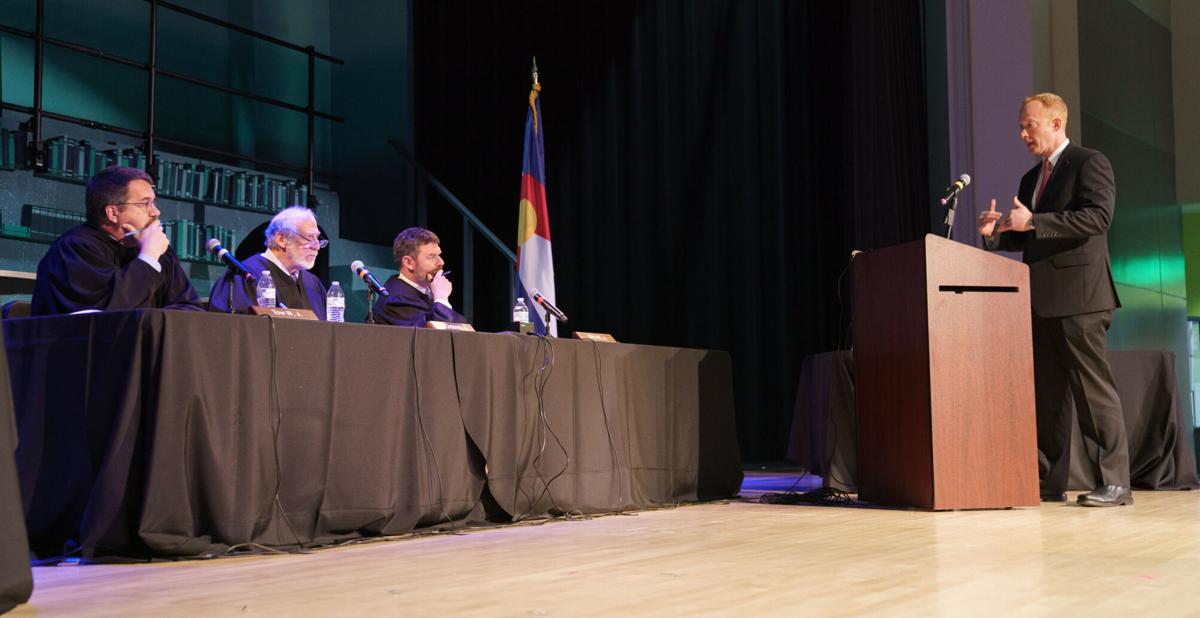
Judges Ted Tow III, David Richman, and Matthew Grove hear oral arguments by State Public Defender Mark Evans, right. STRIVE Prep-RISE high school hosts a Courts in the Community event, featuring oral arguments before a three-judge panel with the Colorado Court of Appeals, at STRIVE Prep – Green Valley Ranch in Denver, Colorado, on Tuesday, April 19, 2022. Photo Steve Peterson
Steve Peterson

Judges Ted Tow III, David Richman, and Matthew Grove hear oral arguments by State Public Defender Mark Evans, right. STRIVE Prep-RISE high school hosts a Courts in the Community event, featuring oral arguments before a three-judge panel with the Colorado Court of Appeals, at STRIVE Prep – Green Valley Ranch in Denver, Colorado, on Tuesday, April 19, 2022. Photo Steve Peterson
Boatright, in the Supreme Court’s opinion, explained some factors supported the notion Niemeyer was not in custody. Specifically, police asked her open-ended questions, said she was not under arrest, spoke conversationally to her and never accused Niemeyer of shooting her husband.
However, many more elements of an arrest-like atmosphere were present, including the late hour and location of the interrogation, plus the restraints on Niemeyer’s hands in the form of gunshot residue-collection bags. As did Richman, the Supreme Court also found the “runaround” treatment significant.
“Importantly, Niemeyer wasn’t merely asking to go home, or simply to be released; she was asking to go to the hospital to be with her husband, who had been shot in the head,” wrote Boatright. “Keeping a person at the police station and refusing to take them to see their severely injured spouse is strongly indicative of custody.”
He added that the incorrect admission of Niemeyer’s statements into evidence was not mitigated by the fact she testified in her own defense. Niemeyer may have testified because of a desire to address her interrogation, Boatright explained, and might have exercised her right not to take the stand if her incriminating statements in custody were properly excluded.
The Supreme Court reversed Niemeyer’s conviction.
The case is Niemeyer v. People.

Colorado judge blasts state forensics lab in dismissing child sex case
Jenny Deam
jenny.deam@gazette.com
Updated 16 seconds ago
In a potentially widely consequential action, a Weld County district judge dismissed a child sexual assault case, citing the ongoing scandal at the Colorado Bureau of Investigation’s forensic lab that “has left a dark mark on the history of Colorado...
10th Circuit sympathetic to Colorado consumer protection law governing interest rates
Michael Karlik
michael.karlik@coloradopolitics.com
Updated 22 hours ago
Members of the Denver-based federal appeals court appeared sympathetic on Tuesday to Colorado’s assertion that it can lawfully require certain out-of-state banks to abide by the state’s own ceilings on interest rates when they lend to consumers in Colorado. The...
Colorado justices to decide insurance companies’ obligation to disclose relevant policies
Michael Karlik
michael.karlik@coloradopolitics.com
Updated 8 hours ago
The Colorado Supreme Court announced on Monday that it will decide whether an insurance company violated state law by withholding an at-fault driver’s policy for nearly a year when there was no dispute that the policy was not in effect...

Judicial performance evaluations released, Montezuma County judge disciplined | COURT CRAWL
Michael Karlik
michael.karlik@coloradopolitics.com
Updated 2 days ago
Welcome to Court Crawl, Colorado Politics’ roundup of news from the third branch of government. Colorado’s citizen-led judicial performance commissions released their voter narratives for the judges standing for retention in November, plus a disciplinary panel imposed consequences on a...
DA justifies CSPD officers in fatally shooting man at McDonald’s
Cleo Westin
cleo-westin@coloradopolitics.com
Updated 24 hours ago
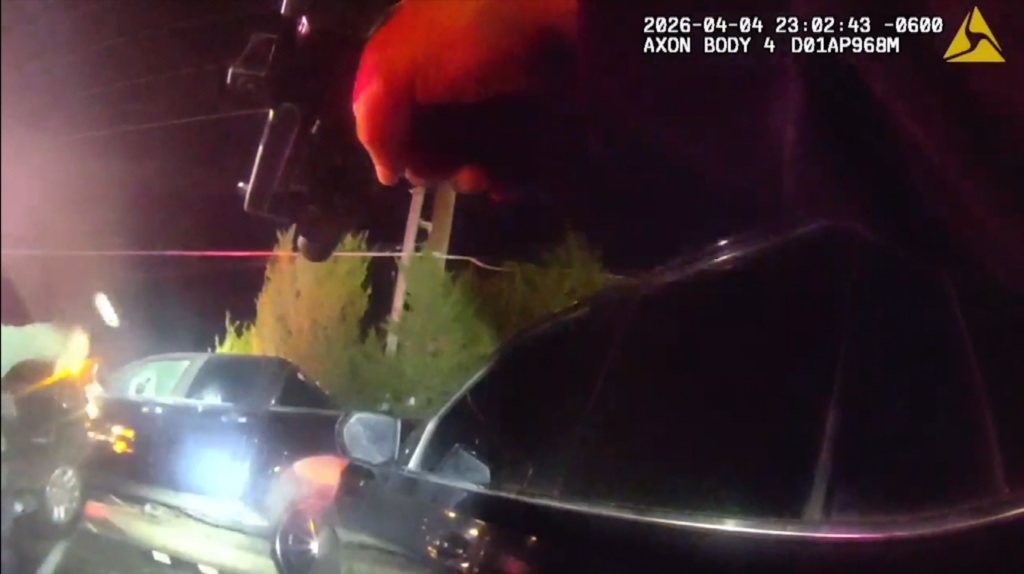
The deadly shooting of a man by Colorado Springs police officers at a McDonald’s was ruled justified by the 4th Judicial District Attorney’s Office on Monday, the office announced in a news release. The ruling determined officers Daniel White, Mitchell...
Federal judge holds off on dismissing formerly bankrupt medical contractor from Jeffco jail death lawsuit
Michael Karlik
michael.karlik@coloradopolitics.com
Updated 20 hours ago
A federal judge declined on Monday to dismiss the formerly bankrupt medical contractor from a lawsuit over a detainee’s death in Jefferson County jail, but indicated she would do so if the plaintiffs’ attorneys go through the process to ensure...
Castle Rock caregiver sentenced after stealing more than $110,000 in jewelry from family
Nicholas Fogleman
nicholas.fogleman@denvergazette.com
Updated 1 day ago
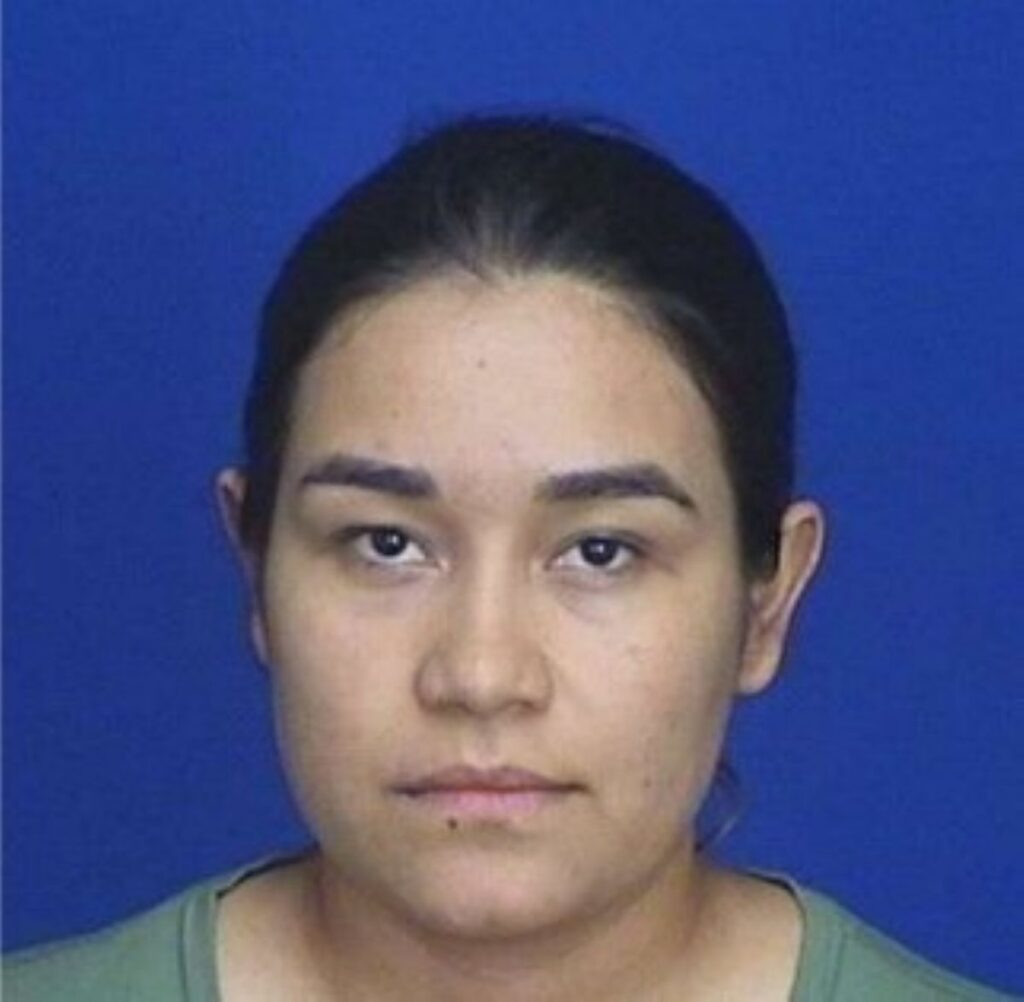
A judge sentenced a Castle Rock caregiver to 90 days in jail after she pleaded guilty to stealing more than $110,000 worth of jewelry from the family of a disabled son under her care. Elsa Montejo-Fuentes, 32, had worked for...
Federal judge green-lights excessive force, retaliation claims for trial against Fort Collins officers
Michael Karlik
michael.karlik@coloradopolitics.com
Updated 4 days ago
A federal judge green-lit a jury trial last week against multiple Fort Collins police officers on claims that they used excessive force on one man who was standing unarmed in his underwear, and retaliated against another man for exercising his...

10th Circuit revives wage violation lawsuit against Papa John’s operator
Michael Karlik
michael.karlik@coloradopolitics.com
Updated 5 days ago
The Denver-based federal appeals court on Tuesday reinstated a former Papa John’s delivery driver’s lawsuit alleging violations of federal and state wage law. Steve Mighell worked for one month at a Denver Papa John’s location in summer 2023. He alleged...
Colorado appeals judge’s delays in releasing opinions noted by performance commission
Michael Karlik
michael.karlik@coloradopolitics.com
Updated 4 days ago
The citizen-led performance commission that provides guidance to voters about whether to retain members of Colorado’s second-highest court raised concerns by judges and attorneys that Judge Elizabeth L. Harris sometimes struggles with releasing opinions promptly. Harris, who joined the Court...