

New chief justice fields questions, 115 judges get positive retention reviews | COURT CRAWL
Welcome to Court Crawl, Colorado Politics’ roundup of news from the third branch of government.
Colorado’s new chief justice spoke about her path to the top job and her intended focus over the next three years, plus voters received the first peek at the performance evaluations for 100+ judges and justices standing for retention this year.
Chief Justice Márquez speaks
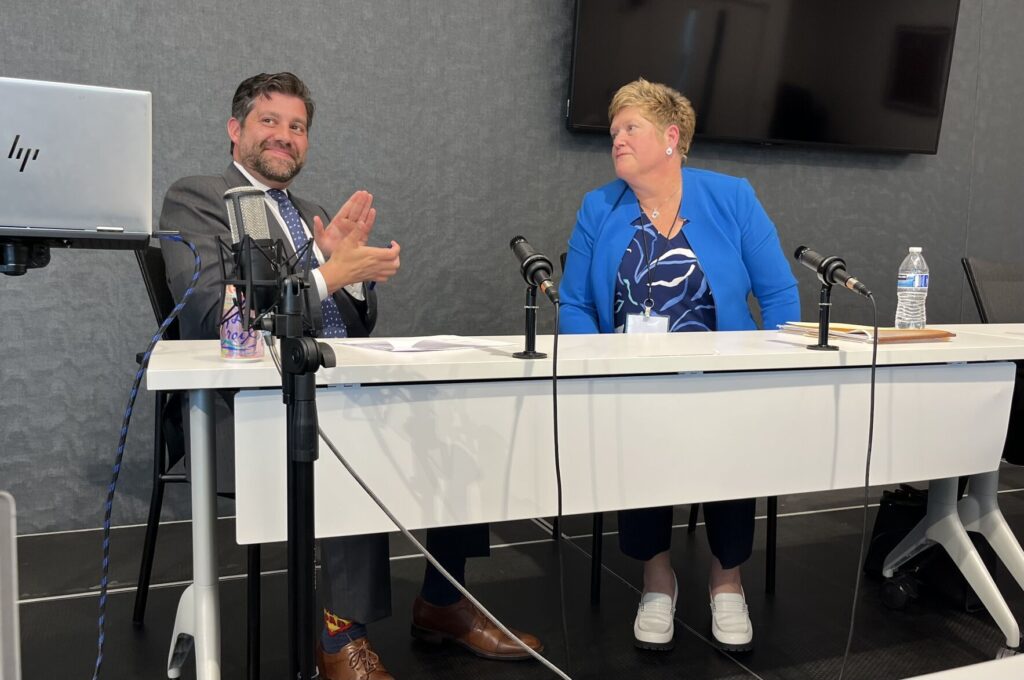
• Last month, in a long-planned rotation, Brian D. Boatright stepped down as chief justice of the Colorado Supreme Court and Monica M. Márquez stepped in. Readers may recall that the court instituted an approximately three-year term for the judicial branch’s top job in 2020, in part to foster turnover among a bench of seven people who are all close to the same age. Márquez spoke to Colorado Politics about some of the current topics of importance to the judiciary. Here is an excerpt:
Colorado Politics: Chief Justice Brian Boatright once said that his onboarding for the job four years ago was that former Chief Justice Nathan Coats sat down with him 30 days before the transition and asked him, “What would you like to know?” Can you describe how your onboarding was different?
Márquez: I think Justice Boatright’s statement was somewhat in jest. He did participate in an onboarding process, but it was informal and condensed into a few months prior to being sworn in as chief justice. We recognize that our earlier process was not ideal….
The year-long formal onboarding process has allowed me to shadow the chief, sit in on critical meetings, undergo a series of HR and management trainings and get to know key constituencies across the state. I know that this process will also allow for a smooth transition a few years from now.
CP: Compared to four years ago, when the Supreme Court announced that Justice Boatright would be chief and you would be the chief who was next in line, this time the court hasn’t said who will succeed you. Why is that?
Márquez: The court has decided that going forward, our chief justice transitions will take place during the summer (around Aug. 1), when things are quieter. The next incoming chief justice will be announced at the time that individual starts the year-long onboarding process. So, approximately two years from now, in the summer of 2026, we will announce the incoming chief who will take over in the summer of 2027.

Supreme Court Justice Monica M. Márquez smiles during a swearing-in ceremony for the first-ever class of licensed legal paraprofessionals, a newly authorized occupation allowed to practice law to a limited extent. The LLPs took an oath of office in the Colorado Supreme Court’s courtroom on Thursday, June 20, 2024. (Stephen Swofford, Denver Gazette)
Retention time
• This November, voters will collectively decide whether to retain 116 judges and justices across the state. Everyone will vote on Supreme Court and Court of Appeals members, and also vote on the trial judges assigned to their judicial district. The citizen-led performance commissions gave favorable reviews to 115 judges and found one county court judge did not meet performance standards.
• Because the reviews are generated by 24 commissions — 22 by geographical district, one for appellate judges and one for Denver County Court — there were some differences in their output. One commission, for example, chose to tell voters whether judges were current on their financial disclosures and whether they had any disciplinary history. Another commission took separate votes on retention and performance. Colorado Politics has the full details here.
Heard on appeal
• The state Supreme Court will evaluate whether vehicular homicide owing to intoxicated driving is always a “grave and serious” offense for purposes of sentencing, and how much detail may be disclosed about child abuse reports.
• The Court of Appeals determined a subcontractor working on the Regional Transportation District’s commuter rail lines asked for more money than it was realistically owed, triggering a provision of state law that required forfeiture of its entire claim — including the money a judge had already awarded.

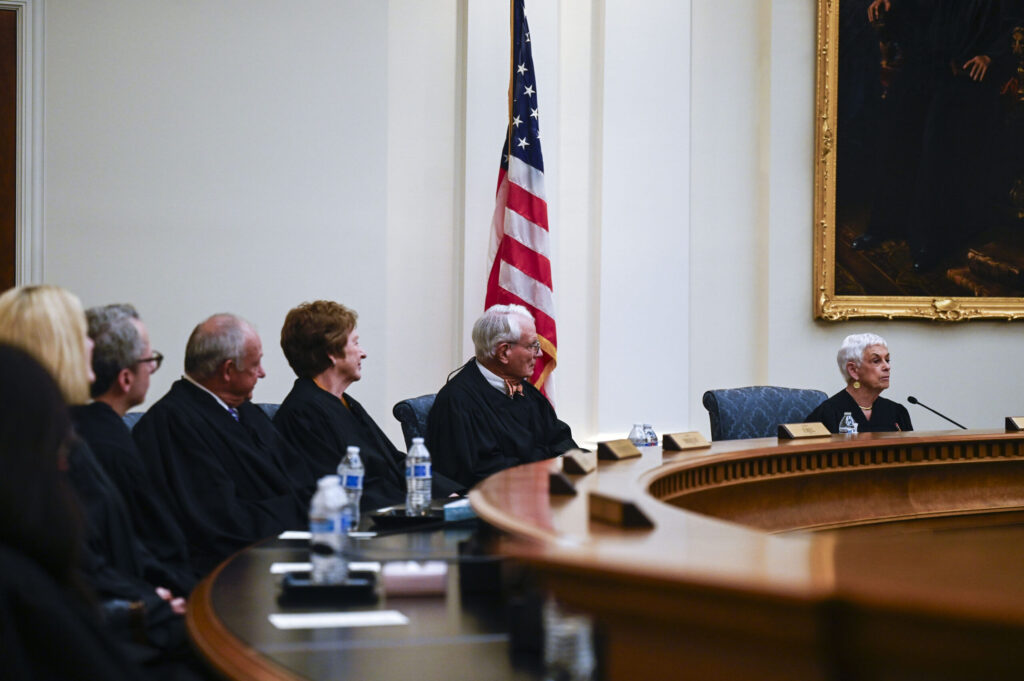
FILE PHOTO: Members of Colorado’s Court of Appeals gather at the ceremonial swearing-in of Judge Grant T. Sullivan.
• A lawyer who was serving as a criminal juror watched “12 Angry Men,” did his own legal research and tried to persuade other jurors of the defendant’s guilt. The Court of Appeals ordered a new trial after finding the damaging, outside legal information likely influenced the verdict.
• The Colorado Attorney General’s Office asked the Court of Appeals to reconsider its decision to grant a new trial to a defendant, raising an argument the government had never previously made. It did not go well.
• Due to governmental immunity, Grand Junction’s police union cannot pursue class action claims on behalf of all city employees that Grand Junction allegedly committed malfeasance while administering a health insurance program for retirees.
• A Denver judge was wrong to dismiss a man’s lawsuit challenging the $600 the state’s health department required him to pay for an open records request, the Court of Appeals decided, while also scolding his lawyer for her inflammatory rhetoric.
• The Court of Appeals took no issue with a lawyer who admitted his client’s guilt to the jury on a trio of less-serious charges, apparently without consulting the defendant.

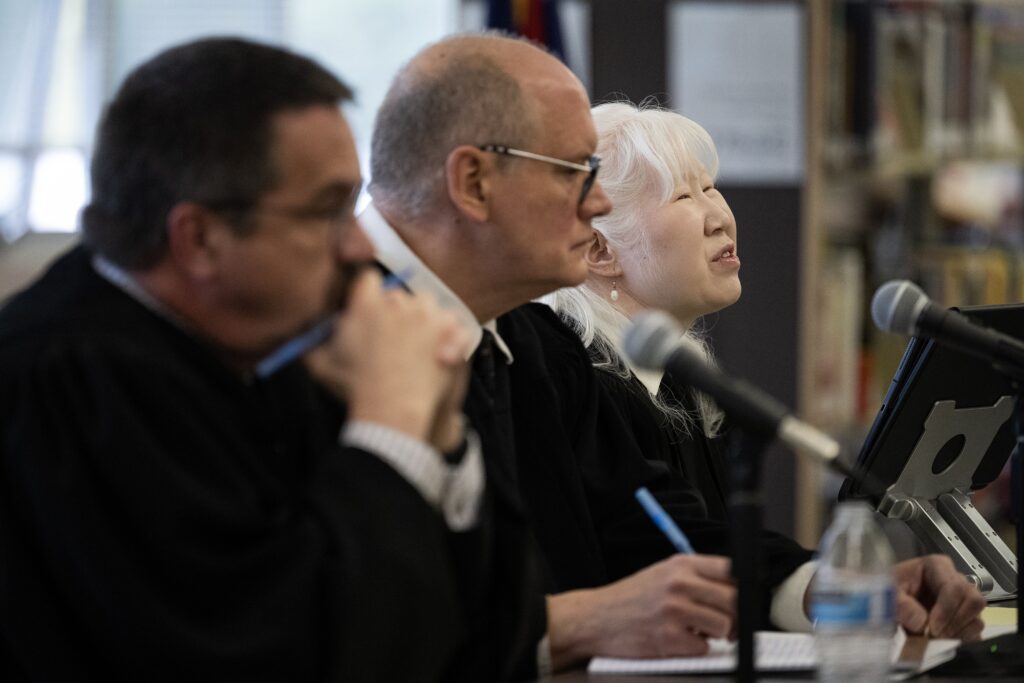
Colorado Court of Appeals Judges Stephanie Dunn, Neeti V. Pawar and Grant T. Sullivan listen to the case of Strange v. GA HC Reit Liberty CRCC, LCC at Fort Lupton High School on Tuesday, April 2, 2024 in Fort Lupton, Colorado. The Colorado Court of Appeals and Supreme Court hold “Courts in the Community” events for students to learn about the justice system and hear real cases. (Rebecca Slezak For The Denver Gazette)
• Although children can be in a harmful environment even if the parents aren’t responsible for it, the state’s child neglect laws do require courts to look at the environment with the parents and not at the foster home, the Court of Appeals clarified.
• Two experts testified about their analysis of a defendant’s DNA and fingerprint, linking it to the weapon used to shoot the victim. The problem, said the Court of Appeals, is that no one could describe what happened to the forensic samples prior to arriving for analysis.
In federal news
• In a welcome development, the judges on Colorado’s federal trial court collectively slashed the number of motions that have been pending for six months or longer in civil cases. A handful of judges who were habitually backlogged managed to get up to speed, and even received some assistance from outside the court.
• A federal judge concluded a Denver Health paramedic had not shown he was terminated due to his sexual orientation, as the evidence instead pointed to his performance issues.
Vacancies and appointments
• There are three finalists to succeed Judge Anthony J. Navarro on the Court of Appeals, as he is not standing for retention this year: Broomfield District Court Judge Priscilla J. Loew, Supreme Court staff attorney Melissa C. Meirink and Jefferson County District Court Judge Christopher C. Zenisek. With the appointment, Gov. Jared Polis could potentially create gender balance on the 22-member court, as there are now 12 men and 10 women. He could also add another member with experience as a trial judge, bringing the total up to six of the current judges.
• The governor appointed cattle rancher Pamela E. Johnston to the Kiowa County Court, where she succeeds retiring Judge Gary W. Davis.
Miscellaneous proceedings
• An Arapahoe County judge cleared the way for dissidents in the state Republican Party to hold a vote on removing Dave Williams as chair.
• An audit found the Colorado public defender’s office handles caseloads that exceed recommended standards, and suggested doing a study of public defenders’ hours worked.


Federal judge blocks USDA ‘pilot project’ affecting Colorado food assistance
Michael Karlik
michael.karlik@coloradopolitics.com
Updated 14 hours ago
A federal judge blocked the U.S. Department of Agriculture on Wednesday from proceeding further with a “pilot project” that would require five Colorado counties to rapidly recertify more than 100,000 households for food assistance. In a brief ruling from the...
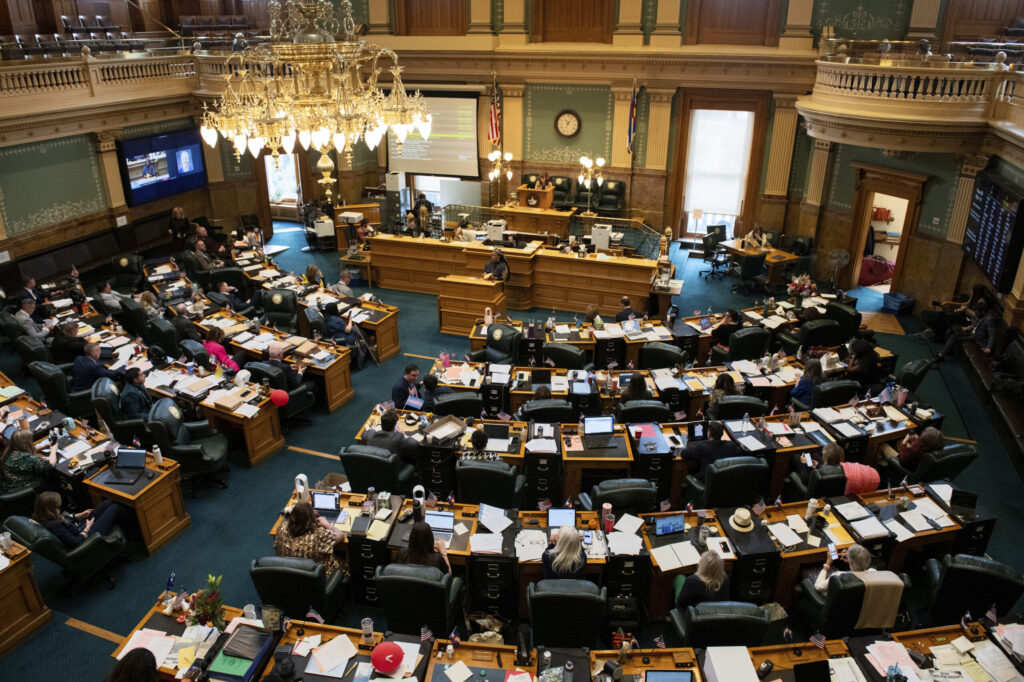
Colorado lawmakers hear about increased judicial discipline complaints, fallout from Missy Woods misconduct
Michael Karlik
michael.karlik@coloradopolitics.com
Updated 18 hours ago
Members of the Colorado legislature’s judiciary committees heard about a large increase in complaints against judges and additional forensic misconduct that has come to light, during three days of oversight hearings last week. Leaders of several judicial-related agencies appeared between...
Federal judge warns DOJ against raising repeatedly rejected arguments in immigration detention cases
Michael Karlik
michael.karlik@coloradopolitics.com
Updated 18 hours ago
A federal judge in Colorado warned the U.S. Department of Justice on Monday against raising arguments that she and other judges have repeatedly rejected in cases challenging the lawfulness of immigration detentions. In a Jan. 26 order finding the government...

Colorado Supreme Court to address child’s CCTV testimony
Michael Karlik
michael.karlik@coloradopolitics.com
Updated 2 days ago
The Colorado Supreme Court announced on Monday that it will review the impact of a victim’s closed-circuit testimony on the prosecution of a juvenile defendant. At least three of the court’s seven members must agree to hear an appeal. There...

10th Circuit to hold all-judges hearing, judicial committee turns down ‘civility code’ | COURT CRAWL
Michael Karlik
michael.karlik@coloradopolitics.com
Updated 2 days ago
Welcome to Court Crawl, Colorado Politics’ roundup of news from the third branch of government. The Denver-based federal appeals court agreed to hold a rare all-judges hearing in a criminal case, plus a state Supreme Court committee overwhelmingly rejected a...

Divided Colorado Supreme Court curtails use of laced-substances defense
Michael Karlik
michael.karlik@coloradopolitics.com
Updated 16 hours ago
The Colorado Supreme Court on Monday walked back the ability of criminal defendants to claim their conduct was the result of consuming an intoxicating substance that secretly contained another behavior-altering substance. Under state law, “involuntary intoxication” is an affirmative defense,...
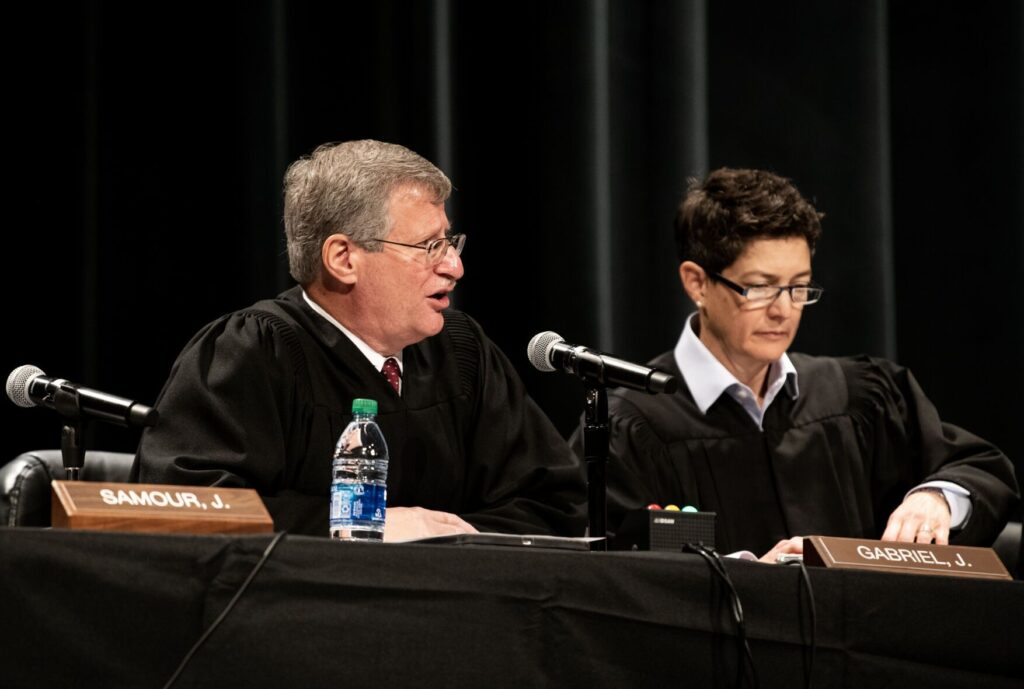
Colorado justices say utilities commission overreached by immunizing Xcel in rate document
Michael Karlik
michael.karlik@coloradopolitics.com
Updated 3 days ago
Xcel Energy cannot rely upon a rate-setting document to broadly immunize itself from liability against electrocutions, the Colorado Supreme Court ruled on Monday. The justices originally heard the electrocution-related lawsuit from Francisco Cuevas to decide whether Xcel’s tariff, which sets...
Colorado Supreme Court committee rejects civility proposal amid fears of weaponization by judges, ‘jerks’
Michael Karlik
michael.karlik@coloradopolitics.com
Updated 3 days ago
The Colorado Supreme Court’s Civil Rules Committee overwhelmingly rejected a proposal last week to create an enforceable “civility code” for lawyers and legal paraprofessionals, which would allow judges to quickly impose corrective action without a formal complaint and investigation by...
10th Circuit to address resentencing of probation violators in rare all-judges hearing
Michael Karlik
michael.karlik@coloradopolitics.com
Updated 4 days ago
The Denver-based federal appeals court agreed on Thursday to hold a rare all-judges hearing to determine the proper procedure for resentencing a criminal defendant who has violated the terms of his probation. In the federal appellate courts, the vast majority...
Appeals court overturns Adams County sex offense convictions due to prosecutor’s misconduct
Michael Karlik
michael.karlik@coloradopolitics.com
Updated 4 days ago
Colorado’s second-highest court reversed multiple child sex assault convictions on Thursday after concluding an Adams County prosecutor committed misconduct while cross-examining the defendant. A three-judge Court of Appeals panel observed the charges against Daniel Michael Boerner depended on the jury...