

Check out these past primary election stunners; appeals courts split over noise limits; Senate panel pursues probe of lawmaker accused of intoxication | WHAT YOU NEED TO KNOW
Today is June 21, 2024, and here’s what you need to know:
From upsets to pepper spray, Colorado has seen its share of primary election stunners | TRAIL MIX
Given this year’s topsy-turvy primary campaigns and Colorado’s panoply of precedents, it’d almost be more of a surprise if there weren’t a few more in store, writes reporter Ernest Luning, who looked back at a half dozen recent primary election stunners — unforeseen developments that spun heads and left jaws dropped.
Here’s one:
Already a minor celebrity in some circles as the owner of a gun-themed restaurant in Rifle, Boebert burst on the political scene in 2020, parlaying a confrontation over the Second Amendment with a Democratic presidential candidate into a feisty primary challenge that took five-term U.S. Rep. Scott Tipton by surprise. Claiming the mantle of Trump — who had already endorsed Tipton — Boebert accomplished what no Colorado politician had done in nearly five decades when she defeated an incumbent in a congressional primary.
Colorado Senate candidate owed child support, faced tax liens, registered to vote in 2 states at the same time
A Republican candidate who is running the Colorado state Senate faced tax liens and owed $40,000 in child support.
Timothy Arvidson, who is running to represent the Douglas County-based Senate District 2, earlier admitted he made mistakes in his past.
New information revealed that Arvidson has had five DUIs. He pleaded guilty to driving while impaired on two cases, including for an arrest in Arapahoe County in March 2002, which was adjudicated the following August.
Appeals court splits with itself on statewide noise limits, sets up Supreme Court intervention
Colorado’s second-highest court on Thursday set the stage for Supreme Court intervention by finding local governments cannot authorize concerts on private, for-profit land to exceed noise limits under state law — three months after another set of appellate judges reached the opposite conclusion.
A three-judge panel for the Court of Appeals concluded the state’s Noise Abatement Act envisioned that Colorado, local governments and nonprofits could allow for excess decibel levels during cultural events, but only for property they own or use.
Consequently, a privately owned and used venue in Chaffee County would not qualify for an exception to noise limits.
Colorado ethics panel finds probable cause to investigate lawmaker accused of intoxication
A Senate panel on Thursday decided to investigate the actions of a legislator accused of showing up intoxicated at a city council meeting in her district.
The panel unanimously agreed that a probable cause exists to look into an ethics complaint filed by the Northglenn City Council against Sen. Faith Winter, D-Westminster, for her behavior during the April meeting.
Northglenn’s councilmembers alleged that Winter failed to uphold her duties as a senator when she appeared to be intoxicated on April 3, in which the city council and residents discussed a proposal to locate a behavioral center in Northglenn.
Meeting attendees noted Winter “appeared to have glassy eyes, slurred speech, and some individuals smelled alcohol on her breath,” and that she seemed to be “disinterested, annoyed, and combative” during the meeting.
Federal judge blocks Colorado's new cap on interest rates for out-of-state banks
A federal judge on Tuesday concluded Colorado may not subject out-of-state banks to Colorado’s interest rate caps when they lend to Colorado residents, as envisioned under a new consumer protection law set to take effect on July 1.
U.S. District Court Judge Daniel D. Domenico issued a preliminary injunction applying to members of three banking industry groups, which argued Colorado exceeded its authority by “exporting” its own limits on interest rates to banks chartered in other states. Domenico noted he was tasked with interpreting federal law in a novel context, and he repeatedly criticized Congress for using unclear language.
Nonetheless, he believed Colorado’s ability to regulate excessive interest rates on loans “made in” the state was evident enough: the bank is the one that makes the loan, so Colorado’s authority extends only to its own state-chartered banks.


Colorado Democrat Julie Gonzales launches US Senate primary challenge to incumbent John Hickenlooper
Ernest Luning
ernest.luning@coloradopolitics.com
Updated 11 minutes ago
Declaring that Colorado “needs a fighter, not a bystander,” state Sen. Julie Gonzales, a Denver Democrat, on Monday launched her long-anticipated primary challenge to U.S. Sen. John Hickenlooper. Pitching her campaign as a departure from “old-playbook politics,” Gonzales said she’s...
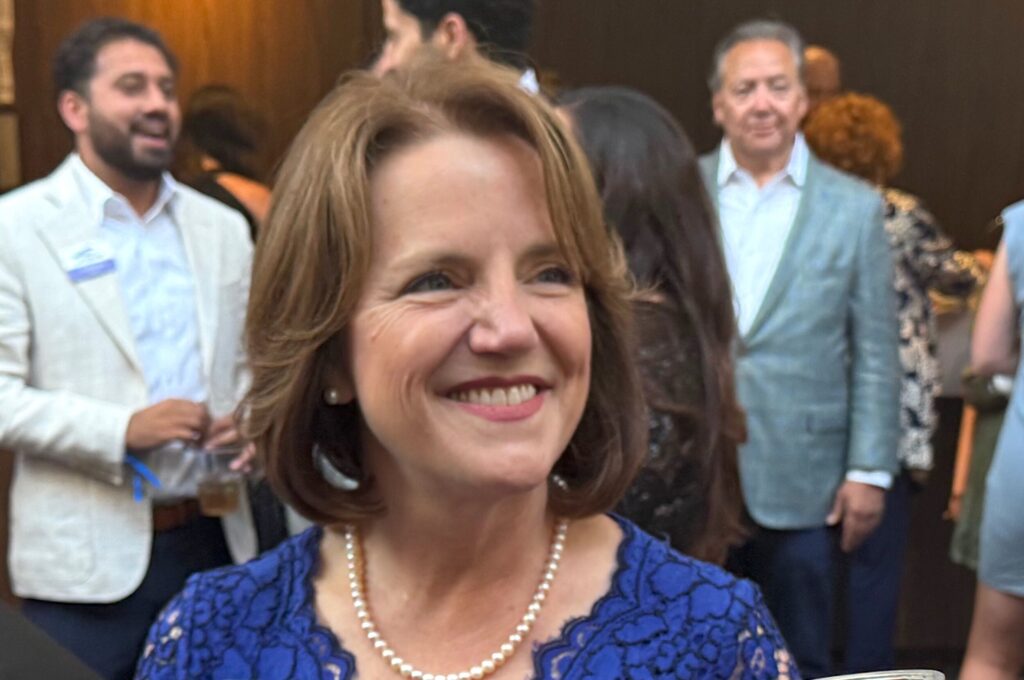
Democrat Shannon Bird to step down from Colorado legislature to campaign full-time for Congress
Ernest Luning
ernest.luning@coloradopolitics.com
Updated 1 hour ago
State Rep. Shannon Bird, a Westminster Democrat, said Sunday that she plans to resign from the Colorado legislature next month in order to focus on running for the 8th Congressional District seat held by Republican U.S. Rep. Gabe Evans. Bird...

Trump administration seeks to roll back protections for imperiled species | OUT WEST ROUNDUP
The Associated Press
the-associated-press@coloradopolitics.com
Updated 4 days ago
MONTANA Endangered species rollback sought BILLINGS — President Donald Trump’s administration moved on Nov. 19 to roll back protections for imperiled species and the places they live, reviving a suite of changes to Endangered Species Act regulations from the Republican’s...
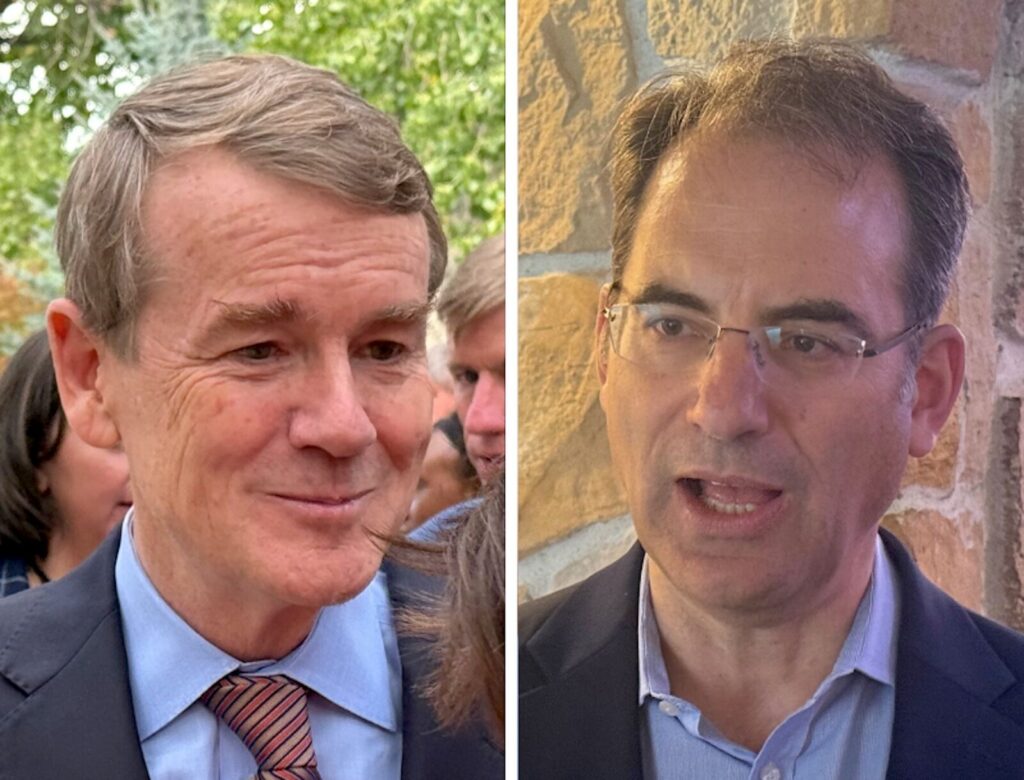
Clash of the titans: Democratic race for governor pits two candidates similar in focus, but very different in style | Vince Bzdek
Vince Bzdek
vince.bzdek@gazette.com
Updated 23 hours ago
By Vince Bzdek The race for governor is shaping up to be a clash of Democratic titans, U.S. Sen. Michael Bennet and Attorney General Phil Weiser. They are two of Colorado’s highest profile politicians with deep track records who...

Calendar Dec. 8-14
Rachael Wright
rachael.wright@coloradopolitics.com
Updated 5 days ago
CoPo’s weekly political calendar will help you find political and public-policy events throughout Colorado. It includes candidate and issue campaign events, public policy meetings, court hearings, state and local party conventions, assemblies, debates, rallies, parades, speaking engagements, traveling dignitary appearances,...
GOP chair candidates circle Benson, statehouse candidate alleges SOS voter fraud | A LOOK BACK
Rachael Wright
rachael.wright@coloradopolitics.com
Updated 5 days ago
Thirty-Five Years Ago This Week: Although Colorado Republican Party Chairman Bruce Benson had told one of his predecessors that he hadn’t yet made up his mind as to whether he’d run for a third term, party insiders had already begun...
Dear Abby: A better answer to your question | SONDERMANN
Eric Sondermann
eric-sondermann@coloradopolitics.com
Updated 3 days ago
It was the beginning of October. I had been invited to speak to a class on political journalism at Colorado College, my old alma mater. The class was taught by none other than Vince Bzdek, the editor-in-chief of this paper...

Federal judge declines to order Denver to let police critic apply for review board
Michael Karlik
michael.karlik@coloradopolitics.com
Updated 20 hours ago
A federal judge declined on Friday to order that Denver permit a longtime police critic to apply to join the board tasked with reviewing officers’ use of force. Regan Benson sought to become one of the two community members on...
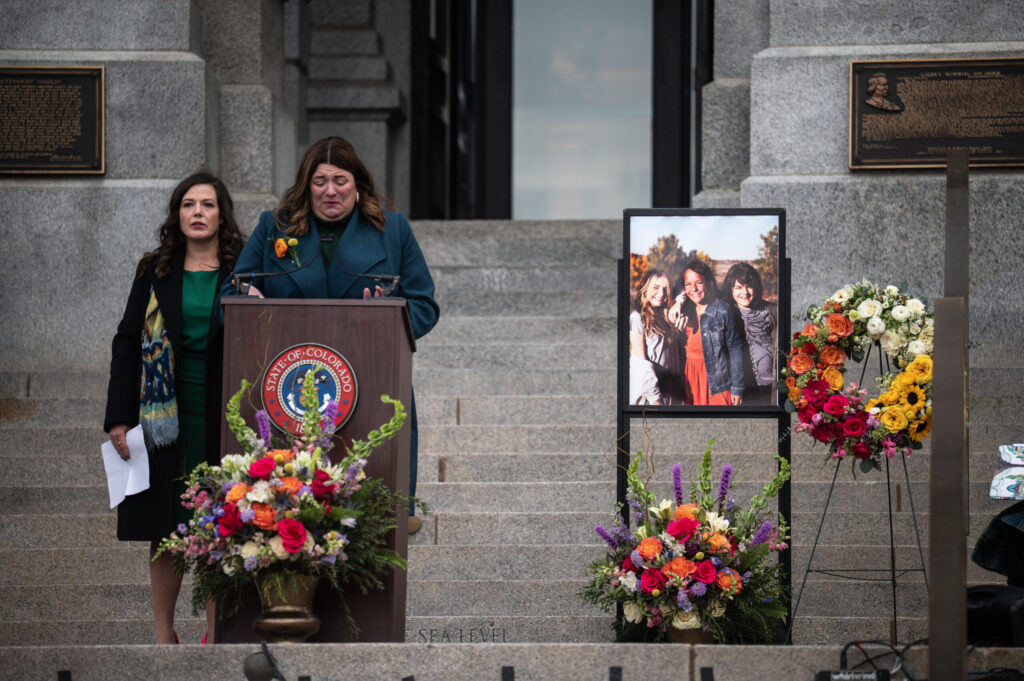
Flags lowered, colors raised: Colorado leaders and friends celebrate Sen. Faith Winter’s life
Marianne Goodland
marianne.goodland@coloradopolitics.com
Updated 3 days ago
It was the colors that stood out as hundreds braved the cold on Friday to celebrate the life of Sen. Faith Winter, who died in a two-car crash on Nov. 26. Flags at the state Capitol flew at half-staff at...
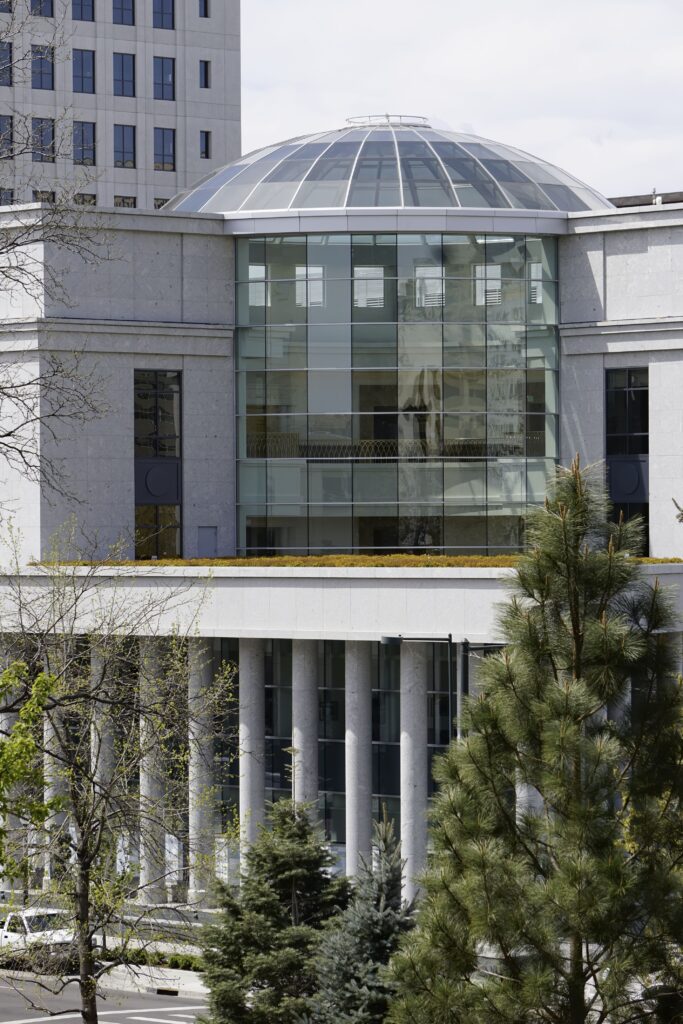
Colorado Supreme Court to hear case on ballot measure disclosure requirements
Marissa Ventrelli
marissa.ventrelli@coloradopolitics.com
Updated 3 days ago
The Colorado Supreme Court has agreed to hear a case challenging whether the state can require ballot measure committees to disclose the names of their registered agents in election communications. The case stems from a complaint filed during the 2020...