

Ranchers press Colorado wildlife officials for answers in daylong summit on wolves in North Park
Jeff Davis, director of Colorado Parks and Wildlife, walked into something of a wolf’s den on Saturday.
Nearly 100 people — ranchers, state and local elected officials, conflict resolution specialists, nonprofit staffers from pro-wolf groups, outfitters, media and representatives of the wildlife agency — traveled to the ranch of Don and Kim Gittleson, just north of Walden, to talk about the issue that has consumed people’s energies particularly after the state officially introduced wolves in December.
The Gittleson’s ranch and Jackson County have been ground zero for attacks on livestock and working cattle dogs. In four years, the state wildlife agency reported that 23 cattle, sheep and working dogs have been killed or injured by wolves that migrated from Wyoming. Gittleson lost 11 on his ranch, which sits just 12 miles south as the crow flies from the Wyoming state line.
Two of the original wolf pack that numbered around six are still in the area and still killing cattle, the most recent just a week ago, on a different Jackson County ranch.
The rest went back to Wyoming, where at least three were killed as nuisances. The killings were allowed under Wyoming law.
“When you get into my shoes, everything becomes about wolves,” Gittleson said on Saturday, a sentiment echoed by other ranchers, local elected officials and business owners.
But what worries the local ranchers almost as much as the wolves on the ground now are the next batch of the apex predators — about 15, coming from Washington state sometime at the end of the year and into 2025. Ranchers claim the wolves that will be sent to Colorado already have a history of depredation.
What’s the hurry? Ranchers asked Davis.
Proposition 114, the 2020 ballot measure that required CPW to reintroduce gray wolves to Colorado by the end of 2023, didn’t say how many wolves had to be brought to the state. That was left up to the parks and wildlife commission, which previously fought against bringing wolves to Colorado for years.
The state agency had struggled to find states that would allow their gray wolves to be brought to Colorado. The request was turned down by Idaho, Montana and Wyoming. Oregon sent 10, including from a pack with a history of killing livestock that took place less than six months before they came to Colorado.
“We hear you,” said several state lawmakers at the Gittleson summit, which drew state Sens. Dylan Roberts (D-Summit County), Perry Will (R-New Castle) and Byron Pelton, R-Sterling; and Reps. Marc Catlin (R-Montrose), Meghan Lukens (D-Steamboat Springs) and Barb McLachlan (D-Durango).
Cattle from Jackson County are sold to feedlots in Logan County, Pelton noted.
“We support and protect agriculture on both sides of the mountains,” he said.
“I’m here to listen and learn,” Davis told the group, adding he also wants to ensure the agency is successful in minimizing impacts to agriculture.
Davis had brought with him Reid DeWalt, the wolf restoration manager for CPW; Eric O’Dell, the agency’s species conservation manager, and several regional managers, including Travis Black, who represents northwest Colorado. Colorado Parks and Wildlife Commissioner Marie Haskett, who was among the six who voted last Thursday to allow the use of night-time lights and vision to lethally manage wolves at night, also attended.
Davis acknowledged the broken trust between private landowners, including ranchers, and CPW leadership, caused by the agency’s lack of transparency in communicating about the Oregon wolves, as well as its refusal to deal with the problem wolves with anything other than non-lethal tools.
He said he hopes to earn back their trust: “I’m more sympathetic to what’s going on than it might appear from the letters.”
Davis has sent several letters to the Middle Park Stockgrowers, in northern Grand County, who have pleaded with CPW for lethal management of the Oregon wolves that have killed or injured at least seven cattle, mostly on the ranch of Conway Farrell. But Davis refused, instead recommending the non-lethal methods that ranchers say don’t work. One recent letter from the livestock group likened Davis’ response to being told to go “pound sand.”
The lack of trust means the agency risks relationships with ranchers, many who have worked with the agency in the past on wildlife management. Yuma County Cattlemen have already told CPW they will “lock their gates” to agency employees, in solidarity with the ranchers dealing with the wolf problem.
Davis and his team started their visit with a tour of the ranch from Don Gittleson, which included the area where wolves have been killing cattle, sheep and working dogs. Gittleson and his son, Lee, demonstrated some of those non-lethal methods, including fladry (pink flags tied to fence posts, which get eaten by cattle and wildlife); and “cracker” shells — a shotgun shell that shoots off a firework similar to an M-80, and which Gittleson won’t use during the summer because of wildfire risk, as well as not wanting to hit his livestock.
Don Gittleson on life with wolves
Gittleson spoke at length about what life has been like for the past four years since wolves began attacking and killing his livestock.
His is the only ranch in the area with cattle in the wintertime.
“We’re in (the wolves’) path,” he said. “We’re a food source.”
His cattle, mostly yearlings, are on the ranch to gain weight and will be sent off to feedlots in August.
He has talked to ranchers in other states, who have warned him wolves will come for his larger cows and that he will be in trouble.
“I know I’m in trouble,” he said.
Ranchers have started text message chains to let each other know when wolves are in the area, he said. When he sees tracks, or his neighbors see tracks, they contact each other to warn them, he added.
Gittleson has had pro-wolf advocates on his ranch — from groups like Defenders of Wildlife. One night, a separate group of advocates stayed out on the ranch to watch out for the wolves, and reported back in the morning they hadn’t seen anything. Gittleson later that day found a dead calf, killed by a wolf, where the advocates were supposedly watching. He smiled but said nothing when asked if they had been effective.
“It’s a rural-urban disconnect,” Gittleson said.
If Proposition 114 were on the ballot today, “I don’t think it would pass or even be close,” he said.
Many of the pro-wolf people who have called or emailed him now say they wished they hadn’t voted for it, he added.
Dealing with wolves has resulted in big costs, a lot more time and a lot of stress, he said. For example, he’s spending way more money for diesel than ever before, since he’s out constantly checking for wolf tracks. Most of the non-lethal tools have come at his own expense, he noted.
He spent three months earlier this year rehabilitating a calf attacked by a wolf.
“They did not get a meal” out of that calf that day, and while “it doesn’t look like or feel like a win, it’s a win.”
Gittleson also addressed comments about killing wolves using night-time vision and lights. That’s raised concerns, including from CPW commissioners, that an “innocent” wolf might be shot, rather than one of the wolves known to be chronically depredating.
There are no innocent wolves, Gittleson responded. Wolves are territorial and won’t allow a wolf from outside its pack to come in. A wolf that shows up on his ranch is from the same pack that has been killing his cattle, he said.
That’s something some CPW commissioners don’t understand, he said, acknowledging that CPW regional managers tried to explain it to them on Thursday with little success.
A change in behavior
He also believes — a sentiment echoed by other ranchers — that wolves are changing wildlife behavior. Moose now come up to his house, which has never happened before, and he believes it’s for protection. Elk herds are smaller and they move much faster through the area, and sometimes they look behind, an indication they’re being chased.
“We did not have elk in our meadow” a year ago but they do now, he said. Coyotes are disappearing, too, he said, adding he rarely sees them anymore when they once were plentiful.
He also dismissed the idea that he could get a 45-day permit, which was part of what the commission voted on Thursday, to lethally manage those wolves. That permit process that goes live August 1. If it were to happen, it would be years from now after more wolves are on the ground. He also believes Gov. Jared Polis will not allow the state wildlife agency to lethally manage the wolves, and that will limit its own wolf management.
He noted the difference between the wolves in North Park (Jackson) versus those in Middle Park. The wolves attacking and killing his livestock show fear of people. He’s never seen one any closer than 300 yards away, and they run when he sees them.
That’s not the case in Grand County’s Middle Park. Those wolves have come within 30 yards of ranchers and their herds.
“Our problem started after the pups got large enough to travel and hunt with adults. They’re teaching their young to hunt,” he said.
That’s way ahead of what’s happening in Grand County, he added.
“We didn’t lose cattle until the pups were on the ground,” which is likely what will face the Middle Park ranchers in the coming weeks and months. Two of the Oregon wolves — the ones attacking and killing Farrell’s livestock — are believed to have mated and produced pups during the spring. The pups would be about two months old at this point.
“Those wolves are not afraid of people,” Gittleson said, adding that’s not a good sign for ranchers, cattle or the wolves.
Wolves definitely bring out the feelings, he added.
Jeff Davis: ‘We don’t have 6,000 wolves’
Davis said people are focused on one potential problem, when there are a lot of other animals out there — bears and mountain lions — that also attack.
“We don’t have 6,000 wolves,” he said. “We’re trying to balance a delicate situation with small numbers.”
More numbers would give them more flexibility with their tools, he said.
But such comparisons don’t hold up, said Kim Gittleson.
“We’ve been ranching for 43 years,” Kim Gittleson said, noting they have never lost cattle to a bear until the wolves showed up. They have lost two calves to bears and 11 to wolves in three years, Kim Gittleson said.
The other difference is that ranchers have the ability (and authority) to shoot mountain lions and bears attacking livestock, including with the help of night-time tools. That hasn’t been the case with the wolves.
Davis acknowledged the difference.
“These things eat animal protein. Wolves will still take an animal or two over a period of time, and then there’s the type of animal that will take (an animal) in a short period of time.”
They’re working on how CPW can balance each situations so that they’re making defensible decisions, he said.
Davis said he’s hoping an ad hoc group approved by commissioners Thursday — ranchers have blasted it as pushing the can down the road — will help people start talking to one another again, as well as giving ranchers clarity. That includes discussions on the definition of “chronic depredation,” something the two CPW working groups couldn’t come up with in two years of meetings. The ad hoc group, which has been charged with coming up with that definition, is expected to meet just three times in the next few months.
“We’re accumulating what other states has done, thinking about our experience to date and what sorts of things we’re learning in Colorado, and bouncing those ideas off that focus group to get feedback, and how to have the best criteria moving forward,” Davis said. “We’re trying to make (lethal management) it as clear as we can, what that criteria looks like.”
“We rely on you and your staff to manage the wildland and be the professionals,” said Mark Hackleman, president of the Jackson County North Park Stockgrowers, who questioned the value of more public comment. “We need you to make the hard decisions.”
“You’re the engineer of a runaway train,” added another rancher.
Grand County Commissioner Merrit Linke, who is also a rancher, suggested it would be better to wait before introducing the next 15 wolves.
“We have to have more problems before we can deal with this one?” he said, somewhat sarcastically.
Earl Osterling, who has owned and run Ivory & Antler Outfitters for the past 14 years, has a concern different from ranchers. He worries about wolves taking out too many of the animals his clients come to him for.
“Do we have any idea about the impact on the wild ungulate population?” he asked.
Osterling later told Colorado Politics he’s also observed changes in wildlife behavior due to wolves, which he said he began seeing in North Park in 2018.
CPW is studying the ungulates — moose, elk, various kinds of deer — as part of the wolf management plan, Davis replied.
“We don’t see it yet but we’re tracking it,” he said.
Wolves prohibit him from bringing out a client when there’s no elk, Osterling said. Ranchers pointed out that elk populations have been declining in Grand County since 2018, as well as questioned why wolves were relocated to Grand and Summit County, when a study cited by CPW and produced by Colorado State University recommended the wolves be placed further south, such as in Pitkin County. (Voters there approved the wolf ballot measure).
Jackson County Commissioner Coby Corkle said the elk population in Jackson County is about 1,200 but is recommended to go to about 1,500, a sustainable population. He asked whether CPW supports that.
“We don’t know yet,” said DeWalt, noting the small wolf population. “We will have to determine localized impacts.”
The summit came to a close when a late afternoon rain storm swept in, dropping hail on the roof of the metal barn and ending conversations.
The day after the summit, a dead calf was found in south Routt County, believed to be the result of a wolf attack. It’s the first to be killed in Routt County. The wildlife agency’s maps show wolves have been in Routt County for several months and the state is investigating. A spokesperson called the report “credible.”


Polis-backed HOME Act aims to increase Colorado housing near transit, businesses
Marissa Ventrelli
marissa.ventrelli@coloradopolitics.com
Updated 2 hours ago
Gov. Jared Polis and Democratic House Speaker Pro Tempore Andrew Boesenecker on Tuesday unveiled proposed legislation aimed at reducing barriers to building “affordable” housing. The bill, known as the HOME Act, will enable the construction of more new homes near...

Man accused of assaulting, attempting to kidnap Colorado Springs woman sentenced to probation
Mackenzie Bodell
mackenzie-bodell@coloradopolitics.com
Updated 7 hours ago
The man arrested after reportedly threatening to stab and kidnap a woman at a spa in Colorado Springs earlier this year avoided any jail time during his sentencing on Monday. Thomas McCarley, 54, was arrested on Jan. 28 after Colorado...
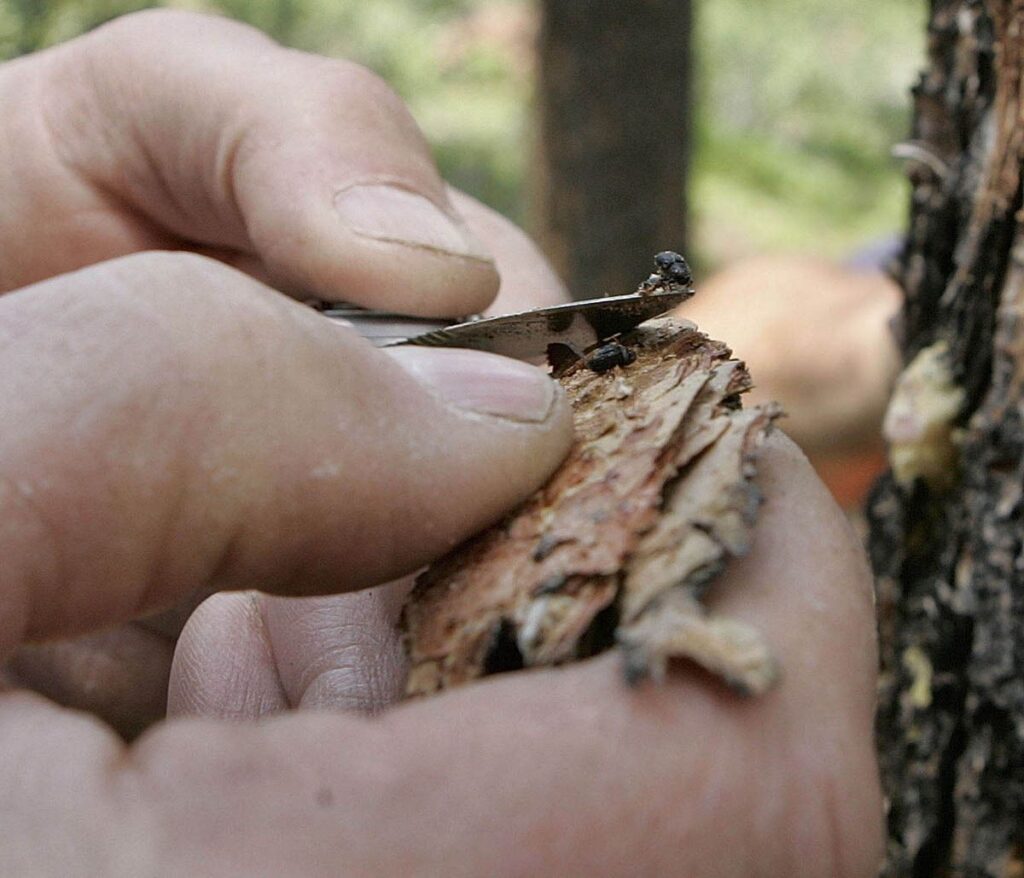
Gov. Jared Polis forms task force to combat pine beetle outbreak threatening Colorado forests
Marissa Ventrelli
marissa.ventrelli@coloradopolitics.com
Updated 6 hours ago
Gov. Jared Polis has issued an executive order establishing a task force to help protect Colorado forests and communities from the impact of pine beetle outbreaks, he announced on Monday. According to the governor’s office, the task force will also...

Polis names JB Holston as next head of Colorado Department of Higher Education
Marianne Goodland
marianne.goodland@coloradopolitics.com
Updated 6 hours ago
Gov. Jared Polis on Monday named JB Holston, former dean of the Ritchie School of Engineering and Computer Science at the University of Denver, as the next executive director of the Colorado Department of Higher Education. He will succeed Angie...
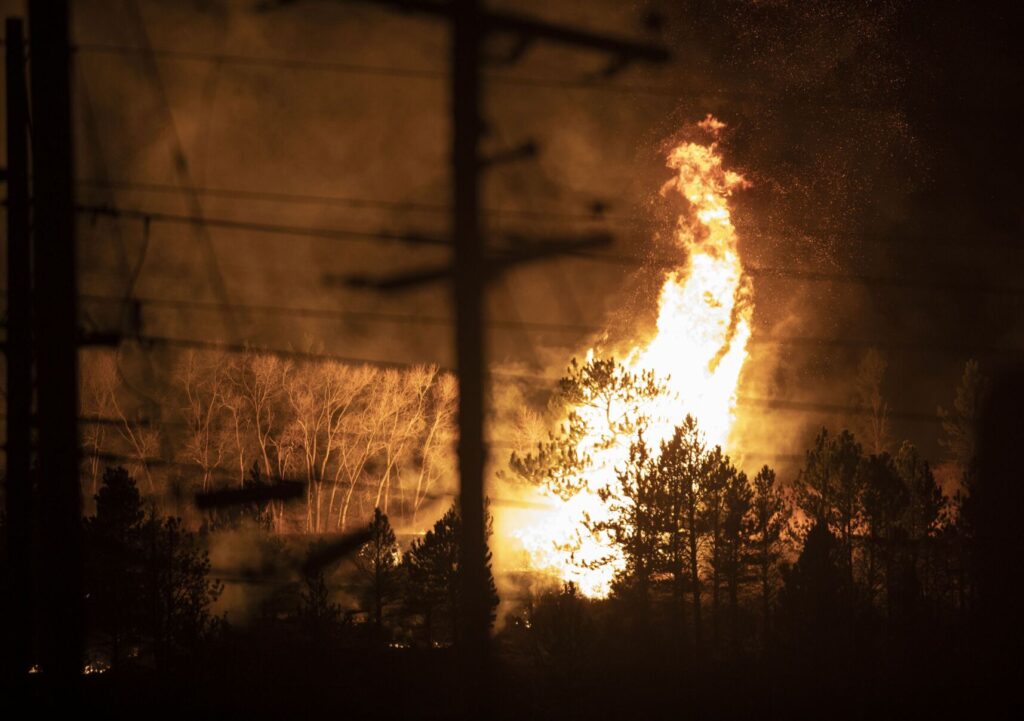
Xcel Energy prepares for power shutoffs to help prevent a repeat of the Marshall fire
Scott Weiser
scott.weiser@gazette.com
Updated 10 hours ago
Forecast high winds along the Front Range on Wednesday revive memories of the devastating 2021 Marshall fire that destroyed more than 1,000 homes when gusts downed energized power lines. Xcel Energy now weighs proactive power cuts to avoid similar ignitions...

DeSantis’s Florida moves lay groundwork for possible 2028 presidential return
NAOMI LIM Washington Examiner
naomi-lim-washington-examiner@coloradopolitics.com
Updated 1 day ago
As 2025 comes to an end, political eyes are not only turning toward next year’s midterm elections, but also toward the 2028 Republican presidential primary, as possible candidates start posturing, including Gov. Ron DeSantis (R-FL). DeSantis, 47, who, along with...

Here’s why House Republicans are increasingly bucking leadership by forcing votes on unapproved bills
Rachel Schilke, Washington Examiner
rachel.schilke.washington.examiner@gazetteedit.wpenginepowered.com
Updated 1 day ago
Legislative tools once thought to be assets of the House minority party only are now being wielded by members of the majority Republican conference. Members and strategists say it’s less a reflection of weak leadership and more due to their...

Grand jury to investigate deadly July shooting involving El Paso County Sheriff’s deputies
O'Dell Isaac
odell.isaac@gazette.com
Updated 7 hours ago
The Grand Jury for the 4th Judicial District will review a deadly shooting to determine if criminal charges should be filed against the El Paso County Sheriff’s deputies involved, according to a Monday news release. The incident, which occurred July...
Wright seeks ‘broad-based’ reform of 55-year-old environmental law to speed permitting
Callie Patteson, Washington Examiner
callie.patteson.washington.examiner@gazetteedit.wpenginepowered.com
Updated 1 day ago
Energy Secretary Chris Wright joined the call for Congress to pass meaningful reforms to the federal environmental approval process required to build energy and infrastructure projects, specifically encouraging reforms to the National Environmental Policy Act. Better known as NEPA, the...

Q&A with the Colorado Springs Chamber & Economic Development Corporation | FISCAL ROCKIES
Thelma Grimes
thelma.grimes@coloradopolitics.com
Updated 1 day ago
Editor’s Note: Once among the nation’s fastest-growing economies, Colorado today confronts mounting challenges that threaten its momentum. This series reveals how a state once defined by prosperity is navigating economic cliffs and ridges. We explore the impact that increased regulations, tariffs,...