

Party assembly meetings result in no primaries for SOS | A LOOK BACK
Thirty Years Ago This Week: In an outcome at the Colorado Republican Party’s state assembly that surprised even GOP insiders, Vikki Buckley emerged as the overwhelmingly popular nominee for secretary of state.
Buckley, a longtime Denver resident from a Black “family of modest means,” had gone to work for the secretary of state’s office straight out of high school and worked her way up through the ranks to second-in-command of the elections division.
“No amount of education or training can substitute for that experience,” Buckley said. “I am the only candidate who will not have to be trained for the job.”
Buckley took to the podium, seemingly quite dazed from all the support, and said that “The Republican Party truly is the party of opportunity.”
Lynn Ellins of NoVember Associates, the firm managing Buckley’s campaign, said that as an African-American candidate Buckley would be able to draw upon national money for her campaign.
“There are very few African-American conservatives who are running for such high office in the country today.”
Denver Election Commissioner Sandy Adams was one of several candidates running against Buckley and said that Buckley’s professional campaign, the backing of Colorado’s gambling interests, professionally written speeches, and undeniable work experience, made her a difficult opponent to beat.
“I really ran my campaign myself; it was just me and my volunteers,” Adams said. “I wrote my speeches myself.”
Unfortunately for Adams, a pamphlet without any disclaimer as to its origin had been distributed shortly before the start of the assembly in which her victory in her previous commissioner’s race was called into question. The literature also attacked Adam’s record in office and her personal life.
“I think it put a little glitch in my momentum,” Adams said. “Frankly it’s sort of a relief to get out of it.”
Connie Solomon, district director for U.S. Rep. Joel Hefley, placed a distant third and said that her campaign, like Adams’s, was a volunteer-based-one-woman show.
“They were looking for a candidate and they got themselves a good one,” Solomon said of Buckley. “I think, for a statewide office, you need that type of support base to win.”
With no primary, Buckley would face Democrat Sherrie Wolff who was nominated the same weekend at the Colorado Democratic Party’s own assembly meeting. Wolff also enjoyed state-wide name recognition as both a committeeperson for the Democratic National Committee and as state director for U.S. Sen. Ben Nighthorse Campbell.
“I think what we are glad of is that there is only one candidate and we can get on with the campaign,” said Nancy Burkhart, Wolff’s press secretary.
Ten Years Ago: Colorado lawyer Chris Forsyth said that after years of frustration over poor judges, he had written two ballot initiatives that he claimed would restructure the system and allow citizens their “own form of justice.”
“I’ve seen judges mistake facts or law and it was pretty glaring that it was intentional. They knew they weren’t going to get disciplined,” said Forsyth. “We’ve got to remove this conflict of interest because we are headed in the wrong direction.”
Forsyth told The Colorado Statesman that he didn’t believe all of Colorado’s judges were bad, but that “judges know they don’t have to be good.”
The first initiative, named the ‘Honest Judge Amendment’, would have voters decide whether to transfer disciplinary cases to the Independent Ethics Commission. The second initiative would require a two-thirds majority of ‘yes’ votes for a judge to run an uncontested retention election.
Even before the signature collecting had begun, the Colorado Bar Association said the proposals could literally destroy Colorado’s entire judicial system. Stacy Carpenter, who sat on the CBA’s board of directors and its legislative policy committee, argued that the passage of the ballot initiatives would result in many judicial vacancies because not enough voters would take interest.
“The impact on the justice system would be awful and people’s cases would come to a grinding halt,” Carpenter said.
Rachael Wright is the author of the Captain Savva Mystery series, with degrees in Political Science and History from Colorado Mesa University, and is a contributing writer to Colorado Politics and The Gazette.


Colorado to get $615M from Meta child safety settlement
Thelma Grimes
thelma.grimes@coloradopolitics.com
Updated 8 hours ago
The parent company of Facebook and Instagram will pay hundreds of millions of dollars to Colorado, part of an $18 billion multistate deal, in which the company also agreed to adopt extensive child-safety changes to its operations. The settlement ended...
Colorado’s chief federal judge orders return of wrongfully deported man, second judge to explore ‘series’ of violations
Michael Karlik
michael.karlik@coloradopolitics.com
Updated 10 hours ago
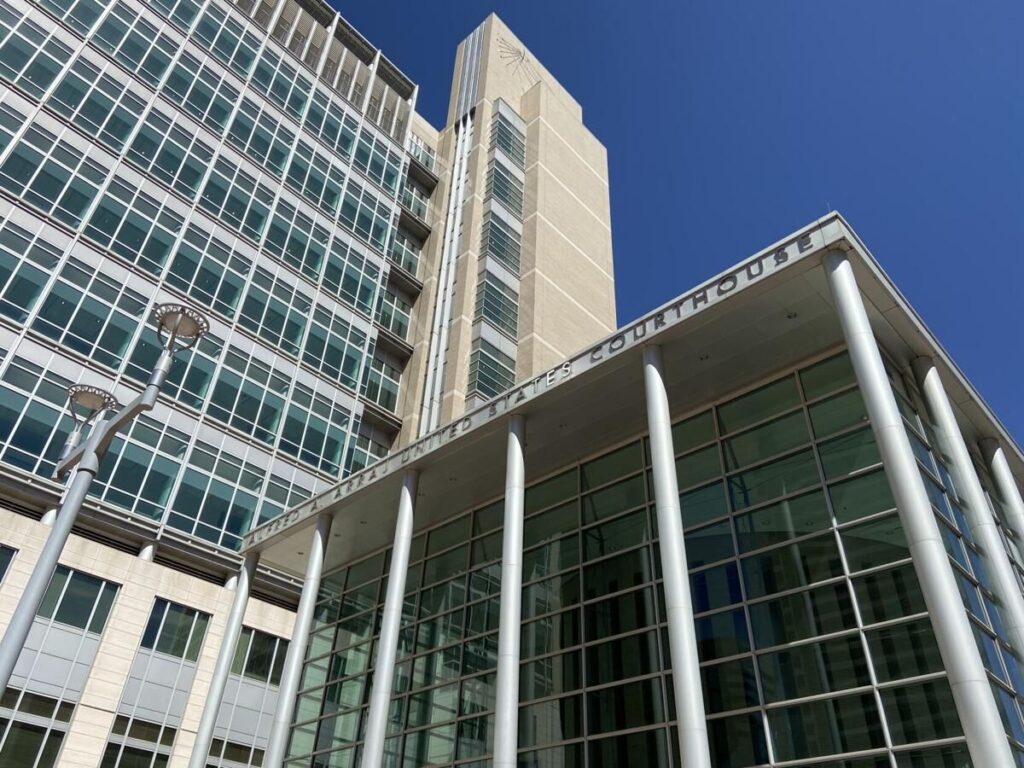
Colorado’s chief federal judge took the extraordinary step of directing the government on Tuesday to do everything it can to return a man it deported in violation of his order. At the same time, Colorado’s chief magistrate judge has set...

Counties warn CPW that new comment limits sideline local governments
Marianne Goodland
marianne.goodland@coloradopolitics.com
Updated 8 hours ago
The September meeting of the Colorado Parks and Wildlife Commission will feature newly revised public‑comment rules — changes introduced by chair Jay Tutchton of Bent County, who announced them without first discussing the revisions publicly with the rest of the...

Controversial two-bag furbearer limit heads to CPW meeting under legal threat
Marianne Goodland
marianne.goodland@coloradopolitics.com
Updated 8 hours ago
Next week’s Colorado Parks and Wildlife Commission meeting in La Junta is likely to open under the cloud of threatened legal action. Safari Club International and the Sportsmen’s Alliance Foundation warned the commission this month that its July vote imposing...

Golden to pay $155,000 to fired city manager
Matt Kyle
matt.kyle@denvergazette.com
Updated 10 hours ago
The Golden City Council on Tuesday approved a roughly $155,000 severance payout to former city manager Scott Vargo, who was fired earlier this month following a “racist incident” at a city fire station. The payout is part of a separation...

Trump says the US doesn’t need Canada. America’s economy says otherwise.
The Associated Press
the-associated-press@coloradopolitics.com
Updated 11 hours ago
TORONTO (AP) — U.S. President Donald Trump says his country does not need Canada. But every day, roughly 4 million barrels of Canadian crude oil flow south, helping fuel American cars, trucks and airplanes and supply U.S. industry. And oil...
USPS ballot rule faces lawsuit from Colorado, other states
Thelma Grimes
thelma.grimes@coloradopolitics.com
Updated 9 hours ago
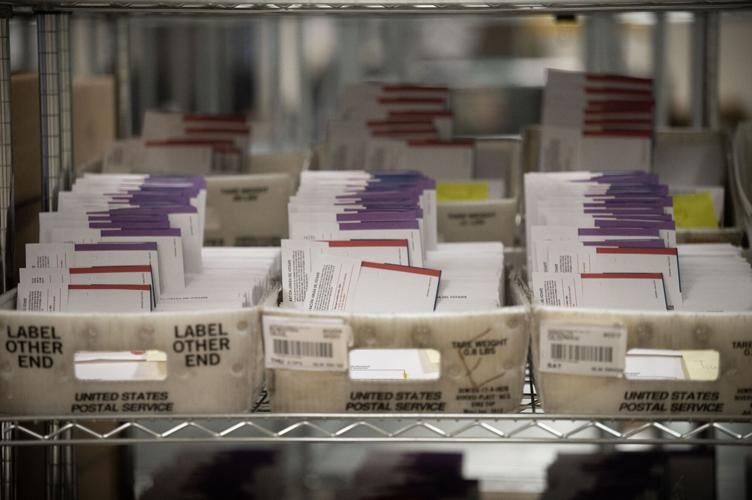
Colorado, along with 25 other states, filed a lawsuit against the U.S. Postal Service to challenge a new rule that seeks to restrict the mailing of ballots to American citizens in an eligible voters list. Colorado relies heavily on the...

FDA approves landmark pancreatic cancer drug that’s shown to improve survival
The Associated Press
the-associated-press@coloradopolitics.com
Updated 11 hours ago
WASHINGTON (AP) — The Food and Drug Administration on Wednesday approved a groundbreaking new drug for advanced pancreatic cancer, offering U.S. patients a more effective treatment against one of the deadliest types of cancer. FDA officials gave expedited approval to...

Trump defends pause on beef tariffs: Prices are ‘coming down very rapidly’
Naomi Lim
naomi-lim@coloradopolitics.com
Updated 14 hours ago
President Donald Trump defended his decision to pause tariffs on some beef imports, even as Republicans criticize the decision. “Prices are coming down very rapidly, and now beef is starting to come down,” Trump told The Glenn Beck Program on...
Denver murder, assault convictions reversed due to faulty jury instructions
Michael Karlik
michael.karlik@coloradopolitics.com
Updated 9 hours ago
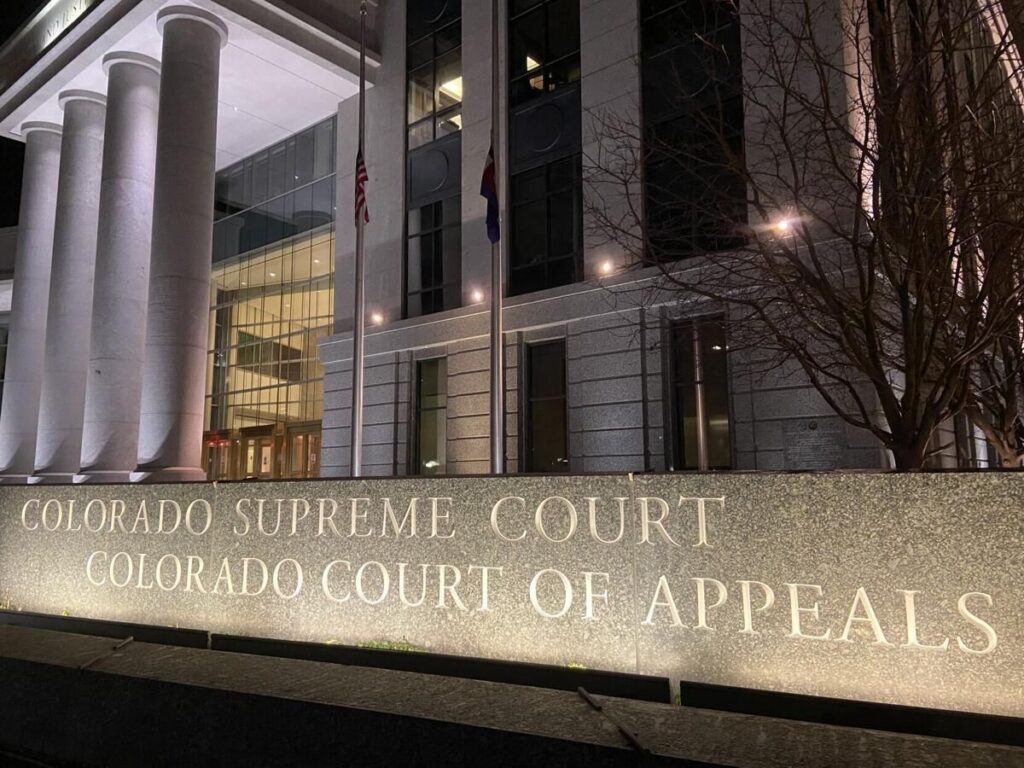
Colorado’s second-highest court reversed a defendant’s convictions for murder and assault last week after concluding a Denver judge incorrectly omitted key jury instructions that could have affected the verdict and sentencing. Stephen C. Swainson fatally stabbed Israel Casillas in downtown...