

Bill’s impact on state Rx affordability board penalizes rare disease patients | OPINION
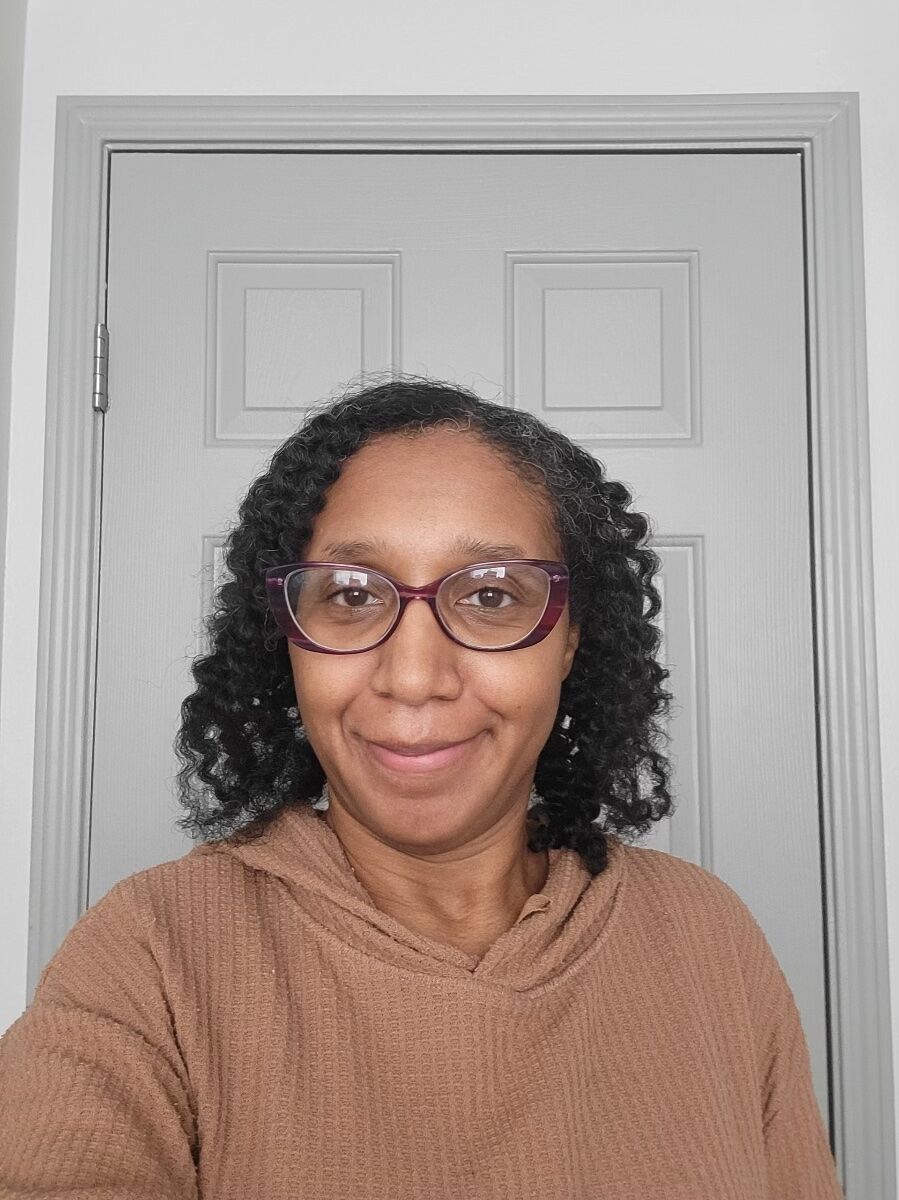
Tamika Matthews

Senate Bill 060 proposes the Colorado Prescription Drug Affordability Review Board (PDAB) “should have no authority to perform an affordability review of, or establish an upper payment limit for any prescription drug designated for a rare disease or condition as defined by the FDA.”
The proposed exemption of “orphan drugs” in this bill perpetuates a system that prioritizes profit and allows companies to monopolize the market to keep prices inflated.
It’s no secret there are already numerous disparities in health care, particularly when it comes to prescription access. If pharmaceutical companies are left unchecked in the fight against high prescription costs, the health and well-being of Coloradans — particularly those with rare illnesses — will hang in the balance. Companies will cash in, but patients will suffer as drug costs remain out of reach.
Stay up to speed: Sign-up for daily opinion in your inbox Monday-Friday
I think of the direct impact on my family, as I am a caregiver and wife to someone living with sickle cell disease. This rare disease, affecting a reported 100,000 Americans and fewer than 500 Coloradans, is considered one of the first documented genetic blood disorders.
Now, 114 years later, multiple cures and medicinal therapies are within reach. But realistically, how can they be, with therapeutic management and curative drug treatments costing anywhere from $50,000 to $2.2 million?
Adakveo and Oxbryta, two approved treatments for sickle cell, were included on the 2023 PDAB Eligible Prescription List for an affordability review. And with good reason, considering 12-month supplies cost approximately $61,000 and $96,000 respectively.
According to the American Society of Hematology, sickle cell patients already incur an estimated lifetime cost of $1.6 million between hospitalizations, pain management and coordinated care across specializations such as hematology, pulmonology, orthopedics and cardiology.
The high cost of managing my husband’s health is already a tangible financial burden for my family — so much so these annual prices are completely unattainable for us. Simply put, we just can’t afford to pay for these treatments. We make too much income for patient access programs, but not enough to afford such exorbitant out-of-pocket costs.
If prices remain high, our reality will never be about the relief these medications could offer him. Instead, we’ll continue to pay into that lifetime $1.6 million tab, cobbling together health management tactics and unexpected emergency room visits to manage the excruciating pain caused by his condition.
Amazing work is happening at hematology research centers across our state, despite the small size of Colorado’s sickle cell community. The University of Colorado Anschutz Medical Campus runs the Colorado Sickle Cell Research and Treatment Center, along with a pediatric component at Children’s Hospital Colorado. SB60 effectively cuts into the heart of the advances being made. It says notoriety for ongoing research is good enough, but the people impacted by its costs are an afterthought. It effectively highlights optics over options.
Rare disease patients across our state are fighting a similar uphill battle — managing day-to-day symptoms, searching for supportive, trauma-informed medical care, seeking diagnoses and finding possible treatment paths.
Excluding orphan drugs from the PDAB review process will continue to deny rare disease patients access to life-changing drugs without breaking the bank. And patients with rare diseases are among the most harmed by uncontrolled drug costs. Exempting orphan drugs from PDAB reviews allows pharmaceutical companies to continue to reap high profits with no market competition, and legally keep their prices high for decades.
As long as we prioritize money over solutions, real people will bear the consequences. Prescription drugs don’t work if people can’t afford them.
The PDAB was specifically designed with the goal of managing costs and encouraging prescription affordability for Coloradans. In fact, in 2021, a bipartisan 71% of Coloradans supported the creation of the PDAB to review and set upper payment limits on high-cost drugs. This board is Colorado’s only tool to hold pharmaceutical companies accountable and help rein in out-of-control drug costs.
It’s critical to seek out and support legislation that eliminates disparities in health care access. SB-60 should reflect our priorities as a society to care for our communities, not the profits of pharmaceutical companies.
We owe it to Coloradans to find solutions that help them. We deserve better than SB60.
Tamika Matthews resides in Denver County. She is a caregiver of a rare disease patient, a member of the Colorado Consumer Health Initiative’s Community Advisory Board and a health care advocate.


Colorado lieutenant governor candidate Markert says early discipline and key mentors set his course
Marianne Goodland
marianne.goodland@coloradopolitics.com
Updated 8 hours ago
Editor’s note: This is the first installment in a three-part series examining Colorado’s candidates for lieutenant governor. In this piece, Colorado Politics speaks with George Markert, the Republican running mate to gubernatorial candidate Victor Marx. Marx is competing against Democrat...
Colorado, like America, past due for generational change in politics | Miller Hudson
Miller Hudson
miller-hudson@coloradopolitics.com
Updated 1 day ago
I was 27 before I ever voted for president. At 19, in 1964, the Constitution had not yet been amended establishing 18-year-old voting eligibility. In 1968, I was serving overseas with the U.S. Navy at a time when there was...

Farmers and ranchers win on NIETC cancellation | Rachel Gabel
Rachel Gabel
rachel-gabel@coloradopolitics.com
Updated 1 day ago
The Department of Energy rolled into Lamar last week and Office of Electricity Assistant Secretary Katie Jereza stood in her neat, green suit in front of a room filled with farmers, ranchers and landowners. The crowd was filled with straw...

Going after the wrong butts | Jon Caldara
Jon Caldara
jon-caldara@coloradopolitics.com
Updated 4 days ago
Mayor Mike Johnston proclaimed, “It is past time Big Tobacco cleaned up the big mess it’s created.” Yep. Denver is suing tobacco companies for the cigarette butts littering the city. Because Denver’s Big Mess couldn’t possibly be the fault of...
Three districts that will answer key Colorado political questions | Paula Noonan
Paula Noonan
paula-noonan@coloradopolitics.com
Updated 5 days ago
Colorado’s legislature used to be a place where neither party was dominant. Dozens of seats were competitive and House and Senate majorities switched regularly. From 2010 to 2020, the House was predominantly Democratic with one two-year assembly under Republicans. The...

Hunting is a privilege, not a constitutional right | PODIUM
Colorado Politics
colorado-politics@coloradopolitics.com
Updated 5 days ago
By Roland Halpern Colorado voters may soon be asked to place hunting and fishing in the state constitution. Proposition 302 would establish the right to hunt, fish and take wildlife using “traditional methods,” while declaring hunting and fishing are the...

DEA’s Miguel Chino describes Colorado’s place on the ‘fentanyl pill superhighway’ | The OpEdge Podcast
Tony Olivero
tony.olivero@gazette.com
Updated 6 days ago
Miguel Chino, Acting Special Agent in Charge of the Drug Enforcement Administration’s Rocky Mountain Field Division, joins The OpEdge to paint the picture of Colorado’s place on America’s “fentanyl pill superhighways.” Chino updates Gazette and Colorado Politics Deputy Opinion Editor...
A right to buy a product? | Hal Bidlack
Hal Bidlack
hal-bidlack@coloradopolitics.com
Updated 7 days ago
A recent story in Colorado Politics caught my eye, as I learned of a “citizen initiative” that has qualified for the November ballot. It seems supporters of Initiative 177 have collected enough signatures, 146,165 legitimate ones out of a total...

Fourteen years after Aurora — we can’t afford to go backward | GUEST COLUMN
Colorado Politics
colorado-politics@coloradopolitics.com
Updated 7 days ago
By John Hickenlooper and Gabby Giffords Two Saturdays ago, a gunman shot and killed three people and wounded several others in Twin Falls, Idaho. This latest deadly shooting comes only days after we remembered the lives we lost 14 years...

A daring and fearless rescuer — is afraid of a debate | Dick Wadhams
Dick Wadhams
dick-wadhams@coloradopolitics.com
Updated 1 week ago
Victor Marx, the Republican nominee for governor who says he can exorcize demons and who claimed he has fearlessly rescued 45,000 women and children during 150 “high-risk” missions around the world, appears to be intimidated by the notion of debating...
PREV
PREVIOUS

Colorado Springs Gazette: Don't restore racist housing discrimination
Colorado’s housing crisis hurts the poor, whether they are Black or white. It wasn’t always like that. Before the federal Civil Rights Act of 1964 and the Fair Housing Act of 1968, we had rampant race-based housing discrimination. Merely affording a home wasn’t enough. One often had to look a certain way. Real estate agents […]
Equal isn't equal in Colorado public education funding | NOONAN
Paula Noonan Editor’s note: The following article has been edited from a previous version Hooray for Gov. Jared Polis and the state legislature’s Joint Budget Committee (JBC) for pitching in $450 million extra to public education. Hooray for the governor and the JBC for bringing Colorado’s public education funding to 1989 levels. Say what? The […]