

Did Ken Buck change or did his party change around him? | SONDERMANN
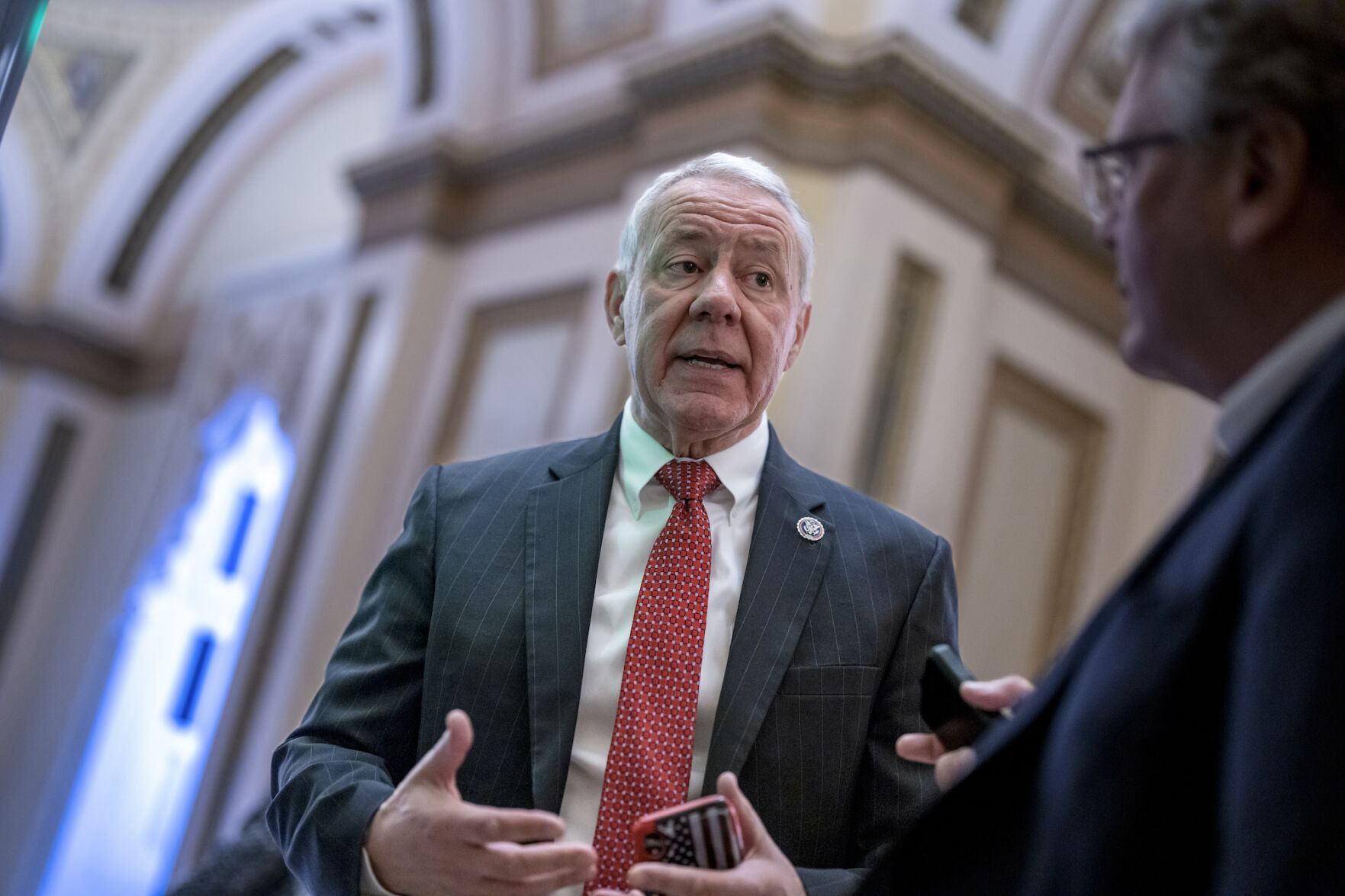
One thing is clear: Congressman Ken Buck will depart office next January with a far different fan club, and for that matter a different set of naysayers, than when he showed up in Washington 10 years prior.
Buck’s newfound critics of late, not a small number or a quiet bunch within activist Republican ranks, have all manner of theories. He went soft. He lost the will to fight. He’s trying to land a CNN gig. Some even suggest a love interest has pulled him away from his longstanding partisan axis.
I have not yet heard of a secret-agent theory or one that involves compromising photos. Though, no doubt, those and other stretches are floating out there as well.
To attend the we-don’t-have-a-stage-big-enough forum of GOP candidates hoping to take Buck’s place, a group now numbering 11, is to hear Buck’s name seldom mentioned, and on those few occasions in disparaging terms.
This crew of candidates – which until proven otherwise I regard as Jerry Sonnenberg, Deborah Flora, some interloper from western Colorado and the amorphous rest – are far more focused on the roaring approval of the Trump base than on any nod from a departing congressman who decided that base was something short of all-knowing.
That Trumpian crowd sees Buck as a changed figure with that change not to their liking. Buck presents himself as a model of consistency in a party that has changed around him and lost its adherence to Constitutional principle.
Buck has never come across as the waffling or weak-kneed type. Fresh out of law school, he was hired by Wyoming Congressman Dick Cheney in 1986 to work on the Iran-Contra investigation. Four years later, he moved to Colorado and became head of the criminal division in the U.S. Attorney’s office.
Having worked with successful Colorado Republicans of that era, including Bill Owens and Wayne Allard, Buck got himself elected Weld County District Attorney in 2004.
In 2010, he became a statewide figure in seeking the U.S. Senate seat then held by an appointed Michael Bennet. Many thought him poised to win this election in a red year in what was then still a very purple state.
But a couple of gaffes cost him dearly. A needless jab at his primary election opponent for her “high heels” did not go over well with women voters. In an October debate on NBC’s “Meet the Press,” Buck wandered off-script in response to a question about gay rights, describing homosexuality as a “choice” and comparing it to alcoholism in that regard.
It all was enough to allow Bennet to overcome the national tide and secure a narrow victory.
Buck campaigned in 2010 as the Tea Party candidate just as that affiliation became a major part of the political landscape. Come 2014, when then-Rep. Cory Gardner sought and won a Senate seat, Buck put on his Tea Party hat and easily maneuvered his way to the Republican nomination. That is tantamount to election in this solidly Republican district. His reelection races have been perfunctory affairs.
At some point between 2014 and 2016, the Tea Party morphed into MAGA, the Trump-led Make America Great Again movement. To many observers, these were one and the same crusade. However, that was not Buck’s take, certainly not as time went on.
In Buck’s telling, the Tea Party was rooted in reverence for the Constitution and an uncompromising dedication to fiscal restraint and budgetary reform.
MAGA has become something quite different in Buck’s view. He described MAGA as too often “cavalier about the Constititon” and their champion, the former president, “not rooted in traditional conservative values.”
That is as true as it is damning. He went on to note that Republicans in MAGA’s grip have sacrificed any claim to fiscal responsibility and putting the country’s financial books in order.
I would add – though, to be clear, this piece is my perspective, not anything Buck stated – that MAGA has evolved into a charismatic enterprise, with cult-like loyalty, far too centered on the whims and grievances of one, singularly unworthy person, with a disregard displayed too often for basic facts and an overdose of ends-justify-the-means thinking.
In MAGA-land, otherwise known as today’s Republican Party, Buck’s heresies have been multiple. A few hours after the disgrace of Jan. 6, he voted to certify Joe Biden’s election as president. That alone put him at odds with two-thirds of his caucus and both of Colorado’s other GOP representatives.
He criticized the fixation of some Republicans with impeaching Biden. He defended Liz Cheney as the House GOP caucus threw her overboard for the crime of telling the truth. He issued a four-page, point by point, footnoted rebuttal to some Jan. 6 myths peddled by El Paso County Republican officials.
Most recently, Buck was one of three lonely Republicans to vote against impeaching Homeland Security Secretary Alejandro Mayorkas. This dissenting vote was not borne of Buck’s approval of Mayorkas’s performance. Anything but. Instead, it resulted from Buck’s conviction that the charges did not rise to the level of high crimes and misdemeanors, the Constitutional standard.
Buck has always struck me as a complicated sort. In my book, that is a compliment. His motives are not typically easy to decipher.
To add to the insults his Republican critics now lob at him, they suggest that the author of “Drain the Swamp,” Buck’s 2017 book that led to an HBO documentary, has become an inhabitant of that swamp.
Hardly so from where I sit. Swamp creatures seek to overstay their time in the office. Such types rarely stand on principle. In today’s GOP, the swamp hustlers contort themselves to stay in Trump’s good graces at the expense of their own spine and self-respect. Examples abound.
Buck contends that he will leave Congress as he arrived, as “a Constitutional conservative.” By his account, he has been true to form while his party backed away from principle time and again.
A recap of Buck’s tenure is not complete without mention of two formidable health crises he survived. He has come back from both Stage 4 lymphoma and a major heart attack.
Now 65, Buck attests that those experiences further molded him. “They reinforced my mortality and the knowledge that my time is limited.” He went on, “I am a person of faith and believe God put me here. I intend to leave Congress with the same consistent worldview with which I arrived.”
Whether in the person of Bob Corker or Jeff Flake, Liz Cheney, or Peter Meijer, along with too few others, it is a sad commentary and also a telling one that Republicans of this period are able to speak hard truths only when hitting the exits or accepting political defeat.
Add Colorado’s Ken Buck to that list. Trump and his worshipping acolytes can preen and flex their muscle. While the nation suffers in retreat.
Eric Sondermann is a Colorado-based independent political commentator. He writes regularly for ColoradoPolitics and the Gazette newspapers. Reach him at EWS@EricSondermann.com; follow him at @EricSondermann

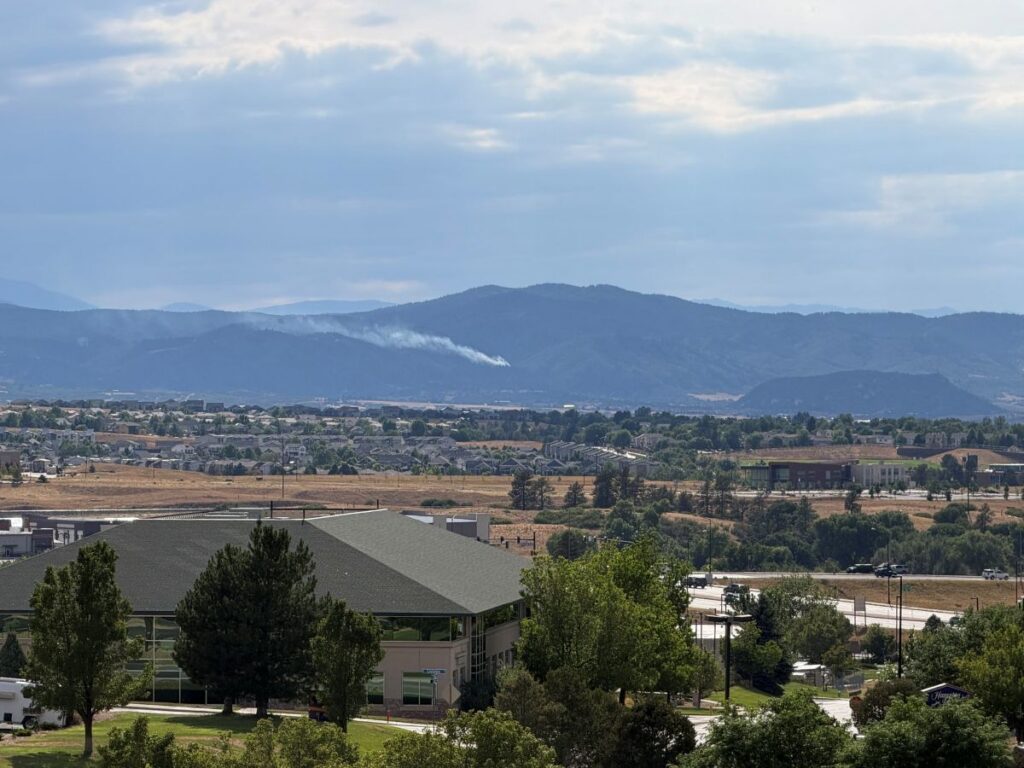
Forest fire west of Sedalia prompts evacuations in Douglas County
Nicholas Fogleman
nicholas.fogleman@denvergazette.com
Updated 1 hour ago
Emergency crews are responding to a forest fire burning west of Sedalia, prompting evacuation orders for nearby residents Sunday afternoon. At about 5 p.m. Sunday, the Douglas County Sheriff’s Office issued an evacuation order for residents within a 2-mile radius...
‘Be prepared to march in the streets’ | Miller Hudson
Miller Hudson
miller-hudson@coloradopolitics.com
Updated 2 days ago
It was early in 1974 when I first met Tim Wirth as he announced his candidacy for Congress, challenging Republican incumbent Don Brotzman. Although I had only resided in Colorado two years, I was drafted to serve as a Democratic...
A Colorado history lesson for Victor Marx | Dick Wadhams
Dick Wadhams
dick-wadhams@coloradopolitics.com
Updated 2 days ago
Victor Marx, who narrowly won the Republican nomination for governor by one half 1% after boasting of a massive 44-point lead, is just as misguided on Colorado political history. During the primary, Marx made a clumsy attempt to denigrate his...

Weiser’s leadership crucial for rural win-win | Rachel Gabel
Rachel Gabel
rachel-gabel@coloradopolitics.com
Updated 3 days ago
Attorney General Phil Weiser is going to win the gubernatorial election. That said, Colorado agriculture and rural communities have a 30-year track record of finding the win-win be it for species or industries or habitat. Former Governor Roy Romer possessed...

Airstrikes have paused and talks are pressing forward. But can the US and Iran take the off-ramp?
The Associated Press
the-associated-press@coloradopolitics.com
Updated 60 minutes ago
WASHINGTON (AP) — The U.S. military has paused its airstrikes on Iran after nearly two weeks of intensifying bombing, while diplomatic efforts have pushed forward to try to avert a return to all-out war. But it remains to be seen...
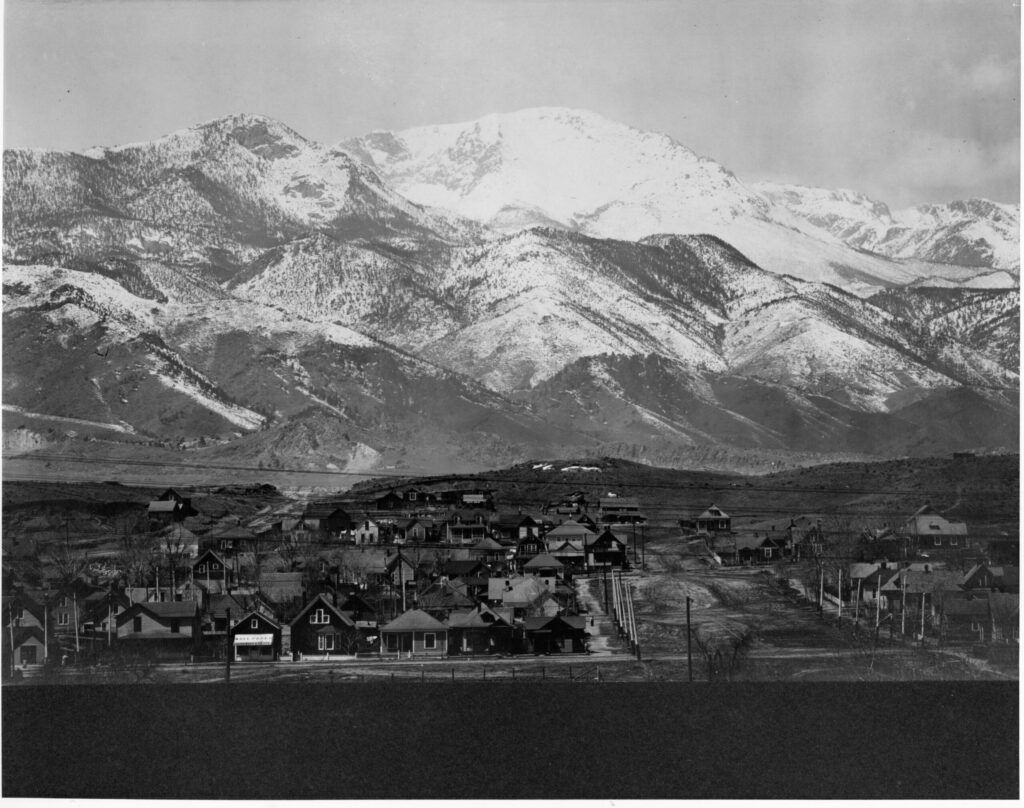
Penrose fortune paved the way for Colorado Springs to be a military, space and sports town
Mary Shinn
mary-shinn@coloradopolitics.com
Updated 1 hour ago
Colorado Springs is always working to catch the next big economic wave. “We’re always trying to figure out what the next thing is going to be,” explained Matt Mayberry, director of the Colorado Springs Pioneers Museum. In the early days,...

‘CoCo’ would take taxpayers for a ride | John Caldara
Jon Caldara
jon-caldara@coloradopolitics.com
Updated 3 days ago
Colorado wants taxpayers to spend another $4.73 billion on passenger rail. Don’t worry. They have a plan. Which is a little like your brother-in-law announcing he’s launching another exciting restaurant venture after his last three restaurants ended in bankruptcy. Please....

Colorado Politics Calendar July 27-Aug. 2
Rachael Wright, Special to Colorado Politics
rachael.wright@coloradopolitics.com
Updated 5 days ago
CoPo’s weekly political calendar will help you find political and public-policy events throughout Colorado. It includes candidate and issue campaign events, public policy meetings, court hearings, state and local party conventions, assemblies, debates, rallies, parades, speaking engagements, traveling dignitary appearances,...

Space Force needs to measure workforce needs, as it prepares to double in size, GAO report says
Mary Shinn
mary-shinn@coloradopolitics.com
Updated 1 hour ago
The Space Force needs more people. It’s just not precisely sure how many more. A Government Accountability Office report released earlier this month found that the youngest and smallest military branch does not have a process to consistently or accurately...

Busy wildfire season tests US fire bosses as they juggle resources to stay ahead | OUT WEST ROUNDUP
The Associated Press
the-associated-press@coloradopolitics.com
Updated 39 minutes ago
NEW MEXICO Wildfires challenge resources ALBUQUERQUE — It’s already been a deadly year for firefighters, and authorities have been putting resources where they can more quickly pounce on wildfires before they get out of hand and increase the possibility of...