

Are you in the right occupational field in Colorado? Tool offers insights into future workforce gaps

A new report suggests a “misalignment” between higher education graduates and what the job market would need in just a few years.
Notably, Colorado’s schools are producing graduates in some fields at rates that are “far greater” than the job market’s projected need by 2031, according to a new report from the Common Sense Institute.
More specifically, some occupations — the fields of production, life, physical, and social sciences, as well as transportation and material handling — would be “overrepresented” based on college degree attainment. Meanwhile, other professions, notably in the areas of business and financial operations, computer and mathematics, and healthcare, will be “underrepresented in college output.”
Such a misalignment means a significant economic opportunity loss, according to the report.
The study said that, by 2031, 73% of jobs in Colorado would require at least some postsecondary education, and, currently, 70.7% of adults, including people who received higher education elsewhere and then moved to Colorado, qualify for them.
But only 66.5% of Colorado’s adult population born in Colorado actually meets that standard, which means the state is short some 79,000 people, the report said.
The report said that, if Colorado’s current native-born workforce were matched to future demand, each of those 79,000 people would earn an extra $27,220 on average, totaling more than $2 billion more in wages.
That, in turn, would support another 25,000 jobs, add nearly $3 billion to the state’s GDP, and produce an additional $2 billion in income for all other workers.
Common Sense Institute said it developed an “Education-to-Workforce Alignment Tool” to diagnose the higher education system’s alignment with workforce needs and measure oversupply or undersupply of graduates compared to future demand.
There’s some good news: The class of 2022 graduates, for example, is 56% “better aligned with future workforce needs” than the 2021 supply.
The report said that, while smart public policies are necessary, ultimately it is up to individual students to make “sensible decisions about what areas of study, training, and jobs they pursue.”
“Public policies which advance career-connected learning are only effective if opportunity-seekers are also making informed decisions about job and career choices,” the report said.
CSI said its Education to Workforce Alignment Tool offers data, trends, and insights to help people understand the future labor market and where gaps might exist.
Correction: An earlier version of this article incorrectly stated that Common Sense Institute created a website.

8 exemplars to guide us into the new year | SONDERMANN
Eric Sondermann
eric-sondermann@coloradopolitics.com
Updated 3 days ago
It started as a one-off in my first year of writing this regular column. To ring in the new year back in the eventful year of 2020, I offered a shoutout to eight Coloradans who served as models of how...
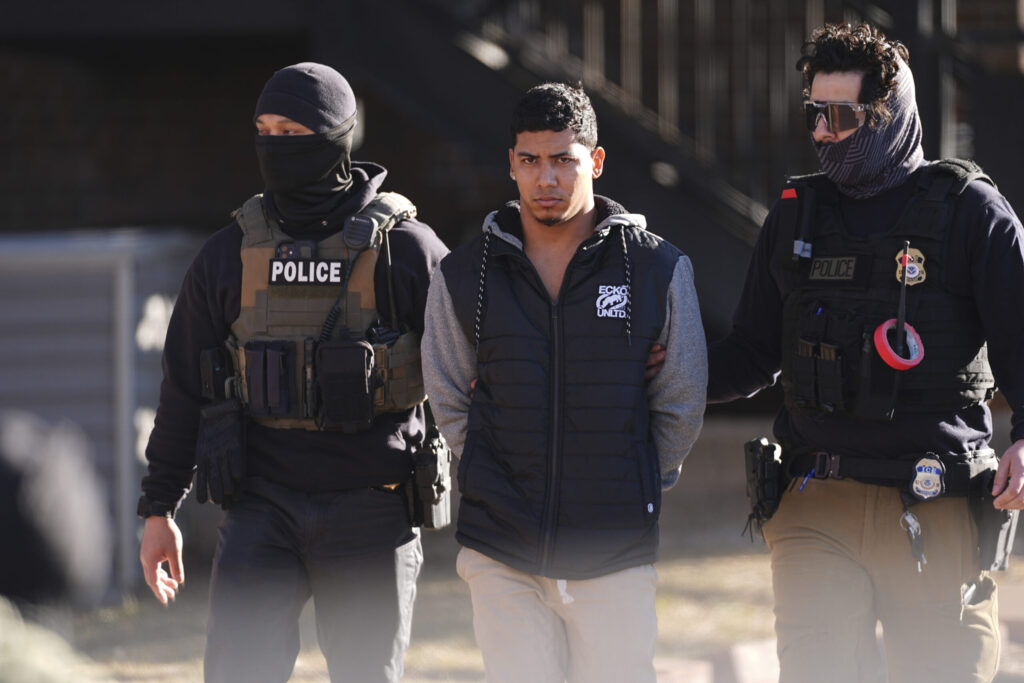
Raids, pushback and TdA indictments defined Denver’s immigration story in 2025
Nico Brambila
nico.brambila@denvergazette.com
Updated 4 hours ago
The Trump administration’s push for a large-scale, deportation effort — built around campaign warnings about Tren de Aragua, the Venezuelan prison gang that established a foothold in Colorado — collided with the realities on the ground in Denver, where raids...
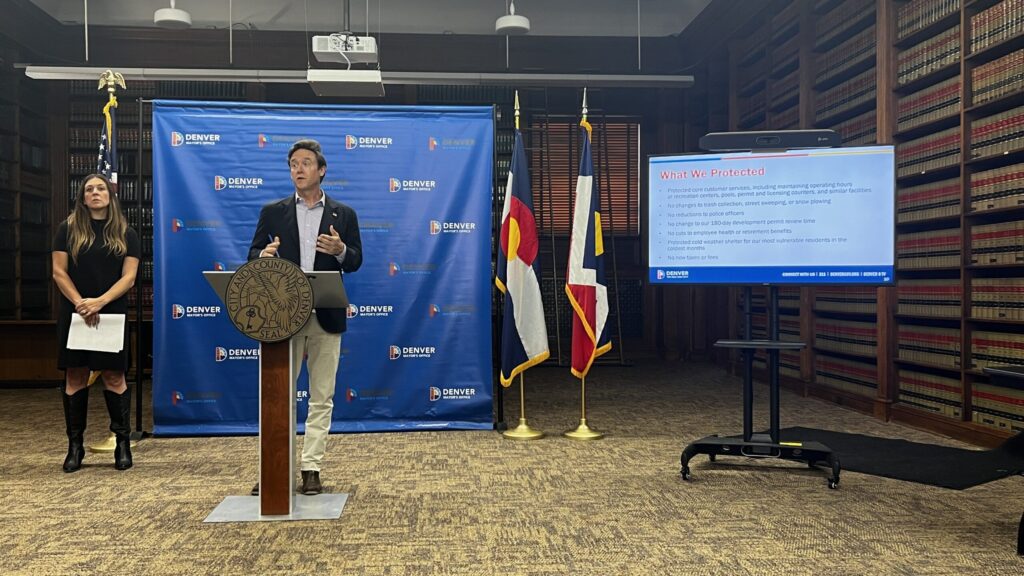
Denver’s budget deficit shaped 2025 news coverage
Deborah Grigsby
deborah.smith@denvergazette.com
Updated 3 hours ago
It was a year of big goals on a tight budget for the Mile High City, where Mayor Mike Johnston’s announcement of a $200 million city budget deficit dominated the news coverage. Facing a $50 million gap in its 2025...
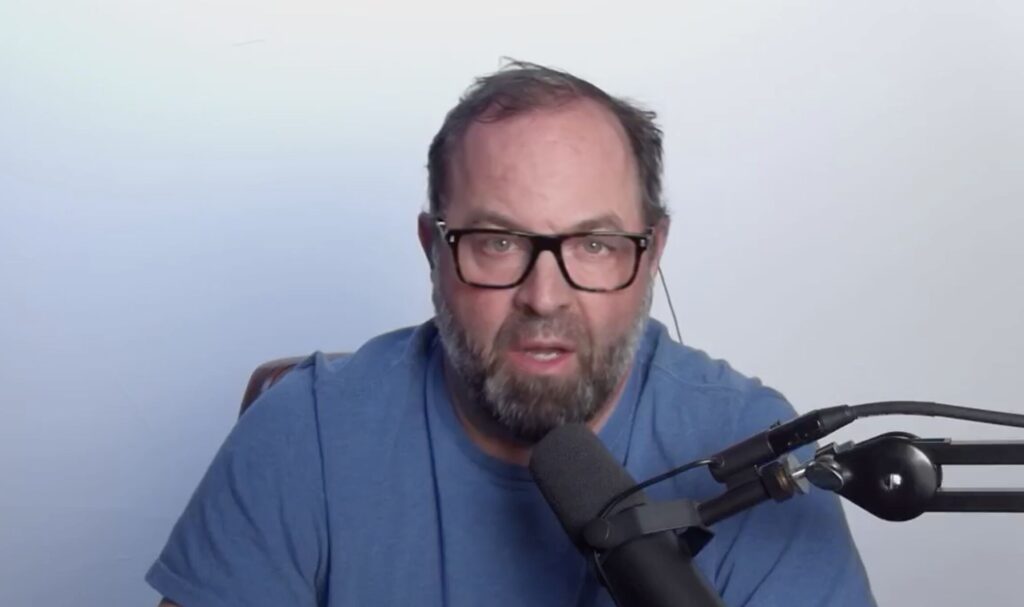
Colorado podcaster who has called for political foes to be executed joins GOP primary for governor
Ernest Luning
ernest.luning@coloradopolitics.com
Updated 5 hours ago
Joe Oltmann, the conservative Colorado podcaster who has repeatedly called for Colorado’s top elected officials to be executed and whose uncorroborated claims that the 2020 election was rigged spawned multiple defamation lawsuits, declared his candidacy for the Republican nomination for...
‘The canary in the democracy mine is local journalism’ | Vince Bzdek
Vince Bzdek
vince.bzdek@gazette.com
Updated 9 hours ago
Colorado could do a lot more to save newspapers – and democracy – in rural areas By Vince Bzdek As another new year and another legislative session dawn for Colorado, it’s a good time to ask what the absolute most...
Colorado’s national correspondent recounts violent KKK march in D.C. | A LOOK BACK
Rachael Wright
rachael.wright@coloradopolitics.com
Updated 4 days ago
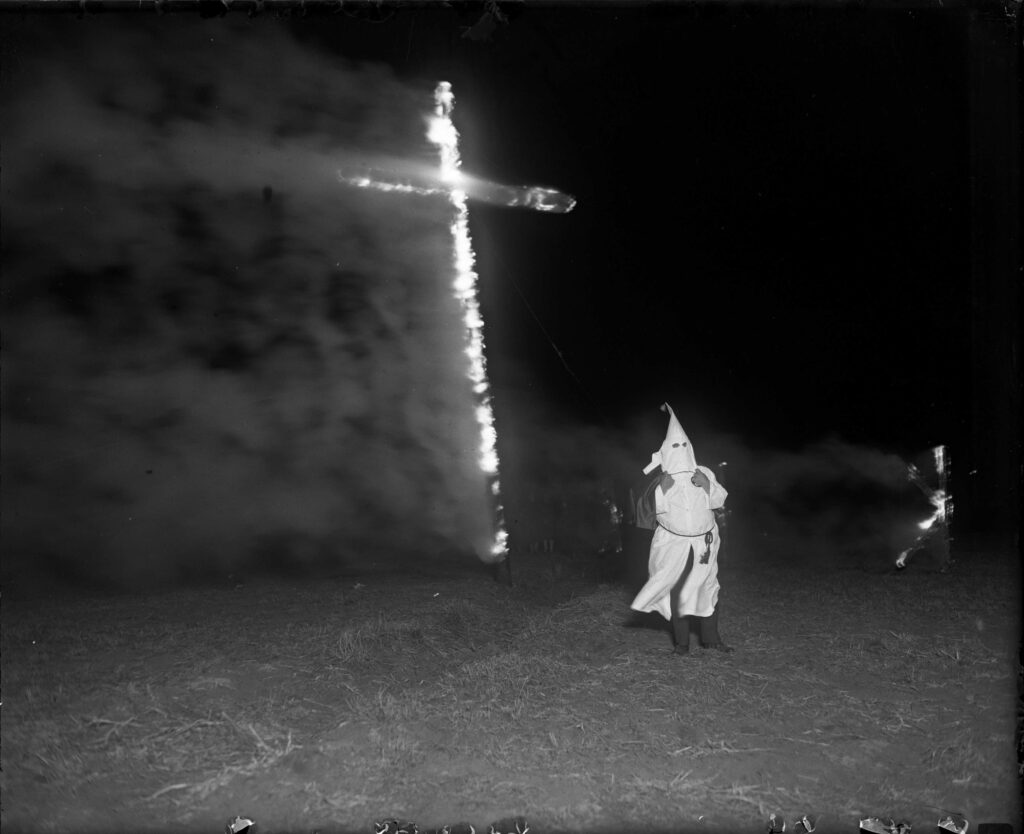
by Rachael Wright Thirty-Five Years Ago This Week: “I had forgotten about the Ku Klux Klan,” said Ann Downing Schmidt, The Colorado Statesman’s Washington, D.C., correspondent. In a commentary piece published in The Statesman, Schmidt described trying to make the ten-minute drive from...
2025 Unfiltered: Ethics investigations, scandals plague Colorado Capitol
Marianne Goodland
marianne.goodland@coloradopolitics.com
Updated 9 hours ago
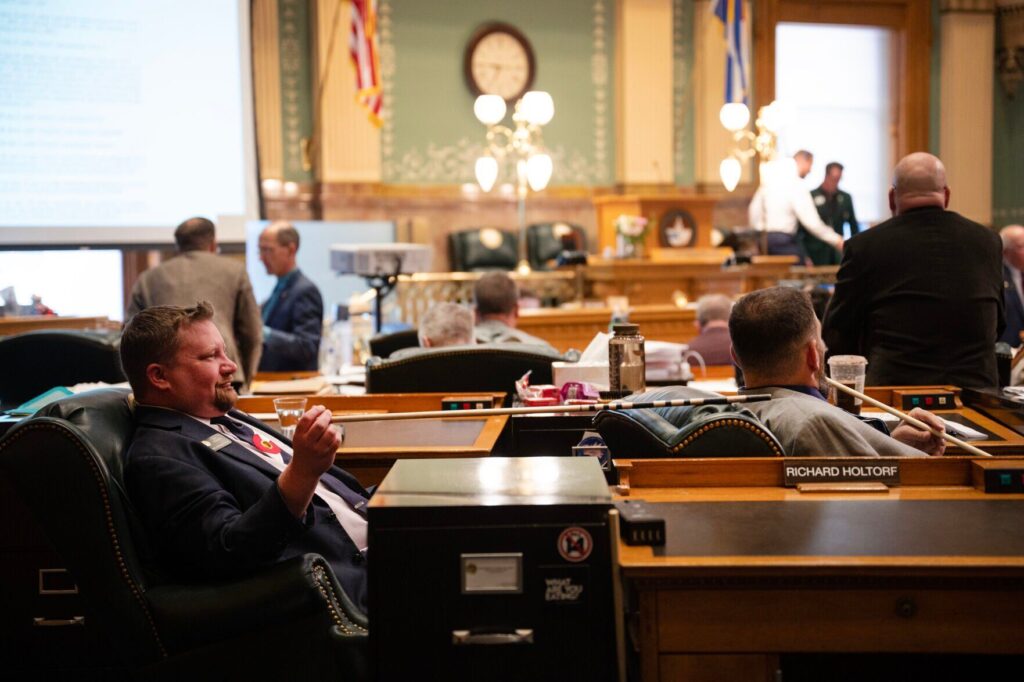
Over the course of the year, a series of investigations, allegations and controversies emerged at the state Capitol, drawing scrutiny to the behavior of elected officials and, in some cases, overshadowing policy debates. Here are some of the notable investigations,...
2025 Unfiltered: Top stories of the Colorado General Assembly
Marianne Goodland
marianne.goodland@coloradopolitics.com
Updated 9 hours ago
In 2025, the Colorado legislature faced a budget deficit, sought to tackle a lingering housing crisis and saw a wave of lawmakers leaving for other opportunities, prompting multiple vacancy committees to act. Here are a look at the year’s top...
2025 Unfiltered: Colorado Supreme Court vacancy, surge in federal filings and more
Michael Karlik
michael.karlik@coloradopolitics.com
Updated 7 hours ago
This year was awash in legal news nationally, with federal courts taking an outsize role in responding to executive branch actions. In Colorado, that effect was evident, but it was not the only factor at play. Here are the top...
2025 Unfiltered: Unions, guns and vetoes — inside Colorado’s political year
Marissa Ventrelli
marissa.ventrelli@coloradopolitics.com
Updated 7 hours ago
From affordability and labor rights to gun policy — as well as public safety and gubernatorial vetoes — 2025 proved to be one of the most consequential and contentious years in recent Colorado political history. Lawmakers entered the session pledging...
PREV
PREVIOUS

Denver's presiding juvenile judge steps down amid misconduct investigation
The longtime presiding judge of the Denver Juvenile Court, D. Brett Woods, retired from the bench on Friday amid a misconduct investigation whose details are still unclear. “I am proud of my work in the area of juvenile justice,” Woods wrote in a Feb. 8 letter to Chief Justice Brian D. Boatright. “I will cherish […]

Colorado lawmakers give green light to bill prohibiting adult use of cellphones while driving
A Senate committee Monday gave approval to a measure that will require adults to use hands-free cellphone devices or face harsher penalties for talking on a cellphone while driving. Senate Bill 65 is the latest incarnation of efforts by lawmakers who have been trying for at least 15 years to require adult drivers to keep […]