

Colorado lawmakers put pressure on wildlife officials to help ranchers protect livestock from wolves
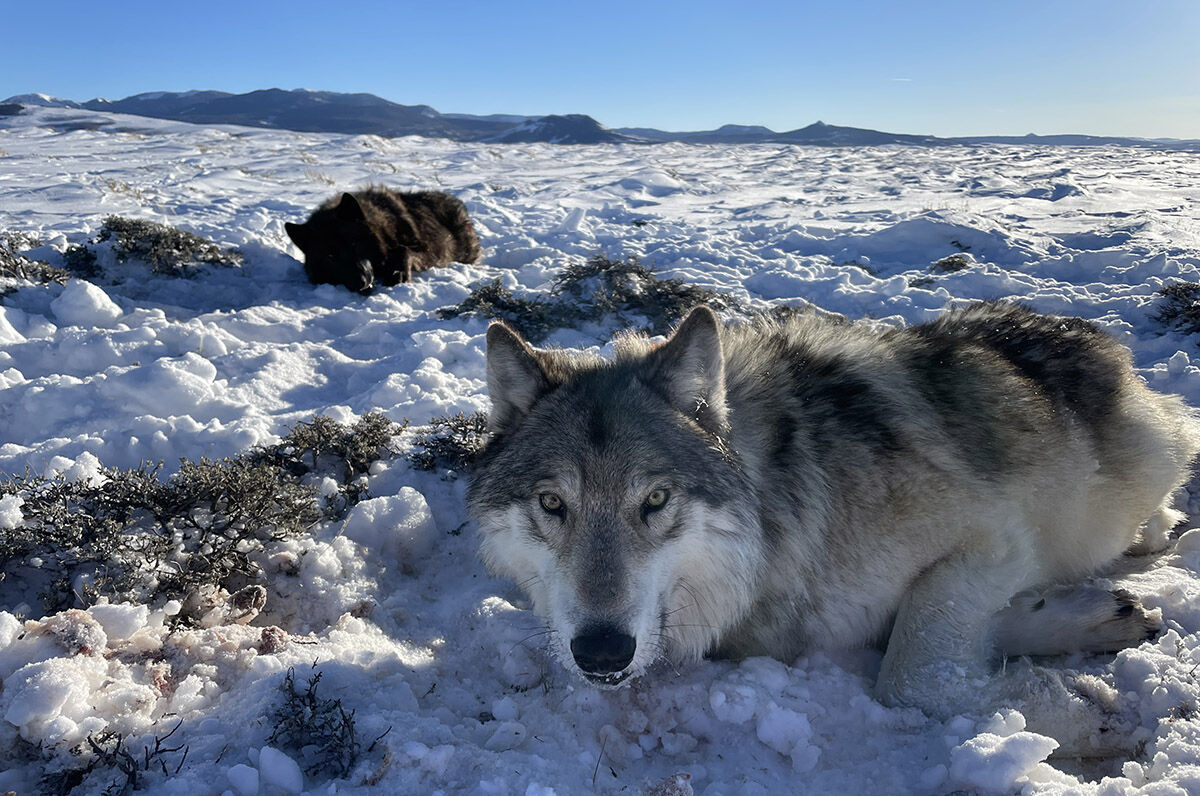
After losing more than a dozen livestock and four cattle dogs to wolf attacks, Jackson County rancher Don Gittleson is getting help from lawmakers, who asked wildlife officials to immediately reconsider their decision denying a request to remove the depredating animals from the area.
Gittleson said repeated pleas to Colorado Parks and Wildlife to deal with these wolves have been ignored, other telling him to employ “non-lethal” methods to scare the wolves off. These methods have not worked, Gittleson said.
Now, state lawmakers are stepping into the fray.
State Sen. Dylan Roberts, D-Frisco, and House Speaker Julie McCluskie, D-Dillon, penned a letter to CPW Director Jeff Davis on Monday, chastising the agency for failing to help the rancher who has so far lost 16 livestock and four working dogs to wolves that initially came from Wyoming and have since produced cubs.
At issue is the definition of “chronically depredating,” which is used to decide whether to use lethal methods to take out wolves that repeatedly attack livestock, as is the case with the two wolves that killed or injured Gittleson’s livestock.
In a letter, Roberts and McCluskie noted that CPW has refused to help livestock producers by clearly defining “chronically depredating.”
They said that, after years of “personally implementing non-lethal” means of mitigation and deterrence, Gittleston asked for CPW’s help after another attack on one of his heifers by one of two wolves identified as responsible for the damage to his herd.
“These killed and injured animals are not only the property of our constituents but they are key to their livelihood as agriculture producers,” the lawmakers said in their letter to wildlife officials. “Further, Colorado’s agriculture industry is a crucial part of our state’s economy and producers in Jackson County are dealing with the impacts of these wolves on the landscape, both directly and indirectly, and suffering hardship.”
To Roberts and McCluskie, CPW’s response to deny the request is unacceptable.
“The decision reflected in your letter” of Dec. 22 must be “immediately reconsidered, and that CPW take swift action to remove the depredating wolves that continue to kill and injure livestock and dogs in Jackson County,” the lawmakers wrote.
In addition, CPW must “immediately publish a draft rule for the definition of chronically depredating, or at the very least, provide reasoning to the General Assembly as to why a definition cannot be determined,” they said.
Gittleson told Colorado Politics that he saw wolf tracks on Tuesday morning during his regular patrol of his ranch, which happens several times a day and throughout the night.
He said he agreed with the letter from Roberts and McCluskie.
“We need a definition of a chronically depredating pack,” Gittleston said. “Everyone’s opinion on what this is could be different. You need one opinion on it so everyone knows where things stand. When you’re developing a wolf plan that’s crucial.”
He said the definition also triggers the federal 10(j) rule that allows for lethal takes of depredating wolves.
“Why they left that out is beyond me,” Gittleson said, adding that decision creates “a really big loophole” for CPW to not deal with the problem.
Roberts and McCluskie said they are dealing with other concerns with wolves in their districts.
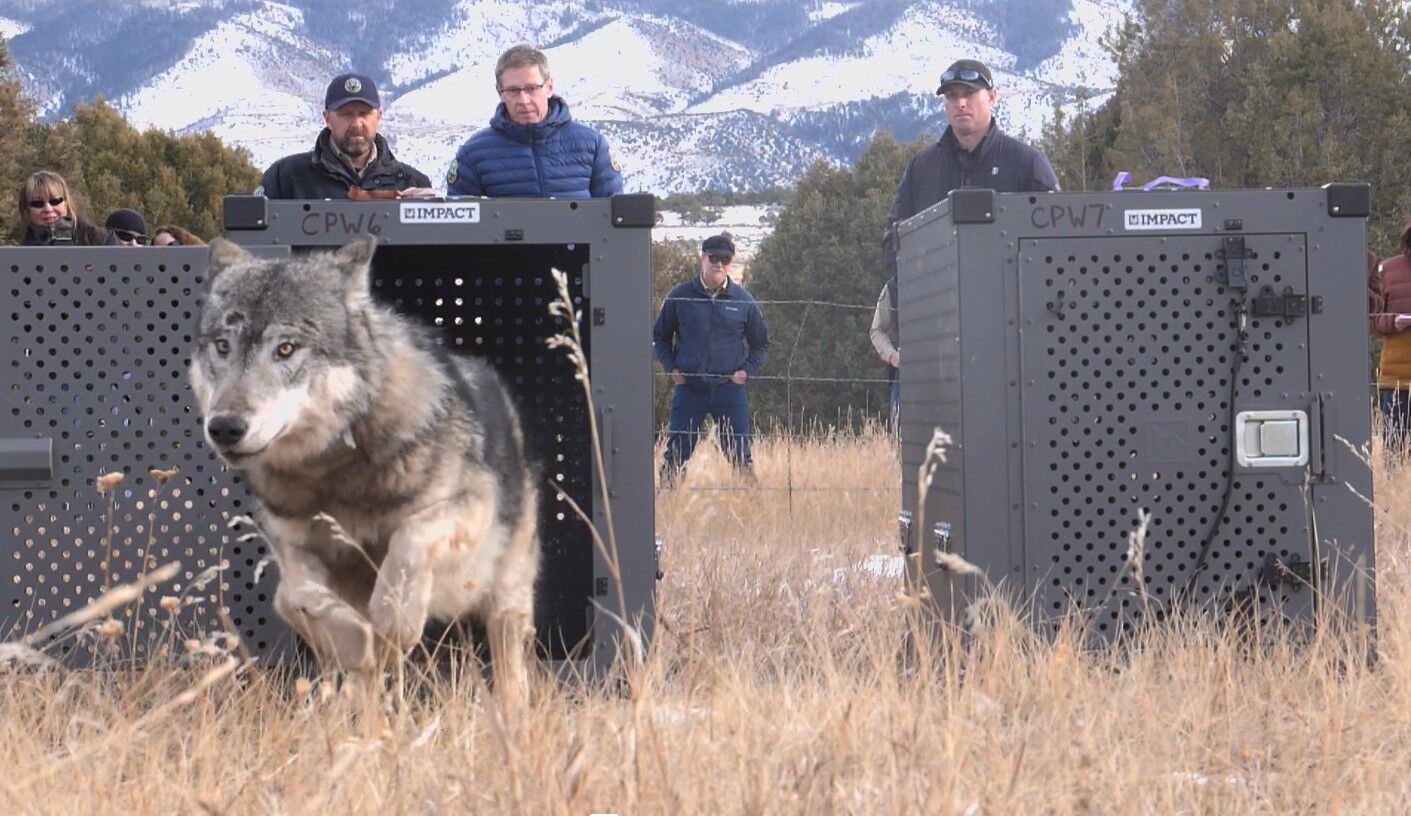
In a separate area from Jackson County, releasing 10 gray wolves into Grand and Summit counties produced a rash of criticism directed at CPW, which failed to notify ranchers that the wolves were being released. Critics said the agency used the release as a photo op and ranchers also said they learned the animals had been released from news reports.
Some of those new wolves came from packs in Oregon with a history of killing livestock, despite promises by wildlife officials in their wolf management plan that they would not bring wolves with such history to Colorado.
Colorado Parks and Wildlife has not yet responded to a request for comment.



Colorado farmers, ranchers wrestle with hurdles amid extreme drought conditions
Shen Wu Tan (Special to The Denver Gazette)
shen-wu-tan@gazette.com
Updated 3 weeks ago
Some producers take drastic steps to adapt to dry climate, record-low snowpack This is the first time that Jim Magnuson, who operates a family farm in the rural town of Eaton, can ever recall planting only 75% of his acreage. ...

Colorado produce not tied to nationwide cyclospora outbreak, agriculture officials say
Marissa Ventrelli
marissa.ventrelli@coloradopolitics.com
Updated 1 month ago
There is no indication that the recent outbreak of cyclospora, a fecal parasite that has contaminated food and water across nearly every state, can be linked to produce grown in Colorado, according to the state’s Department of Agriculture. “Colorado growers...

With no 7-state deal, federal agency turns to 10-year Colorado River strategy
Marianne Goodland
marianne.goodland@coloradopolitics.com
Updated 3 months ago
The U.S. Department of the Interior is moving forward with a 10-year framework for managing the Colorado River after 2026, outlining a plan to issue new operating guidelines every two years as the seven basin states remain unable to reach...
Colorado on the hook for $1 million in costs to pay for wolves’ livestock kills
Marianne Goodland
marianne.goodland@coloradopolitics.com
Updated 4 months ago
After paying more than $700,000 in March to ranchers for livestock lost to wolves, the Colorado Parks and Wildlife Commission is poised to approve two additional claims totaling $262,000 at its meeting this week. Those approvals would bring total payouts...
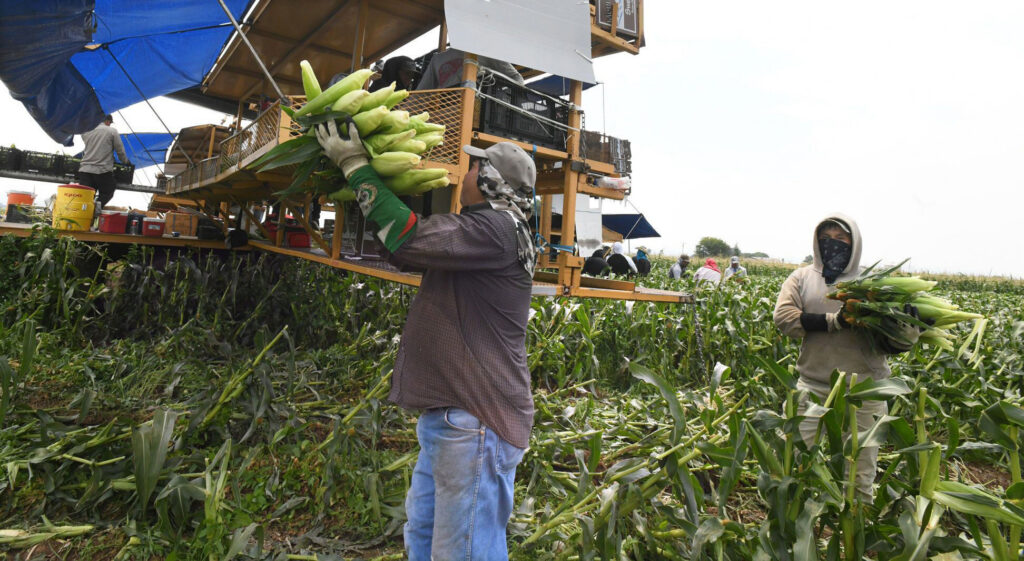
Overtime for farms, school safety, public office rules: What’s new in Colorado law
Marianne Goodland
marianne.goodland@coloradopolitics.com
Updated 4 months ago
Gov. Jared Polis signed 25 bills into law Monday, bringing changes that will affect workers, families, schools, and local governments across Colorado. The new laws deal with a range of issues – from overtime rules for farmworkers to limits on...
While growth slows statewide, small-town populations in Colorado boom
Savannah Eller
savannah-eller@coloradopolitics.com
Updated 4 months ago
A proposed housing project could more than double the population of Calhan, a town of just 760 on the Eastern Plains outside Colorado Springs. For some small towns on the Front Range, it’s a familiar situation. Colorado’s overall population growth...
Governor’s wildlife commission picks face pushback ahead of Colorado Senate hearing
Marianne Goodland
marianne.goodland@coloradopolitics.com
Updated 4 months ago
Colorado’s largest coalition of hunters, anglers, and wildlife conservation groups is urging state lawmakers to reject two of Gov. Jared Polis’ latest nominees to the Colorado Parks and Wildlife Commission, setting up a contentious confirmation hearing before the Senate Agriculture...

Cannabis overhaul introduced in Colorado Senate
Chris Osher
chris-osher@gazette.com
Updated 4 months ago
Colorado lawmakers on Wednesday introduced a measure that, if approved, would place a ballot proposal before voters this fall that contains changes backers say would improve consumer safety and overhauls how the marijuana industry is taxed. The proposed ballot initiative would fund a testing...

Colorado House passed a bill raising threshold for agriculture overtime by one vote
Marianne Goodland
marianne.goodland@coloradopolitics.com
Updated 4 months ago
The bill that would raise the overtime threshold for overtime pay for certain agricultural workers won the narrowest of votes Thursday in the Colorado House. Senate Bill 121 won a 33-32 vote, a dramatic difference from votes cast Wednesday on...

Colorado marijuana regulators pledge crackdown on intoxicating hemp
Christopher Osher
chris.osher@gazette.com
Updated 4 months ago
Citing potential tax avoidance, ‘serious risk to public safety,’ Marijuana Enforcement Division warns companies about swapping illegal chemically converted hemp for marijuana This article was produced for ProPublica’s Local Reporting Network in partnership with The Denver Gazette. Colorado regulators announced...
PREV
PREVIOUS

Data show persistent delays among handful of Colorado's federal judges
Five members of Colorado’s federal trial court have experienced far higher delays in deciding motions than their colleagues, according to recent data released by the federal judiciary. The Civil Justice Reform Act of 1990 requires public reporting of motions pending longer than six months in civil cases assigned to each district judge and magistrate judge. For the reporting […]

Move to oust House Republican leader Mike Lynch falters after critics fail to muster quorum
Another attempt to oust Rep. Mike Lynch as minority leader devolved into chaos on Tuesday morning, when his critics within the caucus failed to muster a quorum to hold a vote on his leadership. Some of Lynch’s colleagues sought to oust him from his post as House Minority Leader on Monday, when the GOP […]