

New federal judge takes the bench, state Supreme Court returns for arguments | COURT CRAWL

Welcome to Court Crawl, Colorado Politics’ roundup of news from the third branch of government.
The U.S. Senate confirmed the president’s nominee to the only existing vacancy on Colorado’s federal trial court, plus the state Supreme Court will return this week to hear oral arguments in six cases.
From Judge Crews to Judge Crews
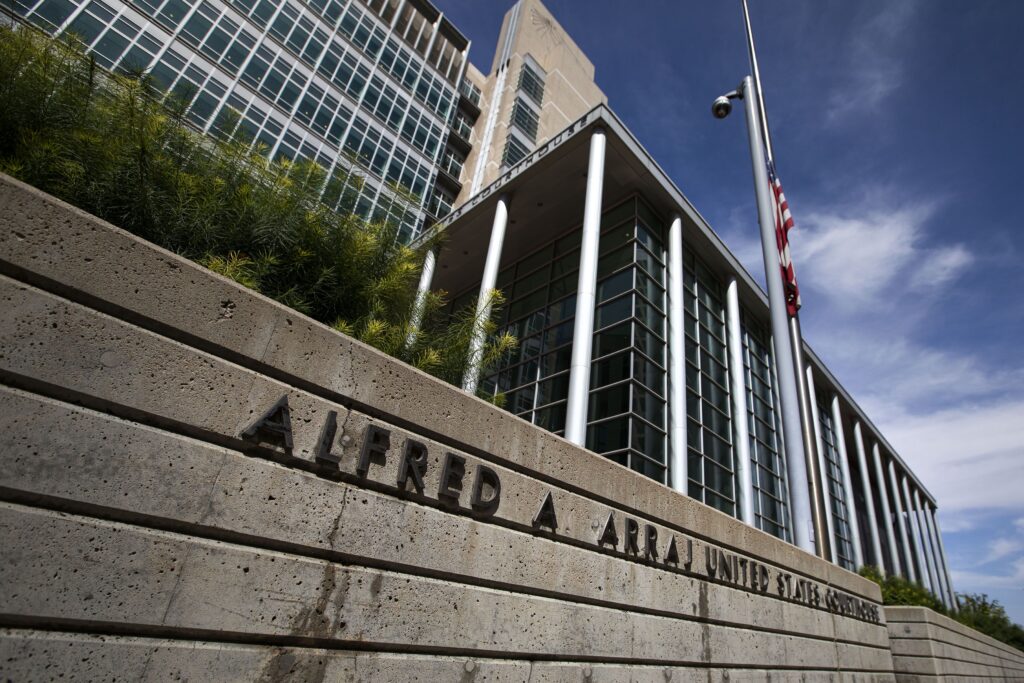
? Eleven months after the White House nominated him to fill a vacancy on Colorado’s U.S. District Court, U.S. Magistrate Judge S. Kato Crews won confirmation to a district judgeship last week by a vote of 51-48. On Friday, he was sworn in (although he’ll remain in his same courtroom).
? Readers will recall that Crews ran into trouble at his confirmation hearing last year when he couldn’t describe the U.S. Supreme Court’s key decision in Brady v. Maryland, which governs prosecutors’ obligations to disclose evidence. Reaction to the flub was harsh online, but practitioners in Colorado’s federal courts stood by Crews.
? With Crews’ appointment, let’s look at some numbers: Over three years, President Joe Biden has appointed five of the seven active district judges to Colorado’s court. In addition to choosing replacements for three Obama administration appointees, Biden also filled seats left vacant by two George W. Bush appointees.

? Now, for the first time in almost a decade, there are no current or announced vacancies among the district judge bench. The relative youth of the bench means we likely won’t see another wave of retirements for several years.
? One area that’s still unsettled is the ranks of magistrate judges. There have been four new appointments since 2021 and Crews’ vacancy means a fifth is on the way. Those who wish to apply for the seat, which comes with an eight-year term, must do so by Feb. 12.
Speaking of magistrate judges
? Another noteworthy development at the district court is the appointment of a “chief magistrate judge.” Michael E. Hegarty, the most senior magistrate judge, will be the first to hold the title for a four-year term. The majority of the 94 federal judicial districts don’t have a chief magistrate judge position, but Colorado Politics learned the entire magistrate judge bench in Colorado asked for the designation of a chief to take on a leadership and coordination role on their behalf. The district judges granted their request.
At the Colorado Supreme Court
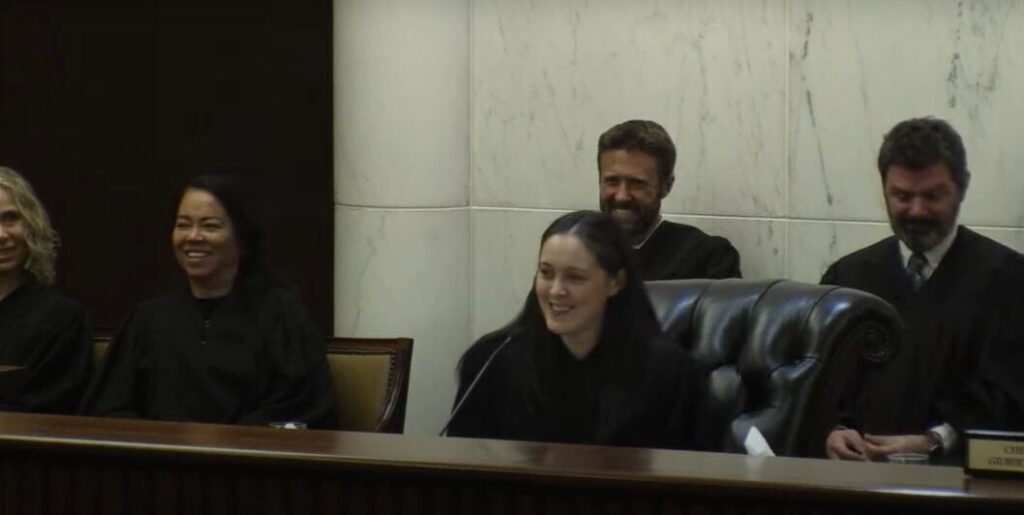
? The state Supreme Court will hear oral arguments in six cases this week beginning on Tuesday:
Godinez v. Williams et al.: For juveniles who are tried and convicted of sex offenses as adults, does Colorado’s process for considering parole eligibility comply with the U.S. Supreme Court’s interpretation of the Eighth Amendment?
People v. Garcia: If the defense knows a trial judge should recuse herself because of a conflict, but doesn’t object, do appellate courts get to address the defendant’s biased-judge claim after he is convicted?
People v. Johnson: Was there enough evidence to convict a man of a child sex crime based on a brief conversation in which the defendant allegedly made inappropriate comments to a 10-year-old girl before driving off?
Whiteaker v. People: Is first-degree trespassing a lesser form of second-degree burglary?
People v. Crabtree: Can a trial error that generates no objection result in the reversal of a defendant’s conviction if the error is “obvious” on appeal thanks to new Supreme Court precedent?
Kinslow v. Mohammadi: If a child is injured in a motor vehicle accident, how long does she have to file a lawsuit after turning 18?

? The justices signaled an interest in deciding whether a person who is the subject of contempt proceedings can be notified through his personal email, rather than in-person service as the rules seem to require.
In federal news
? Colorado Politics spoke with Judge Timothy M. Tymkovich of the U.S. Court of Appeals for the 10th Circuit, who the chief justice recently assigned to the nation’s secretive wiretapping appeals court. While the subject matter of the work is pretty different, Tymkovich said the process of learning about the relevant law and precedent is similar to his day job.
? The 10th Circuit agreed a man can sue an off-duty Aurora police officer for seizing items from his pockets under the incorrect suspicion that the plaintiff was shoplifting.
? A federal judge rejected the idea that a Black bank customer had to resolve her race discrimination claims through the mandatory arbitration clause in her bank account agreement, rather than the courts.
? A man whose shoulder was re-injured while Adams County deputies arrested him failed to show their conduct amounted to a constitutional violation.
? It does not violate the Eighth Amendment’s prohibition on excessive fines to require an Aurora couple to forfeit their home to the government, where they were illegally growing marijuana on a large scale.
? A woman who is suing Colorado Springs police officers for a constitutional violation deleted or withheld evidence relevant to her case, prompting a judge to impose financial sanctions on her and her lawyers.
? A man convicted of terrorism offenses who is residing in Colorado’s “supermax” prison may proceed with a handful of claims against prison officials related to his religious exercise and his ability to contact an outside attorney.
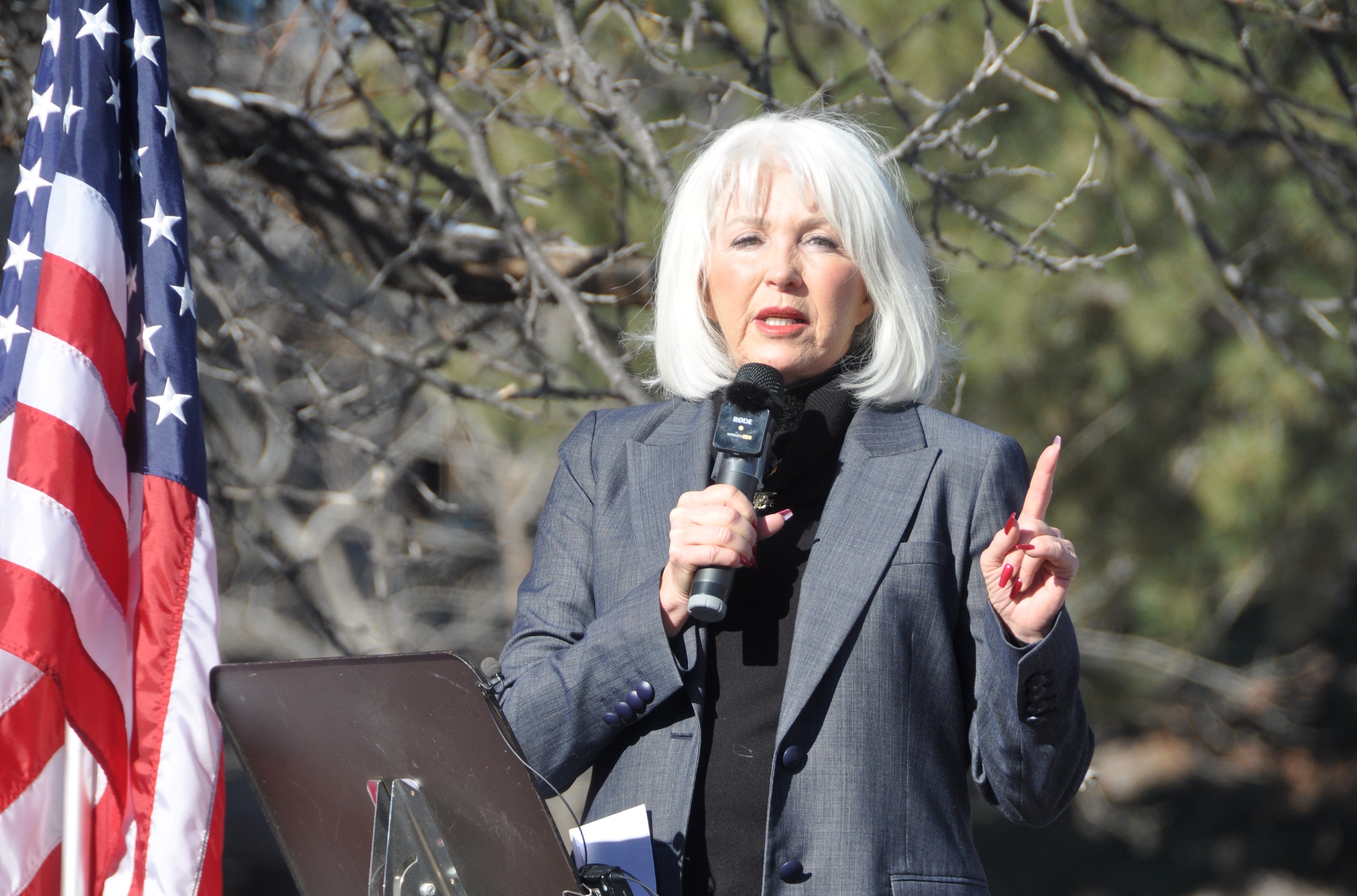
? Former Mesa County Clerk and Recorder Tina Peters is cleared for a criminal trial in state court next month, after a federal judge declined to halt the district attorney’s prosecution of charges related to Peters’ alleged tampering with election equipment.
Vacancies and appointments
? U.S. Magistrate Judge Scott T. Varholak is undergoing the process for reappointment to another eight-year term. A merit selection panel will report to the court by April 5 with its recommendation regarding reappointment.
Miscellaneous proceedings
? During legislative oversight hearings last week, judicial leaders spoke about the $35 million in damage a man caused to the Ralph L. Carr Colorado Judicial Center earlier this month, rendering several offices off-limits for at least the next month – and possibly for the next year. Lawmakers also heard about loosening the procedures of judicial discipline for senior judges, but gave the idea a chilly reception.
? The Colorado Access to Justice Commission’s year-end report previewed a new self-help website that’s in development and the use of federal grant money to address rural “legal deserts.”
? The Judicial Department has announced that $400,000 in restorative justice grants are available in two categories: “immediate community needs for critical conversations, networking, and basic operations for emerging or smaller-scale restorative initiatives” and programs that “strengthen best practices in restorative justice across communities, regions and the state.” Interested organizations may apply here.


Divided appeals court reverses murder convictions due to faulty self-defense instruction
Michael Karlik
michael.karlik@coloradopolitics.com
Updated 17 hours ago
Colorado’s second-highest court concluded last week that an incomplete self-defense instruction required the reversal of an El Paso County defendant’s murder convictions. Demetrius Montez Martin was among those present late at night at a club in Colorado Springs. An argument...

New Supreme Court member announced, justices hear oral arguments | COURT CRAWL
Michael Karlik
michael.karlik@coloradopolitics.com
Updated 21 hours ago
Welcome to Court Crawl, Colorado Politics’ roundup of news from the third branch of government. The governor announced his pick to fill a vacancy on the state Supreme Court, and the justices heard oral arguments in multiple criminal and civil...
Colorado’s federal judges maintain approach to immigration detentions while escalating warnings
Michael Karlik
michael.karlik@coloradopolitics.com
Updated 3 days ago
Colorado’s federal judges are maintaining their view that the government’s assertion of broad immigration detention authority is unlawful, casting aside a recent appellate decision to the contrary as “unpersuasive” and out of step with the predominant interpretation by the judiciary....
U.S. Supreme Court strikes down Trump’s tariffs, upending central plank of economic agenda
Lindsay Whitehurst
lindsay.whitehurst@associatedpress.com
Updated 4 days ago
WASHINGTON • The Supreme Court struck down President Donald Trump’s global tariffs on Friday, handing him a major loss on an issue crucial to his economic agenda. The 6-3 decision centers on tariffs imposed under an emergency powers law, including...

Federal judge partially allows challenge to proceed against Colorado unclaimed property program
Michael Karlik
michael.karlik@coloradopolitics.com
Updated 4 days ago
A federal judge allowed some claims to proceed last week against Colorado’s treasurer, based upon alleged constitutional violations flowing from the state’s process for reuniting people with their unclaimed property. Previously, U.S. District Court Judge Charlotte N. Sweeney dismissed the...
GoFundMe donations for victim do not lessen defendant’s restitution obligation, appeals court rules
Michael Karlik
michael.karlik@coloradopolitics.com
Updated 2 days ago
Donations made to a victim’s crowdfunding page do not necessarily reduce the defendant’s obligation to pay crime victim restitution, Colorado’s second-highest court concluded on Thursday. Under state law, crime victim compensation boards reimburse victims for certain monetary losses, including funeral...
Colorado senators initially push for — then drop ‘identity’ factor in parenting time decisions
Marissa Ventrelli
marissa.ventrelli@coloradopolitics.com
Updated 4 days ago
The sponsors of a proposal that would require suppression of records in name-change petitions for minors removed a provision that would have mandated the courts to factor in the issue of “identity” when allocating parenting time. In its original form,...
Appeals court divided over effect of retroactive sentence on parole calculation
Michael Karlik
michael.karlik@coloradopolitics.com
Updated 2 days ago
Colorado’s second-highest court grappled last week with the framework for calculating a defendant’s earliest possible parole date in light of two intersecting legal principles — a judge’s ability to make an order retroactive, and the requirement that separate, simultaneous sentences...
Federal judge allows some claims to proceed over denial of cancer meds in El Paso County jail
Michael Karlik
michael.karlik@coloradopolitics.com
Updated 3 days ago
A federal judge allowed claims to proceed last week against some medical and sheriff’s office employees at the El Paso County jail over their alleged failure to ensure a detainee received his cancer medication during four months of incarceration. Stuart...
Colorado’s chief justice exceeds average number of dissents with 4-plus months left in term
Michael Karlik
michael.karlik@coloradopolitics.com
Updated 6 days ago
Since the start of the Colorado Supreme Court’s 2025-2026 term in September, Chief Justice Monica M. Márquez has now exceeded her average number of dissenting opinions, with more than four months remaining before the court breaks for the summer. The...
PREV
PREVIOUS
Colorado GOP endorses Trump, Polis declares disaster declaration as temperatures plummet | WHAT YOU NEED TO KNOW
Today is Jan. 15, 2024, and here’s what you need to know: The Colorado Republican Party endorsed former President Donald Trump’s bid for another term late Sunday, nearly two months before state voters are set to cast ballots in Colorado’s presidential primary. In an unprecedented decision, the state GOP’s central committee voted to endorse Trump […]

Rural lawmakers accuse Polis of neglecting rural areas in disaster declaration
Several of the state’s rural lawmakers complained that Gov. Jared Polis has neglected their regions when he issued a disaster declaration as extreme cold conditions pummeled Colorado. The governor’s office said disaster assistance is available to all parts of the state but added that none from the Eastern Plains has so far requested it. Several […]