

Attorneys general from Colorado, dozen other states press federal to reschedule marijuana

Colorado Attorney General Phil Weiser joined a dozen others nationwide in signing a letter addressed to the federal Drug Enforcement Administration asking that marijuana be downgraded from a Schedule I to a Schedule III substance, which would allow it to be officially accepted for medical use at the federal level.
In the undated letter, the officials said they were encouraged by the recommendation from the U.S. Department of Health and Human Services to move cannabis to Schedule III in the interest of public health and safety.
“For these reasons, we encourage the DEA to implement a final rule rescheduling cannabis to Schedule III based on the Federal Drug Administration’s scientific and medical conclusions,” the letter said. “We see this as a public safety imperative and write in support of this policy change.”
Dating back to the 1970s, marijuana has been designated as a Schedule I substance. According to the DEA, the current designation does not allow medical use and has a high potential for abuse. Other drugs designated as a Schedule I substance include heroin, lysergic acid diethylamide (LSD); 3,4-methylenedioxymethamphetamine (ecstasy), methaqualone, and peyote.
Although legalized in about about two dozen states including Colorado, cannabis remains illegal at the federal level because of its designation.
Schedule III drugs, on the other hand, are considered to be substances with moderate to low potential for physical and psychological dependence. That category includes products containing less than 90 milligrams of codeine per dosage unit (Tylenol with codeine), ketamine, anabolic steroids and testosterone.
Another obstacle for those states that have legalized marijuana is the lack of legal authority, which means marijuana businesses are limited in their access to banking and capital. The largest hurdle, however, is IRS regulations that bar marijuana businesses from being able to deduct overhead expenses, such as wages and salaries, advertising and travel costs. They can however, deduct the cost of goods sold, which is their inventory, according to an IRS expert.
The issue of rescheduling has been a bit murky of late.
Dated Aug. 29, the Health and Human Services letter recommending the DEA reschedule cannabis has never been fully seen by the public. To date, it has only been seen by one reporter from Bloomberg News. However, HHS Secretary Xavier Becerra said in June that he hoped to have a recommendation ready by the end of 2023.
In October, the health department released a highly-redacted version of the letter.
That led attorney Matt Zorn to file a complaint under the federal Freedom of Information Act, seeking all documentation related to the health department’s recommendation. That lawsuit was scheduled to go to a hearing next week.
Yesterday, the agency agreed to release all documentation and without redaction, according to Marijuana Moment.
That has led to speculation that rescheduling could be imminent, although Zorn appears skeptical.
The letter from the attorneys general noted that 38 states have now legalized the use of cannabis for medical purposes, and 24 states, including Colorado, allow it for recreational use.
The letter outlined the steps those states have taken to regulate the market, such as seed-to-sale tracking, THC and serving limits, restrictions on minor-directed marketing and advertisements, age verification requirements prior to a sale of marijuana products to limit underage access, packaging and labeling standards, laboratory testing requirements, warning symbols, and regulation of pesticides for use in cultivation of marijuana, among others.
Those regulations are all part of Colorado’s legal framework.
“While we are not all aligned on the wisdom of fully legalizing cannabis, we do agree, however, that a state-regulated cannabis industry better protects consumers than the illicit marijuana market or the unregulated intoxicating hemp-derived marketplace,” the attorneys general said.
In addition to Weiser, the letter is signed by the attorneys general of Illinois, California, Maryland, Connecticut, Massachusetts, Delaware, Oregon, Pennsylvania, Nevada, New Jersey and Rhode Island.


Colorado’s federal judges maintain approach to immigration detentions while escalating warnings
Michael Karlik
michael.karlik@coloradopolitics.com
Updated 28 minutes ago
Colorado’s federal judges are maintaining their view that the government’s assertion of broad immigration detention authority is unlawful, casting aside a recent appellate decision to the contrary as “unpersuasive” and out of step with the predominant interpretation by the judiciary....
In a meeting Colorado GOP chair Brita Horn calls ‘illegal,’ Republicans vote to demand her resignation
Ernest Luning
ernest.luning@coloradopolitics.com
Updated 2 hours ago
Roughly half the membership of the Colorado Republican Party’s state central committee on Saturday voted overwhelmingly to approve a resolution expressing “no confidence” in state GOP Chairman Brita Horn’s leadership and calling for her immediate resignation in an online meeting...

Colorado Medicaid probe uncovers millions of dollars in alleged transport fraud ring
Nico Brambila
nico.brambila@denvergazette.com
Updated 6 hours ago
Colorado Medicaid officials detected $25 million in abnormal billing over just four months two years ago — a surge that prompted a new state law and the suspension of dozens of providers in what authorities now describe as an organized...
One small step for dialing back the partisanship | SONDERMANN
Eric Sondermann
eric-sondermann@coloradopolitics.com
Updated 2 days ago
Much ink, including a good deal of my own, has been spilled on the excesses of super-charged, toxic partisanship in this current era. Except for true believers along with those who profit from this all-consuming poison, there is broad agreement...

Greeley voters to decide fate of project that includes minor league hockey arena
Hap Fry, Special to The Gazette
hap-fry@gazette.com
Updated 6 hours ago
GREELEY • The fate of the Cascadia development — and quite possibly the future direction of the city — is in the hands of Greeley voters this Tuesday during a special city election on whether the landscape-altering project should be...

Colorado Politics Calendar Feb. 23-Mar. 1
Rachael Wright, Special to Colorado Politics
rachael.wright@coloradopolitics.com
Updated 3 days ago
CoPo’s weekly political calendar helps you find political and public policy events throughout Colorado. It includes candidate and issue campaign events, public policy meetings, court hearings, state and local party conventions, assemblies, debates, rallies, parades, speaking engagements, traveling dignitary appearances,...
Meeker rancher leads one of Colorado’s earliest attempts to transfer federal lands | A LOOK BACK
Rachael Wright, Special to Colorado Politics
rachael.wright@coloradopolitics.com
Updated 2 days ago
Forty-Five Years Ago This Week: Former state Rep. Nick Theos, R-Meeker, was one of several people testifying before the Senate Agriculture Committee on Senate Bill 81-170, which would transfer ownership of public lands from the federal government to state control....
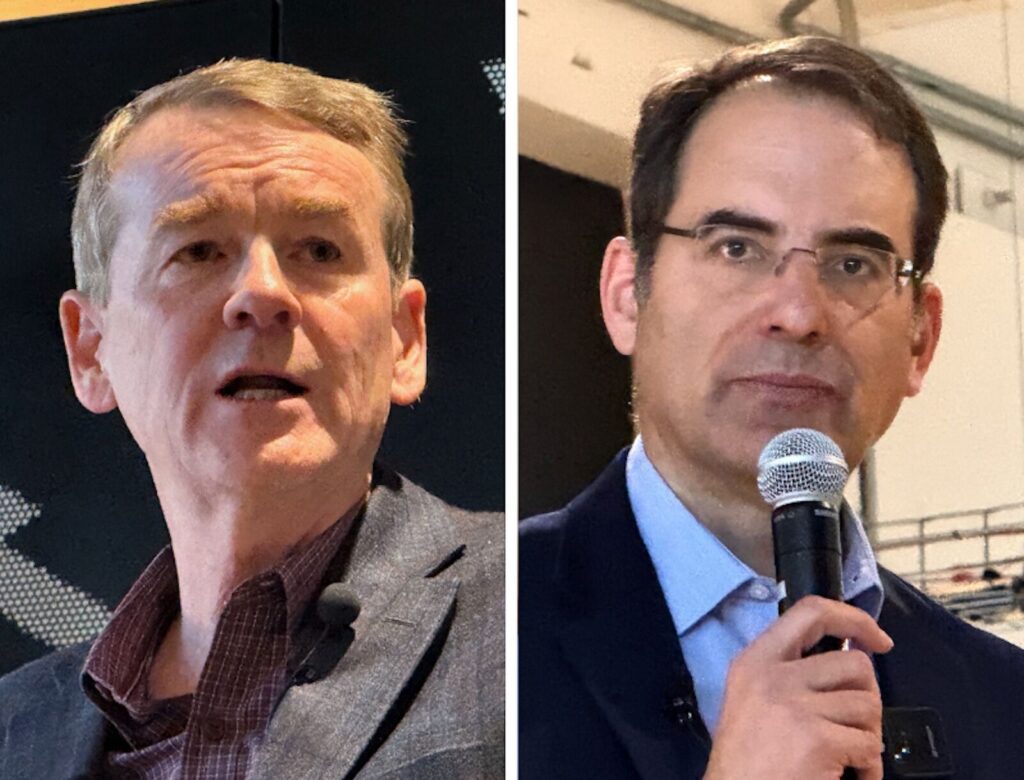
Democrats Michael Bennet, Phil Weiser make their cases to be Colorado’s next governor ahead of primary
Ernest Luning
ernest.luning@coloradopolitics.com
Updated 2 days ago
Nearly eight months before ballots will be counted in Colorado’s race for the its open gubernatorial seat, voters are lining up behind two of the state’s leading Democrats, who are facing off in a primary that will likely determine which...
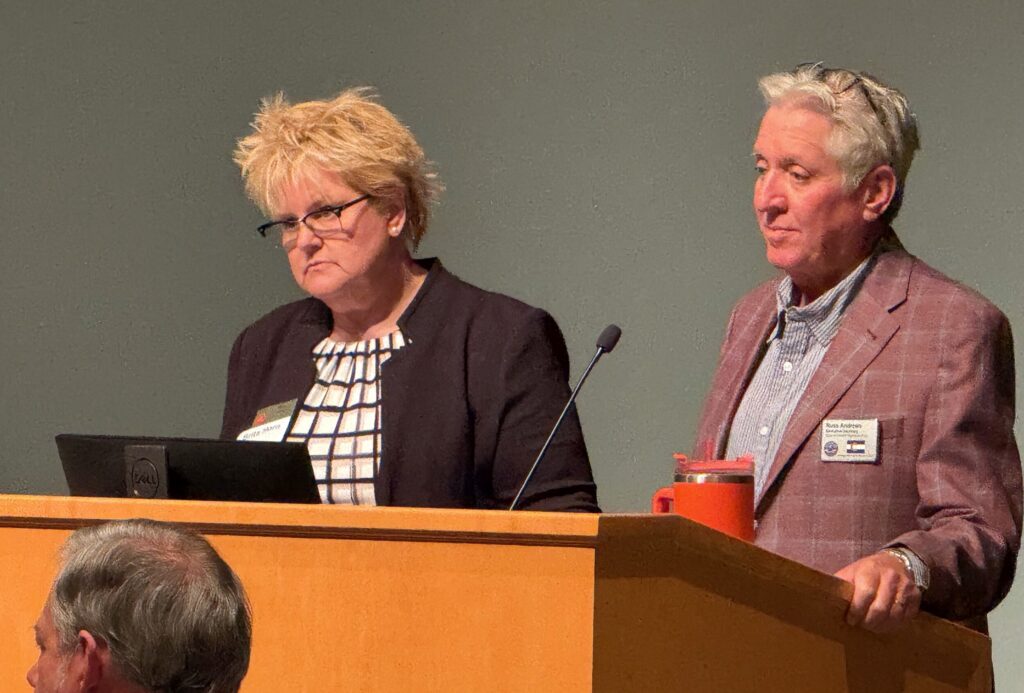
Colorado GOP officers set competing meetings to hold ‘no-confidence’ votes on state chair Brita Horn
Ernest Luning
ernest.luning@coloradopolitics.com
Updated 23 hours ago
Once again, members of the Colorado Republican Party’s central committee have scheduled separate, competing meetings to consider whether the state GOP’s governing body supports its chair, but this time neither meeting will be held under a bridge. State GOP Chair...
Colorado Democratic candidate submitted 1,600 signatures — only 29 were valid
Marianne Goodland
marianne.goodland@coloradopolitics.com
Updated 2 hours ago
When he turned in some 1,600 signatures last month, Eric Nelson said it demonstrated “strong grassroots support from voters” across the district and a “growing momentum” for his “inclusive, community-centered leadership.” On Thursday, the Secretary of State rejected Nelson’s petition...
PREV
PREVIOUS

Colorado Republicans filibuster proposal to double tax credit using TABOR dollars
House Republicans launched a brief filibuster on Friday morning over legislation to double a tax credit using Taxpayer’s Bill of Rights surplus dollars. House Bill 24-1084 is actually a repeal and re-enactment of a measure from the special session in November that dealt with property taxes. The 2023 measure doubles the Earned Income Tax Credit. The […]

Judicial discipline proposal draws Colorado lawmaker skepticism
During a legislative oversight hearing on Friday, judicial leaders revealed that a man who broke into the Ralph L. Carr Colorado Judicial Center earlier this month caused $35 million in damage, resulting in several offices being off-limits for months to come. Chief Justice Brian D. Boatright told members of the House and Senate judiciary committees […]