

Housing takes center stage anew as lawmakers prepare to convene for new session

The quest for affordable housing consumed policymakers’ energy last year, the source of intense animosity between state and local leaders that ultimately handed Gov. Jared Polis a major political defeat.
And it looks like the legislative session that is set to start on Jan. 10 will be a repeat of 2023 – at least in terms of the Colorado General Assembly’s overarching focus.
This time, however, the challenge is shaping up to be dramatically different from where things ended on May 10 last year.
In particular, lawmakers have signaled cooperation at multiple levels – between local leaders and state policymakers, Republicans and Democrats and, just as importantly, between the governor’s office and municipal governments.
Senate Majority Leader Robert Rodriguez of Denver had called the 2023 legislation a “turducken” – a measure pushed too late and lacking the work necessary to ensure its success.
Meanwhile, Assistant House Minority Leader Rose Pugliese of Colorado Springs said Republicans have been invited to the table.
Indeed, interviews with legislative leaders suggest that, as the new session approaches, they are taking a markedly different approach to one of the biggest issues plaguing Colorado.
In addition, they are preparing to renew discussions on the state’s “construction defects” law, which developers and others say is keeping condos – one of the most affordable forms of housing – out of the market.
Smaller bites instead of an omnibus bill
Majority leaders in the state House and Senate said there could be as many as five bills that break the issues from last year’s omnibus land use measure into smaller bites.
In a pre-session conversation, House Majority Leader Monica Duran of Wheat Ridge told Colorado Politics that separate housing bills will likely focus on accessory dwelling units, housing density in transit-oriented corridors and some of the other provisions from Senate Bill 23-213, last year’s measure that ultimately went nowhere.
More importantly, Duran believes there has finally been collaboration between municipalities and the state, as well as with other parties, and that the conversations that SB 213 lacked are now happening.
In addition, lawmakers this time around appear intent on getting the buy-in of rural Colorado.
Sen. Dylan Roberts, D-Frisco, who sought changes to SB 213 that would make the measure more palatable to mountain communities, said he intends to keep working on the issue this year. In particular, he will be pushing legislation to allow municipalities and counties to offer property tax rebates to homeowners or commercial property owners to incentivize affordable housing, childcare, and behavioral health facilities.
“We’re hoping primarily that this would be an incentive for homeowners to decide to lease to a long-term local worker, rather than doing a short-term rental,” Roberts said.
The bill will draw bipartisan support, with Speaker Julie McCluskie and Rep. Lisa Frizell, R-Castle Rock, as co-sponsors, he said.
Meanwhile, Sen. Barbara Kirkmeyer, R-Brighton, a member of the Joint Budget Committee, is working with her fellow JBC colleague Sen. Rachel Zenzinger, D-Arvada, to pick up where the legislature left off on land use issues.
The bill to watch in 2024 may just be a bipartisan measure from the duo known as the “Sustainable Affordable Housing Bill.”
Kirkmeyer, who played an oversized role on the housing issue last year, when she teamed up with her JBC colleague in opposition to SB 213, told Colorado Politics she and Zenzinger have been working with the governor’s office on the measure, as well as conducting an extensive stakeholder process.
“At our first meeting, I think we had 100 people, anywhere from housing advocates, Habitat for Humanity, to obviously local governments, regional governments, homebuilders, realtors,” as well as representatives from the governor’s office, she said.
Pugliese – whose caucus walked out last session over Democrats’ response to skyrocketing property taxes – said House Republicans have been at the table for the conversations on housing, both with the governor’s office and with Rep. Steven Woodrow, D-Denver, one of the House sponsors of SB 213.
Pugliese told Colorado Politics it is “very impressive that they see the value that I could bring in having this conversation.”
Pugliese added, however, that proposals around transit-oriented housing don’t work for everyone, and she hopes Democrats will recognize that the whole state doesn’t look the same. In particular, access to transportation varies depending on the location, she said.
Revisiting ‘Construction defects’
Along with Zenzinger, Rep. Shannon Bird, D-Westminster, is expected to carry a “construction defects” legislation.
Condos have long been seen as the entry point for first-time homeowners or the end point for seniors looking to downsize. But the incessant complaint by many has been that the cost of litigation and insurance has dried up the ability of developers to build new condo units.
A 2023 report from the Common Sense Institute, which espouses free market values, points out that condominium development in the Front Range between 2018 and 2022 was 76% lower than in the period between 2002 and 2008.
“This amounted to 14 new apartments for every 1 new condo in recent years, while there was 1 new condo for every 1.25 apartments in the 6 years prior to 2009,” the report said.
The number of condo developers has also plummeted – from 146 in 2007 to just 23 in 2022, the study said.
Meanwhile, condo owners have pointed to a myriad of defects that have made their homes unlivable.
Lawmakers have tried to tackle the problem for more than 20 years, beginning with the 2001 Colorado Construction Defect Action Reform Act, which set up the parameters for how legal action could proceed. The attempt was meant to rein in frivolous lawsuits, but the effect was to open a Pandora’s box to defective condos without enough protections for homeowners.
The poster child for the construction defects debacle was the Beauvallon on Lincoln St. in Denver. In 2008, homeowners of the 200-unit two-tower condo complex sued the developer and his partners, alleging major construction defects, such as water leaking into the units. The developer and his partners were found liable for $17 million in repairs, a settlement reached in 2014.
By then, the issue of construction defects had taken hold at the state Capitol.
The bitter battles that ensued meant lawmakers had little to show for their efforts.
Homeowners cheered their ability to sue and protect their homes from defects, while developers complained it is too easy for homeowners to sue, which drive up costs, including the cost of insurance for litigation.
In 2017, a bipartisan bill pushed by then-Rep. Alec Garnett, D-Denver, hoped to right the ship and make it just a little harder for condo owners to sue, requiring a majority of owners in a development to agree to a lawsuit, even if their units had no defects. But it put homeowners in a predicament – they couldn’t sell or even refinance their condos, even if free from defects, since the unit is encumbered as part of a lawsuit.
While the law was intended to jumpstart condo construction, it didn’t work. And Colorado’s housing shortage turned into, among other things, a crisis of unaffordability.
“There are really only two kinds of multi-family developments – those who have been sued and those who will be sued,” Kathie Barstnar of NAIOP, the Commercial Real Estate Development Association, told Colorado Politics.
That means entry-level condo development isn’t happening. What’s available are condos at the high price points because those developers can absorb the cost of insurance that will be needed to cover the inevitable lawsuit, she said.
The 2017 legislation only moved the needle by a few percentage points, Barstnar said.
Barstnar said the Bird-Zenzinger bill offers a variety of pathways for homeowners to resolve issues with condo construction – a “right to remedy,” she said.
That could include granting a homeowner the right to bring back the original builder to fix the problem, find a separate contractor to make the repair or accept a cash offer that allows the homeowner to find their own repair company.
“It gives more options on how to make the consumer whole other than just focusing on the courtroom,” she said.
The draft bill could also look at the vote threshold for lawsuits, given that current law sets different percentages, depending on where the defects occur, as well as better notification for homeowners.
Newly-selected Rep. Chad Clifford, D-Centennial, voiced support for the concept during the vacancy committee meeting on Jan. 3. Increasing the supply of housing should be a bigger priority than measures like rent control, he said.
Pugliese also said several members of her caucus have been involved in some of the conversations around the bill and raised the potential that it could be bipartisan.
“I do think there is a concerted effort by Republicans to address this issue as much as Democrats are having the conversations. So, I do hope it would be bipartisan and that we will be engaged,” she said. “It’s definitely a priority within the caucus.”
Health, guns and taxes
While housing will likely the take center again, plenty of other issues will occupy lawmakers’ time.
State Sen. Kyle Mullica, D-Thornton, intends to focus on public health bills that will lower the cost of care and keep tobacco and vaping products out of the hands of teenagers.
His first bill will seek to eliminate a practice of throwing away what he deems to be perfectly good medicine administered at doctor’s offices.
For example, if a person gets eye drops at an eye doctor’s office, the doctor will write a prescription for further medications but the container from the initial treatment gets pitched into the trash. His bill would allow a doctor to send that container home with the patient, which could save money on prescriptions.
Sen. Rhonda Fields, D-Aurora intends to focus on youth and teen behavioral first aid training and on increasing the number of beds in behavioral and mental health facilities for kids. She also plans to add new groups that would be protected under Colorado’s hate crimes statute, as well as collecting better data on hate crimes.
Fields also plans to push for legislation to ensure hospitals clearly list the costs for procedures on their websites, since finding that information has often been difficult.
Field, a major force on issues such as gun control, is serving her final year in the legislature. She jumped into politics after her son and his fiancé were murdered by gang members.
Over in the House, Duran plans to introduce a bill to standardize the state’s concealed carry weapons permit statewide, an issue she’s been working on for five years now. She’s also looking at legislation to restrict firearms possession in parks and schools.
Pugliese said her priority, and that of her caucus, is to fight tax increases. One bill from her caucus will seek a reduction in the state income tax rate, a policy change Polis says he favors but that legislative Democrats don’t support.
Over in the Senate, Kirkmeyer also expressed interested in the state income tax reduction.
“We know that we have these huge amounts of TABOR refunds, which is a good thing and not such a good thing, because what it means is that people have been paying more than their share of taxes than what the government really truly needs,” she said. “So, I just want to make sure that we really truly come back and provide tax relief.”
Kirkmeyer is working on property tax relief with Pugliese, hinting that she’s skeptical that the property tax commission, which begins meeting this week, is going to come through in time with solutions. The commission, created out of the special session last November, must make its recommendations in mid-March.
A bill on early childhood education is also on the horizon, Kirkmeyer said.
To be known as the “Empowerment Scholarship Act,” it’s based on a model from Arizona that allows parents to use a state-funded education savings account for any preschool they choose.
It would also apply to special education, Kirkmeyer said.
“I want to make sure we eliminate the budget stabilization factor (the debt to K-12), but at the same time, I have some criticisms of the early childhood department. The governor told everybody free universal preschool when actually, it didn’t really mean free all-day preschool,” she said.
Pugliese also noted a bill related to the housing issue to be sponsored by Rep. Mary Bradfield of Colorado Springs.
“Childcare has to be part of the conversation on housing,” Pugliese said.
Meanwhile, Bradfield intends to sponsor legislation coming out of the interim committee on behavioral health in the youth justice system. One measure would expand the state’s existing programs on access to crisis system services.
On the issue of behavioral health, Sen. Dafna Michaelson Jenet, D-Commerce City, plans to carry a bill to make permanent the “I Matter” program that deals with suicide prevention. Currently, it provides six free virtual counseling sessions for those under the age of 18.
She also plans to sponsor a measure to make the 988 crisis line free and not count toward someone’s data or minutes on their cell phones. She explained that, if someone calls 911, that doesn’t count toward minutes or data, but calling 988 does.
She also will seek more mandatory insurance coverage, something that Polis has been wary to approve. This year’s bill could focus on pre-diabetes and obesity treatments, such as therapy or weight loss medication.
All eyes on water
While the governor and McCluskie both said water would be a major focus in the 2023 session, what came out of last year’s session was a short-term task force charged with looking at the water issues that federal and state officials and local water providers and experts have been working on for 20 years.
Roberts, who was one of the sponsors of the drought task force, said addressing Colorado’s water challenges should be a top priority.
“There’s no time like the present to prepare for what could be a very challenging future as our state faces ongoing drought and a warming climate, and there are really common sense bipartisan practical changes that we can make in our water policy at a state level that will set Colorado up well for the future,” he said.
With that in mind, Roberts plans to take a deep dive into the recommendations of the task force, especially on boosting funding for aging water infrastructure and helping with drought resiliency. He said he hopes those projects can be funded either through the state budget or the annual water projects bill.
He also wants to see more funding for turf replacement, a bill he’s sponsoring that comes from the Water Resources and Agricultural Review Committee.
Roberts, who has also been a major player on legislation around health care costs, said he wants to see a bill on expanding remote patient monitoring by allowing Medicaid to cover more of those services. That’s especially helpful in rural communities, he said.
“It’s been a really successful program, particularly down in the San Luis Valley, and we think if we can increase access to it more Coloradans will participate,” he said. “It’s a great way to drive down healthcare costs in the long-term because people will get the care they need more immediately, but also not have to spend exorbitant amounts of money to travel to a hospital when they don’t need to.”
Finally, Roberts and Rep. Matt Soper, R-Delta, are taking on the lack of regulation in the funeral home industry, with legislation that will require licensing or certification to work in a funeral home. The push stems from an incident in October, when authorities discovered nearly 200 improperly stored bodies at a funeral home in Penrose, and from what happened in Montrose a couple of years ago, where operators of a funeral home faced accusations of illegally selling the bodies or body parts.
The 2024 legislative session starts on Wednesday, Jan. 10. Gov. Jared Polis is expected to deliver his sixth State of the State address the following day.



marianne.goodland@coloradopolitics.com


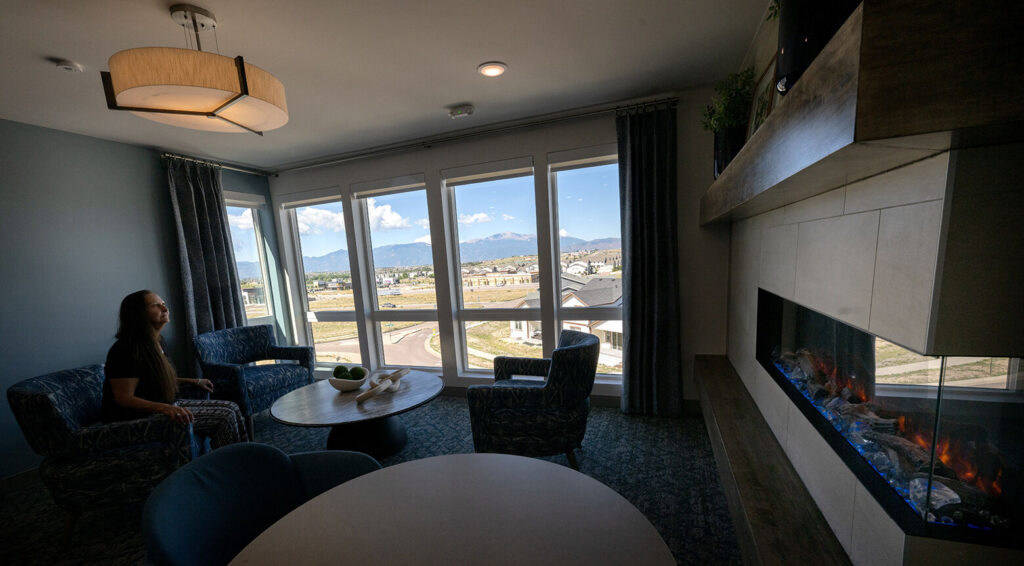
Second affordable housing project on church land opens in Colorado Springs
DEBBIE KELLEY
debbie-kelley@coloradopolitics.com
Updated 1 day ago
Greccio Housing doesn’t just do business deals. The nonprofit residential developer and property manager aligns its projects with a mission of providing stable, safe and affordable housing that helps struggling residents achieve stability, according to Executive Director Lee Patke. The...

After a snowless winter, agents say summer is luring second-home buyers to the mountains
Mark Samuelson Special to The Denver Gazette
mark.samuelson@denvergazette.com
Updated 6 days ago
Last winter was a terrible growing season in Grand County for what arguably is its most important crop: snow. The county 60 miles west of Denver over the top of Berthoud Pass saw a record-low snowpack — poor enough that...
Denver City Council committee looks to ease affordable housing metrics
Deborah Grigsby
deborah.smith@denvergazette.com
Updated 1 week ago
Denver’s Department of Housing Stability is asking the city to rewrite some of the key performance metrics in the city’s agreement with the Denver Housing Authority to deliver affordable housing. HOST is asking the city to amend parts of a...
Denver City Council committee looks to ease affordable housing metrics
Deborah Grigsby
deborah.smith@denvergazette.com
Updated 1 week ago
Denver’s Department of Housing Stability is asking the city to rewrite some of the key performance metrics in the city’s agreement with the Denver Housing Authority to deliver affordable housing. HOST is asking the city to amend parts of a...
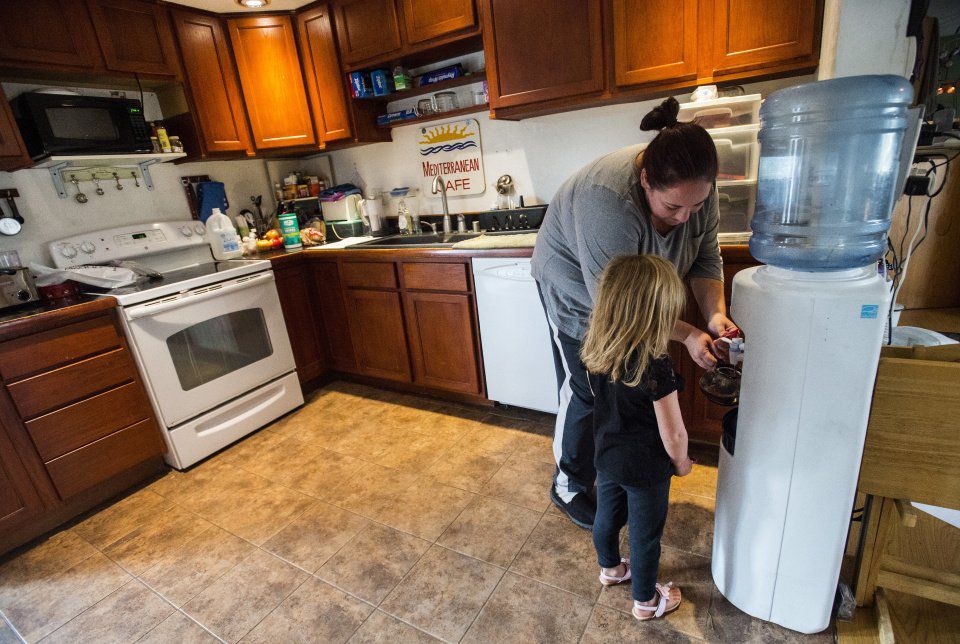
Colorado housing laws take effect, expanding tools for affordable and workforce housing
Marissa Ventrelli
marissa.ventrelli@coloradopolitics.com
Updated 4 weeks ago
New housing laws taking effect on Aug. 12 in Colorado aim to boost affordability, improve homelessness response and ensure safer water systems for mobile‑home communities. The first bill, Senate Bill 001, allows municipalities to sell county- or town-owned property to...
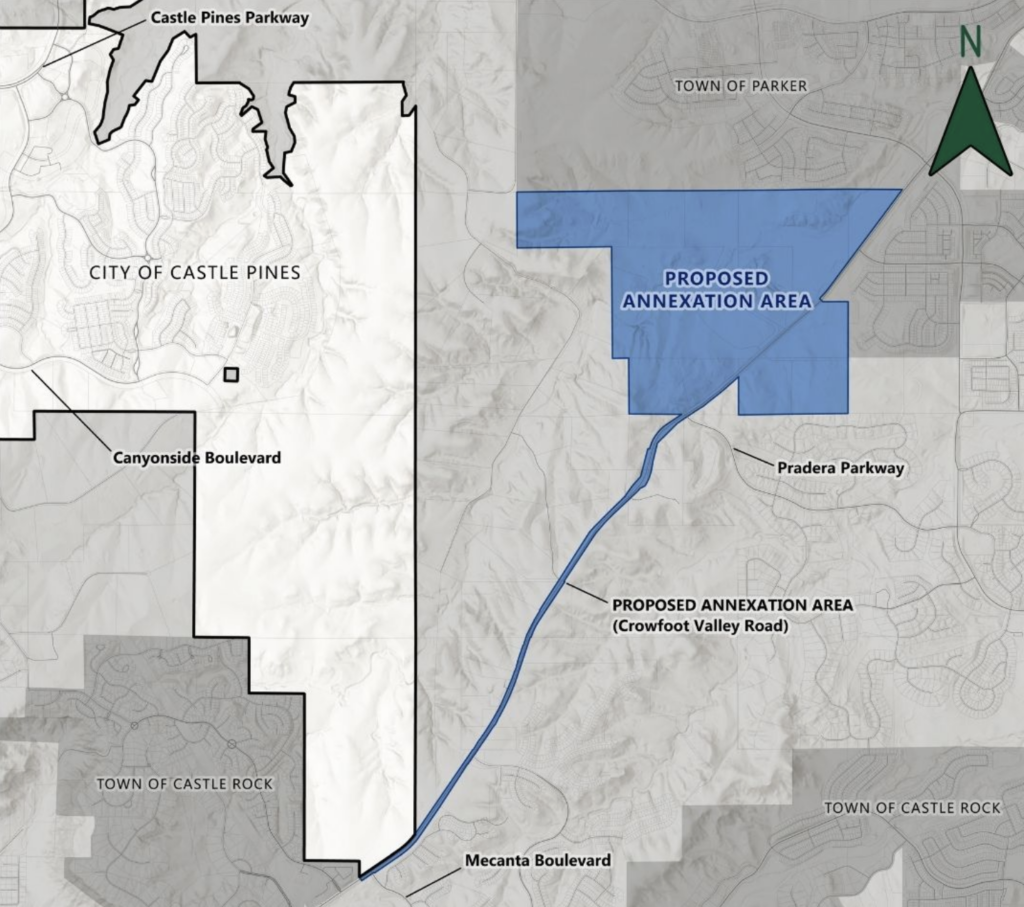
Douglas County tables Crowsnest development proposal
Nicholas Fogleman
nicholas.fogleman@denvergazette.com
Updated 4 weeks ago
A proposal that could pave the way for future residential development in Douglas County will receive additional review after the Planning Commission voted Monday to table the Crowsnest land-use application following a lengthy public hearing. The application seeks to change...
Aurora church tied to group that exploited homeless people is under scrutiny
David Migoya
david.migoya@gazette.com
Updated 4 weeks ago
Two regional Seventh-day Adventist conferences that oversee the activities of its member churches across several states have launched inquiries into an Aurora-based congregation tied to a Medicaid operation that exploited the homeless. The Rocky Mountain Conference and the Central States...
Aurora updating housing strategy, seeking residents input
Kyla Pearce
kyla.pearce@gazette.com
Updated 4 weeks ago
Aurora officials are updating the city’s housing strategy and asking for feedback from residents in a series of upcoming sessions. One session will happen in each ward starting on Wednesday. Wednesday’s session for Ward I takes place at the Martin...

Colorado GDP trails direct competitor states, though slightly ahead of U.S. average
Mark Samuelson Special to The Denver Gazette
mark.samuelson@denvergazette.com
Updated 1 month ago
Colorado’s economy is marginally outperforming the national average but lags behind those of direct competitor states, such as Arizona, Texas and Utah, according to a report by a nonpartisan policy group. And while some indicators for the Centennial State appear...
Homeless recruits of ‘The Program’ say they were told to sign NDAs amid investigations in Colorado
David Migoya
david.migoya@gazette.com
Updated 2 months ago
Several formerly homeless people — each drawn into an Aurora-based enterprise known as “The Program” that promised free housing and cash in return for letting a home-health business administer prescriptions they were given — said they were pressed into signing...
PREV
PREVIOUS

Guv reacts to Air Force’s experimental missile deployment in Colorado | A LOOK BACK
Forty Years Ago This Week: Gov. Dick Lamm sent a five-page letter to the Department of the Air Force, reiterating his belief that Colorado should be included in public hearings on the environmental impacts of MX – “Missile, Experimental” – deployments. “I urge that the study process be reconsidered,” Lamm wrote. “There should be full […]

Who is 'anti-democratic' is in the eye of the beholder | SONDERMANN
There is much on the line in 2024. Some suggest that democracy itself, at least the American kind, is at stake. My point is not at all to minimize the consequence of the coming election. However, even before the year was underway, we saw in rather vivid relief that the argument about democracy cuts both […]