

Guv reacts to Air Force’s experimental missile deployment in Colorado | A LOOK BACK

Forty Years Ago This Week: Gov. Dick Lamm sent a five-page letter to the Department of the Air Force, reiterating his belief that Colorado should be included in public hearings on the environmental impacts of MX – “Missile, Experimental” – deployments.
“I urge that the study process be reconsidered,” Lamm wrote. “There should be full public hearings in Colorado prior to the issuance of a record of decision and a new revised draft environmental impact statement should be produced that comprehensively considers the effects of the proposed project in Colorado.”
Lamm directed the letter to Major Peter Walsh, director of the Environmental Planning Division at Norton Air Force Base. The Air Force had already conducted public hearings in both Wyoming and Nebraska. Lamm told The Colorado Statesman that it was only fair that Coloradans be allowed to hear for themselves the effects of MX missiles.
Lamm wrote that it was clear that “the borders of Colorado and Wyoming are unusual in that they do not follow ecological, geological or economic boundaries” and there should be an “opportunity for full public scrutiny and comment on the MX.”
Apparently unswayed by Lamm’s public calls, an Air Force spokesman said that hearings would only be held in those areas immediately affected by MX deployment and that no further hearings were anticipated.
According to a 1981 Federation of American Scientists report compiled at the request of the Technology Assessment Board, multiple protective shelters for MX missiles, which later became known as LGM-118 Peacekeeper intercontinental ballistic missiles deployed by the U.S. from 1985 to 2005, would have “considerably greater physical impacts than other basing modes … these impacts would be particularly severe and could include the long term loss of thousands of square miles of productive rangelands.”
Thirty Years Ago: Bob Palmer, Republican candidate for the 2nd Congressional District, was taking incumbent U.S. Rep. David Skaggs, D-CD2, to task for his vote on the campaign finance bill that had been passed by the U.S. House of Representatives.
The bill established voluntary spending limits (adjusted for inflation) of $600,000 for House campaigns, with exemptions for legal and fundraising costs, with $200,000 extra allowed for primary races and $200,000 in publicly financed vouchers for advertising.
Palmer had been vocal about the voluntary limit of $475,000 on his campaign spending and said he wouldn’t accept contributions from PACs, from people who didn’t live in Colorado full-time and would return any surplus campaign funds to contributors or donate it to charity.
“The House campaign ceiling is a fraud,” the Coors Brewing Co. employee said. “In 1992, the average winning U.S. House candidate spent less than $550,000. Instead of reducing campaign expenditures, the House-passed bill will escalate campaign expenditures to over $1 million.
Palmer also called the publicly-financed monies for advertising “inherently flawed” as the bill did not stipulate where the public funds would come from.
Fellow Republican candidates in the district chimed in, including former Clear Creek County GOP chair Sharon Klusman, who said that she really wanted Congress to put “stringent limitations” on the percentage PACs could contribute to campaigns.
“Basically,” Klusman said, “I’m disappointed in the measure.”
Westminster doctor Bernard Engel, who had not officially announced his candidacy for CD2, called the million-dollar limit “outrageous.”
“Multiply that by 435 members of the House and you’re talking about $435 million being spent every two years,” Engel said. “People with money are going to buy the elections.”
Although neither Engel or Klusman had set spending limits on their own campaigns, Engel said that he felt Palmer’s $475,000 limit an “enormous amount of money.”
“I would not be in favor of spending nearly that much,” Engel said. “But I have no problem accepting support from organizations which share my philosophies.”
Neither Skaggs nor state Rep. Michelle Lawrence, R-Arvada, who was also running for the CD2 seat, could be reached for comment.
Rachael Wright is the author of the Captain Savva Mystery series, with degrees in Political Science and History from Colorado Mesa University, and is a contributing writer to Colorado Politics and The Gazette.


Judge grants partial injunction to GEO in fight against state health inspection law
Kyla Pearce
kyla.pearce@gazette.com
Updated 9 hours ago
A judge ruled Thursday that The GEO Group does not have to follow parts of a new state law requiring more frequent health and safety inspections at the U.S. Immigration and Customs Enforcement processing center in Aurora. Under the order...
Parker man faces 20 years to life for serial sexual assaults
Nicholas Fogleman
nicholas.fogleman@denvergazette.com
Updated 12 hours ago
A 25-year-old Parker man who sexually assaulted three women in 2025 pleaded guilty Wednesday and will serve 20 years to life in prison. Javier Rodriguez-Andrade pleaded guilty to charges stemming from three sexual assaults involving women ages 19 to 24. ...
Buttigieg performs best among Democrats against Rubio or Vance in possible 2028 contest: Poll
David Zimmermann
david-zimmermann@coloradopolitics.com
Updated 14 hours ago
Former Transportation Secretary Pete Buttigieg appears to be the Democratic Party’s best chance at winning the presidency against Secretary of State Marco Rubio or Vice President JD Vance in 2028, according to a poll released on Thursday. In hypothetical matchups...
Douglas County moves to Stage 1 fire restrictions following recent rain
Nicholas Fogleman
nicholas.fogleman@denvergazette.com
Updated 12 hours ago
Douglas County has downgraded its fire restrictions from Stage 2 to Stage 1 on Thursday following recent rainfall and moderate fire conditions, according to the Douglas County Sheriff’s Office. The change applies to unincorporated Douglas County, as well as the...
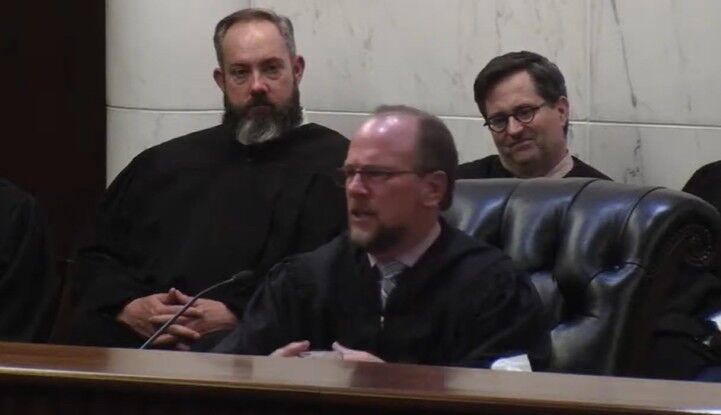
Divided appeals court upholds warrantless DNA collection in Colorado cold case, cautions of government overreach
Michael Karlik
michael.karlik@coloradopolitics.com
Updated 10 hours ago
Colorado’s second-highest court upheld the warrantless collection of a suspect’s DNA from a discarded soda can as constitutional on Thursday, while warning about potential abuse of DNA privacy in the absence of further guardrails. By 2-1, a three-judge Court of...
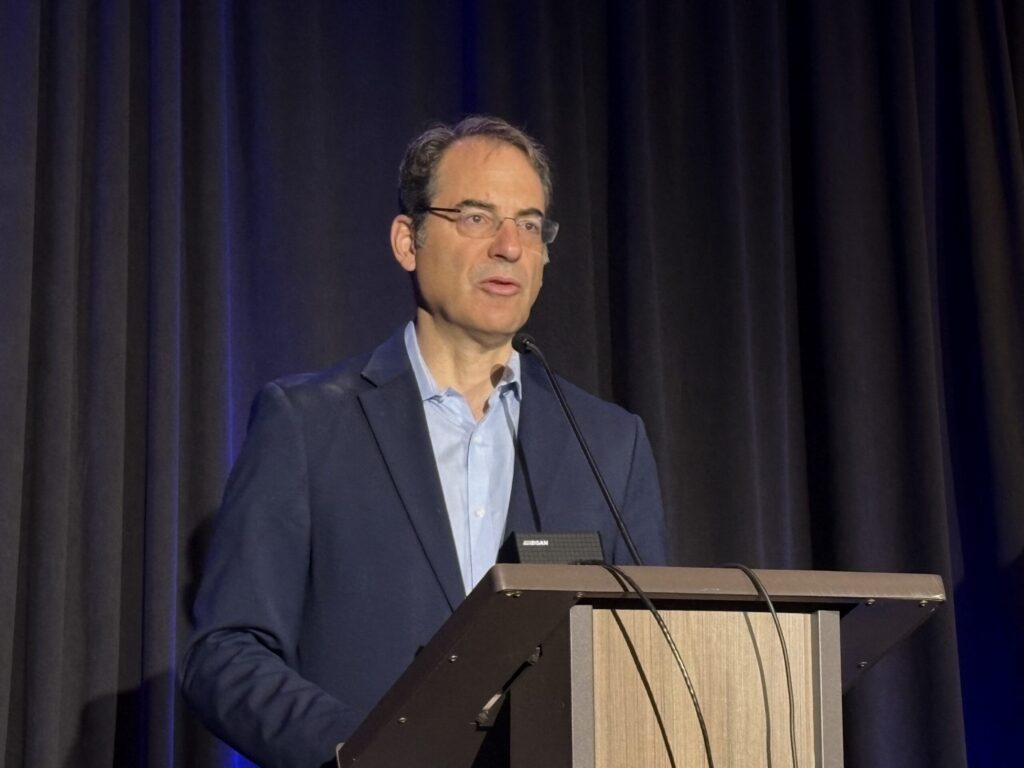
Democratic gubernatorial candidate Phil Weiser promises to appoint rural outreach director, water adviser
Marianne Goodland
marianne.goodland@coloradopolitics.com
Updated 10 hours ago
Democratic gubernatorial candidate and current Attorney General Phil Weiser told the Colorado Water Congress Thursday he intends to appoint a rural outreach director and a water policy adviser should he win the election in November. Weiser’s speech at the Steamboat...
Man charged in Northglenn homicide of wife
Matt Kyle
matt.kyle@denvergazette.com
Updated 12 hours ago
A man has been formally charged with murder and burglary relating to a homicide last week in Northglenn. Alexei Munive-Rodriguez, 48, was arrested Sunday after he was at large following the homicide, which occurred Friday. Police were dispatched around 10:30...
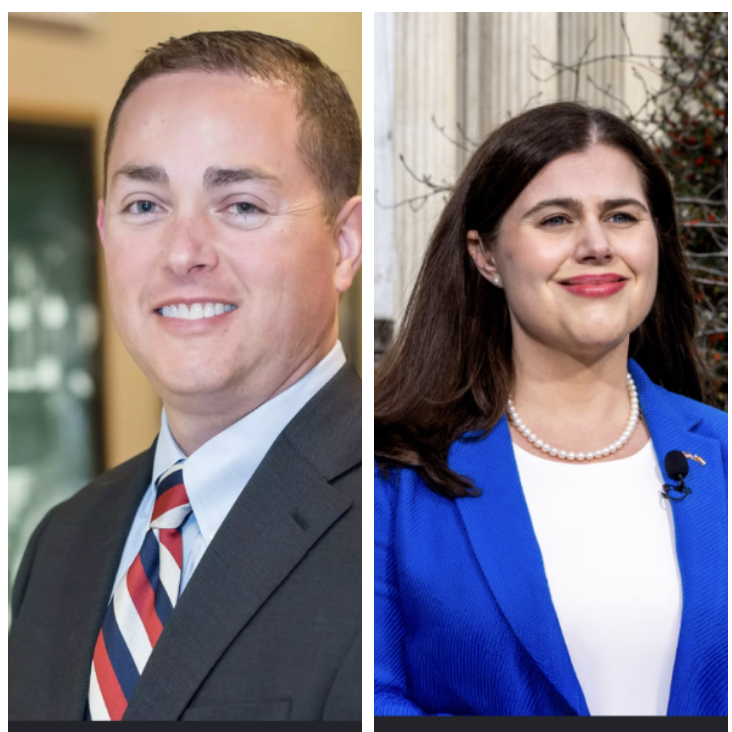
Attorney General candidates present priorities at Colorado Water Congress
Marianne Goodland
marianne.goodland@coloradopolitics.com
Updated 11 hours ago
The two major-party candidates for attorney general — Republican Michael Allen, the district attorney for Teller and El Paso counties, and Democratic Secretary of State Jena Griswold — on Thursday outlined their priorities at the Colorado Water Congress. Griswold attended...

US aircraft carrier arrives in Middle East, relieving long-deployed USS Lincoln
The Associated Press
the-associated-press@coloradopolitics.com
Updated 15 hours ago
WASHINGTON (AP) — The Asia-based USS George Washington aircraft carrier is now operating in the Middle East, the U.S. military said Thursday, relieving a long-deployed carrier following reports of mental health challenges and supply shortages aboard while it was supporting...

Denver named finalist for 2028 Democratic Convention site
Thelma Grimes
thelma.grimes@coloradopolitics.com
Updated 9 hours ago
The Mile High City competes with Boston and Philadelphia The list of cities being considered to host the 2028 Democratic National Convention has narrowed even further, with Denver making the cut as one of the final three, along with Boston...
PREV
PREVIOUS
Q&A with Steve Fenberg | Senate president talks about reaching goals with a tight budget
As the 2024 state legislative session gets underway on Jan. 10, Senate President Steve Fenberg gears up for some tough decisions. In particular, analysts expect the budget to be tight, while the state’s challenges, notably housing, have grown. The Democratic leader also talks about the need to build more “authentic relationships” among Senate lawmakers, adding […]

Housing takes center stage anew as lawmakers prepare to convene for new session
The quest for affordable housing consumed policymakers’ energy last year, the source of intense animosity between state and local leaders that ultimately handed Gov. Jared Polis a major political defeat. And it looks like the legislative session that is set to start on Jan. 10 will be a repeat of 2023 – at least in […]