

Authorities investigate threats made against Colorado justices following Trump ballot decision
Local law enforcement authorities confirmed they are investigating threats against Colorado Supreme Court justices, who concluded on Tuesday that Donald Trump is ineligible to run for the state’s presidential primary election.
The police also beefed up security measures surrounding the homes where the justices live, and the FBI is aware of the situation.
The Dec. 19, unsigned opinion was the first by any state supreme court to address head-on the substantive arguments of Trump’s – or any presidential candidate’s – eligibility. The court, which split, agreed that Trump engaged in an insurrection on Jan. 6, 2021.
The court put its ruling on hold, anticipating an appeal from Trump, the leading contender for the Republican nomination.
“The Denver Police Department is currently investigating incidents directed at Colorado Supreme Court justices and will continue working with our local, state and federal law enforcement partners to thoroughly investigate any reports of threats or harassment,” the Denver Police Department said in a statement to The Denver Gazette.
“Due to the open investigations and safety and privacy considerations, we will not be providing details of these investigations. The Department is providing extra patrols around justice’s residences in Denver and will provide additional safety support if/as requested.”
The FBI said it is aware of the situation and is working with local law enforcement.
“We will vigorously pursue investigations of any threat or use of violence committed by someone who uses extremist views to justify their actions regardless of motivation,” said Vikki Migoya, a spokesperson for the FBI’s Denver office.
The court’s decision to disqualify Trump means the former president faces a tight deadline as he prepares to fight the ruling before the U.S. Supreme Court.
Colorado Secretary of State Jena Griswold must certify the candidates for next year’s primary on Jan. 5, 2024.
Colorado’s justices said if a review is sought in the U.S. Supreme Court before their stay expires, then the hold would remain in place, and Griswold must “continue to be required to include President Trump’s name on the 2024 presidential primary ballot until the receipt of any order or mandate from the Supreme Court.”
Note that the requirement is “if review is sought” – which means a trigger for Griswold’s office to keep Trump on the ballot – is an appeal by Trump.
Of course, the appeal could be filed within days and the Supreme Court could rule, giving clarity to Griswold’s office, before Jan. 5.
In ruling against Trump, the majority said they did not reach their conclusions lightly.
“We are mindful of the magnitude and weight of the questions now before us. We are likewise mindful of our solemn duty to apply the law, without fear or favor, and without being swayed by public reaction to the decisions that the law mandates we reach,” they said.
The majority noted it had “little difficulty” concluding there was sufficient evidence to deem the deadly mob attack of Jan. 6 an insurrection, and that Trump’s own actions to stop the certification of President Joe Biden’s victory were directly linked to the insurrection.
Three justices dissented, two of whom voiced concerns about the former president’s right to due process.
“From my perspective, just because a hearing was held and (Trump) participated, it doesn’t mean that due process was observed,” wrote Chief Justice Brian D. Boatright.
“The decision to bar former President Donald J. Trump,” added Justice Carlos A. Samour Jr., “flies in the face of the due process doctrine.”
Reporter Michael Karlik of Colorado Politics contributed in this article.


Threats inside and out loom for Colorado’s Republicans | Dick Wadhams
Dick Wadhams
dick-wadhams@coloradopolitics.com
Updated 17 hours ago
Colorado Republicans made strides in 2024 despite an insidious state chairman who tried to defeat successful Republican candidates. Newly elected U.S. Reps. Gabe Evans, Jeff Hurd and Jeff Crank fought off unethical opposition from their own state party chairman, making...
Is it time for both parties to bail on Colorado’s political nominating system? | Miller Hudson
Miller Hudson
miller-hudson@coloradopolitics.com
Updated 17 hours ago
Cracks are beginning to appear in Colorado’s political nominating system. Recently, Mario Nicolais, a formerly Republican-leaning pundit, and Doug Friednash, former Democratic legislator, have opined regarding the imminent demise of the caucus/assembly framework which controls partisan candidate selection. There has...

Recognizing the value of generational work | Rachel Gabel
Rachel Gabel
rachel-gabel@coloradopolitics.com
Updated 17 hours ago
The Lesser Prairie Chicken habitat in southeastern Colorado is a swath of prairie that begins in Cheyenne and far-southeastern Lincoln counties and moves south and east into Kiowa, Prowers and Baca counties. This is cattle country where the short grass...

Why the controversy with mail-in ballots? | Cronin & Loevy
Tom Cronin Bob Loevy
tom-cronin-bob-loevy@coloradopolitics.com
Updated 17 hours ago
Most Coloradans enjoy the right to vote “by mail” at election time. Most Americans favor this process. But U.S. President Donald Trump is trying to federalize (nationalize) this practice and shift the supervision of voting from county clerks to the...

Who are the kings being crowned here in Colorado? | Jon Caldara
Jon Caldara
jon-caldara@coloradopolitics.com
Updated 3 days ago
Though most of us celebrate “No Kings Day” on July 4, the Trump-deranged got a head start last weekend with rallies around the state. Attendees bravely fought oppression by blocking traffic for people with jobs. Rally-goers demanded freedom from tyranny,...
An April Fool’s Day to remember | Capitol M | Week of April 4, 2026
Marianne Goodland
marianne.goodland@coloradopolitics.com
Updated 4 days ago
The lighter side of the Capitol, and if light were weight, the Capitol would have lifted off better than the Artemis II rocket on April Fool’s Day. There was a plethora of Fools at the Capitol for April Fool’s Day...

Kentucky Gov. Andy Beshear set to headline Colorado Democrats’ annual fundraising dinner
Ernest Luning
ernest.luning@coloradopolitics.com
Updated 3 days ago
Kentucky Gov. Andy Beshear, one of the Democrats’ top 2028 presidential prospects, is scheduled to deliver the keynote address at the Colorado Democratic Party’s annual fundraising dinner in June in Denver, the party said Friday. Serving his second term as...
Gov. Polis names new leaders for Colorado health agencies in wake of Medicaid turmoil
Marianne Goodland
marianne.goodland@coloradopolitics.com
Updated 3 days ago
Gov. Jared Polis, on Thursday, announced he was appointing Gretchen Hammer to serve as acting executive director of the Colorado Department of Health Care Policy and Financing, and deputy executive director Stephanie Beasley to become the next commissioner of the...
Colorado sues Trump administration, calling new election order ‘unconstitutional’
Marissa Ventrelli
marissa.ventrelli@coloradopolitics.com
Updated 2 days ago
Colorado Attorney General Phil Weiser has joined a multistate coalition suing President Donald Trump over a new executive order on elections, arguing the directive unlawfully intrudes on states’ authority to run their own voting systems and threatens access to mail...
Denver Democrat Neal Walia lands endorsement from Ro Khanna in Colorado’s state House District 9
Ernest Luning
ernest.luning@coloradopolitics.com
Updated 3 days ago
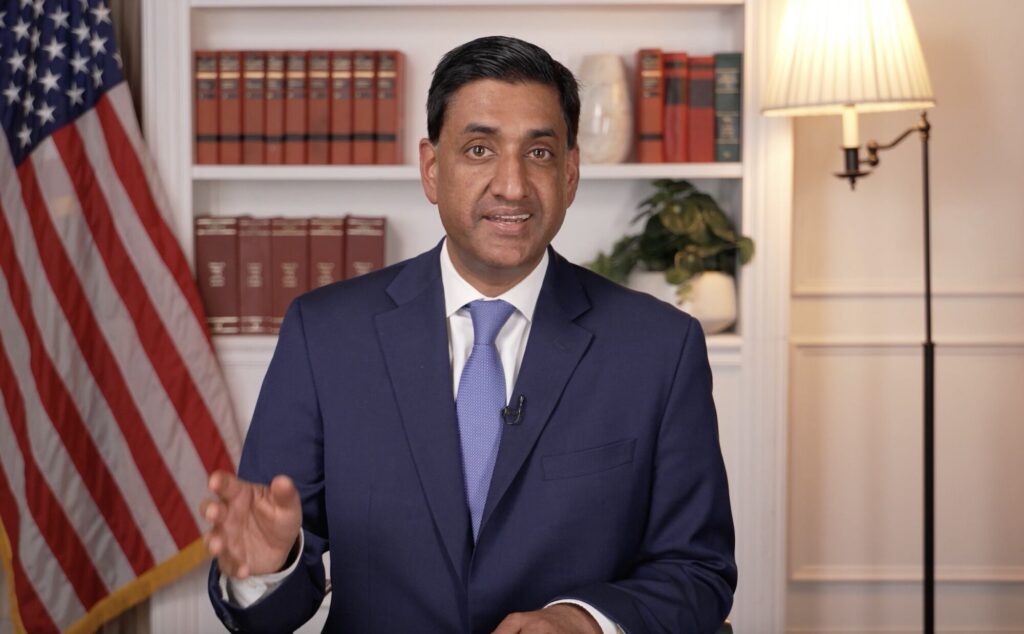
California Rep. Ro Khanna on Friday endorsed legislative candidate Neal Walia in the race for an open state House seat, praising the Denver Democrat’s commitment to public service and progressive goals. Walia, who mounted an unsuccessful challenge against U.S. Rep....
PREV
PREVIOUS

Appeals court rejects Safeway's attempt to deny workers' comp to 82-year-old employee
Colorado’s second-highest court last month rejected Safeway’s attempt to deny workers’ compensation benefits to an 82-year-old employee who injured herself while trying to stop a shoplifter. While she was cleaning the entryway of a store, Janice Sewald observed a customer leaving without paying and she reached for his cart. She was pulled to the floor […]
Appeals court sides with Lakewood in Colorado Christian University's zoning discrimination case
Even though a recently enacted zoning ordinance only applies to housing operated by Colorado Christian University, the state’s second-highest court last month concluded the city of Lakewood did not unconstitutionally discriminate against the school by forcing it to stop leasing to students in a residential neighborhood next to campus. CCU sued the city over an […]