

Tension grows as Polis asks local governments to reduce property tax levy

Mere days after signing legislation that provides some respite from soaring property taxes, Gov. Jared Polis went on the offensive, calling on local governments to reduce their mill levies to offer more relief to homeowners.
In a letter to local governments on Thursday, the governor effectively said the property tax relief adopted in the special session is insufficient.
“Now, it’s up to you – local elected officials – to do more, which is why I am urging you to reduce the tax rate (mill levy) in your district,” he said.
Current and former officials who have been dealing with property tax issues for years appeared annoyed by the governor’s message. Some noted that taxing jurisdictions, in fact, have had that ability for years, effectively saying Polis’ suggestion – that they tackle the crisis – is not helpful.
Others said local governments, in fact, have responded. Several have already reduced mill levies or are seriously considering plans to.
Experts also noted that taxing jurisdictions face intense pressure to implement the provisions of the Democrat-backed property tax legislation, which created a new set of complications.
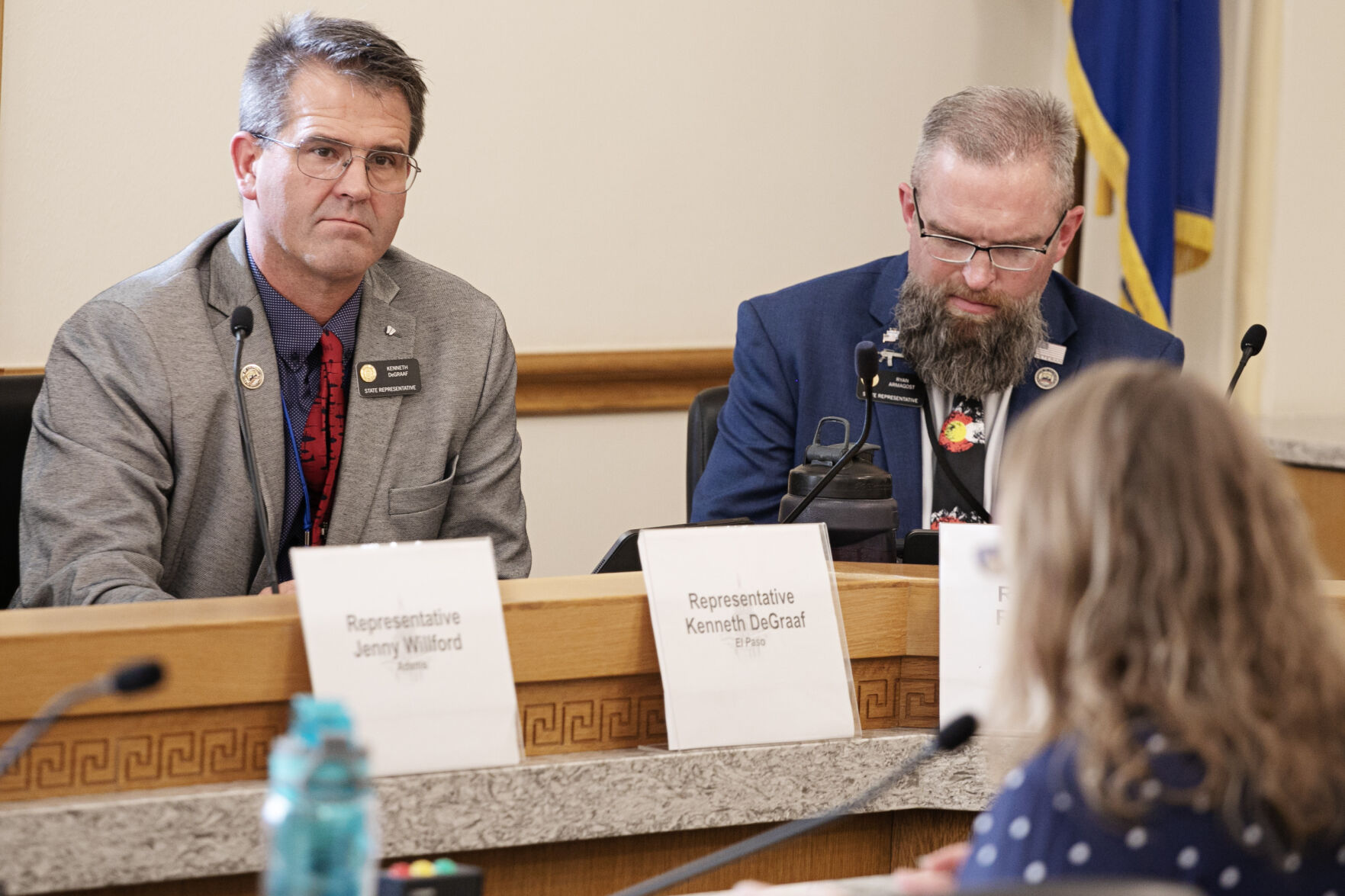
Some, such as Rep. Lisa Frizell, a Republican who served as Douglas County assessor for eight years, said the governor’s suggestion is outrageous, particularly in light of the growth of state government over the last several years.
“He has bloated state government and the budget beyond recognition but is now telling local governments to tighten their belts,” she said.
Frizell noted a recent decision by the Legislative Council Committee to approve bills for 2024 that carry a price tag of $2 billion, even when a recent budget forecast said lawmakers only have about $23 million to spend on new programs.
“Democrats are looking at new programs but are not willing to give meaningful tax relief,” Frizell said.
The property tax relief that came out of the special session isn’t “real relief” because the increases in taxes are so great that miniscule reduction in the assessment rate will not significantly help, she said.
Lawmakers concluded the special session this month after passing Senate Bill 23B-001, which offers homeowners relief by reducing the assessment rate from 6.765% to 6.7% and by increasing the amount that would be exempted from tax liability purposes to from $15,000 to $55,000.
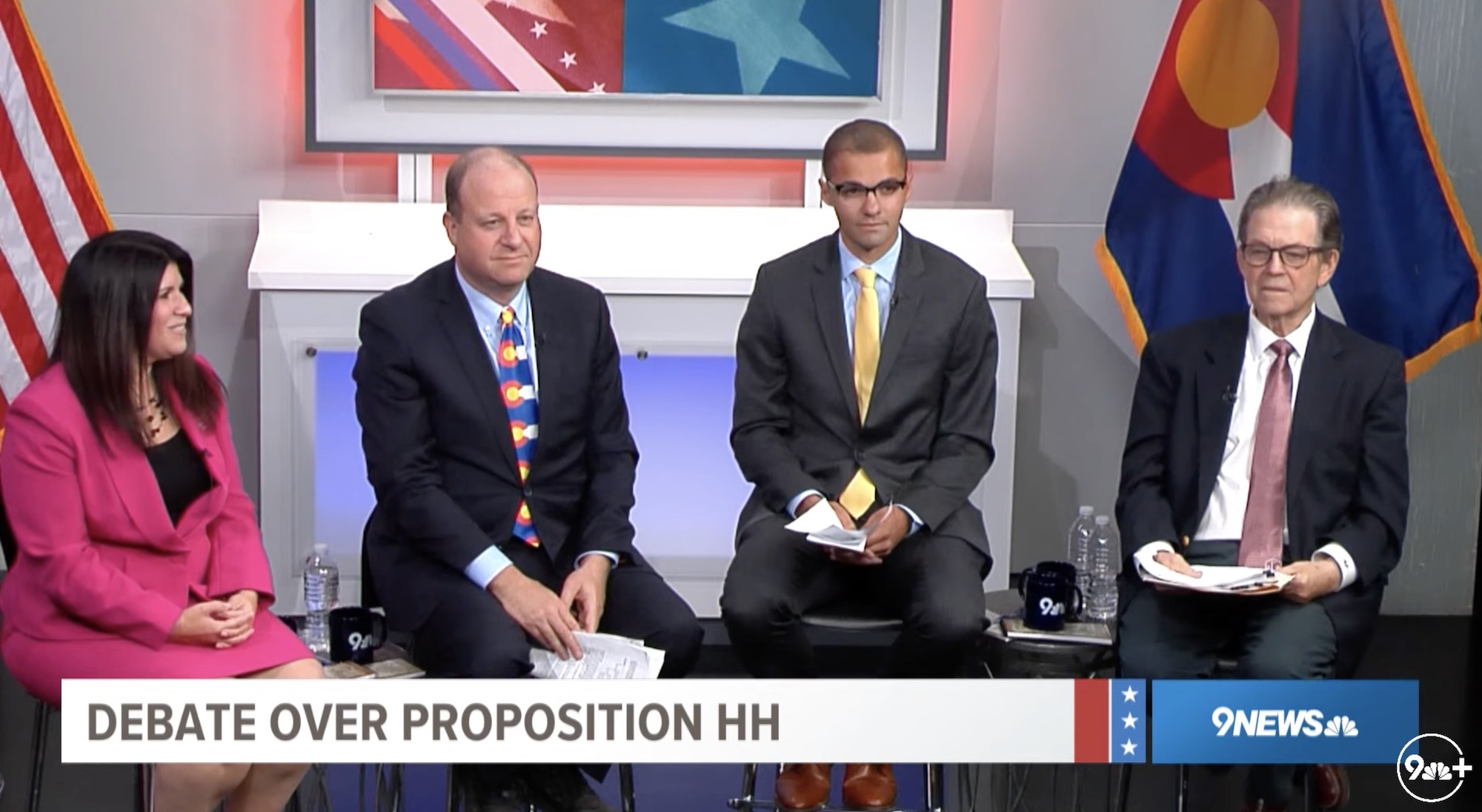
The governor convened the session after voters rejected Proposition HH, which would have used Taxpayer’s Bill of Rights refunds for property tax relief. The ballot measure lost by more than 18 percentage points and won in only six out of the state’s 64 counties.
That relief, however, doesn’t extend to everyone. Notably, owners of commercial properties were left out.
Ann Terry, executive director of the Special District Association of Colorado, told Colorado Politics that more than 400 special districts have been working on temporary mill levy reductions for the past 10 years.
“They already know how to reduce or ‘float’ mill levies,” Terry said. “This is not a new process.”
The issue local governments will have to decide is what they can afford, in light of inflation and employee costs, she said, adding, “They’re not looking to make profits. They’re trying to make ends meet.”
Polis went to Colorado Mountain College’s Breckenridge campus on Thursday and commended the college’s decision to reduce their mills for the counties in which the college’s special district has campuses: Eagle, Lake, Garfield, Pitkin, Summit, and Routt. The mill levy will go down to 5.7%, in line with inflation, according to a statement from the governor’s office.
Meanwhile, Douglas and Teller counties have already decided to reduce their mills to provide more substantial property tax relief.
Douglas County, for example, intends to reduce its assessments by 4%, which would provide each homeowner about $223 in property tax relief.
In Teller County, officials are looking at a mill reduction that would keep their property tax increases to 4% to 6%, which is typical year to year, according to Commissioner Bob Campbell.
The plan to reduce mill levies has been in the works for much of the year, Campbell said, noting that commissioners held meeting with special district officials and with elected leaders in the county’s three cities.
“Nobody anticipated 40% increases in values nor a 40% increase in taxes,” he said.
Capping property tax increases at 4% to 6% would give property tax relief to homeowners so they don’t lose their homes, or put those on fixed incomes in a difficult position, Campbell said.
“It’s the right thing to do,” he added.
Teller County provided the template for Senate Bill 23-108, the only bipartisan measure on property taxes to come out of the 2023 session. The law allows local governments to voluntarily and temporarily provide property tax credits or reduce mill levies, which is part of the property tax calculation.
One mill is equal to one dollar per $1,000 of assessed value. It’s not uncommon for a property tax bill to range between 50 and 100 mills, providing revenue for the expenses of schools, county and city governments, and special districts, such as fire, hospital, library and ambulance services.
The legislation’s key provision – that the reductions would be temporary – allows counties to bring their mill levy rates back up without asking voters for permission, which is required under the Taxpayer’s Bill of Rights.
Campbell said SB 108 is “the best answer out there, even if the legislature hadn’t done anything,” adding that property tax relief could have been done without any legislative work.
But he also said he appreciates the governor’s push for local governments to take further action.
Experts told Colorado Politics that local governments face a daunting task in implementing the special session’s property tax bill. Specifically, lawmakers increased the amount that would be exempted from tax liability purposes to $55,000.
But accomplishing that to calculate tax liabilities is not that easy.
JoAnn Groff, the state’s property tax administrator, told Colorado Politics the reduction in 2023 home values as dictated by SB23B-001 will be the first time it’s ever been done in the state.
Legislation in 2022 had set the reductions at $15,000 – to be applied in 2023. But that’s now set at $55,000.
Even though counties have known since last year this was coming, some counties don’t have the IT systems that can make those value adjustments automatically.
That could require a manual adjustment. Literally – one property at a time.
“You can’t just do a computer algorithm” to make it work, Groff said.
The legislature, in the recent special session, recognized the headache for assessors, and in its primary property tax bill extended the deadlines by a month for taxing jurisdictions to wrap up their assessments and for counties to certify their mill levies, Groff explained.
That means a Jan. 17 deadline, instead of Dec. 15.
There’s also the issue of just how much of a reduction should be applied to each property. In small, rural counties, $55,000 could wipe out almost the entire assessed value of a home. So, each property will have to be evaluated to see how much of a reduction in value can be applied, and for some, it could be less than $55,000.

marianne.goodland@coloradopolitics.com
For Denver County, it was no more than adding a field in their software, rather than having to adjust every property’s value, according to Keith Erffmeyer, the county’s assessor.
The lowest a property can go in assessed value is $1,000, Erffmeyer said. A home’s property value would have to be less than about $70,000, using that 6.7% assessment rate, to bring the property tax bill to the bare minimum for assessment purposes. In Denver, that could apply to a parking space for a townhome or condo, for example.
Erffmeyer said not all taxing jurisdictions have the authority to reduce their mill levies, such as school districts.
Meanwhile, Douglas County Commissioner Lora Thomas raised other issues taxing jurisdictions that want to consider mill levy reductions or other property tax relief will face.
She said commissioners can lower residential values by 4%, but in her county, for example, that only affects the 19 mills that go to the county.
“We have more than 300 metro and other districts in the county. We can’t fix that for them. Each one of those boards are going to have to do something. These are well-meaning people, but these are part-time positions,” she said. “Property taxes are complicated and I don’t know if they understand how to fix this.”
Thomas added: “The governor and his pals kicked the can down the road. Local governments do not have the tools to do what needs to be done.”
marianne.goodland@coloradopolitics.com
tom.hellauer@denvergazette.com
marianne.goodland@coloradopolitics.com

U.S. House probes reports of fraud, waste in Colorado’s Medicaid program
Marianne Goodland
marianne.goodland@coloradopolitics.com
Updated 2 minutes ago
A congressional committee is probing reports of waste, fraud and abuse in Colorado’s Medicaid program, citing recent stories outlining over-billing in transportation spending and The U.S. House Committee on Energy and Commerce has sent a letter to Gov. Jared Polis...

Colorado’s congressional redistricting proposal could flip three Republican House seats | ANALYSIS
Michael Braithwaite
michael.braithwaite@gazette.com
Updated 1 hour ago
A Democrat-backed proposal to redraw Colorado’s congressional map for the 2028 election could flip three Republican districts. The proposal, introduced by a group called Coloradans for a Level Playing Field, is yet another development in a national redistricting debate after...

Appeals court overturns Douglas County vehicular homicide conviction due to faulty jury instructions
Michael Karlik
michael.karlik@coloradopolitics.com
Updated 7 hours ago
Colorado’s second-highest court overturned a defendant’s vehicular homicide conviction and 12-year prison sentence on Thursday after determining a Douglas County judge omitted key language from the jury instructions that could have resulted in a different outcome. James Paul McDonald was...
Colorado lawmakers’ speeches on immigration, Iran draw worries about decorum, grandstanding
Marianne Goodland
marianne.goodland@coloradopolitics.com
Updated 5 hours ago
Several speeches from Colorado legislators this week have raised new worries about decorum and grandstanding in the state House after two members talked about immigration and Iran using what’s called a “point of personal privilege.” Under the rules of the...

Trump fires Homeland Security Secretary Noem after building criticism over immigration enforcement
Michelle L. Price
michelle.l..price@associatedpress.com
Updated 7 hours ago
WASHINGTON (AP) — President Donald Trump on Thursday fired his embattled Homeland Security Secretary Kristi Noem and said he will nominate in her place Oklahoma Republican Sen. Markwayne Mullin. Trump made the announcement on social media on Thursday, two days...
Trump wants to be personally ‘involved’ in picking next Iranian leader: Report
Christian Datoc, Washington Examiner
christian.datoc.washington.examiner@gazetteedit.wpenginepowered.com
Updated 8 hours ago
President Donald Trump told Axios Thursday that he wants to be personally involved with picking Iran‘s next leader, despite multiple senior administration officials repeatedly declaring that “regime change” is not a stated objective of Operation Epic Fury. Trump conducted an...

Iran widens regional war with first strike into Azerbaijan
Brady Knox, Washington Examiner
brady.knox.washington.examiner@gazetteedit.wpenginepowered.com
Updated 8 hours ago
Iran spread the growing regional war to the Caucasus with its first drone strike into Azerbaijan, hitting an airport terminal and damaging a nearby school. A video recorded by someone at Nakhchivan International Airport showed one of the drones exploding...

Rand Paul excoriates Congress for failure to pass War Powers Resolution: ‘Should be ashamed’
Claire Carter, Washington Examiner
claire.carter.washington.examiner@gazetteedit.wpenginepowered.com
Updated 8 hours ago
Sen. Rand Paul (R-KY) blasted his colleagues for failing to pass a resolution aimed at limiting President Donald Trump’s military campaign in Iran. The Kentucky Republican made the remarks in an opinion column published on Fox News a day after...

DOJ quietly closes autopen investigation targeting Biden and aides
Kaelan Deese, Washington Examiner
kaelan.deese.washington.examiner@gazetteedit.wpenginepowered.com
Updated 8 hours ago
The Department of Justice has quietly closed an investigation into former President Joe Biden’s use of an autopen to sign official documents, according to a source familiar with the matter. DOJ pardon attorney Ed Martin, the former “weaponization” czar, opened...

Colorado legislators eye changes to credit card ‘swipe fees’
Marianne Goodland
marianne.goodland@coloradopolitics.com
Updated 6 hours ago
Colorado legislators are proposing to eliminate “swipe fees” on sales taxes, a move that proponents say would save businesses tens of thousands of dollars a year but which will likely revive counter-arguments that those fees help create a stable and...
PREV
PREVIOUS

Heckles and interruptions: Top Democrats face protests over Israel-Hamas war, environment
Several top Democrats have faced opposition and protests while speaking at events this year, mostly from liberal groups unhappy with the Biden administration’s handling of the environment and the war involving Israel. Over the last few months, leading Democratic leaders have traveled to universities to speak at panels or appear at organizations’ functions to tout […]

Appeals court declines to open door to challenges of already-final convictions
Colorado’s second-highest court on Thursday declined to apply a major state Supreme Court decision retroactively and enable more people to challenge their criminal convictions. In 2022, the Supreme Court issued Rojas v. People – a decision that eliminated a “troublesome relic” from the rules of evidence. Known as the “res gestae” doctrine, it enabled prosecutors to introduce evidence […]