

Colorado Supreme Court weighs immunity for speeding officer who killed 2
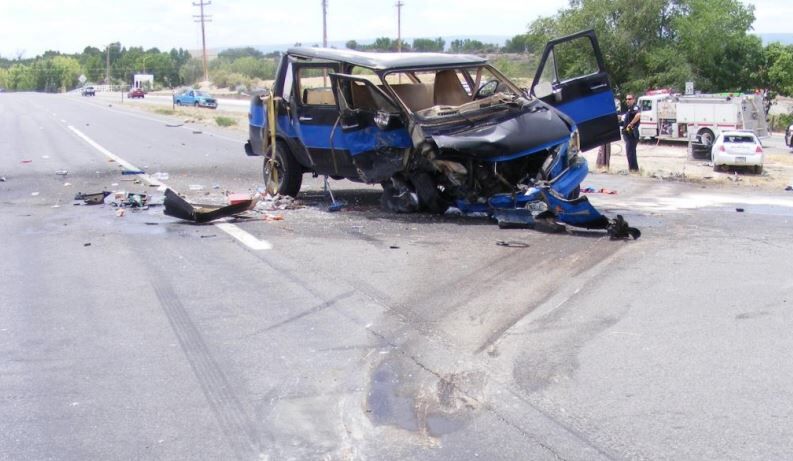
In July 2018, Officer Justin Hice of Olathe was in pursuit of a speeding car, accelerating to more than 100 mph before he accidentally struck a different vehicle and killed its two occupants.
Last year, the state’s Court of Appeals concluded Hice was not shielded from liability under the broad immunity Colorado law provides to public entities and employees. The court laid down a straightforward rule: If an officer in pursuit exceeds the speed limit and fails to use his lights or siren at any point, he is not immune for any injuries he causes.
During oral arguments before the Colorado Supreme Court on Tuesday, however, the justices suggested the Court of Appeals may have gone too far.
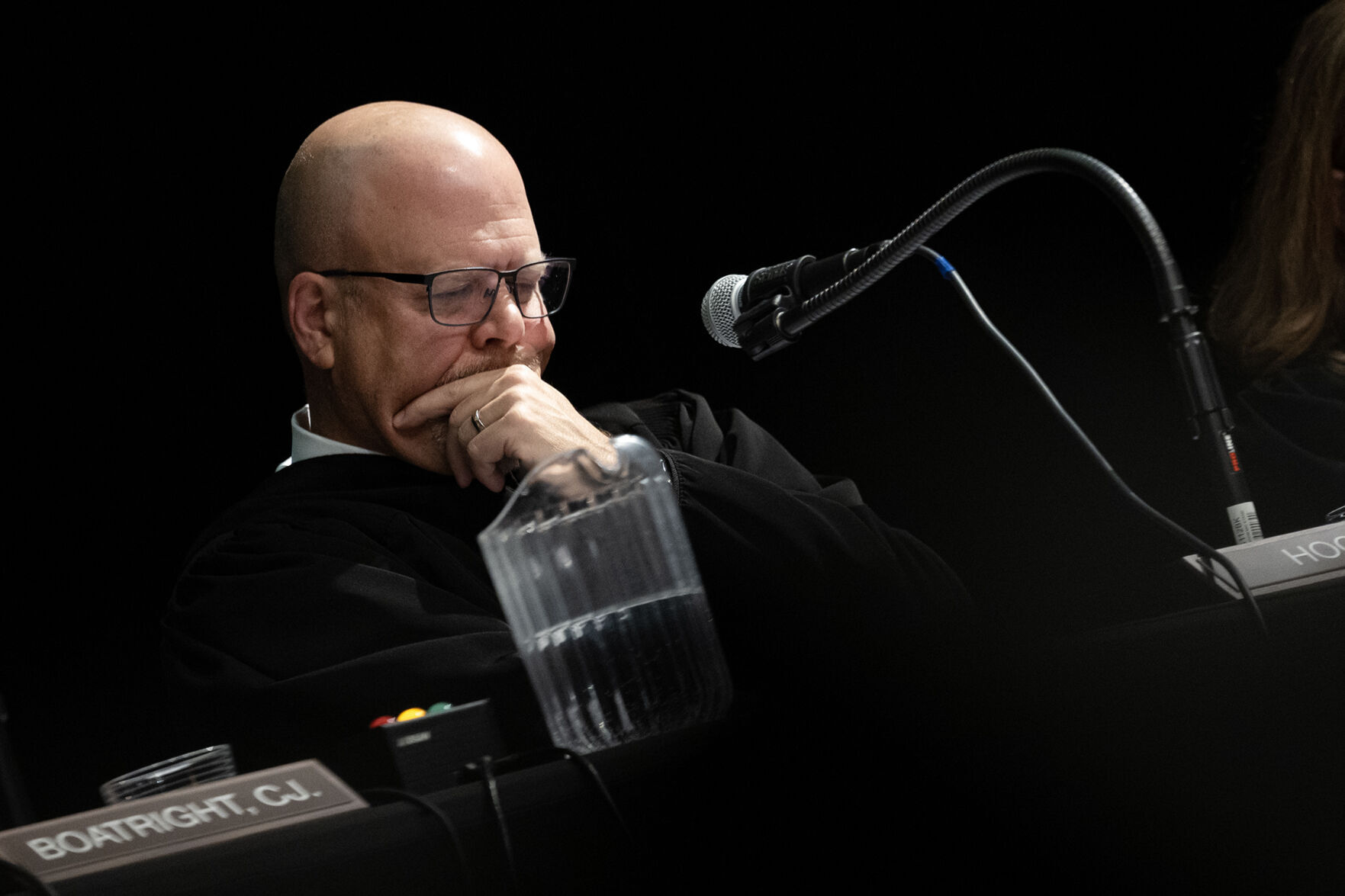
“I just struggle to find anything that explicitly tells us when the lights or sirens are supposed to come on,” said Justice William W. Hood III.
The Supreme Court acknowledged there are multiple dimensions to the lawsuit against Hice and the town of Olathe. On the one hand, the Colorado Governmental Immunity Act is meant to protect emergency responders who act quickly without fear of liability. On the other hand, the legislature added a condition to that immunity – the use of lights or sirens when exceeding the speed limit.
Although it was undisputed Hice activated his lights by the time he crashed into the van carrying Walter and Samuel Giron, the legal question is whether Hice forfeited his immunity by spending the bulk of his pursuit going well above the speed limit without any warning to motorists.
The attorney for Hice argued in favor of largely allowing officers to decide for themselves that activating their warning signals is not always prudent, even in a high-speed chase.
“Whether that might seem unusual to us as we sit in a courtroom and debate this academically, out in the real world this is something that they occasionally do,” said Winslow R. Taylor III.
“One of the objectives is to protect public safety broadly, right?” countered Hood. “So a requirement that errs in favor of having police officers activate lights and sirens seems to better accomplish that, wouldn’t you agree?”
Hice was monitoring traffic along U.S. Highway 50 when he saw a white Toyota exceeding the speed limit. Hice gave chase, which lasted for 36 seconds. He never activated his siren, but turned on his lights for the last five to 10 seconds. At an intersection, the Girons’ van turned in front of Hice. He hit the van going at least 75 mph.
The Girons’ surviving relatives sued Hice and the town of Olathe. In response, the defendants invoked the Colorado Governmental Immunity Act. Under the law, immunity only applies to emergency vehicles exceeding the speed limit during a pursuit if they are “making use of audible or visual signals.”
Montrose County District Court Judge D. Cory Jackson initially dismissed the lawsuit after finding Hice used his emergency lights and did not create an unreasonable risk of injury in his pursuit. Jackson credited the testimony of current and former police officers over the motorists who Hice passed at high speed and who came close to crashing into Hice themselves.
Last July, a three-judge panel for the Court of Appeals reinstated the lawsuit, finding it did not matter that Hice turned on his lights in the final seconds before impact.
“For Officer Hice and Olathe to be entitled to immunity, Officer Hice would need to have activated his emergency lights or sirens the moment he exceeded the speed limit during his pursuit,” wrote Judge Sueanna P. Johnson.
On appeal to the Supreme Court, multiple outside groups weighed in. The Colorado State Patrol alleged that courts should not second-guess the “split second decisions” of first responders. The Colorado Trial Lawyers Association argued the Court of Appeals’ rule would only be a problem for emergency personnel who break the law.
The defendants, meanwhile, warned the Court of Appeals’ rule could apply in absurd situations: eliminating immunity if an officer fails to activate his lights for one second at the beginning of a pursuit when he is traveling 1 mph above the speed limit, even if his lights are on the entire time afterward.
“Each side has done a pretty good job of conjuring hypotheticals that make the other side’s position look a little silly and extreme,” Hood observed. “It doesn’t seem so unreasonable to me to ask police officers, particularly when they are doing this kind of patrol duty, to at least activate their lights as soon as they’re going to engage someone who’s speeding. They know that they’re gonna have to speed in order to catch up.”
“I don’t think you would say we could have a rule where each individual officer gets to decide in each individual case when I should turn my lights on,” added Justice Richard L. Gabriel.
Taylor acknowledged that if Hice had collided with any other vehicle before he turned his lights on, there was no question he would face liability. In the Girons’ case, he continued, it was not clear the failure to turn on the lights initially could have affected the ultimate impact.
Damon J. Davis, representing the Girons’ family, responded that even in a situation where an officer briefly exceeds the speed limit without lights or sirens – and the crash happens miles down the road – the officer may not have liability. But they will lose immunity.
“The rule is you have to turn the lights and sirens on,” Davis said. “It makes it safer. That’s what the legislature has decided.”
“Why wouldn’t having a rule that says you lose immunity if you didn’t turn the lights on at a time when it would affect the accident … why wouldn’t that have the same deterrent effect?” wondered Gabriel.
Chief Justice Brian D. Boatright and Justice Carlos A. Samour Jr. were not present for the arguments. They represented the Supreme Court at the funeral of former Chief Judge Gilbert Martinez of El Paso County. Justice Monica M. Márquez, who presided in Boatright’s absence, said the two will still participate in the case.
The case is Hice et al. v. Giron et al.

Fort Carson soldier’s wife could be deported
Carol McKinley
carol-mckinley@coloradopolitics.com
Updated 5 hours ago
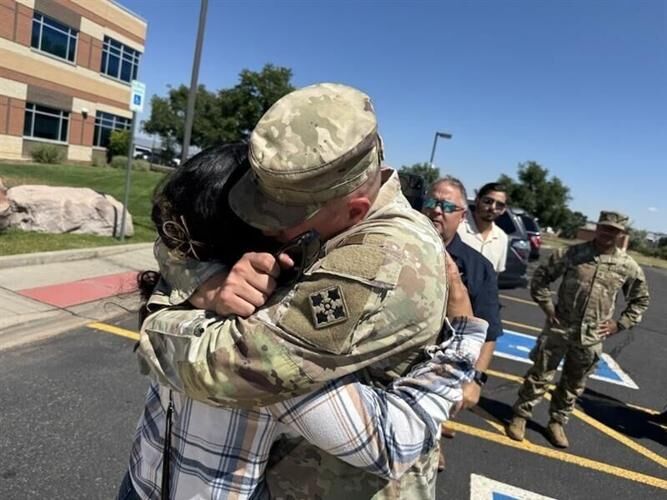
As the country’s largest immigration enforcement crackdown continues in Minnesota’s Twin Cities, a Fort Carson sergeant is fighting a personal immigration crisis — one that may implode his family. Sgt. Tyler Garza’s wife, Jennifer Maradiaga Baca, is not a legal...

Elizabeth School District dismisses challenge to book-ban injunction on eve of appellate arguments
Michael Karlik
michael.karlik@coloradopolitics.com
Updated 4 hours ago
An Elbert County school district has dismissed its challenge to a judge’s injunction ordering it to return banned books to library shelves, days before the Denver-based federal appeals court was set to hear oral arguments this week. Although a three-judge...

Colorado Supreme Court to hear cases on insurance coverage for COVID, witness credibility
Michael Karlik
michael.karlik@coloradopolitics.com
Updated 19 hours ago
The Colorado Supreme Court announced on Tuesday that it will decide the degree to which a virus or other hazard must affect a commercial property before it can trigger loss-or-damage coverage under an insurance policy. At least three of the...
Federal judge says prisoner cannot sue for dog-bite injury
Michael Karlik
michael.karlik@coloradopolitics.com
Updated 1 day ago
A federal judge concluded last week that a man cannot sue the government for injuries he sustained when a dog allegedly attacked him while he participated in a prison program. Kenneth M. Chandler, representing himself, was participating in the “FIDOS”...

Federal judge recommends dismissing trans athletics lawsuit by area school districts
Eric Young
eric.young@gazette.com
Updated 1 day ago
A judge has recommended dismissing a federal lawsuit filed by multiple school districts against the Colorado Attorney General’s and Civil Rights Offices over their policies dictating students’ participation in athletics and activities based on their biological sex rather than gender...
Appeals judge asks Colorado Supreme Court to once again clarify magistrate rules
Michael Karlik
michael.karlik@coloradopolitics.com
Updated 2 days ago
A member of Colorado’s second-highest court urged the state Supreme Court last week to revise confusing language in the rules governing magistrates, less than two weeks after an attempted cleanup of the rules took effect. Magistrates are judicial employees who are...
10th Circuit dismisses paralyzed man’s claims against Colorado Springs, officer
Michael Karlik
michael.karlik@coloradopolitics.com
Updated 2 days ago
The Denver-based federal appeals court upheld the dismissal last week of a man’s excessive force claims against the city of Colorado Springs and the officer who tased him, causing him to fall down a sloped surface and break his neck....
Colorado justices weigh overlap between child prostitution offenses
Michael Karlik
michael.karlik@coloradopolitics.com
Updated 2 days ago
Members of the Colorado Supreme Court last week appeared willing to uphold a man’s conviction for an attempted child prostitution offense, which the state’s second-highest court previously found to be a violation of his right to equal protection under the...

State Supreme Court holds oral arguments, 10th Circuit revives dormant initiative | COURT CRAWL
Michael Karlik
michael.karlik@coloradopolitics.com
Updated 3 days ago
Welcome to Court Crawl, Colorado Politics’ roundup of news from the third branch of government. The state Supreme Court heard oral arguments last week in multiple civil and criminal cases, plus the Denver-based federal appeals court is doing something unusual...
Is a pardon for Tina Peters coming? Colorado governor confirms he is weighing options
The Denver Gazette
the-denver-gazette@coloradopolitics.com
Updated 3 days ago
Gov. Jared Polis on Friday strongly indicated he is considering clemency for Tina Peters, the former county clerk convicted of a security breach at her election office. When pressed about the matter, Polis didn’t offer an explicit answer, but he...
PREV
PREVIOUS

Colorado justices skeptical of striking down antique car insurance policies
Members of the Colorado Supreme Court appeared skeptical on Tuesday that an insurance company’s specialty policy applying only to classic cars amounts to a violation of the court’s past directive that coverage follows people, not vehicles. In the case before the justices, another driver struck Beverly Hughes while she was in her vehicle. The at-fault […]

WATCH: Disagree better? Yes, Colorado's Jared Polis and Utah's Spencer Cox insist
Colorado State University November 15, 2023 Colorado Politics Political division has long been a staple of the American experiment in representative democracy, but a Pew Research revealed just how deep the polarization trended in the last several years. “Increasingly, Republicans and Democrats view not just the opposing party but also the people in that party […]