

Vacancy committees undermine democracy | OPINION
Another empty seat in the state legislature, House District 32, has been filled by a vacancy committee (Adams County Democrats pick Manny Rutinel for House vacancy). In 2023 alone, seven of 100 legislative seats have been vacated, as well as one seat on the nine-member state Board of Education.
State Rep. Dafna Michaelson-Jenet, D-Commerce City, left to take the place of former state Sen. Dominick Moreno, D-Commerce City. He resigned to take a position in Mike Johnston’s administration, and a vacancy committee selected Michaelson-Jenet to replace him. So now a vacancy committee has appointed Manny Rutinel to replace Michaelson-Jenet.
In February, Denver’s Fox31 reported on this topic and at that time “found the 74th General Assembly includes 24 lawmakers… who were appointed to the job, not elected. FOX31 first told you about the number of lawmakers appointed by vacancy committee in 2020, when 20 lawmakers were elected by committee, not through an election. Colorado uses this side door entrance to the Capitol, called a vacancy committee, to replace lawmakers.”
It’s a side door because vacancy committees are made up entirely of political party insiders. When someone leaves a legislative seat, it is filled by the district vacancy committee of that person’s party. Only members of that person’s party are considered as candidates.
As an unaffiliated voter in Commerce City, both of my legislators are now appointees rather than actual elected officials. Also, I had no opportunity to participate in the process.
Stay up to speed: Sign-up for daily opinion in your inbox Monday-Friday
In most states, similar vacancies are filled by the governor, by county commissioners (if a district is entirely within a county), or with a special election. Colorado’s vacancy committees are the exception, not the rule. They are also unconstitutional.
“The United States shall guarantee to every State in this Union a Republican Form of Government” according to Article IV, Section 4 of the Constitution. “Republican” does not mean the GOP. It means that each state must be a republic, a thing of the people, “res publica” in Latin.
Vacancy committees are a thing of political parties, not the people. They serve partisan interest, not the public interest. When a legislator resigns, the message is clear: “I don’t care enough to complete my term of office.” Yet their party owns the empty seat and gets to fill it exclusively?!
“We the People” are the opening words of the U.S. Constitution. All elective offices in America belong to us. All seats in a legislature belong to the citizens of the particular districts. When there is a vacancy, anyone eligible to run in a general election should qualify as a candidate to fill the office, whatever the process. Again, Colorado’s vacancy committees are unconstitutional.
I informed both the Adams County Democratic Party chairperson and the ballot access department in the secretary of state’s office of this fact when I tried to declare myself as a candidate to fill the vacancy in House District 32. The chairperson directed me to the secretary of state, then the ballot access department told me to get a lawyer.
I’m a blue-collar worker from Commerce City who lives in a low-income senior apartment downwind from the Suncor oil refinery and within the state’s worst school district, Adams 14. I’m what Democrats used to represent before becoming the elitist party. I asked two law firms specializing in constitutional law to consider me as a pro bono client, but they declined because of already depleted resources.
If history is any indicator, nearly every resident of Colorado will eventually have a state legislator appointed by a vacancy committee. When this occurs in a wealthy upscale district, I hope someone with money will hire an attorney and fight back.
Most Americans proudly pledge allegiance to the U.S. flag and “to the Republic for which it stands.” Politicians who want to sneak into elective office should be held to the same standard.
Burke Scot Beu is a lifelong resident of Commerce City. He works at a Denver nonprofit and as a substitute teacher. He was the Democratic candidate for CU Regent at-large in 2000. He has been an unaffiliated voter since 2018.

Blue states should avoid disasters | Hal Bidlack
Hal Bidlack
hal-bidlack@coloradopolitics.com
Updated 12 hours ago
Back when I was teaching political science at the U.S. Air Force Academy (and amazingly to me, a week from this column’s publication will mark 20 years since my retirement from active duty. Where the heck did that time go?)...
Right-to-hunt ballot measure’s a cruel, anti-wildlife solution to a nonexistent problem | GUEST COLUMN
Colorado Politics
colorado-politics@coloradopolitics.com
Updated 23 hours ago
By Eric Washburn I love to hunt. Every year I try to hunt big game in Colorado and waterfowl in Louisiana. This year, I applied for five Colorado big game licenses — elk, deer, pronghorn, moose and bighorn sheep. I...

Jena Griswold’s record: corruption, incompetence | Dick Wadhams
Dick Wadhams
dick-wadhams@coloradopolitics.com
Updated 4 days ago
There is no statewide elected official going back decades who is as breathtakingly corrupt and incompetent as Secretary of State Jena Griswold, who is now running for attorney general of all things. And compliant ruling Democrats know it. Their silence...
Kiros exudes why Colorado’s political times are a-changin’ at annual Denver Dems gala | Miller Hudson
Miller Hudson
miller-hudson@coloradopolitics.com
Updated 4 days ago
Among Colorado’s few remaining bipartisan rituals are county and state party dinners. I was particularly intrigued by last week’s Denver Democratic Party’s 2026 Annual Gala, a “New Deal for a New Era.” Their glossy program featured an artist’s Technicolor rendering...
Livestock grazing regulations need flexible updates | Rachel Gabel
Rachel Gabel
rachel-gabel@coloradopolitics.com
Updated 4 days ago
The Bureau of Land Management last updated their livestock grazing regulations the year I graduated from high school. I am 49. Assessing rangeland health can’t be done once and not revisited. This year is a prime example that managers must...
Taxpayers donate to tax increase campaign | Jon Caldara
Jon Caldara
jon-caldara@coloradopolitics.com
Updated 5 days ago
Give the man his due. President Donald Trump has undeniable talents. Colorado politicians are learning. Chief among The Don’s skills is taking the self-serving, ethically dubious behavior of previous politicians and putting it on steroids. Or, to borrow from the...
A summertime all-you-can-eat political buffet | SONDERMANN
Eric Sondermann
eric-sondermann@coloradopolitics.com
Updated 6 days ago
We find ourselves in the doldrums of August with a complete dearth of political news. Yeah, right. These days, that train never stops moving. It is a 24/7/365 express amplified by 24/7/365 media. Let me respond with one of my...
State money diversion scheme the unsurprising downfall of ERBOCES scam | Paula Noonan
Paula Noonan
paula-noonan@coloradopolitics.com
Updated 5 days ago
Falcon School District 49, aka El Paso County School District 49, has finally cut bait, thrown the fishing pole into the lake and sunk the canoe. The longtime enabler of the Education Reenvisioned BOCES’ (ERBOCES) schemes to fund private Christian...

Steve Schuck on the ‘magic’ of school choice | The OpEdge Podcast
Tony Olivero
tony.olivero@gazette.com
Updated 6 days ago
Parents Challenge co-founder and longtime school choice advocate Steve Schuck joins The OpEdge to discuss expanding educational opportunities and ensuring parents are in charge of their kids’ education. Schuck tells investigative columnist and host Jimmy Sengenberger why he believes Colorado...
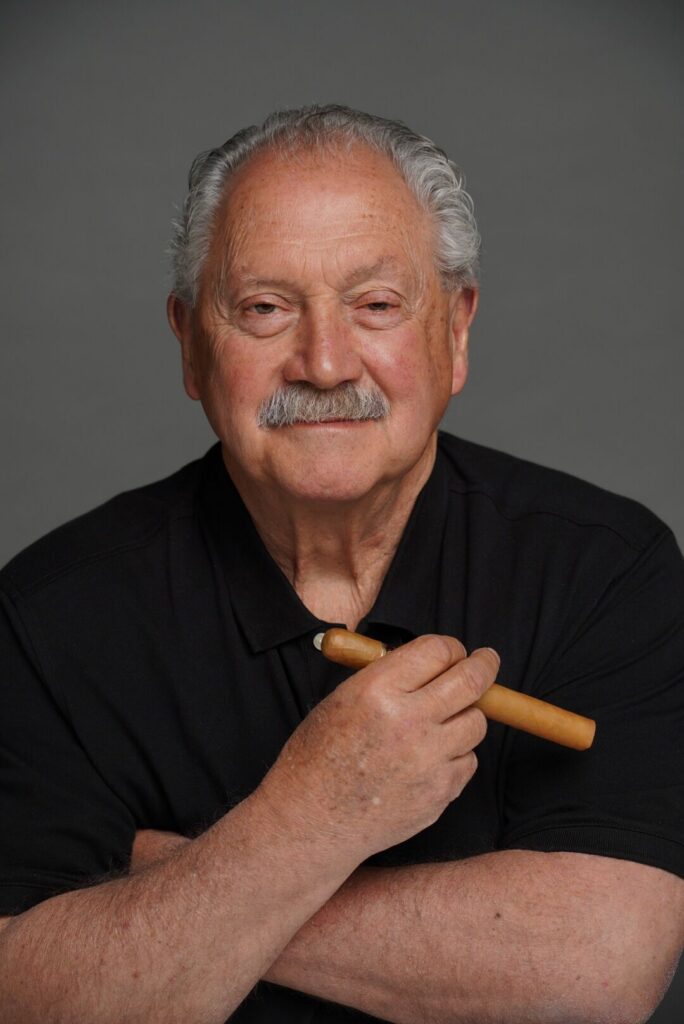
Do lobbyists add value to policymaking? | PODIUM
Colorado Politics
colorado-politics@coloradopolitics.com
Updated 6 days ago
By Corky Kyle I was recently asked a straightforward question: are lobbyists a valuable component in the development of public policy? After more than four decades working with the Colorado General Assembly, state agencies, local governments, associations and businesses, my...
PREV
PREVIOUS
The class and grace of Ellen Armstrong | WADHAMS
Dick Wadhams The recent passing of Ellen Armstrong, the wife of the late, great U.S. Sen. Bill Armstrong, marks the end of an era that seems so lacking in Colorado today on both sides of the political spectrum. There was no ambiguity about the public role she was about to play in her life when […]
Embrace the 'burden' of supporting our state | BIDLACK
Hal Bidlack Today I’m going to talk with you about an important fundamental issue in governance, and that is taxation, as discussed in a recent Colorado Politics article. Now, I admit, I’m tempted to write on the nightmare unfolding in the Middle East, but you have likely already heard or read a great deal about […]