

Colorado Supreme Court rejects expanded role for juries in analyzing prior convictions
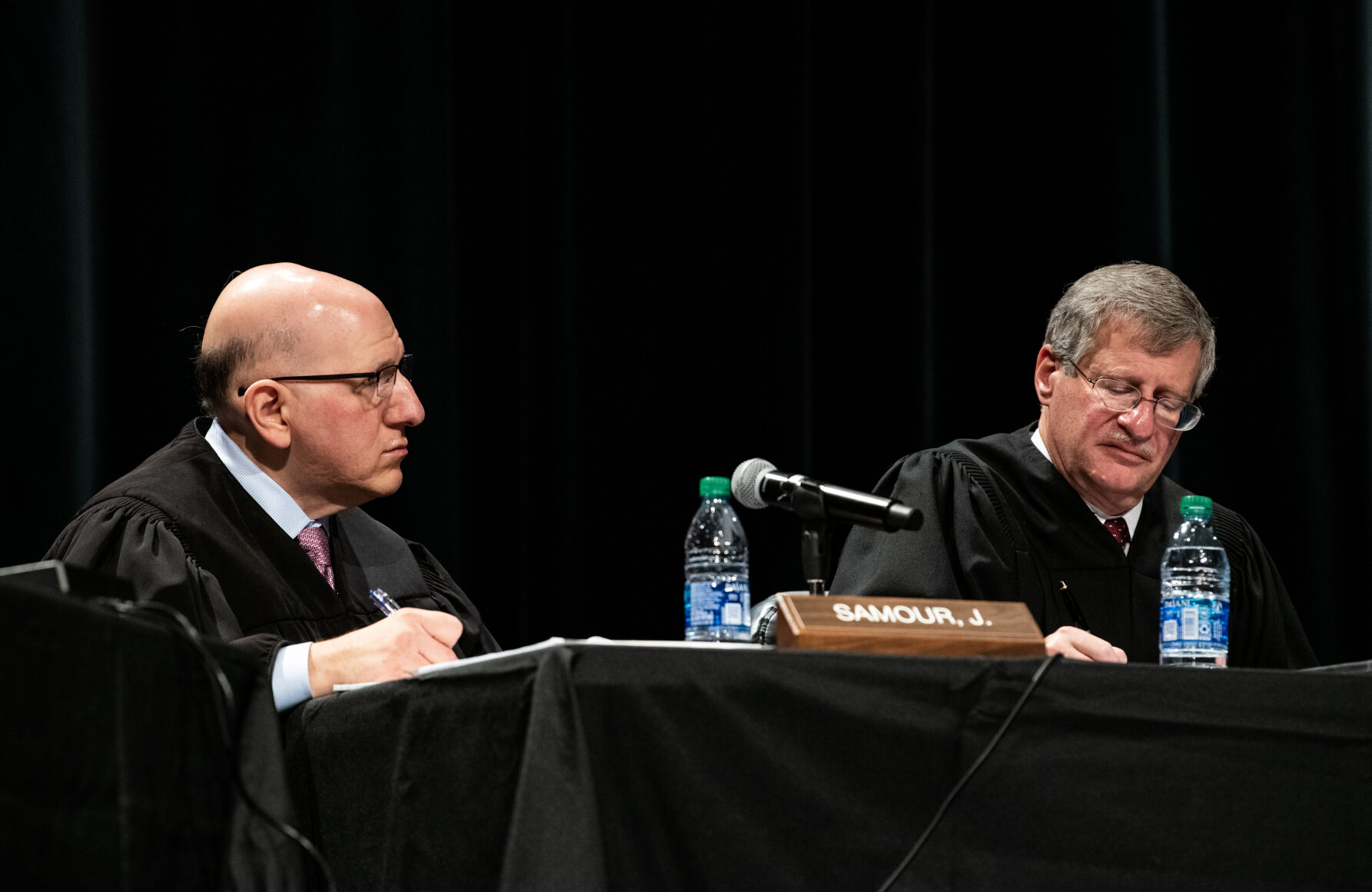
The Colorado Supreme Court on Tuesday rejected the argument that juries should be the ones who increase the severity of a defendant’s convictions by evaluating prior convictions – meaning judges alone retain the authority to transform a misdemeanor into a felony in some instances.
The question of whether juries should decide beyond a reasonable doubt whether a defendant has prior convictions could either help, or hurt, the criminally accused. On the one hand, jurors might hear damaging information about a defendant’s past conduct and be more likely to convict. On the other hand, they could conclude the prosecution failed to show the defendant on trial was the same person who allegedly committed previous offenses.
In a pair of rulings, the justices cautioned that their interpretation about the role of juries tracked the U.S. Supreme Court’s own directive about prior convictions. Moreover, the specific offenses before them did not envision juries would be the ones elevating a felony conviction to a more serious felony, or a misdemeanor to a felony.
In the majority opinion, Justice Carlos A. Samour Jr. acknowledged that a jury convicting someone of a misdemeanor, only for a judge to transform it to a felony, carried more significant consequences for a defendant’s liberty than simply increasing an existing felony to a more serious felony.
“They include: the loss of the right to vote while incarcerated, the loss of the right to own firearms, the possibility of habitual criminal charges upon the subsequent commission of a felony,” he wrote, “and the inability to obtain certain employment.”
Nevertheless, Samour noted the nation’s highest court has explicitly carved out an exception for the Sixth Amendment’s right to a jury trial that permits judges to use prior convictions to increase a defendant’s sentence.
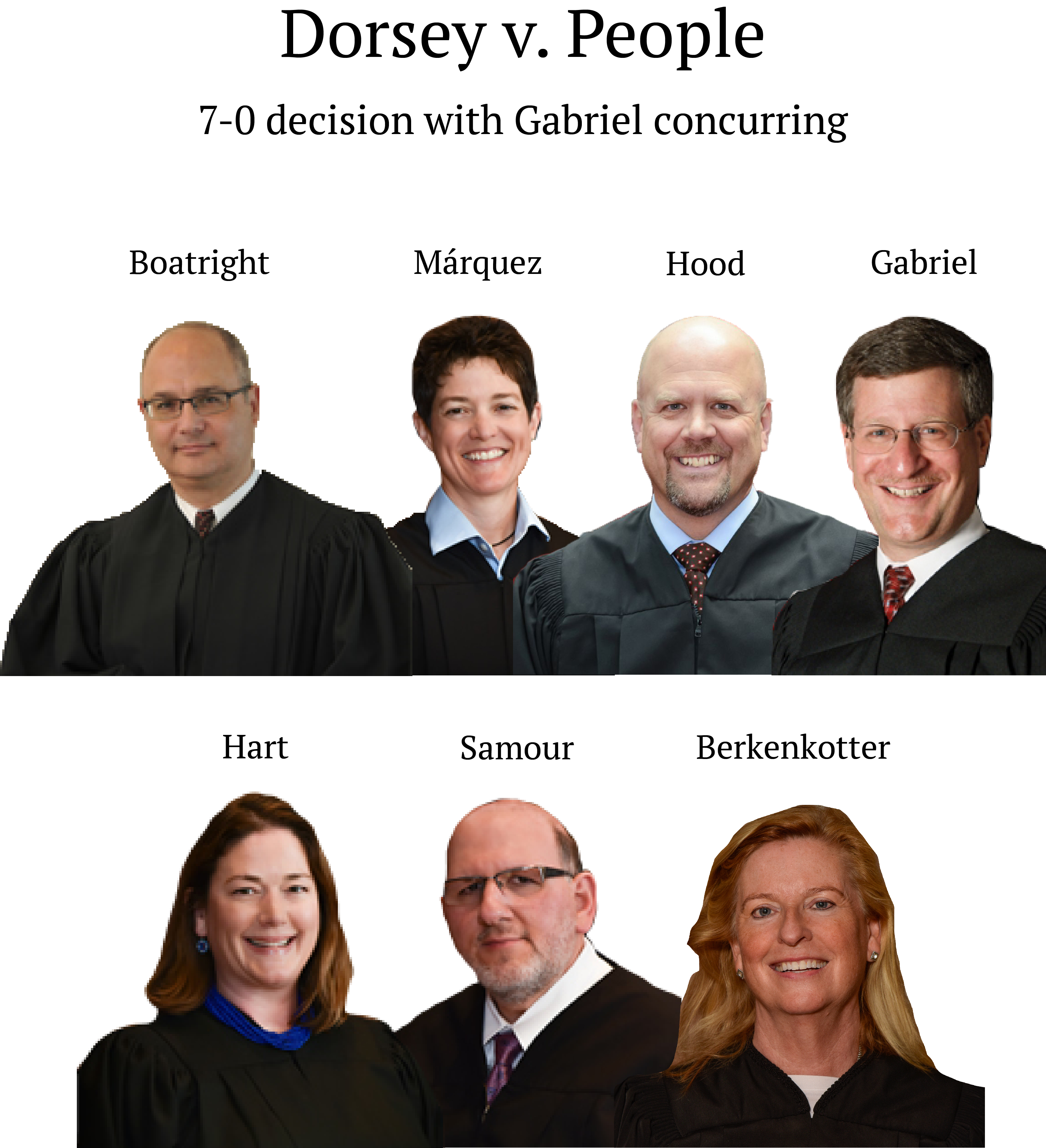
Justice Richard L. Gabriel, writing in dissent, pointed out the U.S. Supreme Court has never endorsed letting judges alone transform a misdemeanor conviction to a felony. In an unusual move, he suggested the U.S. Supreme Court use the case of Constance Eileen Caswell as an opportunity to address whether judges act constitutionally by doing so.
“I would urge the Supreme Court – whether in this or another case – to clarify whether the prior conviction exception remains viable and, if so, whether it applies in cases like this one,” he wrote.
The public defender’s office, which represented Caswell, did not immediately say whether it planned to appeal to the U.S. Supreme Court in response to Gabriel’s suggestion.

A Lincoln County jury convicted Caswell of 43 counts of animal abuse, which is ordinarily a misdemeanor. Caswell admitted she had a prior animal abuse conviction on her record, prompting the trial judge to sentence her for a felony – as Colorado law requires for repeat offenses.
In the second, related case the state’s justices heard, a Denver jury convicted Charles K. Dorsey for failing to register as a sex offender. Twice in 20 years, he did not register by the annual deadline, which is a class 6 felony. After a jury convicted Dorsey the second time, prosecutors showed the trial judge paperwork documenting his prior conviction and the judge sentenced Dorsey on a more serious, class 5 felony.
Both appeals questioned whether the trial judges could use the defendants’ criminal histories to increase the severity of the convictions, or whether that was a task constitutionally left to their juries.
In Dorsey’s case, the justices easily decided a prior conviction for failing to register was meant to enhance his sentence after a jury verdict. The state Supreme Court agreed Dorsey’s circumstances fit squarely within the U.S. Supreme Court’s precedent, permitting a judge to increase a low-level felony conviction to a slightly more serious felony.
Caswell’s case was different. Three years ago, the state Supreme Court concluded Colorado’s felony drunk driving law required juries to decide beyond a reasonable doubt whether a defendant had prior DUI convictions – the key factor that turns an otherwise-misdemeanor offense into a felony. At the time, the justices warned it may be unconstitutional for a jury to convict someone of a misdemeanor, only to have a judge decide unilaterally whether to increase it to a felony.
But the state Supreme Court clarified its thinking in Caswell’s appeal. Her case was treated as a felony in the trial court, Samour observed, which lowered the potential for unfairness. Further, the U.S. Supreme Court’s directive still applied: prior convictions are not automatically a jury question.
“A prior conviction is a prior conviction, regardless of whether it transforms a misdemeanor into a felony or not,” Samour wrote.
In his dissent, Gabriel argued that increasing a misdemeanor to a felony “changes the very nature of the offense.” He believed the Colorado Supreme Court was not simply following what its federal counterpart has said about prior convictions, but was stepping outside of the constitutional boundary.
“A critical question in cases regarding prior convictions is one of identity, that is, whether the defendant presently before the court committed the prior offense,” he wrote. “I believe that the critical issue of identity must be presented to a jury, which can convict the defendant of a felony only if it finds the fact of identity – and all other facts necessary to establish the prior conviction – beyond a reasonable doubt.”
The cases are Caswell v. People and Dorsey v. People.


Federal judge hears ICE agents’ confusion about law, injunction on warrantless arrests
Michael Karlik
michael.karlik@coloradopolitics.com
Updated 12 hours ago
A federal judge heard testimony on Tuesday from U.S. Customs and Immigration Enforcement agents in Colorado, who had trouble describing the requirements of his recent injunction and the training they received on making warrantless arrests pursuant to the law. On...

10th Circuit dismisses challenge to Colorado legislature’s decorum rules
Michael Karlik
michael.karlik@coloradopolitics.com
Updated 18 hours ago
The Denver-based federal appeals court concluded on Tuesday that Colorado lawmakers cannot be sued for creating and enforcing rules of decorum that circumscribe the public commentary allowed at legislative committee hearings. A three-judge panel of the U.S. Court of Appeals...
Colorado Supreme Court blocks ballot initiative defining ‘fees’
Michael Karlik
michael.karlik@coloradopolitics.com
Updated 2 days ago
The Colorado Supreme Court blocked a proposed ballot initiative on Monday that would have required voter approval for new fees above a certain threshold, while also enshrining a definition of “fee” into the state constitution for the first time. Chief...
Colorado justices, by 5-2, say Longmont detective did not violate suspect’s Miranda rights
Michael Karlik
michael.karlik@coloradopolitics.com
Updated 2 days ago
The Colorado Supreme Court’s majority ruled on Monday that a Longmont detective did not coerce a suspect into talking by making references to how a judge would look at his character, and by suggesting he may get out of prison...
Colorado justices find Fort Collins police lacked probable cause to arrest suspect in park
Michael Karlik
michael.karlik@coloradopolitics.com
Updated 2 days ago
The Colorado Supreme Court agreed on Monday that Fort Collins police lacked probable cause to arrest a man for a child sex offense based on his presence in a public park around the time they intended to meet with their...

Supreme Court to hold oral arguments, discipline commission releases report | COURT CRAWL
Michael Karlik
michael.karlik@coloradopolitics.com
Updated 2 days ago
Welcome to Court Crawl, Colorado Politics’ roundup of news from the third branch of government. The state Supreme Court is holding oral arguments this week, plus Colorado’s judicial discipline commission released its annual report. Colorado Supreme Court news • The Supreme...

Federal judge dismisses developer’s challenge to Denver affordable housing ordinances
Michael Karlik
michael.karlik@coloradopolitics.com
Updated 5 days ago
A federal judge dismissed a homebuilder’s constitutional challenge on Tuesday to a pair of Denver ordinances that impose obligations on developers related to the affordable housing demands created by new construction. Two related companies, redT Homes and redT Capital Partners,...
10th Circuit distances itself from prior decision making it easier to toss prisoner lawsuits
Michael Karlik
michael.karlik@coloradopolitics.com
Updated 5 days ago
The Denver-based federal appeals court distanced itself on Wednesday from its own recent decision that made it easier for prison officials to end civil lawsuits by transferring incarcerated plaintiffs between facilities. A three-judge panel of the U.S. Court of Appeals...

Appeals court overturns Douglas County vehicular homicide conviction due to faulty jury instructions
Michael Karlik
michael.karlik@coloradopolitics.com
Updated 3 days ago
Colorado’s second-highest court overturned a defendant’s vehicular homicide conviction and 12-year prison sentence on Thursday after determining a Douglas County judge omitted key language from the jury instructions that could have resulted in a different outcome. James Paul McDonald was...
Federal judge dismisses malicious prosecution claim against former Denver prosecutor
Michael Karlik
michael.karlik@coloradopolitics.com
Updated 5 days ago
A federal judge concluded on Monday that a former Denver prosecutor could not be sued for allegedly causing the arrests of two plaintiffs after they failed to appear for trial on the scheduled date, even though the trial had been...
PREV
PREVIOUS

Aurora mayoral candidate admits to misdemeanor during debate
One of Aurora’s three mayoral candidates admitted during a debate on Thursday to a misdemeanor charge that occurred in the 1980s. Jeffrey Sanford, who is in a three-way race for mayor with Councilmember Juan Marcano and incumbent Mayor Mike Coffman, said he was young and in the military at the time, and “got out of […]

Colorado Supreme Court to hear latest LGBTQ discrimination case against Masterpiece Cakeshop
The Colorado Supreme Court announced on Tuesday that it will decide whether a Lakewood cake maker violated the state’s anti-discrimination law when he declined to supply a cake to celebrate a customer’s gender transition, or if the First Amendment protected his refusal. The case involves a familiar name: Masterpiece Cakeshop, whose owner, Jack Phillips, was […]