

Political powerhouses, rising stars on the menu at Colorado’s annual partisan bashes | TRAIL MIX

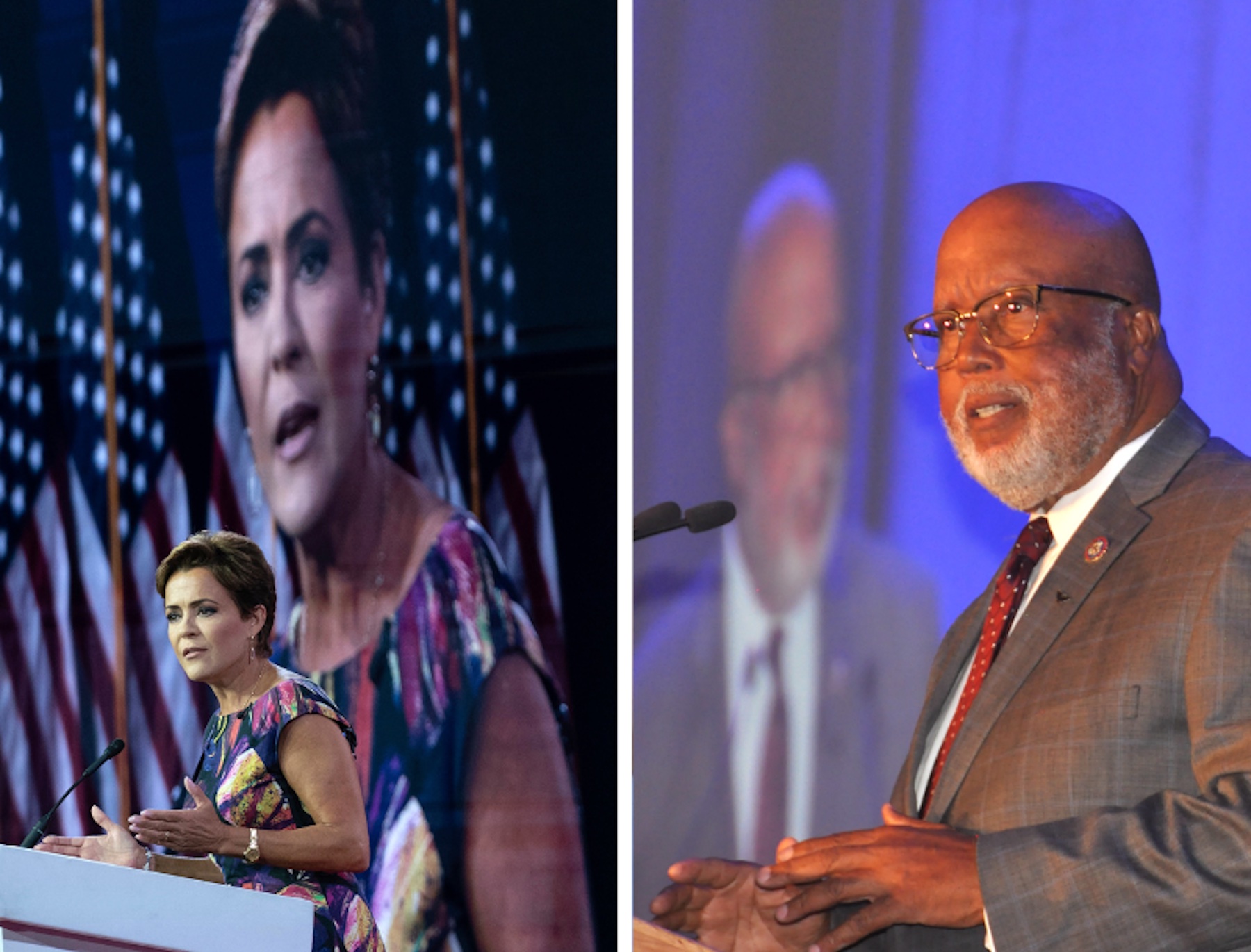
With the announcement this week that former Republican Arizona gubernatorial candidate Kari Lake is set to keynote the Colorado GOP’s annual fundraising dinner in November, both of the state’s major parties have set the table for this year’s edition of one of the least consequential, but most illuminating, partisan juxtapositions.
Every year, rain or shine – even in the depths of a global pandemic – Colorado’s Republicans and Democrats convene donors big and small for a glitzy evening to toast their wins, fête their elected officials and rev up many of their most committed activists for the next election.
Affectionately dubbed “nerd prom” by some wags, the parties’ big fundraisers – the Democrats’ Obama Gala and the Republicans’ Centennial Dinner – offer a snapshot of where the parties are and where they’re headed.
The contrast this year couldn’t be sharper.
Lake, a former TV newscaster and fierce advocate for the America First policy agenda, is slated to top the program at the Republicans’ annual Centennial Dinner on Nov. 4 at the Embassy Suites by Hilton in Loveland, state GOP Chairman Dave Williams announced on Sept. 25.
A staunch ally of former President Donald Trump, Lake lost the election in Arizona last fall to Democrat Katie Hobbs but has refused to concede and continues to litigate the results, echoing Trump’s unsubstantiated claims of widespread voter fraud.
This week, the Wall Street Journal reported Lake plans to throw her hat in the ring for the swing state’s U.S. Senate seat, challenging independent Kyrsten Sinema, who ditched her Democratic affiliation late last year.
Speculation surrounds Lake’s prospects as a top potential Trump running mate, should the GOP frontrunner win the nomination in a primary field filled with candidates mostly said to be auditioning for his No. 2 spot.
While it’ll be another month before Lake addresses Colorado’s Republican donors, there’s a decent chance she’ll generate headlines.
In a speech to Georgia Republicans on June 9, Lake issued a warning to the federal prosecutors who would soon indict Trump for trying to overturn the 2020 election: “If you want to get to President Trump, you’re going to have to go through me, and you’re going to have to go through 75 million Americans just like me,” she said. “And I’m going to tell you, most of us are card-carrying members of the NRA. That’s not a threat, that’s a public service announcement.”
Nearly six months ago at their fundraising dinner, Colorado Democrats heard from a politician who could qualify as Lake’s polar opposite.
U.S. Rep. Bennie Thompson, the 16-term Mississippi Democrat who chaired the bipartisan House Jan. 6 select committee, headlined the 6th annual Obama Gala on April 1 at the Sheraton Denver Downtown Hotel. He declared that Trump had brought the country to the brink of losing its democracy in the waning days of his presidency.
Earlier in the same ballroom, outgoing state party chair Morgan Carroll passed the torch after three terms to Shad Murib, the veteran political strategist and policy advisor who won election to a two-year term as the Democratic Party chair.
After nearly running the table last fall for the third general election in a row, the Democrats decided against handing the microphone to the usual cavalcade of elected officials at the dinner. Instead, organizers asked the party’s standard-bearers to rotate among the tables, joining diners for conversation while they ate in a version of political speed dating.
That left ample time for a slew of crowing, awards and farewells – including a final, trademark cartwheel across the stage from retiring U.S. Rep. Ed Perlmutter – before Thompson’s pointed keynote.
“In America, we settle our differences at the ballot box,” Thompson said. “We’re not a third-world country. We should not have a coup, we should not have anything. If we go to court and we lose, then we get you in the next election. But what you saw on Jan. 6 was an attempted coup on our government. That’s why you should be offended.”
Speakers at previous Democratic and Republican dinners seldom presented the same starkly divergent worldviews as Lake and Thompson, but the parties’ invited luminaries nonetheless highlighted the evolving distinctions between their brands.
Looking back a dozen years, the parties have featured a range of speakers at their annual dinners, from local heroes to up-and-coming national figures and outright political superstars.
On-the-scene comparisons are lacking for the last half dozen dinners, since the Colorado GOP has barred the press from its Centennial Dinners since 2017, though Williams told Colorado Politics ahead that could change this year.
While more recent keynoters have exemplified the parties’ increasingly polarized public images – in 2020, U.S. Rep. Hakeem Jeffries of New York fired up the Democrats during a virtual dinner held online, while U.S. Sen. Marco Rubio regaled Republicans behind closed doors – the speakers at the state parties’ fundraising dinners a decade or so ago serve as time capsules for a bygone political era.
Both parties welcomed Colorado Politics’ predecessor The Colorado Statesman to their 2011 dinners, when Democrats heard from then-Massachusetts Gov. Deval Patrick in Denver and Republicans gathered in Colorado Springs to hear then-U.S. Rep. Pete Sessions of Texas, who had steered the GOP to a House majority the previous year as chairman of the National Republican Congressional Committee.
Noting that he’d led a state sales hike when the commonwealth was hit hard by the Great Recession, Patrick said: “We chose to invest in education, in health care and in job creation. We all know that educating our kids, having health care you can depend on and a good job is the path to a better future.”
Sessions predicted that Colorado would be among the swing states that would help make Barack Obama a one-term president. “We will win because the Republican Party is well positioned because of where we stand with the free enterprise system and the growth of jobs in this country,” Sessions said.
Top Republican strategist Karl Rove delivered the keynote out of view of reporters at the 2012 Centennial Dinner in Denver.
Cory Booker, then the young mayor of Newark, New Jersey, however, drew plenty of coverage for his turn at the microphone at the Democrats’ dinner in Denver. That included a blog post by Lynn Bartels in the Denver Post that featured a photo of the sparse notes Booker had sketched out before delivering his 37-minute barnburner.
Two years later, when he made a campaign swing through Denver on his way to the U.S. Senate, Bartels showed Booker her earlier post, eliciting laughter and recognition. It turned out Booker had seen the item and was mildly upset that then-Gov. John Hickenlooper had shared the notes he’d left on the table with a reporter, particularly since he’d misspelled some words.
In 2013, Republicans celebrated former U.S. Sen. Hank Brown at their dinner in Greenwood Village, while Democrats featured then-U.S. Sen. Claire McCaskill of Missouri, who didn’t take the stage at a Denver hotel until close to midnight.
Hailed as a “leader’s leader” by a seemingly endless stream of then-current and former elected Republicans, Brown said the contrast between the parties was becoming more pronounced. “The reality is, the Democratic Party is changing, they’ve become the party of those who take,” he said. “And the Republican Party is becoming the party of those who give.”
McCaskill, who easily won reelection a year earlier despite her state going Republican elsewhere on the ticket, said she “took advantage of the Republican civil war” and advised Colorado Democrats to “be smart and strategic and realize that the very extreme base of the Republican Party allows us to stay on offense, not on defense.”
Conservative commentator Michael Reagan, the son of former President Ronald Reagan, told Republicans at their 2014 dinner in Broomfield to embrace his father’s big-tent approach to politics.
“If we don’t expand this party and embrace others to come into this party, and embrace the youth and embrace other nationalities, and become the party of inclusion instead of exclusion, then we’re not going to win either,” Reagan said. “This party was inclusive with Ronald Reagan. Let’s not make it exclusive, if we want to win.”
The next night in Denver, then-San Antonio Mayor Julian Castro countered that the current GOP was no longer the party of Ronald Reagan or Abraham Lincoln but was, instead, the party of Texas Sen. Ted Cruz and conservative radio host Rush Limbaugh.
Noting that his grandmother had emigrated from Mexico, Castro added: “People come here because the United States of America is the society of opportunity in the world. And we, as Democrats, as Americans, have to make sure that that is still true, not only today but a generation from now.”
Ernest Luning has covered politics for Colorado Politics and its predecessor publication, The Colorado Statesman, since 2009. He’s analyzed the exploits, foibles and history of state campaigns and politicians since 2018 in the weekly Trail Mix column.

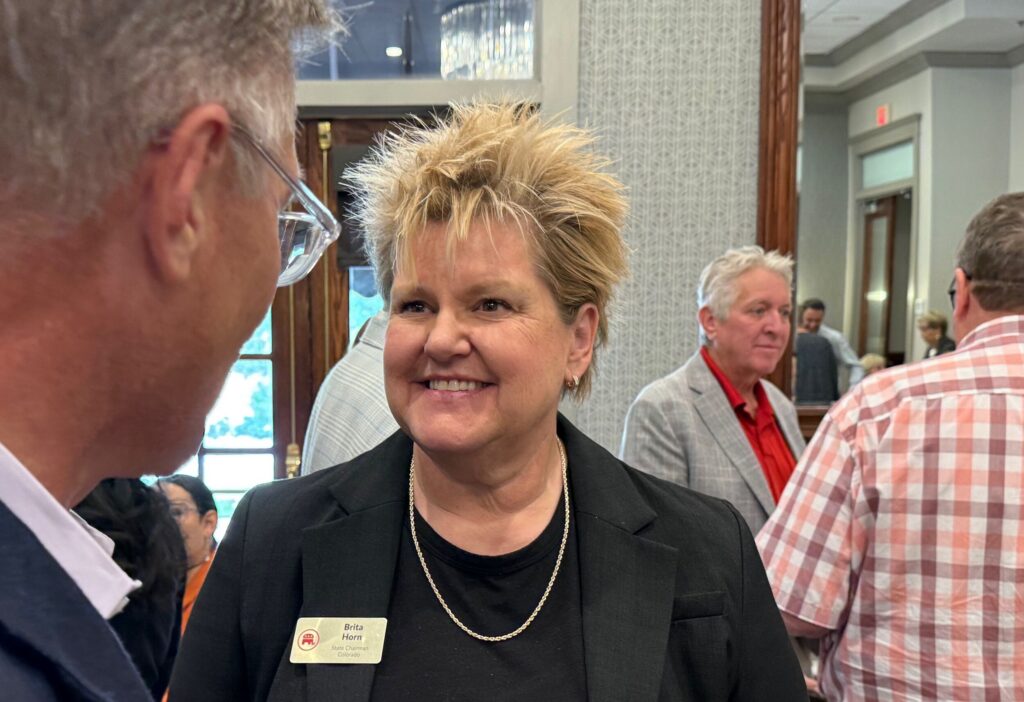
Colorado GOP Chair Brita Horn rebuffs critics as fellow party officer greenlights ‘no-confidence’ vote
Ernest Luning
ernest.luning@coloradopolitics.com
Updated 10 hours ago
A Colorado Republican Party officer said last week that a move by party officials to impose restrictions on state GOP chair Brita Horn and hold a “no-confidence” vote on her leadership can proceed. Horn, however, told Colorado Politics that the...
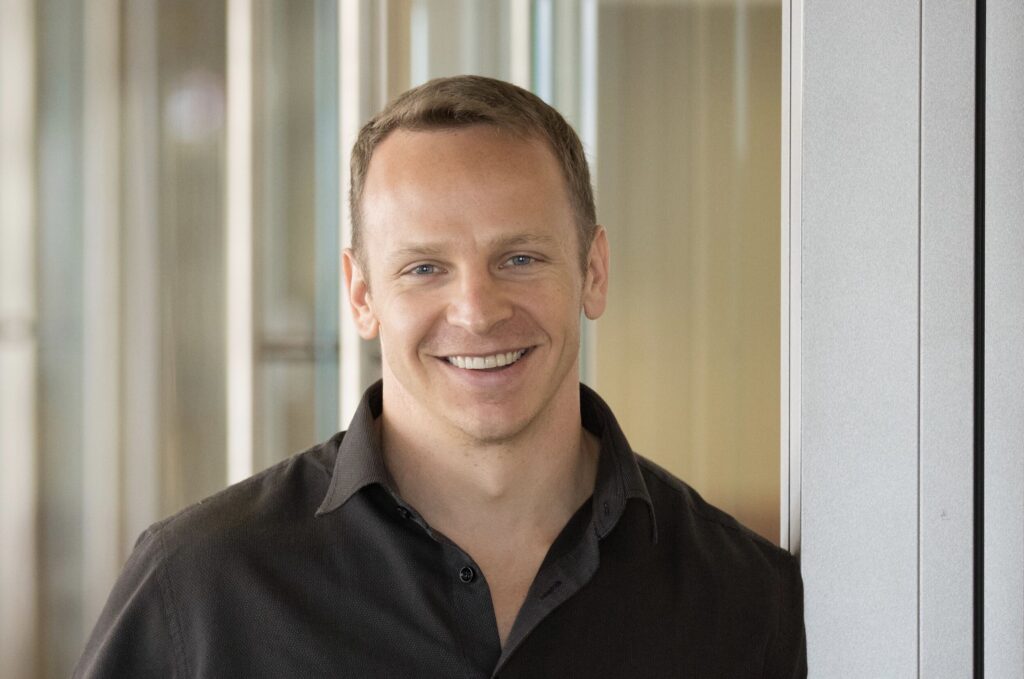
Evans challenger Evan Munsing qualifies by petition for Democratic primary ballot in Colorado’s 8th CD
Ernest Luning
ernest.luning@coloradopolitics.com
Updated 2 days ago
Thornton Democrat Evan Munsing, one of three major Democratic candidates challenging Republican U.S. Rep. Gabe Evans’ bid for a second term, became the first candidate to qualify for Colorado’s 8th Congressional District primary after submitting a sufficient number of valid...
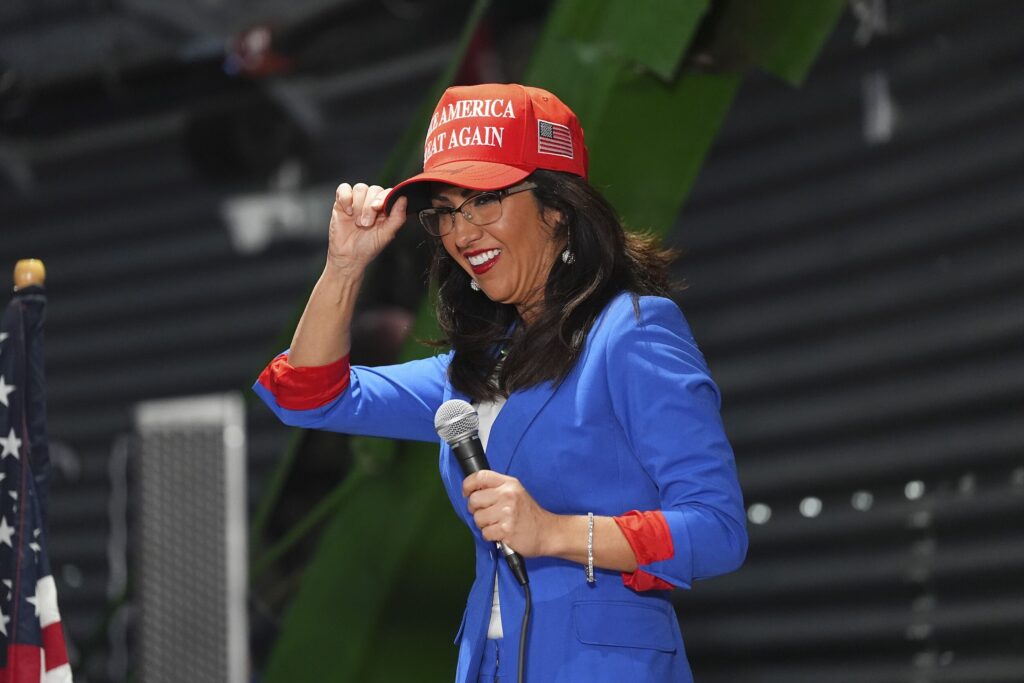
Boebert’s top Dem challengers set fundraising, spending pace heading into election year | TRAIL MIX
Ernest Luning
ernest.luning@coloradopolitics.com
Updated 2 days ago
As multiple candidates across Colorado have demonstrated in recent years, challenging US Rep. Lauren Boebert could be the most lucrative campaign fundraising pitch yet discovered in the state. For the umpteenth time, Democrats hoping to unseat the Republican congresswoman have...
Proposal targets dual office-holding by Colorado legislators | Bills in brief
Marianne Goodland
marianne.goodland@coloradopolitics.com
Updated 3 days ago
Colorado lawmakers introduce hundreds of bills each year. Bills in Brief cuts through the noise by explaining which proposals matter, what’s at stake, and how decisions at the Capitol could affect everyday life across the state. A bill set for...
Colorado GOP vice chair Richard Holtorf resigns, says it’s ‘impossible’ to work with chair Brita Horn
Ernest Luning
ernest.luning@coloradopolitics.com
Updated 4 days ago
Colorado Republican Party Vice Chair Richard Holtorf notified GOP officials on Tuesday that he will step down from the party position at the end of the month, citing his inability to work with state chair Brita Horn. Holtorf, a third-generation...
Colorado delegation splits in House vote to end federal government shutdown
Ernest Luning
ernest.luning@coloradopolitics.com
Updated 5 days ago
Colorado’s U.S. House members divided mostly along party lines Tuesday in separate votes on a funding deal to end the federal government’s partial shutdown, while giving Congress more time to negotiate long-term funding for the Department of Homeland Security. Lawmakers...
Lisa Calderón launches bid for Denver mayor
Deborah Grigsby
deborah.smith@denvergazette.com
Updated 5 days ago
The 2027 race for Denver mayor is officially underway as longtime progressive candidate Lisa Calderón on Tuesday announced her bid for the city’s top executive seat. This is her third time running for mayor. Calderón ran against Mayor Mike Johnston...
So … why do we care about Bad Bunny?
Isabelle Rosewater, Special to The Gazette
Isabelle-Rosewater@gazette.com
Updated 5 days ago
Puerto Rican superstar’s selection to headline first Super Bowl halftime show in Spanish has sparked global conversation and controversy Puerto Rican superstar Bad Bunny’s selection as the first artist to headline a Super Bowl halftime show performing entirely in Spanish...
Colorado House launches ethics review of Rep. Ron Weinberg filed by fellow GOP legislator
Marianne Goodland
marianne.goodland@coloradopolitics.com
Updated 6 days ago
The Colorado House will convene an ethics committee to review a complaint filed by Rep. Brandi Bradley, R-Roxborough Park, against fellow Republican Rep. Ron Weinberg, R-Loveland. It will be the first time since 2012 that the House has formed an...
Colorado Republicans plan to return to Pueblo for 2026 state GOP assembly | TRAIL MIX
Ernest Luning
ernest.luning@coloradopolitics.com
Updated 1 week ago
The Colorado Republican Party plans to hold its 2026 state assembly in Pueblo in April, marking a return to the largest city in the only county in the state that’s flipped from Democrat to Republican to Democrat to Republican in...
PREV
PREVIOUS

'Absolute insanity': Colorado lawmakers decry budget process as federal government shutdown looms
As uncertainty and frustration gripped Capitol Hill in Washington on Thursday, members of Colorado’s congressional delegation grappled with the near-certainty of an approaching federal government shutdown. While the Democratic-controlled Senate moved ahead with a bipartisan measure aimed at funding the government past Saturday at midnight, Republican House Speaker Kevin McCarthy made clear that he won’t […]

Aurora council candidates sharply diverge on homelessness, crime
Aurora’s candidates for mayor and council offered sharply divergent solutions to major issues facing the city, notably when it comes to crime and homelessness, during a debate on Thursday night. Some promised not to raise taxes; one complained the city is unfairly imposing the burden on companies by giving a few major tax breaks. They […]