

Aurora council candidates sharply diverge on homelessness, crime
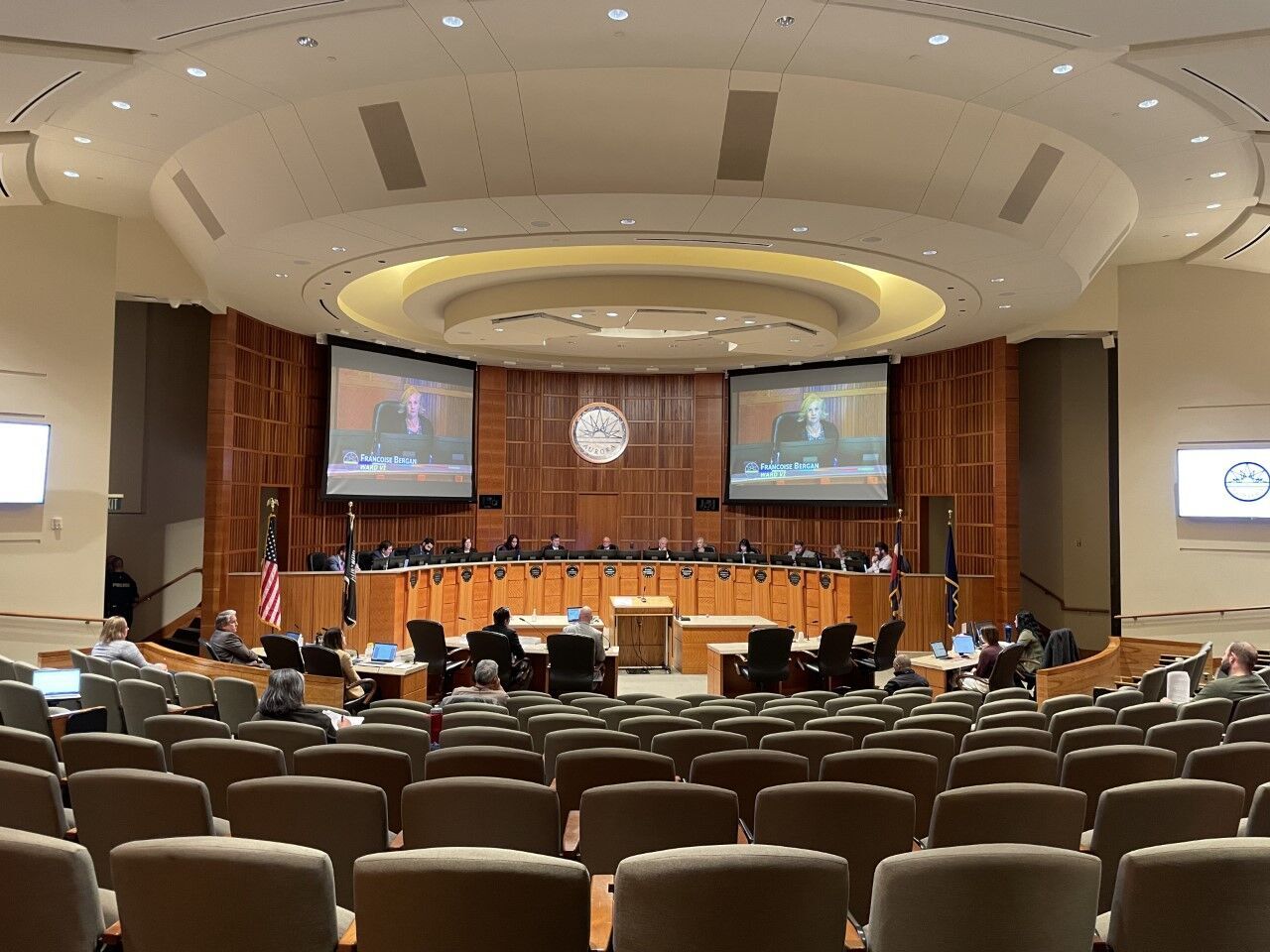
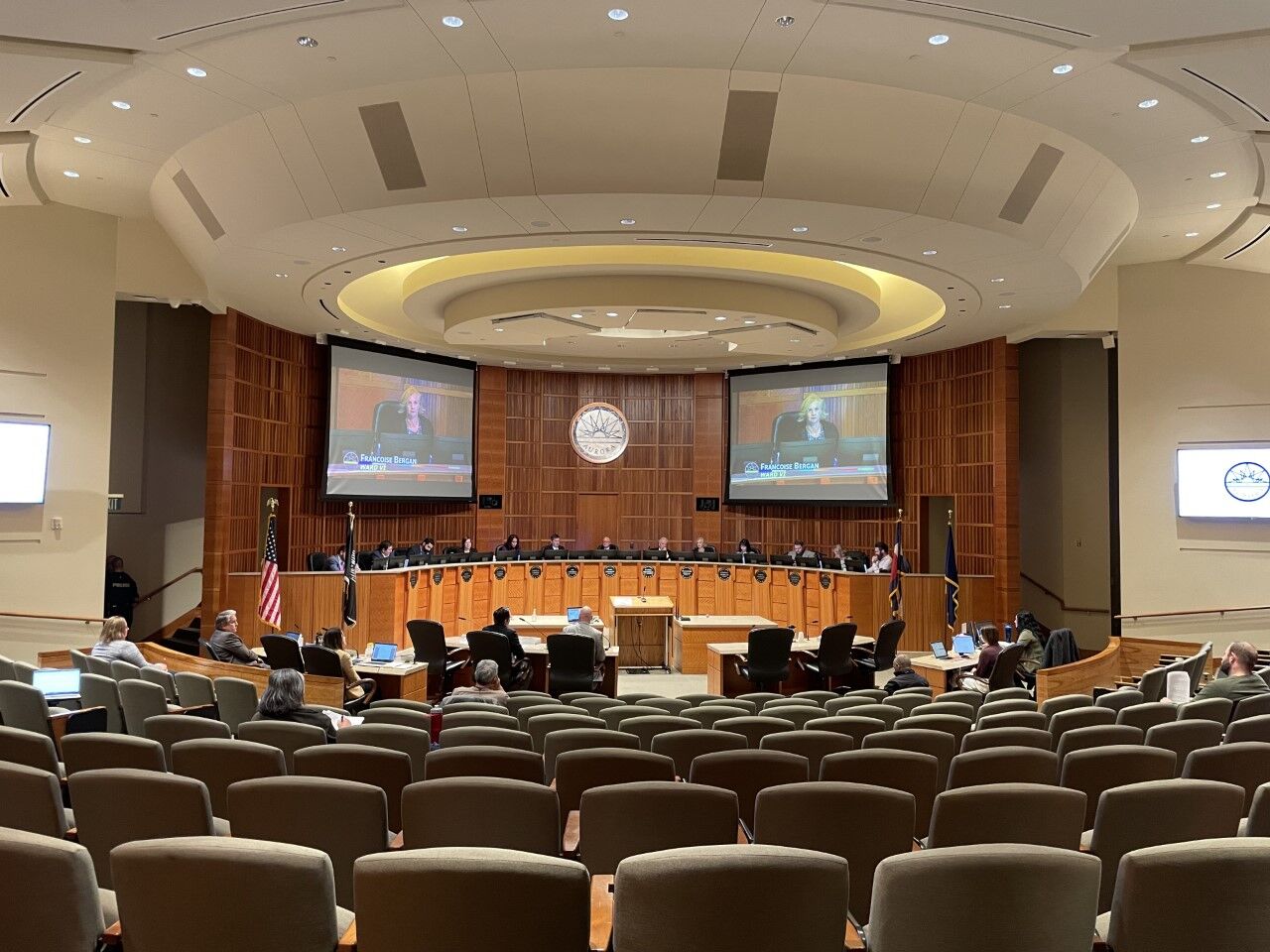
Aurora’s candidates for mayor and council offered sharply divergent solutions to major issues facing the city, notably when it comes to crime and homelessness, during a debate on Thursday night.
Some promised not to raise taxes; one complained the city is unfairly imposing the burden on companies by giving a few major tax breaks.
They all vowed to work on helping businesses expand and attracting others to move to the city, noting that Aurora is well-positioned to take advantage of its proximity to Denver International Airport, the presence of the University of Colorado Anschutz Medical Campus, and its vast, open spaces yet to be developed.
The future of Aurora is bright, they said, noting a fast-growing population, but they also acknowledged the city’s major woes – and top of mind for many is keeping residents safe from crime, and helping the youth steer clear of a life of trouble.
Voters will choose between several candidates for mayor, at-large councilmembers and councilmembers for districts – called “wards” – IV, V and VI.
Candidates whose names will appear on the ballot include:
- Mayor: Mike Coffman (incumbent), Juan Marcano, Jeffrey Sanford
- At-large councilmembers (voters will choose two): Alison Coombs, Curtis Gardner (incumbent), Thomas Mayes, Jono Scott
- Ward IV councilmember: Jonathan Gray, Stephanie Hancock
- Ward V councilmember: Angela Lawson, Chris Rhodes
- Ward VI councilmember: Francoise Bergan (incumbent), Brian Matise
Election Day is Nov. 7 and the victors will serve four-year terms ending in 2027. Their terms will begin at the commencement of the first regular council meeting in December following the election.
Aurora’s mayor and councilmembers all serve staggered, four-year terms. Other council seats not up for election in 2023 will be up for election in November 2025.
Policing and public safety
Ward IV candidate Stephanie Hancock said Aurora’s police officers are doing a “fantastic” job with the limited resources and training. It’s important for the city to put “calculated, aggressive effort” into recruiting officers, she said.
In response to youth violence, she said youth are best empowered through employment.
“We have a generation of young people who are left adrift,” Hancock said. “I think it’s important to steer some of these young people into active programs … because the one thing that gives people purpose is to have a job.”
Her opponent, Jon Gray, said work needs to be done on police training and addressing issues, such as those that arose in the Elijah McClain and Jor’Dell Richardson cases.
“There’s a racial bias that is going on throughout all of America right now,” Gray said. “I completely understand some of the issues and trauma that (police) go through … but we have to make sure our police are training correctly.”
In response to addressing youth violence, Gray said he would expand Utah Park to a full-service recreation center.
“It’s important we get our youth involved in activities and programs that increase their social capital, that allows them to be productive members of society,” Gray said.
When it comes to retail theft, Gray said he does not believe in mandatory minimum sentences, arguing they exacerbate the problem.
“If we have mandatory minimums, it’s only going to continue to put our kids into a system that diminishes their future,” Gray said.
Hancock, on the other hand, supports mandatory minimums.
“I wholeheartedly support accountability and responsibility,” Hancock said. “If you decide that crime is what you’re going to do with your life, then you’re taking a risk and you’re going to pay the cost for that.”
Ward V candidate Chris Rhodes said the city needs to ramp up its police force, saying the number of officers in the city is “way too small.” When a community knows its officers and sees them around, it creates more trust, Rhodes said.
Rhodes’ opponent, Angela Lawson, said Aurora has new public safety challenges, including an uptick in youth violence.
Lawson said police should be held accountable for their actions.
At-large candidate Thomas Mayes said the city needs to start addressing crime by increasing law enforcement visibility, making sure police are available to prevent crime.
Aurora has to match surrounding cities’ police officer incentives in order to draw officers to the city, Mayes said. If officers in the next city over make more money, it’ll be difficult to recruit police candidates.
Mayes’ opponent, Jono Scott, agreed, saying law enforcement is put in very difficult situations.
Scott said expanding punishments for crimes helps empower the victim and diminish crime.
“Criminals need to know Aurora is open for business, but closed to crime,” Scott said.
At-large candidate Alison Coombs, on the other hand, said police “respond” to crime, but they don’t prevent it, and the only way to reduce crime is by ensuring people have the things they need, such as housing, to prevent crimes from happening in the first place.
“We also need to make sure that when people do need police, they’re available,” Coombs said. “We have a staffing crisis and in order to provide the right response to every public safety issue, we have to diversify our public safety workforce.”
At-large candidate Curtis Gardner said Aurora police need to be staffed well enough to do “proactive policing” to ensure crimes of opportunity don’t take place as frequently. The city has room for both restorative justice and penalties for crime, he said.
Mayoral candidate Juan Marcano said Aurora police’s Police Area Representatives program should serve as the foundation of the department, calling it a “great example of what community policing looks like.”
PAR officers are responsible for establishing bonds with the community that allow for problems to be identified and then prevented or solved, according to Aurora’s website. They have the flexibility to gather citizen input, alter work hours, develop and implement new policing strategies, and bring additional resources to bear on problems that have been identified by the community.
Mayoral candidate Jeffrey Sanford said Aurora needs to let law enforcement candidates know that the city will support them and give them stability in order to attract more officers.
“I know a lot of law enforcement officials,” Sanford said. “They want to do the best for the community. When you go through interims and interims and you’ve got gypsy police chiefs coming up here from Houston or Florida … it’s not stable.”
When asked about rising crime, Sanford wondered if crime is going up or down. He has been researching crime and seeing various stats, he said. If the city invests in its open space, parks and recreation centers, people will have somewhere to go, he added.
Homelessness
Gray said he is a “firm believer” in permanent supportive housing with “wraparound” services. He is a “housing-first” advocate and said it is vital for the city to expand its outreach and spend money on nonprofits so they can “reach those that we are unable to reach.”
Hancock said the city should empower but not enable people. When asked if she supports housing-first or treatment first, she said it’s not one or the other. Rather, she said, it needs to be a “multi-pronged” that also addresses the root problems.
Rhodes said a “housing-first” model for homelessness has been “proven” in various cities to “save the city million of dollars” since it frees up police from dealing with people on the street. Once the homeless have a shelter, the city can connect them with services.
Lawson said homelessness needs to be addressed with a more regional approach. In some situations, it’s appropriate to bring enforcement to homelessness situations, such as if a person is being violent, Lawson said. However, in other situations, the city needs to bring people in who can help them, such as in situations where substance abuse or mental health issues are present.
Bergan said throwing money at homelessness without looking at the root problems is useless, saying Denver has not seen any results in years past despite spending hundreds of millions of dollars on the issue. She also said housing people does not do any good without offering resources, as well.
The city needs to address drug and alcohol addiction, mental illness and other causes that make up “the majority” and ensure they have the resources to deal with those causes, she said.
Matise, who’s running against Bergans, said mental illness and drug abuse are not the only root causes of homelessness, pointing to January’s point in time count that outlined about a dozen reasons for homelessness.
He advocated for a housing-first model, saying housing people is cheaper than enforcement.
Scott said he supports the camping ban and that it should be expanded “with compassion.”
Coffman said homeless numbers are going down in Aurora, pointing to the city’s point in time count that showed fewer homeless people in 2023 than in 2022.
He said that, by the end of the year, he hopes the city will have a new set of policies that will be more “aggressive” about enforcement, while also providing services to people.
In terms of the camping ban, Coffman said the policy can be better, but the homeless situation would be worse without it.
Marcano said the point in time count numbers should not be taken as gospel because it was especially cold when the 2023 count was taken, meaning there were more people than usual in shelters.
The city needs to work with other cities regionally to come together on the issue and create a permanent supportive housing strategy, Marcano said.
Marcano also wants to roll back Coffman’s camping ban, saying he hopes council has a democratic majority in November to do so. The city can use the millions of dollars they put toward “pushing people around our city” to put them in permanent supportive housing, he said.
Sanford said with winter coming up, the city needs to “get these folks housed, even if it may be temporary.”
Economy
Lawson said reaching out to the development and retail communities is vital in revitalizing vacant strip malls and other areas with potential for economic growth.
Businesses right now are being “taxed to death,” and the city needs to be cautious about raising taxes and increasing the minimum wage, Lawson said.
Rhodes, Lawson’s opponent, emphasized the importance of community engagement and looking at what other cities have done to boost the retail industry, so the city can implement strategies that work instead of “trying to build more things that might not work.”
When discussing taxation, Rhodes pointed to Amazon and the Gaylord Rockies Resort & Convention Center, saying the tax breaks for those big companies are hurting business, arguing the latter pay their “fair share,” while the former do not.
Rhodes supports raising the minimum wage, which would allow residents to spend more money and increase the city’s profits from sales tax, he said.
When asked about taxes on marijuana companies, Bergan and Matise offered opposing views.
Matise does not support tax cuts for legal marijuana businesses, citing money from those taxes that Aurora has already pledged to future payments. There are no studies showing that a reduction in the tax rate would increase revenue, he said.
“Back in the 80’s, there was that same theory of Reaganomics that basically (said) if we lower the income tax rates, suddenly we’ll have a surplus,” Matise said. “We lowered the income tax rate and got a deficit. If we lower the marijuana tax rate, there’s no guarantee we’re going to generate any more revenue.”
Bergan said she did not initially vote for the legalization of marijuana, but said it is here now and should be treated like other businesses, but she has not made a final decision on the specific issue yet.
“I think I lean toward reducing (extra taxes on marijuana businesses) because I don’t think we should put an extra burden on our businesses,” Bergan said.
Coombs said transit in Aurora needs to be better to improve the economy, the environment and for quality of life. While the city has the R Line, it does not run frequently enough or to enough places to enable people to use it, she said.
Gardner said the city has a lot of economic potential in the land south of Denver International Airport and is a great place for commercial and industrial development. He said that, if done right, that economic growth will bring money to the city without the need for any tax increases.
Mayes said that, while the city has a lot of potential in undeveloped land, it also needs to make sure its focusing on the infrastructure that already exists.
“We have one of the finest cities already, we have a lot of opportunity but we don’t want to leave the infrastructure within the city that’s already there,” Mayes said.
Coombs emphasized said the city needs to “build from the ground up” through empowering people already in the community and ensuring housing and commercial spaces are affordable to those wanting to do business.
Scott said the city has “incredible economic potential” that needs to start with supporting the small business sector and attracting industry leaders to the E-470 corridor.
He does not support increasing taxes, especially for small businesses, he said.
Marcano said economic development is key to the city’s future and that the city needs to rework its strategy because the big employers the city has brought in “don’t actually pay enough to make ends meet.”
Sanford said the city needs a master plan for development, but did not specify what was involved in that plan.
Coffman said there is a lot of potential for economic growth at the Anschutz Medical Campus, which already has a significant economic impact on the city and could do even more.
A recording of the public forum is available at www.auroratv.org and YouTube.com/TheAuroraChannel.


tom.hellauer@denvergazette.com

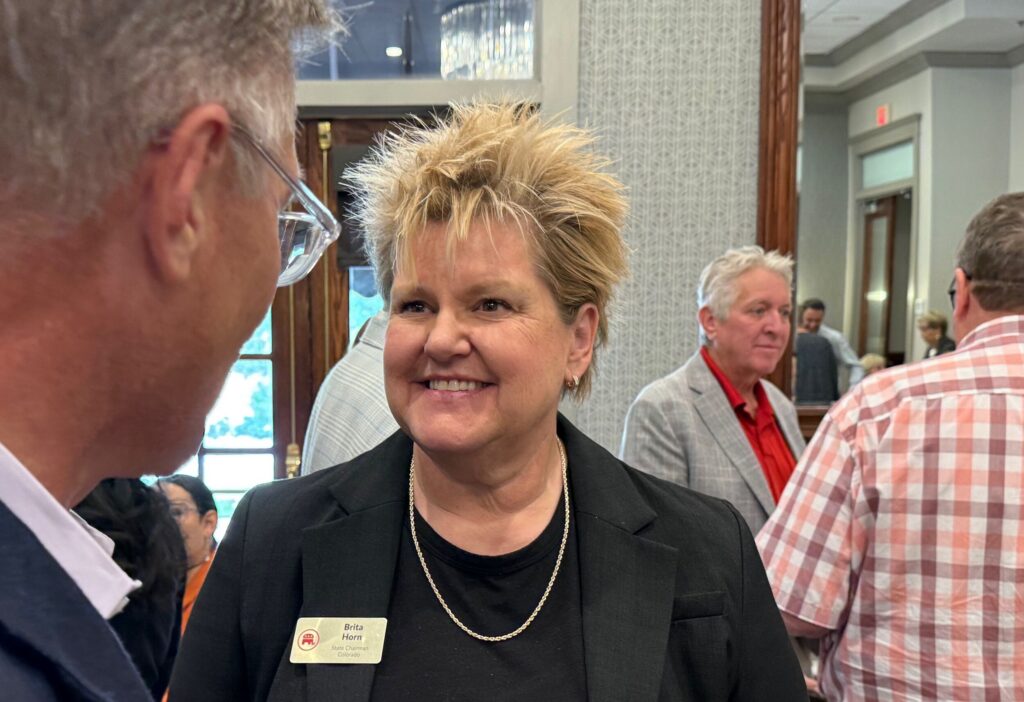
Colorado GOP Chair Brita Horn rebuffs critics as fellow party officer greenlights ‘no-confidence’ vote
Ernest Luning
ernest.luning@coloradopolitics.com
Updated 13 hours ago
A Colorado Republican Party officer said last week that a move by party officials to impose restrictions on state GOP chair Brita Horn and hold a “no-confidence” vote on her leadership can proceed. Horn, however, told Colorado Politics that the...
Evans challenger Evan Munsing qualifies by petition for Democratic primary ballot in Colorado’s 8th CD
Ernest Luning
ernest.luning@coloradopolitics.com
Updated 2 days ago
Thornton Democrat Evan Munsing, one of three major Democratic candidates challenging Republican U.S. Rep. Gabe Evans’ bid for a second term, became the first candidate to qualify for Colorado’s 8th Congressional District primary after submitting a sufficient number of valid...
Boebert’s top Dem challengers set fundraising, spending pace heading into election year | TRAIL MIX
Ernest Luning
ernest.luning@coloradopolitics.com
Updated 2 days ago
As multiple candidates across Colorado have demonstrated in recent years, challenging US Rep. Lauren Boebert could be the most lucrative campaign fundraising pitch yet discovered in the state. For the umpteenth time, Democrats hoping to unseat the Republican congresswoman have...
Proposal targets dual office-holding by Colorado legislators | Bills in brief
Marianne Goodland
marianne.goodland@coloradopolitics.com
Updated 3 days ago
Colorado lawmakers introduce hundreds of bills each year. Bills in Brief cuts through the noise by explaining which proposals matter, what’s at stake, and how decisions at the Capitol could affect everyday life across the state. A bill set for...
Colorado GOP vice chair Richard Holtorf resigns, says it’s ‘impossible’ to work with chair Brita Horn
Ernest Luning
ernest.luning@coloradopolitics.com
Updated 4 days ago
Colorado Republican Party Vice Chair Richard Holtorf notified GOP officials on Tuesday that he will step down from the party position at the end of the month, citing his inability to work with state chair Brita Horn. Holtorf, a third-generation...

Colorado delegation splits in House vote to end federal government shutdown
Ernest Luning
ernest.luning@coloradopolitics.com
Updated 5 days ago
Colorado’s U.S. House members divided mostly along party lines Tuesday in separate votes on a funding deal to end the federal government’s partial shutdown, while giving Congress more time to negotiate long-term funding for the Department of Homeland Security. Lawmakers...

Lisa Calderón launches bid for Denver mayor
Deborah Grigsby
deborah.smith@denvergazette.com
Updated 5 days ago
The 2027 race for Denver mayor is officially underway as longtime progressive candidate Lisa Calderón on Tuesday announced her bid for the city’s top executive seat. This is her third time running for mayor. Calderón ran against Mayor Mike Johnston...
So … why do we care about Bad Bunny?
Isabelle Rosewater, Special to The Gazette
Isabelle-Rosewater@gazette.com
Updated 5 days ago
Puerto Rican superstar’s selection to headline first Super Bowl halftime show in Spanish has sparked global conversation and controversy Puerto Rican superstar Bad Bunny’s selection as the first artist to headline a Super Bowl halftime show performing entirely in Spanish...
Colorado House launches ethics review of Rep. Ron Weinberg filed by fellow GOP legislator
Marianne Goodland
marianne.goodland@coloradopolitics.com
Updated 7 days ago
The Colorado House will convene an ethics committee to review a complaint filed by Rep. Brandi Bradley, R-Roxborough Park, against fellow Republican Rep. Ron Weinberg, R-Loveland. It will be the first time since 2012 that the House has formed an...
Colorado Republicans plan to return to Pueblo for 2026 state GOP assembly | TRAIL MIX
Ernest Luning
ernest.luning@coloradopolitics.com
Updated 1 week ago
The Colorado Republican Party plans to hold its 2026 state assembly in Pueblo in April, marking a return to the largest city in the only county in the state that’s flipped from Democrat to Republican to Democrat to Republican in...
PREV
PREVIOUS

Political powerhouses, rising stars on the menu at Colorado's annual partisan bashes | TRAIL MIX
With the announcement this week that former Republican Arizona gubernatorial candidate Kari Lake is set to keynote the Colorado GOP’s annual fundraising dinner in November, both of the state’s major parties have set the table for this year’s edition of one of the least consequential, but most illuminating, partisan juxtapositions. Every year, rain or shine […]

Douglas County sheriff's alleged political firing of subordinate to be heard by jury, judge rules
A jury will decide whether the former Douglas County sheriff fired his subordinate for making a political Facebook post in the middle of the 2020 election, and whether the sheriff’s office has raised a valid defense to terminating her without the proper process. Holly Kluth, a 32-year employee of the Douglas County Sheriff’s Office, sued […]