

Mike Johnston promised to house 1,000 homeless people by year’s end — he’s 10% there, data shows

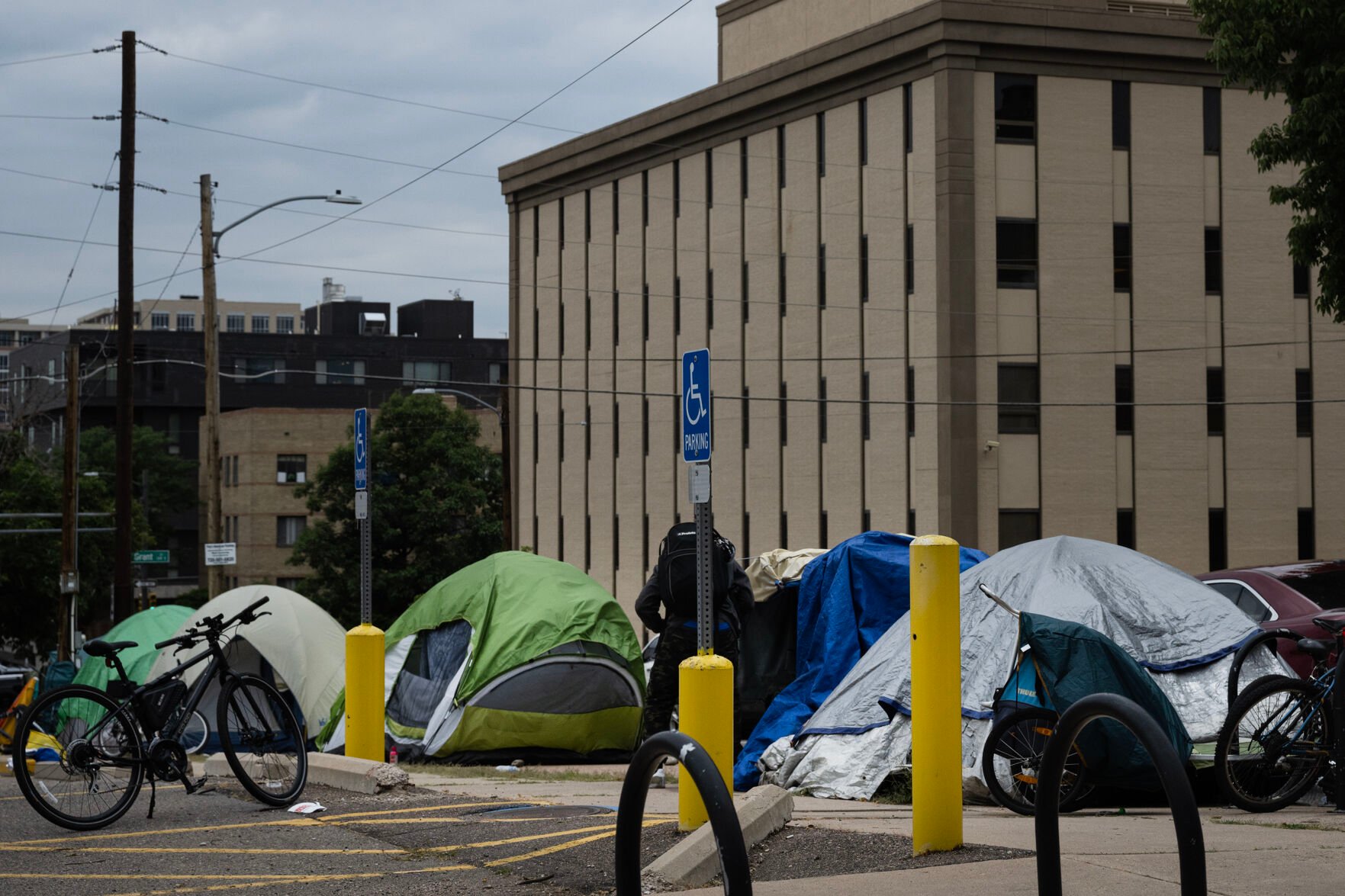
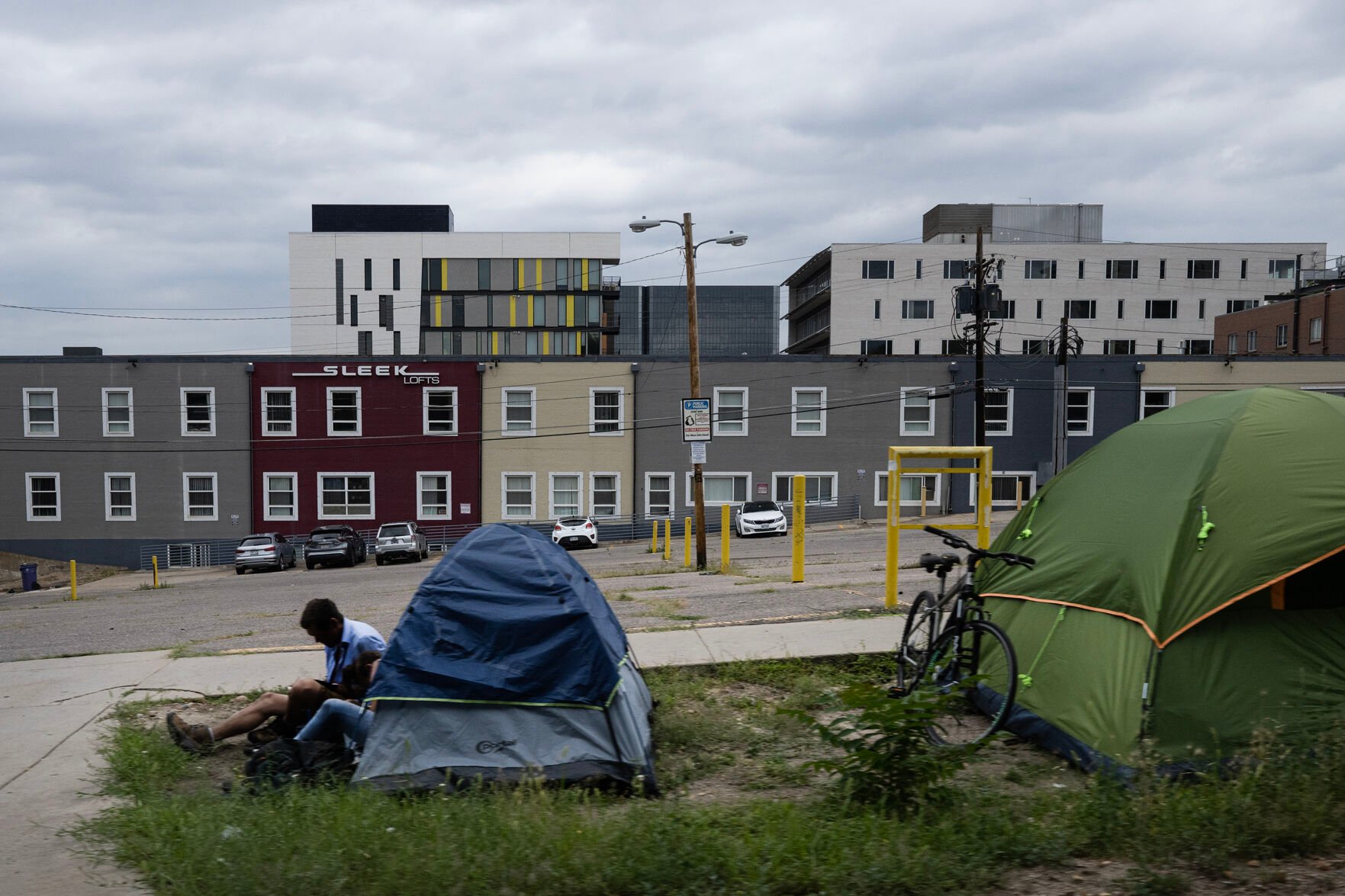
About 100 homeless people have so far found shelter through Denver’s services since Mike Johnston took office as the city’s new mayor in July.
The number – 101 as of Sept. 15, to be exact – represents 10% of the mayor’s promise to take 1,000 homeless individuals off the streets by year’s end. It also reflects the magnitude of the crisis, which Johnston vows to resolve by the end of his first term as mayor.
The city unveiled the data via a dashboard that officials promised to update on a daily basis.
In a statement, officials said the dashboard shows the city’s “dedication to transparency, accountability, and achieving our mission of providing housing and shelter to those in need.”
“We believe that by making this data accessible to the public, we can foster collaboration, inspire support, and encourage community engagement,” city officials said.
The city’s homelessness dashboard shows that roughly half of the homeless people that Denver has helped are in shelters, while the rest are living in rental units or have been unified with their families:
-
Permanent housing: 5
-
Rental unit: 35
-
Permanently reunified with family: 12
-
Temporarily unified with family: 2
-
Micro-communities: 18
-
Housing-converted motel or hotel: 6
-
Other “sheltered outcomes”: 23
Solving the city’s soaring homelessness crisis has been top of mind for the new mayor, who intends to spend roughly $50 million on his homeless initiatives through the rest of the year, the majority of which is earmarked for building “micro-communities.”
Johnston has also proposed spending $242 million on homelessness and housing affordability next year, a slight drop from this year’s budget of $254 million. His spending plan, he said, puts the city on a path to house 2,000 homeless people within the next two years.
The mayor had declared a state of emergency on homelessness in his first full day of office.
On Monday, councilmembers extended that emergency declaration, the third time they’ve done so in the last two months.
District Five City Councilwoman Amanda Sawyer remained opposed to the emergency declaration’s extension.
“I don’t think we need an emergency declaration to achieve the goals we are trying to achieve,” Sawyer said Monday, referring to Johnston’s goal to move 1,000 homeless people from Denver’s streets into shelters by year’s end.
“There is an impact on residents,” Sawyer said. “We are making a choice on how we dedicate the budget. The budget is tight and there are trade-offs that have to be made.””
Another councilmember voted ‘no’ to the emergency declaration’s extension: District 7 City Councilwoman Flor Alvidrez, who brought up “equity” concerns regarding the treatment of homeless people and residents.
Alvidrez’s district last week hosted a town hall, where residents of a nearby potential homeless micro-community site – at 5500 Yale Ave. – confronted Johnston over his homeless strategy, with some arguing his plans could create new problems for neighborhoods.
The residents asked the mayor sharp questions, offered suggestions and relayed worries, notably about increased crime, violence, drugs, public defecation, decrease in home values, police officer response times, and rapid re-zonings.
“This is a very difficult position for me to be in,” Alvidrez said during that meeting. “These people want to be a part of a community and we want to build that.”
On Monday, Cole Chandler, the mayor’s adviser on homelessness, said, “Every conversation we have in the emergency operations center is along the lines of equity.”
The goal is to be able to provide housing resources and services on a 24-hour, seven-days-a-week basis, he said.
“Expect a fully-staffed, 24-hour-a-day site,” he said. “Expect a site that has complete wraparound services and everything they need to thrive.”
City officials have defended Johnston’s emergency declaration, saying it allows Denver’s emergency operations center, which the mayor tasked with carrying out his strategy, to tackle homelessness more effectively and immediately. The city has pulled 75 people from various agencies to staff the emergency operations center.
The city has adopted several strategies in its campaign against homelessness, with a special emphasis on building “micro-community” sites. Micro-communities consist of a supervised set of tiny home or “pallet” shelters with access to bathrooms, kitchens, showers, mental health treatment and other services. The idea is to offer homeless people a place to live that can be built faster and cheaper.
Of the $50 million Johnston plans to spend through the rest of the year, he earmarked $19.6 million for micro-communities.
Already, the Denver City Council has approved up to $7 million to order 200 portable pallet shelters.
Last July, housing authorities in Denver approved the purchase of a Best Western hotel in northeast Denver for $26 million, with plans to convert it into housing units.
Under the plan, the Denver Housing Authority will lease the building to the city via Denver’s housing department for a nominal annual rate and basic maintenance costs. The department will then contract out with a partner to provide non-congregate shelter with supportive services – until the site is ready for conversion to supportive housing, which authorities said would take a few years.
The seven-county metro Denver region saw a 32% jump in homelessness this year, based on the Metro Denver Homeless Initiative count. Point-in-time counts are estimates taken on a single night, which many say undercount the true scale of the crisis.
As of Jan. 30, the region had 9,065 homeless people, compared to 6,884 the year before. Between 2022 and 2023, the number of “unsheltered” people – those who specifically sleep in public places, such as on the street, in tents or in cars – grew by 33%, from 2,078 to 2,763.
In raw count, Denver saw the biggest increase with 5,818 homeless people, up from 4,794 last year.





Second affordable housing project on church land opens in Colorado Springs
DEBBIE KELLEY
debbie-kelley@coloradopolitics.com
Updated 4 weeks ago
Greccio Housing doesn’t just do business deals. The nonprofit residential developer and property manager aligns its projects with a mission of providing stable, safe and affordable housing that helps struggling residents achieve stability, according to Executive Director Lee Patke. The...

After a snowless winter, agents say summer is luring second-home buyers to the mountains
Mark Samuelson Special to The Denver Gazette
mark.samuelson@denvergazette.com
Updated 4 weeks ago
Last winter was a terrible growing season in Grand County for what arguably is its most important crop: snow. The county 60 miles west of Denver over the top of Berthoud Pass saw a record-low snowpack — poor enough that...
Denver City Council committee looks to ease affordable housing metrics
Deborah Grigsby
deborah.smith@denvergazette.com
Updated 1 month ago
Denver’s Department of Housing Stability is asking the city to rewrite some of the key performance metrics in the city’s agreement with the Denver Housing Authority to deliver affordable housing. HOST is asking the city to amend parts of a...
Denver City Council committee looks to ease affordable housing metrics
Deborah Grigsby
deborah.smith@denvergazette.com
Updated 1 month ago
Denver’s Department of Housing Stability is asking the city to rewrite some of the key performance metrics in the city’s agreement with the Denver Housing Authority to deliver affordable housing. HOST is asking the city to amend parts of a...
Colorado housing laws take effect, expanding tools for affordable and workforce housing
Marissa Ventrelli
marissa.ventrelli@coloradopolitics.com
Updated 2 months ago
New housing laws taking effect on Aug. 12 in Colorado aim to boost affordability, improve homelessness response and ensure safer water systems for mobile‑home communities. The first bill, Senate Bill 001, allows municipalities to sell county- or town-owned property to...
Douglas County tables Crowsnest development proposal
Nicholas Fogleman
nicholas.fogleman@denvergazette.com
Updated 2 months ago
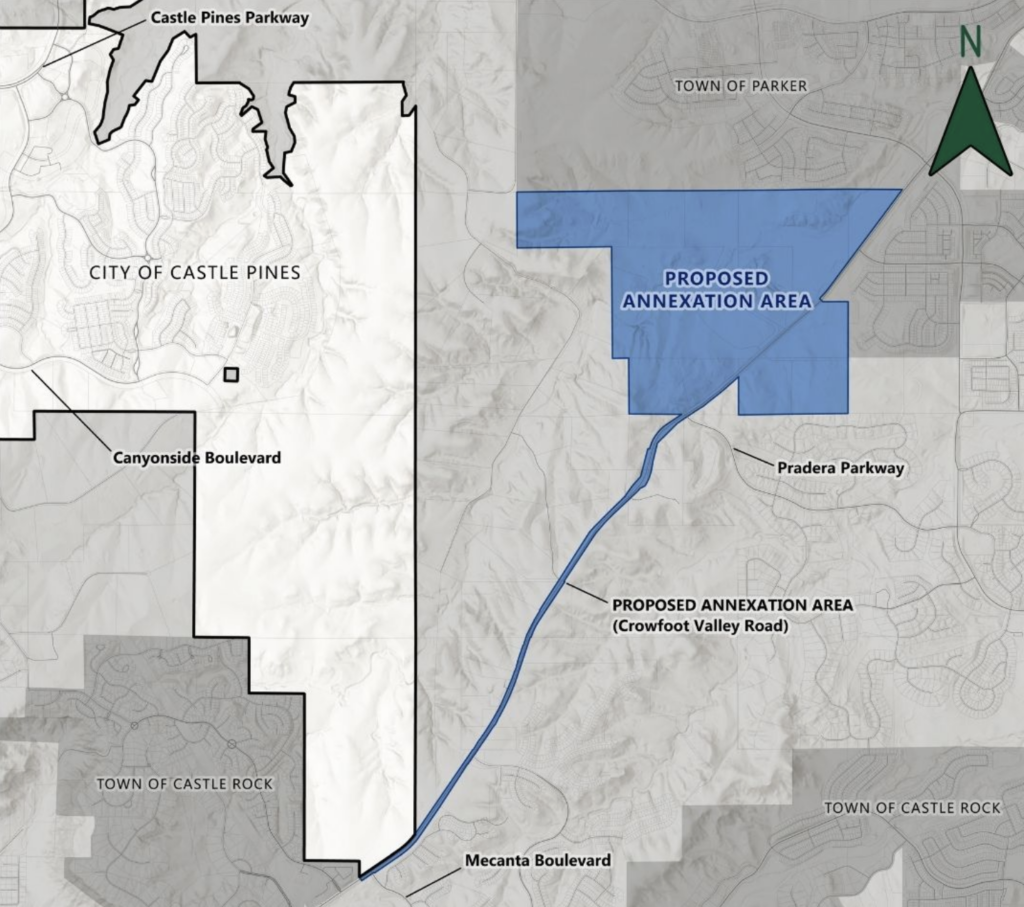
A proposal that could pave the way for future residential development in Douglas County will receive additional review after the Planning Commission voted Monday to table the Crowsnest land-use application following a lengthy public hearing. The application seeks to change...
Aurora church tied to group that exploited homeless people is under scrutiny
David Migoya
david.migoya@gazette.com
Updated 2 months ago
Two regional Seventh-day Adventist conferences that oversee the activities of its member churches across several states have launched inquiries into an Aurora-based congregation tied to a Medicaid operation that exploited the homeless. The Rocky Mountain Conference and the Central States...
Aurora updating housing strategy, seeking residents input
Kyla Pearce
kyla.pearce@gazette.com
Updated 2 months ago
Aurora officials are updating the city’s housing strategy and asking for feedback from residents in a series of upcoming sessions. One session will happen in each ward starting on Wednesday. Wednesday’s session for Ward I takes place at the Martin...

Colorado GDP trails direct competitor states, though slightly ahead of U.S. average
Mark Samuelson Special to The Denver Gazette
mark.samuelson@denvergazette.com
Updated 2 months ago
Colorado’s economy is marginally outperforming the national average but lags behind those of direct competitor states, such as Arizona, Texas and Utah, according to a report by a nonpartisan policy group. And while some indicators for the Centennial State appear...
Homeless recruits of ‘The Program’ say they were told to sign NDAs amid investigations in Colorado
David Migoya
david.migoya@gazette.com
Updated 3 months ago
Several formerly homeless people — each drawn into an Aurora-based enterprise known as “The Program” that promised free housing and cash in return for letting a home-health business administer prescriptions they were given — said they were pressed into signing...
PREV
PREVIOUS

Jury pool whittled in trial of Aurora officers charged in Elijah McClain's death
Jury selection will continue Tuesday in the trial of two Aurora police officers facing charges over the 2019 death of Elijah McClain in Aurora. Prosecutors and attorneys for the officers will question potential jury members to decide who they believe can or cannot return an impartial verdict. The trial for Randy Roedema and Jason Rosenblatt […]

Colorado's water watchers celebrate wettest year in some areas in 128 years
Residents living along Colorado’s northern Front Range and Northeastern Plains experienced a pretty wet year – the wettest, in fact, in 128 years. And water experts expect this winter isn’t likely to be much different. Becky Bolinger, assistant state climatologist at the Colorado Climate Center, said those areas had the wettest year since the state started […]