

As sexual assaults rise, Air Force Academy needs to stop freshmen hazing, DOD report finds
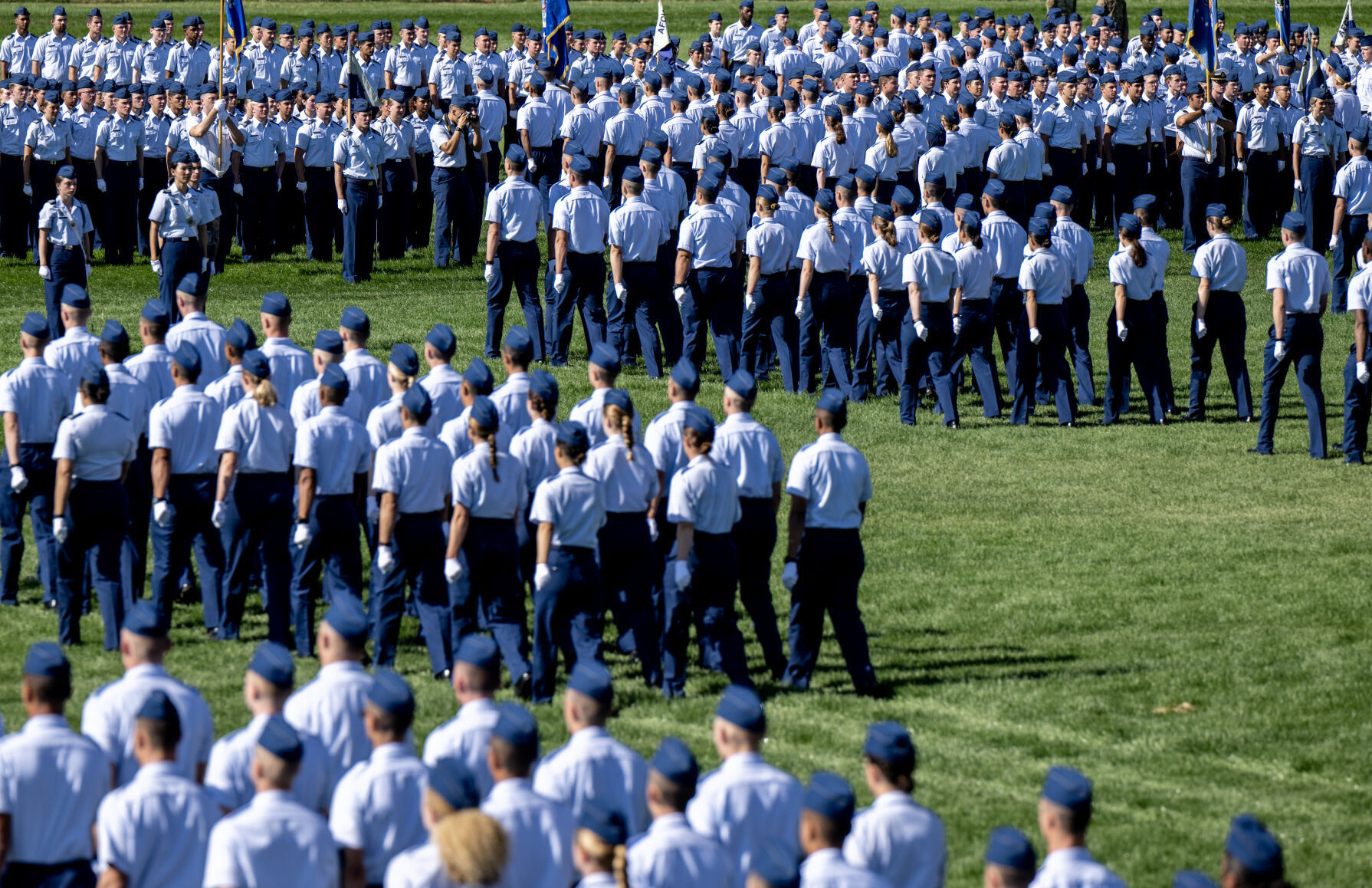
Following a rise in reported sexual assaults across the military academies, Pentagon staff visited and evaluated all the schools, finding that the Air Force Academy needs to make changes to stop hazing among cadets and that freshman cadets feel the school has a prison-like environment.
While military environments need to be stressful to build resilience, older cadets placed in leadership positions are “not sufficiently equipped” for the roles and in some cases the peer leadership structure at the academies was “creating unhealthy power dynamics that lead to hazing,” said Dr. Andra Tharp, the Department of Defense’s senior prevention adviser for sexual assault prevention and response office and office of force resiliency at a news conference.
AFA cadets who have kids can retain parental rights, stay in school following policy change
The Department of Defense does not allow hazing and gives numerous examples of forms it can take in its policy, such as berating, branding, duct-taping, greasing cadets, and pinning objects to a person’s skin.
The military banned hazing in the late 1960s, but it’s been a persistent problem, in part because when service members undergo intense training, the line between acceptable activities and hazing can blur and trainees may seek out hazing to show they belong, the Congressional Research Service found.
The recent evaluation found at the Air Force Academy, freshmen, also known as 4th-class cadets, are not acknowledged as cadets and are subject to “mistreatment,” Tharp said. The mistreatment may be intended to bond the class, but that’s not everyone’s experience.
“Instead, they carry these negative experiences and unhealthy norms about how you treat others through their time at the service academy and into the force,” she said.
A fact sheet provided to cadet parents describes some of the strict protocols that 4th-class cadets are subject to, but not the mistreatment that Tharp spoke about.
The freshman year is considered the most difficult at the academy with a heavy course load and required physical training. Cadets’ activities are also restricted and they can traverse “the Cadet Area only by approved routes (including staying on the marble “strips” on the Terrazzo).” They must also interact with upper-class cadets using a very specific decorum.
During summer basic training, incoming freshman cadets are faced with physical challenges such as the obstacle and assault course, where they crawl through the mud and take on rope courses, among other challenges. Older cadets oversee this training with professional supervision. The peer leaders can yell at freshmen during that training, similar to the way military training instructors would yell at recruits in boot camp.
Required basic training across the military can help increase stress tolerance by normalizing it and ensuring when service members are faced with intense stress later that they can think clearly, said Chaitra Hardison, a senior behavioral scientist with the Rand Corp.
More specifically to the academy, in “Contrails,” a book cadets must memorize, the 4th-class system is explained as a way to develop character and discipline so deeply that “no stress or strain will erase them.”
However, Pentagon evaluators found that Air Force Academy cadets are becoming desensitized to conditions, such as unprofessional leadership, hazing and harassment, likely unacceptable in other environments.
Fourth-class cadets also told the DOD they felt the academy had a prison-like environment and they “believed they needed an escort to seek physical or mental health” and transportation to seek care off campus was unavailable or difficult to get.
The Gazette sent written questions to the Air Force Academy on Aug. 21 about the DOD report, and some of its findings, including questions about how the school might change experiences for freshmen and what kind of care cadets can seek on their own. The Department of Air Force Public Affairs said on Aug. 25 that they were working with the academy on a response. The Gazette had not received a response by the end of the day Wednesday.
Air Force Academy sexual assault, unwanted sexual contact reports continue to climb
Prevention fails to reduce numbers
Before the site visits, all three military academies had seen rising numbers of sexual assault, unwanted sexual contact and sexual harassment through the 2021-2022 school year, the most recent data in military reports.
Sexual assaults are up from 129 in the 2019-20 school year to 206 for the 2021-22 school year across all the academies.
In the 2021-22 school year, Air Force Academy cadets reported 57 assaults, up from the 2016-17 and ‘2017-18 school years, when the academy had 23 reports of sexual assault each year, according to March congressional testimony by an Air Force general. The recently released report also found 380 male and female cadets experienced some form of unwanted sexual contact in the 2021-22 school year.
Lt. Gen. Caroline Miller, deputy chief of staff for manpower, personnel and services with the Air Force, acknowledged the problem at the academy in March congressional testimony.
“Although individual program metrics indicate positive outcomes, holistically our current programs are not driving prevalence down,” she said, in her written statement.
Department of Defense research has shown that behaviors such as harassment can escalate into other kinds of violence, including sexual assault. The research has been wrapped into prevention campaigns within the Navy and the Marine Corps that spread awareness about how those behaviors contribute to the assaults. For example, the research found that when women experience sexual harassment, they are nine times more likely to be assaulted, and men are 40 times more likely to experience assault.
Trauma resources
Veterans Health and Trauma Clinic at UCCS: 719-255-8003
PFC Floyd K. Lindstrom VA Clinic: 719-327-5660
DoD Safe Helpline: 877-995-5247
Colorado Crisis Services: 844-493-8255
To help address the problem, the academy is doubling the prevention and response workforce from 12 to 24 employees. In addition, the superintendent had asked for a review of current prevention program, such as the teal-rope program, in which cadets are trained to help promote change around sexual violence and refer their peers to resources. The school also provides Cadet Healthy Personal Skills training to help teach cadets about healthy consent and the connection between sexual violence and alcohol, among other prevention steps.
In the report on the site visits, the DOD found prevention programs at all the academies lacking.
All the schools expect cadets and midshipmen to police themselves – but they do not feel empowered to do so, the report found. Rather, the students are cynical about seeking help, because they fear it could hurt their careers, and the prevention curriculum has not been integrated into graded classes, among other shortcomings.
The report recommended hiring more officers and enlisted leaders to help the peer leaders and providing information to dispel myths about seeking help.
Compared to the other schools, academy leadership scored poorly in the evaluation, receiving zeros on a scale up to 5 for prioritizing a protective environment, integrated prevention and stakeholder engagement. When it comes to implementing programs with quality and integration, the school received zeros in the protective environment and integrated prevention categories, and a 1 in stakeholder engagement.
The school did better when it came to equipping and empowering leaders to work in those three areas, receiving 2s in the protective environment and stakeholder engagement categories and a 3 in the integrated prevention category.
To follow up on the report, Air Force Secretary Frank Kendall must submit a plan to the secretary of defense by Oct. 31 on how the academy plans to put the recommendations in the report into action.
The DOD is also setting up a new Service Academy Climate Transformation Task Force that will help Kendall with his plan and ensure it stays on track.
At the same time, basic training in other venues is changing, with the Army adopting more of a “coach, teach and mentor” approach, with a smaller drill sergeant-to-trainee ratio, the Army Times reported. The changes evolved out of COVID-19 when drill sergeants couldn’t yell through their masks and needed to work with smaller groups of people to slow the spread.
The Army also is finding new recruits are not receptive to screaming, yelling, and excessive physical punishments, Military.com reported, so the training style is shifting while the physical standards are getting higher.
A DOD-wide problem
The military as a whole has struggled with sexual assault and sexual harassment prevention. In the 2022 fiscal year, the military saw an almost 1% rise in reported sexual assaults from the previous year up to 8,942 cases, a rise a DOD official described as positive when the data was presented to the press, because it showed more people are coming forward.
During the same reporting period, the Army’s reports declined 9%, the Navy’s increased 9%, the Marine Corps increased 3.6%, and the Air Force increased 13%.
Navy Watch List Brochure_secondpage.pdf
The Department of Veterans Affairs has found that across initial screenings, 1 in 3 female veterans has experienced military sexual trauma and 1 in 50 men, said Keighlynn Adlof, the agency’s military sexual trauma coordinator for southern Colorado and a post-traumatic stress disorder psychologist who holds a doctorate. Military sexual trauma covers a range of experiences from sexual harassment to assault, and it is not itself a diagnosis.
Veterans seeking care first need to be enrolled in the VA, and if they are being treated for military sexual trauma, that care is free through the agency, she said. Care for military sexual trauma is also available to those who may not qualify for other VA care because of their discharge status.
‘You can have hope; you can heal’
Since 2014, when the Veterans Health and Trauma Clinic opened at the University of Colorado Colorado Springs, more people who have experienced military sexual trauma have sought help there. The rise may be driven, in part, by the broader acknowledgment of the prevalence of the problem, particularly over the past decade, said Lisa Decker, a resilience navigator and clinician for the clinic who has worked there since it opened.
The clinic provides resilience and mental health services to veterans, active-duty service members, and first responders who have experienced military or civilian trauma.
Typically, sexual trauma is not the main reason services members and veterans come in for help and those experiences are disclosed later during treatment and therapy, she said.
Talking about sexual assault or other unwanted sexual contact can be hard, in part, because of the self-blame, shame and confusion the survivor can experience, Decker said.
Some may fear reporting an experience within the military because they aren’t sure they will be believed, they fear it will hurt their career, they don’t want to be separated from their unit or they don’t want to disrupt a team they are loyal to, among other reasons, she said.
Air Force Academy cadet found guilty on two sexual assault charges
Survivors tend to try to focus on getting their jobs done, but when unresolved trauma is not addressed timely and effectively, it can fuel posttraumatic stress disorder, she said.
Whereas when people seek care, it can help them move forward and integrate a sense of “power, control, safety, trust, esteem, and intimacy in their life,” she said.
“You can have hope, you can heal,” she said. It is particularly helpful when survivors have the support of their family, colleagues and commanders.
She noted the military is working to prevent sexual assault, but it will also take a larger cultural shift “that allows for acknowledgement that there is a problem, and we have to talk about it and have to work together to break down some of those barriers,” she said.
Society as a whole is challenged with sexual violence and so prevention needs to be broad, as well.
“We need to be aiming the education, information and prevention efforts at all of the parties, everybody who is responsible and involved in affecting change,” she said.


Trump calls SAVE America Act his ‘No. 1’ priority for House GOP
Rachel Schilke, Washington Examiner
rachel.schilke.washington.examiner@gazetteedit.wpenginepowered.com
Updated 13 minutes ago
DORAL, Florida — President Donald Trump made his “biggest plea” to House Republicans on Monday: Pass the SAVE America Act, a GOP voter identification bill, even if it takes the rest of this year. A little over 100 of the...

Colorado Senate panel OKs bill named for Boulder teen cyclist killed in 2023 crash
Marissa Ventrelli
marissa.ventrelli@coloradopolitics.com
Updated 29 minutes ago
The Senate Judiciary Committee on Monday gave unanimous approval to a bill that would require law enforcement officers responding to crashes resulting in serious injury or death to offer drivers a voluntary breathalyzer test. Sponsors hope the measure would provide...

Fort Carson-based soldier killed in Iranian attack
Mary Shinn
mary-shinn@coloradopolitics.com
Updated 2 hours ago
A Fort Carson-based soldier is among the U.S. service members killed in an attack by Iran during Operation Epic Fury, according to a Department of Defense news release. Sgt. Benjamin N. Pennington, 26, died Sunday of injuries sustained during an...
Colorado open records bill dies in Senate committee
Marianne Goodland
marianne.goodland@coloradopolitics.com
Updated 47 minutes ago
Efforts to overhaul Colorado’s open records law stalled anew. A proposal that would have extended response times for public records requests and added accountability measures for late responses failed to advance out of its first committee and will not move...
Colorado Supreme Court blocks ballot initiative defining ‘fees’
Michael Karlik
michael.karlik@coloradopolitics.com
Updated 20 hours ago
The Colorado Supreme Court blocked a proposed ballot initiative on Monday that would have required voter approval for new fees above a certain threshold, while also enshrining a definition of “fee” into the state constitution for the first time. Chief...
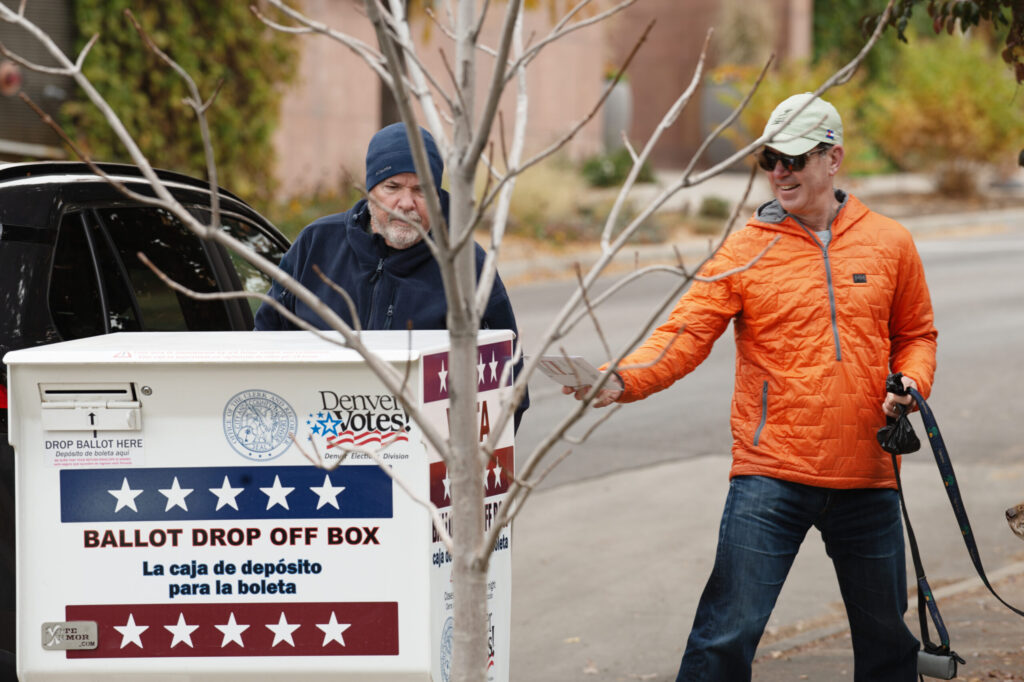
Colorado joins multi-state call to keep ICE away from polling locations
Jacob Mauk
jacob.mauk@denvergazette.com
Updated 16 hours ago
Colorado Secretary of State Jena Griswold announced Monday that the state has formally requested written confirmation from the Department of Homeland Security that ICE agents will not be stationed at polling locations during the 2026 election cycle, according to a...

Colorado prostitution decriminalization bill shelved after sponsor says it lacks votes
Marianne Goodland
marianne.goodland@coloradopolitics.com
Updated 6 hours ago
A bill that would have decriminalized prostitution in Colorado will not move forward this year after its sponsor said it lacks the votes to pass its first committee. Sen. Nick Hinrichsen, a Pueblo Democrat, said he will ask to postpone...
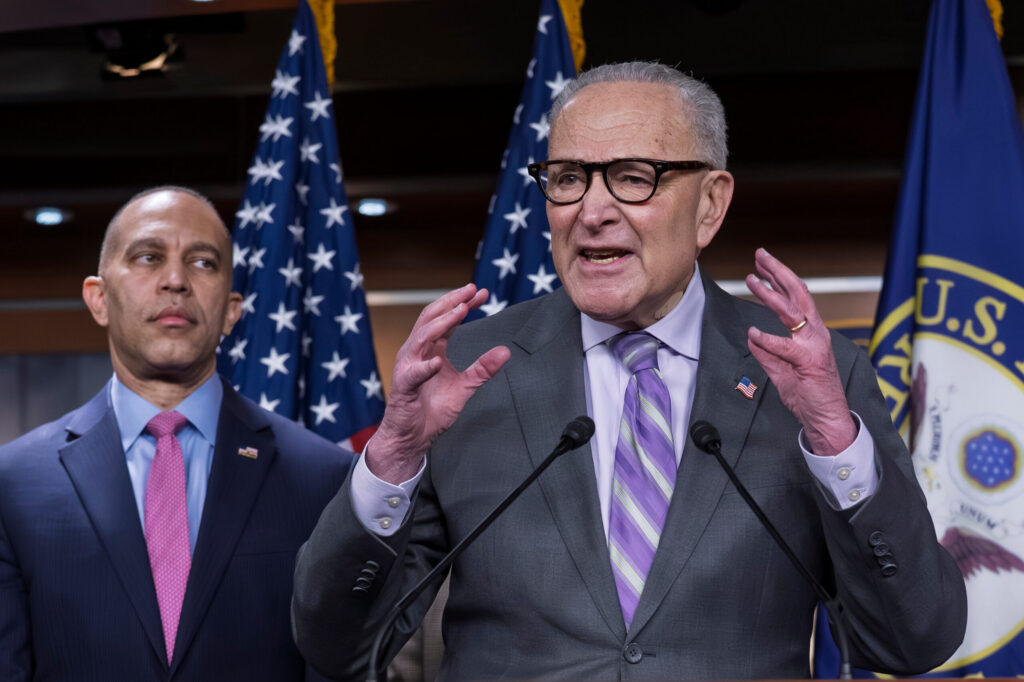
GOP senators push back against Schumer’s ‘Jim Crow 2.0’ description of SAVE Act
Asher Notheis, Washington Examiner
asher.notheis.washington.examiner@gazetteedit.wpenginepowered.com
Updated 20 hours ago
Sens. Rick Scott (R-FL) and Mike Lee (R-UT) pushed back on Senate Minority Leader Chuck Schumer’s (D-NY) framing of the SAVE America Act as “Jim Crow 2.0” on Sunday. President Donald Trump announced Sunday that he will not sign any...
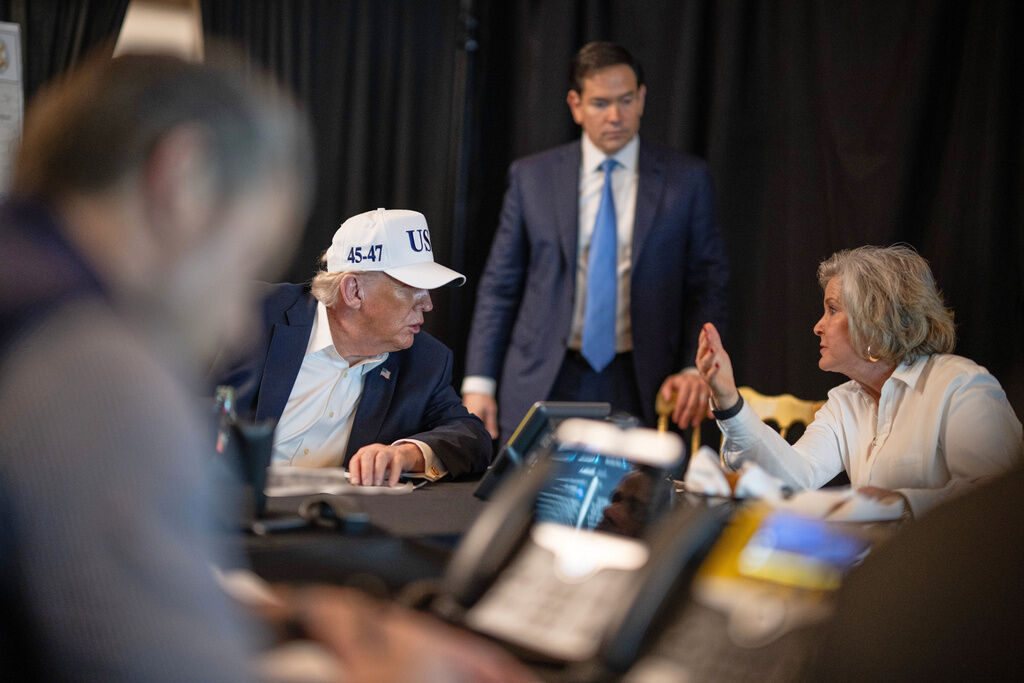
Rubio warns US will no longer tolerate ‘hostage diplomacy,’ claims Iranian military is ‘being eviscerated’
Timothy Nerozzi, Washington Examiner
timothy.nerozzi.washington.examiner@gazetteedit.wpenginepowered.com
Updated 21 hours ago
Secretary of State Marco Rubio is warning hostile state actors, Iran in particular, that the United States will no longer engage in “hostage diplomacy.” Rubio made the remarks ahead of a flag-raising ceremony at the State Department to mark U.S....

Colorado justices, by 5-2, say Longmont detective did not violate suspect’s Miranda rights
Michael Karlik
michael.karlik@coloradopolitics.com
Updated 21 hours ago
The Colorado Supreme Court’s majority ruled on Monday that a Longmont detective did not coerce a suspect into talking by making references to how a judge would look at his character, and by suggesting he may get out of prison...
PREV
PREVIOUS

Wildlife managers to review plight of Western bird linked to piñon forests | OUT WEST ROUNDUP
Wildlife managers agree to review the plight of pinyon jay ALBUQUERQUE – U.S. wildlife managers announced on Aug. 16 that they will investigate whether a bird that is inextricably linked to the piñon and juniper forests that span the Western United States warrants protection under the Endangered Species Act. The pinyon jay’s numbers have declined […]

More than a half dozen Colorado judges still haven't filed financial disclosure
Colorado Watch logo-new (copy) More than a half dozen Colorado judges are still delinquent in updating missing personal financial disclosure statements with state officials, despite a Denver Gazette investigation that flagged them about the problem two weeks ago. There were 15 judges delinquent as of Thursday – one of them on the Appellate Court bench – but the […]