

Colorado lawmakers: AZ, CA must do their part before state agrees to water cuts
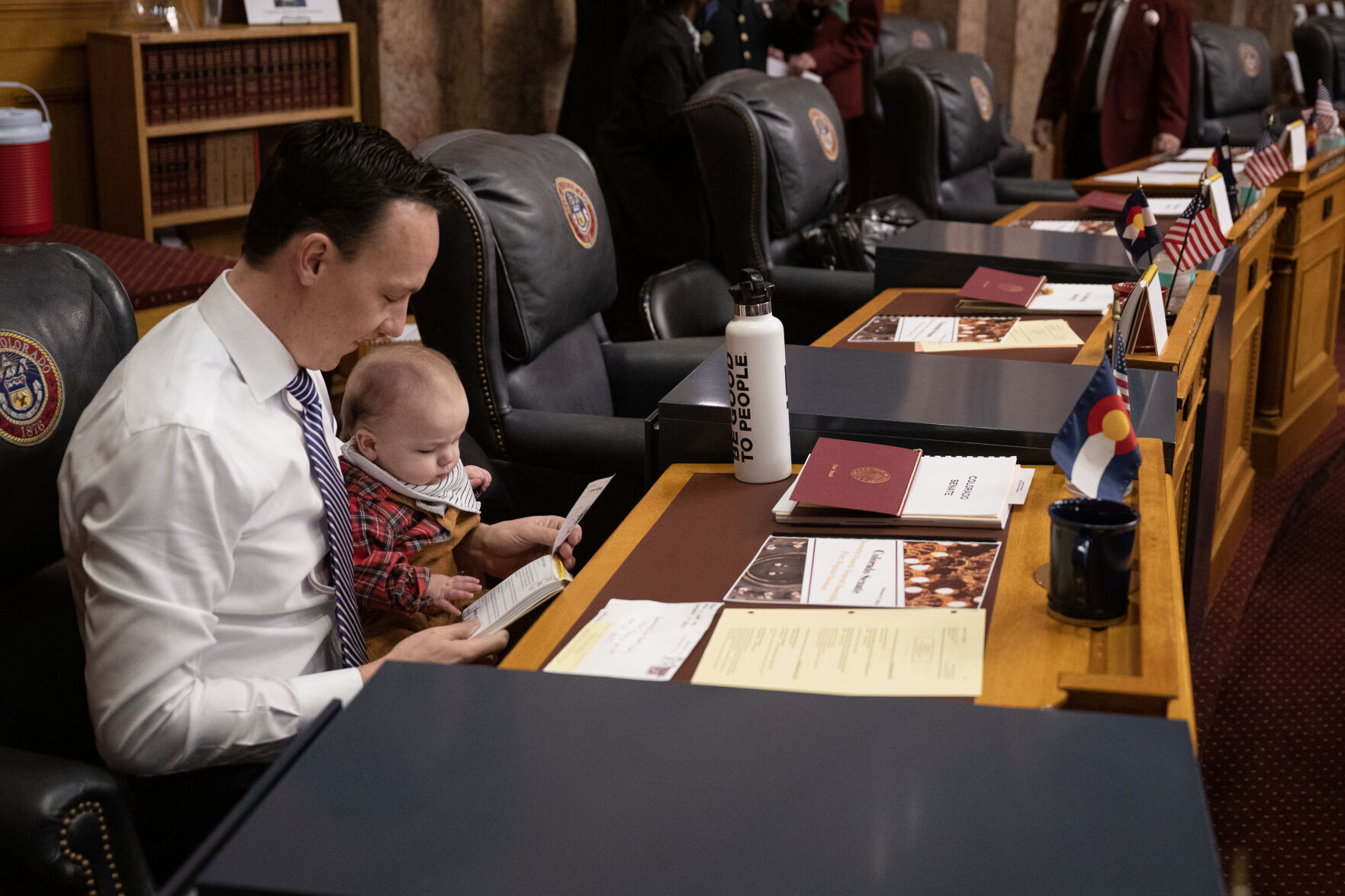
A panel of state lawmakers who lead in the water and agriculture space said any water conservation program Colorado conceives of shouldn’t go into place until after California and Arizona first take action.
The bipartisan panel spoke Wednesday at Colorado Water Congress about the water policies passed in the last legislative session, and where they see Colorado water policy headed in the next year.
“We’re at a place where we know that Colorado is not the reason why the Colorado River is threatened. It is Arizona and California’s overuse,” Sen. Dylan Roberts, D-Eagle, said. But it would be foolish for the state of Colorado to simply lock itself into that position of “we want the Lower Basin to do everything” because the political realities don’t bear that out.
Those realities include that the speaker of the U.S. House is from California, a state that has many more members of Congress than Colorado does.
The intention of a state-created task force has to be to create solutions to protect ag water users, protect municipalities and protect the environment, in the event the federal government gets involved and imposes across the board water cuts, Roberts said.
He added “any program we start in Colorado” should not begin until after California and Arizona do their part.
“But we shouldn’t be ignorant to the fact that it could happen in the near future where the federal government says people across the Basin need to cut their water use, including water users here in Colorado.”
House Speaker Julie McCluskie, D-Dillon, told the audience that having a legislative leader such as herself who represents rural Colorado and the Western Slope brings a “renewed invigorated focus on water” and a stronger partnership with the executive branch. That includes the governor and the Department of Natural Resources.
House Minority Leader Mike Lynch, R-Wellington, sat in for Rep. Marc Catlin, R-Montrose, the House minority’s acknowledged expert on water.
“There is an appetite and opening of the door for serious water conversations,” Lynch said.
Roberts, who chairs the Senate Agriculture and Natural Resources Committee, also bristled at a suggestion that there hasn’t been enough action on water from either the water community or the legislature.
In January, both Gov. Jared Polis and Speaker of the House Julie McCluskie, D-Dillon, announced water would be a priority in the 2023 session.
The session produced successful legislation on stream restoration and restoration projects, as well as an aborted effort at a major bill to address the Colorado River and drought.
That was instead turned into a short-term task force on drought, required to produce a report with recommendations to the legislature’s water resources review committee, due by Dec. 15. The task force has so far held two meetings, the most recent on Aug. 10. But it has little so far to show for it with less than four months before the report is due.
Roberts insisted the legislature did make water a priority in 2023, noting the annual water projects bill, which in 2023 got its biggest funding ever, about $90 million.
As to the drought task force, Roberts said the point of that group is to have conservations “about what we should be working on.” He believes many good ideas will come from the Water Congress and a meeting of the water review committee later in the day. He was one of its sponsors of the bill.
The bill creating the task force was a bipartisan effort, Roberts noted. The intention was “not to cram a policy through the legislature,” but to get the best minds in this space together and encourage them to have those hard conversations, knowing that not everything would be agreed upon, he said.
“Our constituents are demanding action. They see the future. They see climate change,” he said
Rep. Karen McCormick, D-Longmont, chairs the House Water, Agriculture and Natural Resources Committee. She recently had a conversation about what makes a bill a solid piece of policy. “It’s giving (the legislation] the opportunity to go through a process” with the potential that it might look a lot different than where it started, even when the conversation slows down. “This task force is allowing that slowing down process, longer conversations, more voices to be heard.”
She added that she’s been advising people to pay attention to what happens on the Colorado River, whether they live in the Basin or not. “Every sector of our economy, every inch of the state will be impacted by what happens on the Colorado River system. “What happens in the Colorado River will impact all of us,” she added.
“I want you to be alarmed anytime you hear the word task force, because it’s good news and bad news,” Lynch said. The good news is the attention to the issue. The bad is that it’s a task force and that mean’s something will come from it.
That implies deliverables, Lynch said, and that requires people in the water space to be at the table. “You’d better make sure you’re ahead of it and that your voice is heard.”
One of the questions put to the panel was what difference it has made for Democrats to hold a supermajority in the House. “When it comes to water, it certainly isn’t Republican or Democrat,” McCluskie said. She pointed out that she continued the commitment to keep Catlin, a Republican, as vice-chair of the House ag committee. Catlin had been put into that position by the previous House speaker but McCluskie said she wanted to keep that bipartisan leadership on the committee because that matters when it comes to water.
Roberts said people also also see the future where there could be drastic cuts imposed along the Colorado River, including in Colorado. The intention of the task force wasn’t to force through any particular policy, “but to have the conversation about what we do within our state to prepare for the future in those worst case scenarios.”
This is not a time to retreat to the corners, Roberts said. “This is not a time to put our heads in the sand. This is the time to put things on the table, talk through them” and give the legislature guidance on what Colorado should be doing next.
But Roberts spoke strongest when asked whether the task force’s timeline is rushed and signaled inaction by the legislature, particularly given that demand management question alone took more than two years.
Roberts disagreed. “A lot of us engage in all of this and know about the incredible work that’s going on on a variety of fronts,” Roberts said.
On the demand management issue, Roberts said some of the proposals coming in didn’t point to the need for a temporary, voluntary and compensated program around water, particularly ag water.
The task force won’t only look at demand management, Roberts said. “Protecting Colorado’s interest in the Colorado River is going to take a toolbox of solutions.”


Who has the power to declare war?
Tom Cronin Bob Loevy
tom-cronin-bob-loevy@coloradopolitics.com
Updated 11 hours ago
Our constitutional framers boldly and ambitiously granted Congress the power to declare war yet granted the executive the responsibility, after war is declared, to supervise war as the commander-in-chief. That worked well until the Cold War began. The U.S. has been...

The delicate, ever-changing dance between politics and religion | SONDERMANN
Eric Sondermann for Colorado Politics
eric_sondermann_for_colorado_politics@coloradopolitics.com
Updated 2 days ago
The dance, really a marathon that brings to mind the classic movie “They Shoot Horses, Don’t They?”, has been going on as long as there have been governments and organized religion. That is to say that this delicate tango has...
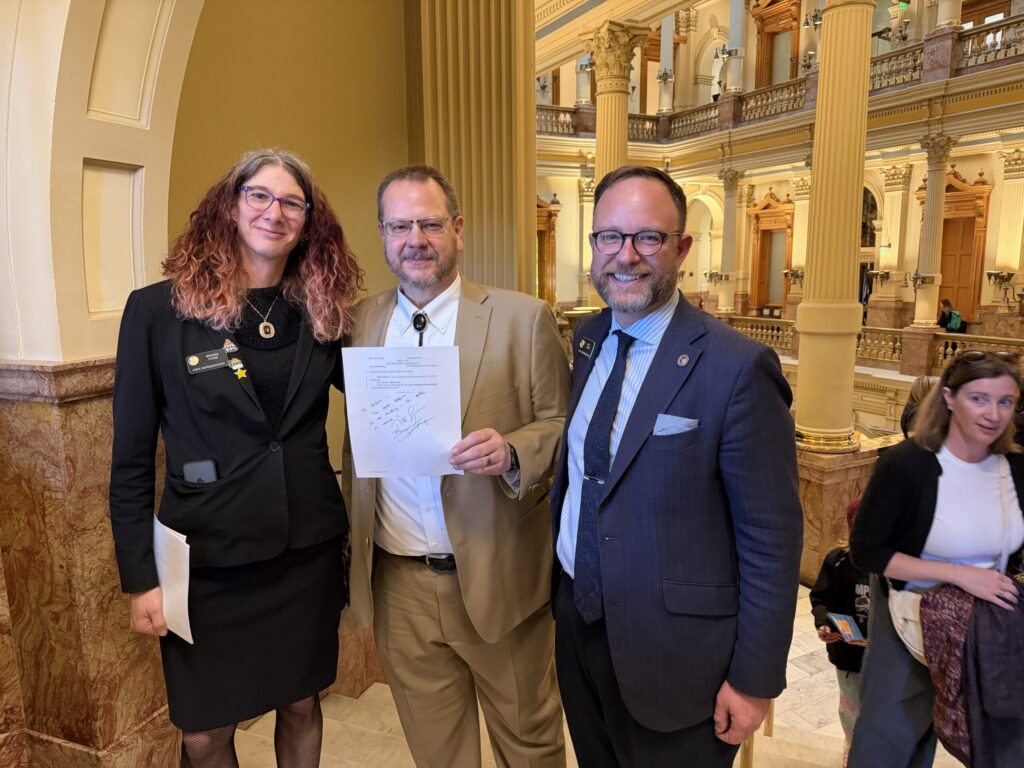
Roasts, get yer roasts, here: Capitol M | Week of March 14, 2026
Marianne Goodland
marianne.goodland@coloradopolitics.com
Updated 3 days ago
The lighter side of the Capitol, especially in the past week Apparently, the pending and eventual switch to daylight stupid time has put people in some pretty funny moods. And thank goodness! On March 4, the Senate approved the appointments...
Polly Baca elected to DNC | A LOOK BACK
Rachael Wright, Special to Colorado Politics
rachael.wright@coloradopolitics.com
Updated 3 days ago
Forty-Five Years Ago This Week: After her loss to Republican U.S. Rep. Hank Brown the previous year in the race for the 4th Congressional District, state. Sen Polly Baca-Barragan, D-Thortnon, was elected as one of the three vice-chairs of the...

Colorado Politics Calendar Mar. 16-22
Rachael Wright, Special to Colorado Politics
rachael.wright@coloradopolitics.com
Updated 3 days ago
CoPo’s weekly political calendar will help you find political and public-policy events throughout Colorado. It includes candidate and issue campaign events, public policy meetings, court hearings, state and local party conventions, assemblies, debates, rallies, parades, speaking engagements, traveling dignitary appearances,...

Boebert challenger Eileen Laubacher joins lawsuit aimed at blocking her from Democratic assembly
Ernest Luning
ernest.luning@coloradopolitics.com
Updated 10 hours ago
A Denver District Court judge on Thursday permitted Democratic congressional candidate Eileen Laubacher to join a lawsuit filed by one of her primary opponents seeking to prevent Laubacher from participating in the party’s assembly process in a bid to qualify...
House Ethics Committee to begin hearing on Weinberg complaint
Marianne Goodland
marianne.goodland@coloradopolitics.com
Updated 17 hours ago
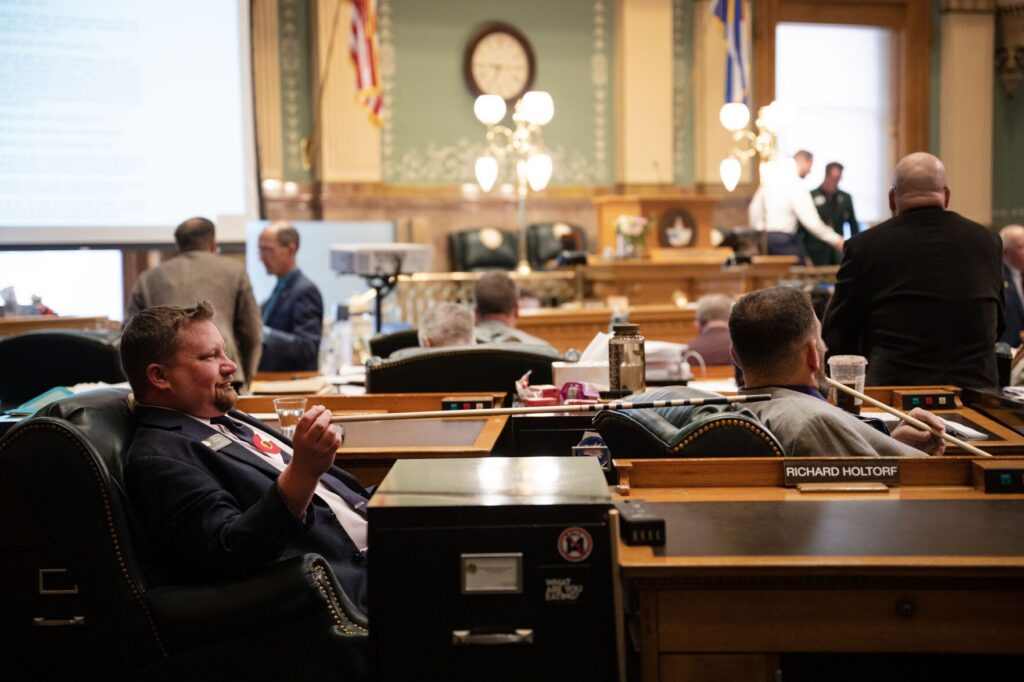
The House Ethics Committee on Tuesday will begin a hearing requested by Rep. Ron Weinberg, R-Loveland, tied to an ethics complaint filed against him by Rep. Brandi Bradley, R-Roxborough Park. The ethics committee had found probable cause on two issues...

Iran war enters next phase of destroying entire missile supply chain: Hegseth
Brady Knox, Washington Examiner
brady.knox.washington.examiner@gazetteedit.wpenginepowered.com
Updated 18 hours ago
Secretary of War Pete Hegseth said the war with Iran was entering a new phase, as the United States was focusing on destroying Tehran’s defense industrial base. At a Friday Pentagon briefing, Hegseth and Gen. Dan Caine, chairman of the Joint...
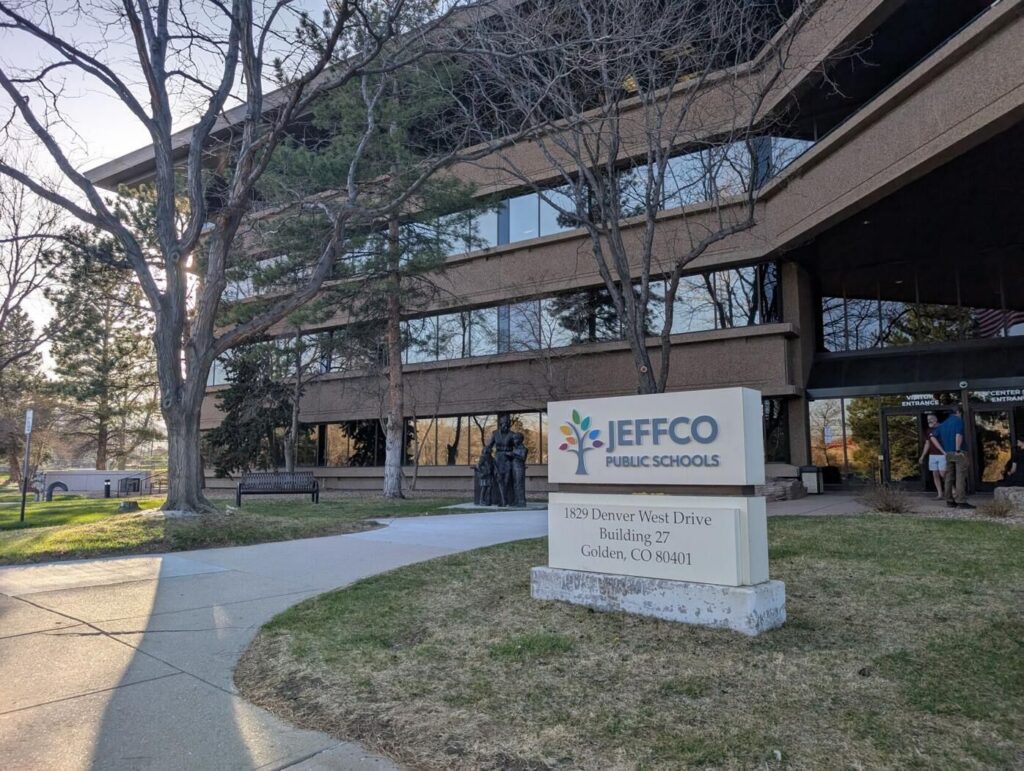
Jeffco Public Schools found in violation of Title IX
Sage Kelley
sage.kelley@denvergazette.com
Updated 13 hours ago
Civil rights office: Male students occupy 61 roster positions on girls’ sports teams The U.S. Department of Education announced Friday that the Jeffco Public Schools district violated Title IX by permitting male students to access female bathrooms and compete in...
Colorado plans to slash interim committee work amid budget woes
Marianne Goodland
marianne.goodland@coloradopolitics.com
Updated 9 hours ago
In a tight-budget year, the work of interim committees — those off-session groups that look at transportation, agriculture, water, healthcare, wildfires, pensions, and anything else lawmakers want to look at — is on the chopping block. And this year, no...
PREV
PREVIOUS

Experts expect federal Farm Bill to touch programs valuable to Colorado, West
One of the biggest items on Congress’ agenda when lawmakers return from their August recess is the 2023 Farm Bill, legislation which experts unpacked Wednesday in Steamboat Springs. The bill is congressional legislation that is usually passed only once every five years, intended to set national agriculture, nutrition, conservation, and forestry policy. Wednesday’s opening conversation at […]

10th Circuit reinstates challenge to Colorado's regulations on ballot issue advocacy groups
The federal appeals court based in Denver has reinstated a legal challenge to Colorado’s regulations on groups advocating for or against ballot initiatives, which require registration with the state and, in some instances, disclosure of donors. Previously, a trial judge threw out the lawsuit from the Colorado Union of Taxpayers, Inc. after finding the conservative […]