

Suicide hotline 988 looks back at year, raises concerns for future
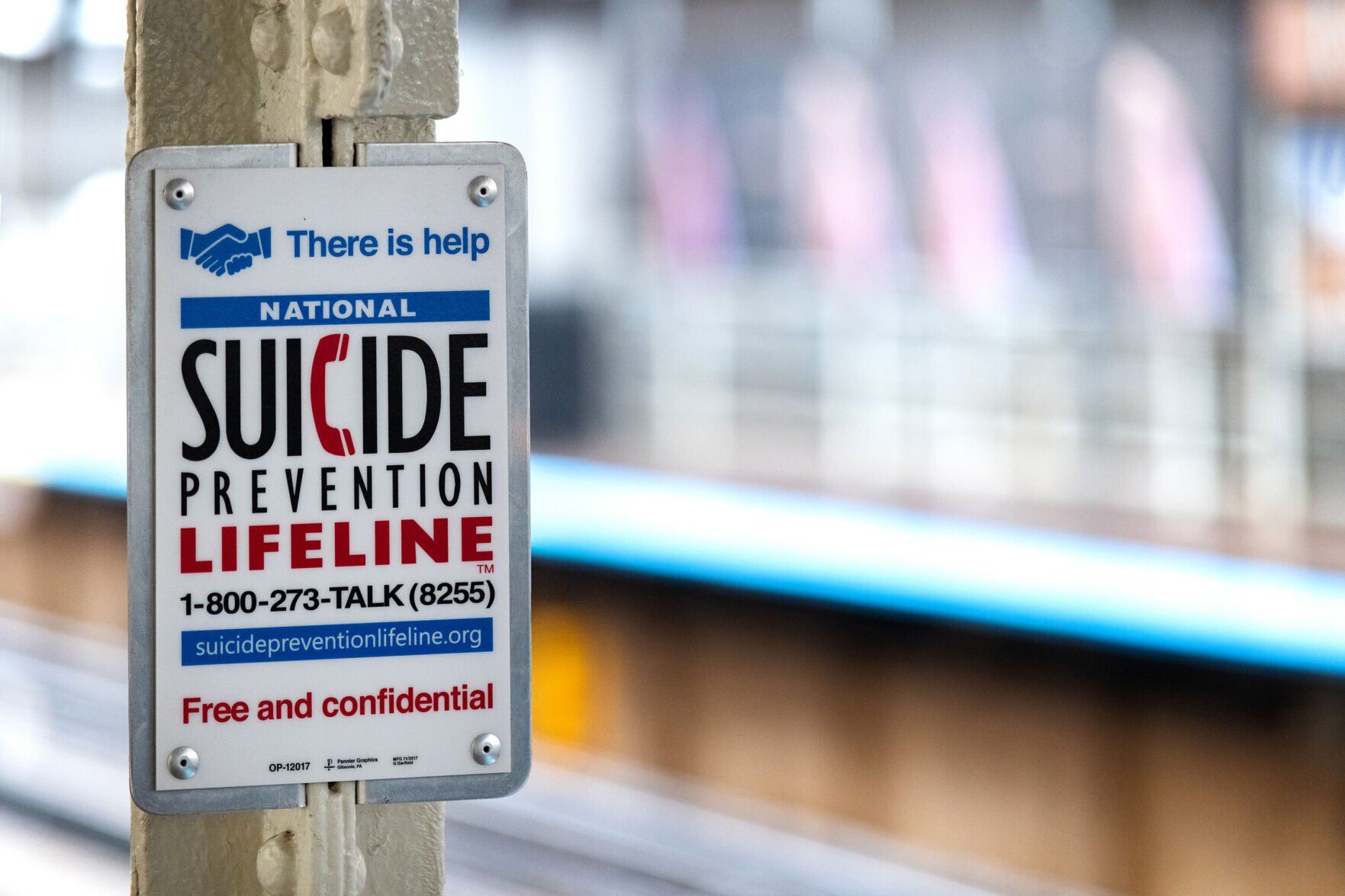
The 988 suicide and crisis lifeline began in July of 2022, looking to battle the ever-growing suicide rates head-on with ease and efficiency of a “911” type system.
Following a year of services, mental health officials discussed the successes, and shortcomings, of the national system.
The Association of Health Care Journalists held a webinar on Thursday to discuss 988’s first-year statistics and the questions that still remain going forward.
“As a nation, we are in a vast public health crisis when it comes to mental health,” said Vincent Atchity, President and CEO of Mental Health Colorado. “There’s a pediatric state of emergency when it comes to mental health.”
National suicide rates rose another 2.6% in 2022, following a 5% increase in 2021, according to the U.S. Centers for Disease Control and Prevention. An estimated 49,449 Americans lost their lives to suicide in 2022.
The 988 lifeline looks to bring mental health issues to the forefront, with easy access to immediate and long-term care. The national number was mandated by the National Suicide Hotline Designation Act of 2020, and requires each state to have a call center that puts callers and texters in contact with a live counselor. It looks to carve out an identity of access and response akin to 911 emergency services.
Since launching last year, 988 has received more than 5 million contacts, ranging from calls to texts and chats. And national answer rates increased to 93% in May 2023, up from 70% the same month the year before, according to the KFF health policy research group.
Though the nationwide effort has helped reach millions of those in need, the building blocks are still being placed.
“Only around 13% of people know that 988 exists,” Heather Saunders, a postdoctoral fellow at KFF, said.
Saunders points to an increase in data that could help bolster understanding and implementation. She asks for statistics like why, exactly, people are calling, what their experience with the call representative is, and whether they are comfortable while speaking on the hotline. All of which may improve services and outreach.
“I think that we tend to forget – because we’re so familiar with 911 and it’s convenience – is that while 911 was conceived in the late 60s, we didn’t get to the point where over 90% of the U.S. had availability to dial 911 until the year 2000,” Atchity said. “And so I think that it’s important for all of us to just remember that it is going to take some time for 988 to become the thing that we need it to be.”
It’s creating that strong infrastructure and awareness, like 911 dispatch has done over 60 years, that needs to be done to improve results.
Funding and staffing have proven to be an issue for a plethora of state crisis centers. Though federal budgets support 988 nationally, states are responsible for the long-term funding of their own call centers.
While Colorado has supported its crisis center through 2021 legislation that allows for funding through telecom fees, other states rely on volunteering and private donations.
With the extreme nature of crisis hotline jobs and the need for competitive salaries, hiring can become tough. Even Colorado, a state with hotline funding, faces workforce challenges, Atchity said.
There’s also the fear that “prevalent response” to mental health crises will still be police officers, not mental health professionals.
“There are communities in context in which I would be as anxious about resorting to 988 as I might be about resorting to 911 because the prevalent response may still be a law enforcement response or response that’s discriminatory or traumatizing,” Atchity said.
Atchity added that if you were to call 988 for a crisis in rural Colorado, for example, the response team may be an untrained sheriff because they are the only people on call.
“The level of cultural competency and reliable compassion and person-centric response is not as high a level as we, who dream up such things as a robust continuity of care, might imagine,” he said.
Through more data reporting, the raising of awareness and the creation of more infrastructure, 988 will continue to address the mental health crisis moving forward, officials said.
It starts with conversations like this.



Federal judge recommends dismissing trans athletics lawsuit by area school districts
Eric Young
eric.young@gazette.com
Updated 3 hours ago
A judge has recommended dismissing a federal lawsuit filed by multiple school districts against the Colorado Attorney General’s and Civil Rights Offices over their policies dictating students’ participation in athletics and activities based on their biological sex rather than gender...

DOJ subpoenas Minnesota officials in ICE probe
The Associated Press
the-associated-press@coloradopolitics.com
Updated 3 hours ago
MINNEAPOLIS — Federal prosecutors served grand jury subpoenas Tuesday to Minnesota officials as part of an investigation into whether they obstructed or impeded law enforcement during a sweeping immigration operation in the Minneapolis-St. Paul area, a person familiar with the...
Appeals judge asks Colorado Supreme Court to once again clarify magistrate rules
Michael Karlik
michael.karlik@coloradopolitics.com
Updated 4 hours ago
A member of Colorado’s second-highest court urged the state Supreme Court last week to revise confusing language in the rules governing magistrates, less than two weeks after an attempted cleanup of the rules took effect. Magistrates are judicial employees who are...
Gov. Jared Polis touts Colorado’s ‘significant’ drop in crime in 2025
Marissa Ventrelli
marissa.ventrelli@coloradopolitics.com
Updated 7 minutes ago
Gov. Jared Polis is touting a recent report saying Colorado’s overall crime rate decreased by double-digit margins over the past year. “I am thrilled to see our data-driven investments in law enforcement support and crime prevention are working,” Polis said...

UK approves Chinese ‘mega-embassy’ despite espionage concerns
Emily Hallas, Washington Examiner
emily.hallas.washington.examiner@gazetteedit.wpenginepowered.com
Updated 6 hours ago
The United Kingdom on Tuesday authorized a massive new Chinese embassy in London, despite international concerns that the facility could be used to spy on the country. The embassy, set to be China’s largest in Europe, will sit on the...

Greenland talk dominates among world leaders while Ukraine takes a backseat
Mike Brest, Washington Examiner
mike.brest.washington.examiner@gazetteedit.wpenginepowered.com
Updated 6 hours ago
The United States and Europe are engaged in a dispute over the Trump administration’s desire to “own” Greenland, taking attention away from Ukraine as it suffers through another brutal winter of Russian troops targeting its infrastructure. Leaders from around the...

Final appropriations package includes DHS in lofty goal to avoid Jan. 30 deadline
Rachel Schilke, Washington Examiner
rachel.schilke.washington.examiner@gazetteedit.wpenginepowered.com
Updated 6 hours ago
Appropriators released the final package of government funding bills early Monday morning as the House seeks to pass all 12 bills before the shutdown deadline next week. The contentious nature of the final four bills, however, could make passage an...

Democrats Michael Bennet, Phil Weiser and their backers bank $9 million for Colorado gubernatorial race
Ernest Luning
ernest.luning@coloradopolitics.com
Updated 6 hours ago
Democratic gubernatorial candidates U.S. Sen. Michael Bennet and Attorney General Phil Weiser, and the campaign committees that support them, entered the election year with almost $9 million on hand, as the race to succeed term-limited Colorado Gov. Jared Polis heats...
Tina Peters involved in prison altercation caught on video
Dan Boniface
dan.boniface@denvergazette.com
Updated 4 hours ago
Tina Peters appears to have been involved in a prison altercation on Sunday with another inmate and the incident was caught on video. The incident happened at the La Vista Correctional Facility where Peters is serving a roughly nine-year prison...

Court rules against Colorado Rep. Jason Crow, other Democrats in ICE visitation policy challenge
Michael Kunzelman
michael.kunzelman@associatedpress.com
Updated 2 hours ago
WASHINGTON • A federal judge refused Monday to temporarily block the Trump administration from enforcing a new policy requiring a week’s notice before members of Congress can visit immigration detention facilities. U.S. District Judge Jia Cobb, who is based in Washington, D.C., concluded...
PREV
PREVIOUS

Colorado education leaders, districts sue the state over troubled universal preschool program rollout
A half-dozen Colorado school districts and two education groups sued the state Thursday over its freshly implemented free universal preschool program, alleging the state walked back key promises and that deficiencies in the application process disproportionately harm low-income families and students with disabilities. Colorado Springs’ Harrison School District 2 is among the slate of districts […]

Colorado Medical Board votes to make 'abortion reversal' unprofessional conduct
An effort to make Colorado the first state in the nation to prohibit so-called “abortion reversal” treatment secured a major victory on Thursday. The Colorado Medical Board unanimously passed a rule declaring abortion reversal treatment using certain medications outside of the “generally accepted standards of medical practice.” This comes after a draft rule released in July proposed […]