

Federal judge to Congress: Roll back Supreme Court’s limitations on suing federal officials

In an extraordinary move, a federal judge in Colorado has called upon Congress to roll back the U.S. Supreme Court’s broad limitations on suing federal officials for constitutional violations.
U.S. District Court Senior Judge William J. Martínez, in an Aug. 3 order, criticized the fact that prisoners, if they are in a federal facility, are largely precluded from holding corrections officials legally accountable. Martínez lamented that he had to dismiss a cruel-and-unusual punishment lawsuit from plaintiff Anderson Straker, even though Straker supplied evidence that guards goaded another inmate into attacking him – including a signed statement from his assailant saying as much.
“Congress must act promptly to rectify this gaping void in the remedies available to federal prisoners subjected to unconscionable misconduct on the part of federal corrections officers,” Martínez wrote.
Lawsuits seeking money against federal officials are known as a “Bivens remedy,” named after the 1971 Supreme Court decision Bivens v. Six Unknown Named Agents. The Supreme Court initially authorized Bivens remedies in three specific circumstances: unreasonable searches and seizures, sex discrimination and deliberate indifference to an inmate’s serious medical needs.
However, the Supreme Court has since broadcast that it is largely unwilling to allow Bivens remedies in other types of cases. In contrast, a federal law known as Section 1983 facilitates lawsuits against state officials for constitutional violations. While state employees may still be subject to immunity depending on the nature of their conduct, there is no blanket prohibition on bringing such claims in the first place.
Henry Rose, a law professor at Loyola University Chicago, has advocated for Congress to expand Section 1983 to allow lawsuits against federal officials as well, breaking down the Supreme Court’s barrier to plaintiffs. He said Congress, to date, has shown no interest in his suggested policy.
“My reaction to these judicial comments is that some federal judges are frustrated by their inability to provide justice to litigants whose constitutional rights have obviously been violated by federal actors,” Rose said.
Colorado Politics sent inquiries to U.S. Reps. Joe Neguse and Ken Buck, who are members of the judiciary committee, as well as to U.S. Sens. John Hickenlooper and Michael Bennet, but received no response.
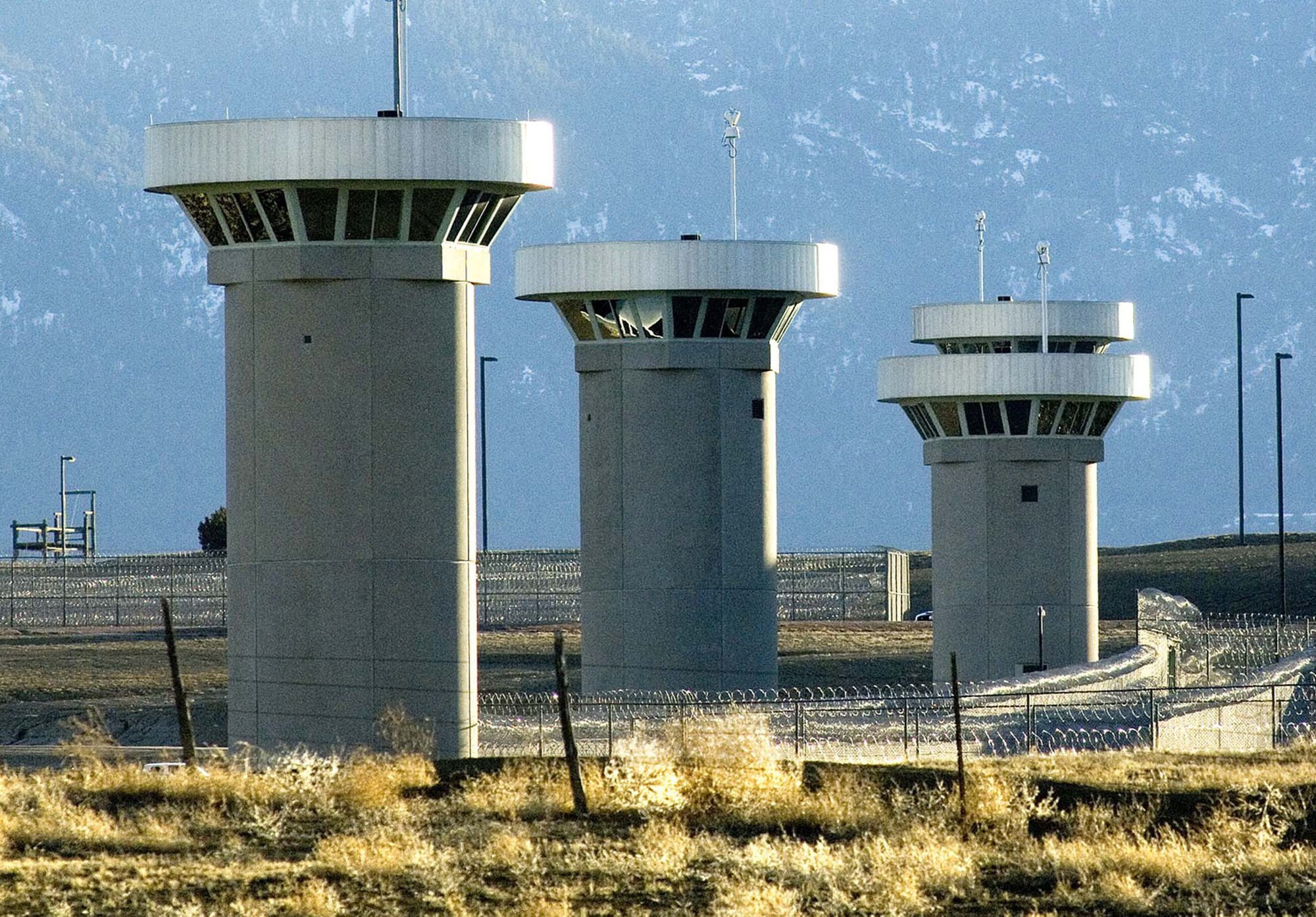
Straker’s lawsuit alleged that employees at the U.S. Penitentiary in Florence were responsible for instigating another inmate’s attack on him, and then failing to do anything to help him. At the time, Straker was serving a life sentence for his role the death of a U.S. citizen in Trinidad and Tobago. The government eventually agreed to his resentencing and release after Straker and his co-defendants challenged the conduct of defense counsel and the prosecution.
Before coming to Florence, Straker was incarcerated in Allenwood, Pa. Other inmates attacked him there and officials allegedly prevented him from filing a grievance. Once at Florence, Straker was able to submit a grievance. However, a group of employees – who were not identified by their full names – put Straker in a cell with an “extremely violent” inmate.
The employees told the inmate Straker was a “snitch” who “killed a U.S. citizen.” They promised he would not have to attend certain prison programming if he agreed to assault Straker. The inmate, within five minutes of being placed with Straker, proceeded to beat him up. He received “head nods and thumbs up” from the guards afterward. The defendants allegedly refused to provide Straker with medical treatment.
In support of his lawsuit, Straker attached a signed statement from his assailant, Demetrius Puifory. Puifory attested the guards knew the word “snitch” was a “trigger for violence,” and they chose him to attack Straker because of his violent history.
“Prior to this incident, I had not known Mr. Straker and I had nothing against him, nor do I have nothing against him now,” Puifory wrote. “I committed this act specifically and solely at the request of the guards.”
The government moved to dismiss Straker’s lawsuit for cruel and unusual punishment and retaliation largely for one reason: there was no Bivens remedy. The defendants cited a 2022 decision from the U.S. Court of Appeals for the 10th Circuit, which has jurisdiction over Colorado, blocking an inmate from suing a guard who allegedly assaulted him. The 10th Circuit agreed the Supreme Court had tied its hands.
Martínez acknowledged that Straker’s allegations similarly fell outside the narrow category of cases the Supreme Court has allowed to proceed. But he made clear he believed that outcome to be unjust.
“Plaintiff’s allegations discussed above portray a truly reprehensible and malicious course of conduct on the part of Defendants. Had the alleged events in this case occurred in state correctional facilities, Plaintiff would have very strong claims under Section 1983 for significant monetary damages,” Martínez wrote.
“The slow and steady evisceration of Bivens by the Supreme Court over the years, coupled with the persistent failure on the part of Congress to provide federal prisoners like Mr. Straker with a statutory remedy,” he continued, “has created a fundamentally unjust legal state of affairs.”
Although it is uncommon for federal judges to encourage Congress to overturn the Supreme Court’s line of case law, Martínez, a Barack Obama appointee, is not alone in venting his frustration. Judge Don R. Willett, a Donald Trump appointee in Texas to the U.S. Court of Appeals for the Fifth Circuit, previously blasted the shield for federal officials in a 2021 opinion.
“Private citizens who are brutalized – even killed – by rogue federal officers can find little solace,” he wrote.
Tricia S. Lindsay, a New York-based attorney who represents Straker, said she had never seen a federal judge call on Congress to overturn the Supreme Court’s limitations on Bivens remedies, but she deemed it a “step in the right direction.”
“These officials must be made to answer for their crimes and placed in the same facilities they are paid to police when they break the law,” Lindsay said. “It is a dangerous signal to send that one’s right to be safe, secure and protected can be eradicated without consequence by the very people meant to ensure these things. “
The case is Straker v. Stancil et al.

10th Circuit to address resentencing of probation violators in rare all-judges hearing
Michael Karlik
michael.karlik@coloradopolitics.com
Updated 17 hours ago
The Denver-based federal appeals court agreed on Thursday to hold a rare all-judges hearing to determine the proper procedure for resentencing a criminal defendant who has violated the terms of his probation. In the federal appellate courts, the vast majority...
Appeals court overturns Adams County sex offense convictions due to prosecutor’s misconduct
Michael Karlik
michael.karlik@coloradopolitics.com
Updated 21 hours ago
Colorado’s second-highest court reversed multiple child sex assault convictions on Thursday after concluding an Adams County prosecutor committed misconduct while cross-examining the defendant. A three-judge Court of Appeals panel observed the charges against Daniel Michael Boerner depended on the jury...
Fort Carson soldier’s wife could be deported
Carol McKinley
carol-mckinley@coloradopolitics.com
Updated 2 days ago
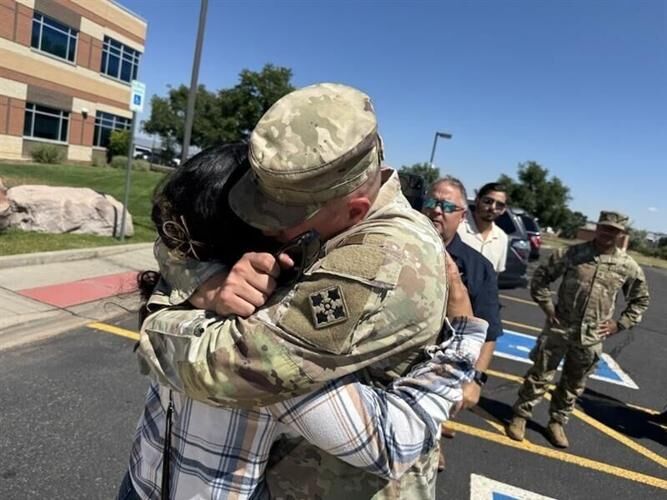
As the country’s largest immigration enforcement crackdown continues in Minnesota’s Twin Cities, a Fort Carson sergeant is fighting a personal immigration crisis — one that may implode his family. Sgt. Tyler Garza’s wife, Jennifer Maradiaga Baca, is not a legal...

Elizabeth School District dismisses challenge to book-ban injunction on eve of appellate arguments
Michael Karlik
michael.karlik@coloradopolitics.com
Updated 23 hours ago
An Elbert County school district has dismissed its challenge to a judge’s injunction ordering it to return banned books to library shelves, days before the Denver-based federal appeals court was set to hear oral arguments this week. Although a three-judge...

Colorado Supreme Court to hear cases on insurance coverage for COVID, witness credibility
Michael Karlik
michael.karlik@coloradopolitics.com
Updated 3 days ago
The Colorado Supreme Court announced on Tuesday that it will decide the degree to which a virus or other hazard must affect a commercial property before it can trigger loss-or-damage coverage under an insurance policy. At least three of the...
Federal judge says prisoner cannot sue for dog-bite injury
Michael Karlik
michael.karlik@coloradopolitics.com
Updated 3 days ago
A federal judge concluded last week that a man cannot sue the government for injuries he sustained when a dog allegedly attacked him while he participated in a prison program. Kenneth M. Chandler, representing himself, was participating in the “FIDOS”...

Federal judge recommends dismissing trans athletics lawsuit by area school districts
Eric Young
eric.young@gazette.com
Updated 3 days ago
A judge has recommended dismissing a federal lawsuit filed by multiple school districts against the Colorado Attorney General’s and Civil Rights Offices over their policies dictating students’ participation in athletics and activities based on their biological sex rather than gender...
Appeals judge asks Colorado Supreme Court to once again clarify magistrate rules
Michael Karlik
michael.karlik@coloradopolitics.com
Updated 4 days ago
A member of Colorado’s second-highest court urged the state Supreme Court last week to revise confusing language in the rules governing magistrates, less than two weeks after an attempted cleanup of the rules took effect. Magistrates are judicial employees who are...
10th Circuit dismisses paralyzed man’s claims against Colorado Springs, officer
Michael Karlik
michael.karlik@coloradopolitics.com
Updated 13 hours ago
The Denver-based federal appeals court upheld the dismissal last week of a man’s excessive force claims against the city of Colorado Springs and the officer who tased him, causing him to fall down a sloped surface and break his neck....
Colorado justices weigh overlap between child prostitution offenses
Michael Karlik
michael.karlik@coloradopolitics.com
Updated 4 days ago
Members of the Colorado Supreme Court last week appeared willing to uphold a man’s conviction for an attempted child prostitution offense, which the state’s second-highest court previously found to be a violation of his right to equal protection under the...
PREV
PREVIOUS

Federal judge blocks Colorado law raising firearm-purchase age, lets waiting period take effect
A federal judge on Monday granted the request of two Colorado residents to block a new Colorado law generally raising the age limit for purchasing firearms to 21. At the same time, in a separate lawsuit, U.S. District Court Chief Judge Philip A. Brimmer declined to bar enforcement of another recently-enacted law establishing a three-day […]

Colorado Springs City Council supportive of new police academy, disagree on TABOR retention
Members of the Colorado Springs City Council said Monday they generally supported building a new facility for police training in the city but some disagreed over using excess tax revenues to fund the project. The council expects to formally vote at its regular meeting Aug. 22 whether to ask voters if the city can retain […]