

Denver police officer killed developmentally disabled teen 20 years ago, spurring civilian oversight

Twenty years ago this week, the killing of a teenager by a Denver Police officer helped spur the creation of two new bodies in the city’s landscape of police oversight.
On July 5, 2003, 15-year-old Paul Childs’ sister called 911 saying he had a knife and was trying to stab their mother, according to news outlets’ transcription of the call. Childs had developmental disabilities and sometimes wandered away from home. Police had often been called to the family’s house.
His family later denied they felt threatened, according to news reports from the time.
The officer who killed Childs, James Turney, started shooting when Childs did not drop the knife.
Denver civilian law enforcement watchdog concerned with strengthening STAR’s community oversight
Turney did not face criminal charges, and a 10-month suspension imposed by Denver’s manager of safety was later overturned. His suspension was reinstated after the city appealed to the full Civil Service Commission. Turney then appealed to the court system where the discipline was upheld.
Turney had also killed a hearing-impaired teenager the year before.
At the time, reports said the police department had shot an average of seven people each year since 1990.
Childs’ death was an example in contemporary times of the circumstances of a police shooting and a young person with disabilities converging. In 2004, the year after Childs’ death, the city created the two civilian oversight bodies for law enforcement that still exist today: The Citizen Oversight Board and the Office of the Independent Monitor. The creation of the monitor’s office replaced the civilian Public Safety Review Commission.
Childs’ killing hadn’t been the only shooting by police in Denver that sparked protests in the surrounding years. In September 1999, police killed Ismael Mena during a no-knock raid that targeted the wrong house, based on a warrant in which the reliability of the information came into question.
In July 2004, an officer shot and killed Frank Lobato – who held a soda can police mistook for a gun as he lay in bed – when they entered his house through a window looking for his nephew because of a domestic violence case, unaware the man had fled the house.
“Some (deaths) seem to resonate more with folks and catalyze action, and in the case of Paul Childs, he was a child, and he was developmentally disabled,” said Julia Richman, the chair of the Citizen Oversight Board. “To look at somebody who’s having a mental health crisis, who’s a youth, and shoot them is particularly shocking to people, but certainly wasn’t the only incident that created that oversight.”
Denver’s new top law enforcement watchdog confirmed by City Council
The Citizen Oversight Board broadly assesses the effectiveness of hiring, training and discipline in the Department of Public Safety and makes recommendations. The board also has the authority to appoint the independent monitor, subject to City Council’s approval, and oversees the office’s effectiveness.
The independent monitor’s office receives community complaints about sworn officers in the police and sheriff’s departments and monitors investigations of complaints, shootings by officers and deaths in custody. The office also makes policy recommendations, as well as discipline and complaint findings. That’s along with issuing public reports about patterns in complaints, findings and discipline.
The independent monitor, Lisabeth Pérez Castle, declined to comment on the record for this story.
Scott Robinson, a civil attorney who has represented families of people killed by police in a few high-profile cases, remembers Childs’ death not as the single incident that led to the creation of the civilian oversight bodies, but one in an accumulation of killings by police.
Robinson believes the increased use of body-worn cameras and availability of other types of video footage have been one of the most pivotal factors in increasing accountability on police actions. Robinson suggested that without video, the police’s version of events in George Floyd’s killing by Minneapolis police officers would have been the dominant narrative, “with a few horrified bystanders.”
“Cell phone cameras, and also body-worn cameras and surveillance video, do so much to prove cases. They’re just invaluable. And what I like about video is, it generally shows you what happened,” he said. “If it was a ‘good’ shooting, then exonerates the officers, as it should. But if they overstepped – which is a great understatement – video makes it real and makes it something jurors can see and be, quite frankly, horrified by.”
The city has made incremental changes to the oversight bodies over the years, such as when residents voted in 2021 to give appointment power for the monitor to the Citizen Oversight Board. But the Office of the Independent Monitor and the Citizen Oversight Board have never had the authority to impose discipline or conduct the investigations themselves, which has prompted debate about whether the bodies should have more power.
Some sources have previously told The Denver Gazette that giving the monitor’s office discipline power would shift the agency away from being a watchdog system and potentially necessitate oversight of the oversight body to scrutinize its decisions.
Indeed, some in the law enforcement fear that, instead of being true independent entities, the bodies would ultimately be given the authority to dole out disciplinary actions themselves, altering the character of their work. The problem, critics say, is the oversight board is perceived as a politicalized entity that’s too eager to hammer the police for “negative” actions but won’t highlight “positive” ones.
One lament from law enforcement, critics also say, is the perception that the oversight board’s members would weigh in on cases before the facts are fully established. As such, critics view the entities as fundamentally adversarial in their stances toward the police, not objective observers of difficult developments. The critics add that some in law enforcement see the independent monitor as a solution in search of a problem, in particular because the idea that officers found to have engaged in egregious conduct do not get appropriately disciplined has not been true in Denver in the last several years – for example, officers who ought to have been fired had, in fact, been fired.
Richman said she believes independent oversight ultimately won’t fundamentally transform the system of policing rather than making incremental changes, though she didn’t intend to downplay the importance of civil bodies like the Citizen Oversight Board. Systemic change, she said, has to come from law enforcement leaders setting the culture and moral guidance of their organizations.
“Having the public aware, and having a court of public opinion create outrage for the mayor; for a city council is incredibly valuable,” she said. “Then they put pressure on that leader to do it. But if it’s this incident response, Whack-a-Mole type approach to making change, that’s not true investment in the root causes.”
Denver ended up paying Childs’ family $1.3 million in a settlement.


Immigration reporting measure fuels debate over Colorado’s role with ICE
Marissa Ventrelli
marissa.ventrelli@coloradopolitics.com
Updated 3 hours ago
A coalition of advocacy groups and several district attorneys rallied outside the Colorado Capitol on Thursday to oppose a ballot measure that, if approved by voters in November, would require state and local law enforcement to cooperate with federal immigration...
The African roots of three Colorado leaders | SONDERMANN
Eric Sondermann
eric-sondermann@coloradopolitics.com
Updated 2 days ago
Colorado’s political transformation is measured in many ways. A once reliably red state (with asterisks) became purple and is now a rather deep blue. For better or worse, probably the latter, power is ever more consolidated along the Front Range...

Colorado Politics Calendar Sept. 14-20
Rachael Wright, Special to Colorado Politics
rachael.wright@coloradopolitics.com
Updated 3 days ago
CoPo’s weekly political calendar will help you find political and public-policy events throughout Colorado. It includes candidate and issue campaign events, public policy meetings, court hearings, state and local party conventions, assemblies, debates, rallies, parades, speaking engagements, traveling dignitary appearances,...
Federal judge green-lights civil trial against ex-Fort Collins DUI officer
Michael Karlik
michael.karlik@coloradopolitics.com
Updated 1 day ago
A federal judge ruled on Thursday that Fort Collins’ former “DUI officer” will face a civil trial for allegedly investigating a motorist for impaired driving without any reasonable suspicion to do so. In recent years, several people arrested by Officer...

Denver police reopen 13 sex assault cases after retesting Missy Woods’ CBI work
Jenny Deam
jenny.deam@gazette.com
Updated 1 day ago
Thirteen previously closed Denver sexual assault cases have been reopened after the city’s crime lab retested DNA evidence once analyzed by former Colorado Bureau of Investigation forensic analyst Yvonne Woods. A police spokesperson told The Denver Gazette the once-closed cases...

Ballot measure aims to shift Colorado sporting goods tax revenue to land, water and wildfire projects
Marissa Ventrelli
marissa.ventrelli@coloradopolitics.com
Updated 3 hours ago
Colorado voters this November will decide whether to direct a share of sales tax revenue from sporting goods — including bicycles and skiing equipment — toward land and water conservation, wildfire prevention and expanding outdoor recreation. Supporters say the measure...

Colorado Supreme Court suspends Mesa County judge pending misconduct investigation
Michael Karlik
michael.karlik@coloradopolitics.com
Updated 5 hours ago
The Colorado Supreme Court suspended Mesa County Court Judge Michael J. Grattan on Thursday amid a misconduct investigation. The court’s Sept. 10 order gave Grattan 21 days to explain why his paid suspension should not continue through the end of...

Trump honors the fallen of the 9/11 terrorist attacks during Pentagon speech
Mabinty Quarshie
mabinty-quarshie@coloradopolitics.com
Updated 1 day ago
President Donald Trump and first lady Melania Trump honored the roughly 3,000 Americans killed during the Sept. 11, 2001, terrorist attacks during a ceremony at the Pentagon. The event marking the 25th anniversary of the deadliest attack on American soil...
Colorado Supreme Court changes course, dismisses case about special district bonds
Michael Karlik
michael.karlik@coloradopolitics.com
Updated 5 hours ago
The Colorado Supreme Court declined on Friday to decide a dispute between a large-scale Commerce City development and the various districts financing it, after initially showing interest in the ongoing case. Colorado has roughly 2,800 special districts, which are local...
Trial remains elusive for purported mastermind accused of plotting 9/11 attacks
The Associated Press
the-associated-press@coloradopolitics.com
Updated 1 day ago
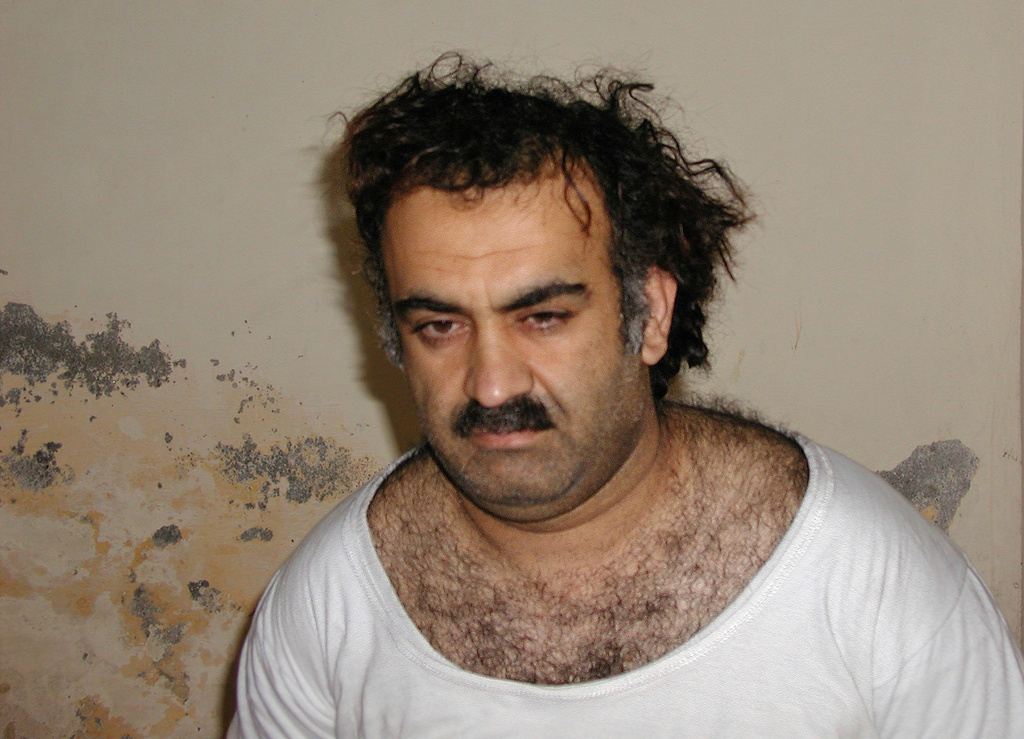
NEW YORK (AP) — Two decades after U.S. authorities locked Khalid Sheikh Mohammed away at a military detention center in Cuba, the purported mastermind of the Sept. 11 attacks sometimes seems barely any closer to being put on trial than...