

Colorado Dem, GOP chairmen duke it out in newsprint | A LOOK BACK
Thirty Years Ago This Week: Eleven years before Mark Zuckerberg and a team of Harvard students breathed life into Facebook, and 13 years before Twitter came on the scene, publicized bantering was often exchanged in newspapers across America. If you wanted to challenge a peer to a cage fight, you did it in newsprint.
For the Centennial State, The Colorado Statesman served as the primary conduit for all political spats, er debates, and Colorado Democratic Party Chairman Howard Gelt saw an opportunity to troll his adversary, state Republican Party Chairman Don Bain, using the Twitter of the day. Gelt submitted an open letter to The Statesman that accused Bain of launching a series of below-the-belt character attacks on Gov. Roy Romer for his veto of a campaign finance reform bill.
The governor was right to veto the bill, Gelt argued. After all, it wasn’t campaign finance reform by a long shot, he wrote.
The legislation both chairmen were referring to, House Bill 93-1159, did “nothing to reform campaign finance, Gelt insisted. Instead, what it did do was “shift fundraising burdens and campaign responsibilities from campaigns to other entities, such as state parties, while encouraging the proliferation of political action committees. It also had an unworkable campaign contribution limitation policy and many other problems too numerous to mention.”
Gelt didn’t stop at keyhauling Bain. He also called out Sens. Bill Owens, R-Aurora, and Tom Norton, R-Greeley, and Rep. Mike Coffman, R-Aurora, for attacking the governor and accusing him of “being a captive of special interests and placing his own interests above campaign finance reform.”
It just wasn’t so, it was a partisan hack-job, Gelt insisted. He continued to draw in one of the state GOP’s own top-ranking officials as an example.
Earlier in the year one of Colorado’s two U.S. Senators, Republican Hank Brown, had voted against S.3, a national campaign finance reform bill, explaining to reporters that he’d voted no because the bill was “long on finance, short on reform.”
Brown and Romer’s reasonings were nearly identical, Gelt argued. To see it any other way was pure “hypocrisy,” as Bain, Owens, Norton nor Coffman had publicly questioned Brown’s vote.
“If you’re going on record to wrongly accuse Gov. Romer of being against campaign finance reform, then the only honest move is to say that Hank Brown is guilty of the same,” Gelt wrote.
In a response to Gelt’s volley of words, Bain responded to The Colorado Statesman that the federal bill was oriented toward the public financing of campaigns, to which Republicans strongly objected, but Colorado’s bill merely set limits in certain areas.
“In other words,” Bain said, “it was like comparing apples and oranges. Howard is taking a cheap shot.”
Bain postulated that the real reason Romer vetoed the bill was because “he didn’t want to lose gigantic campaign contributions from such traditionally Democratic strongholds as the National Education Association and its Colorado chapter.”
Two our knowledge on this bit of history, Gelt and Bain did not end up calling for a cage fight.
Twenty Years Ago: In a statement released by Senate President John Andrews, R-Centennial, it was announced that the Colorado Legislative Department, which included the General Assembly, Joint Budget Committee, Legislative Council, the Office of Legislative Legal Services and the Office of the State Auditor, would return an estimated $1.79 million to the General Fund.
“The Legislature did its part in leading through example,” Andrews wrote. “Throughout the state, government departments and state programs are going through a time of tough budget reductions. We took an initial 10% reduction in the 2002-2003 fiscal year budget and will still be able to return $1.8 million thanks to good team effort and shared sacrifices by all our members and staff.”
The Legislative Department postponed filling vacant positions, withheld pay raises and froze operating budgets early in the fiscal year. Reductions were also made in building improvements and repairs, Capitol security and in-state travel.
Andrews’s cohort across the lobby chimed in as well. “As stewards of the taxpayer’s dollar, we are always working to make fiscally responsible decisions within our own budget,” said House Speaker Lola Spradley, R-Beulah. “Returning $1.8 million to the General Fund shows that the General Assembly is setting the example of responsible spending during these difficult economic times.”
While leadership was pleased with the reversion amount, Spradley said that the savings from the legislative branch would continue. The total appropriation for the legislative branch for FY 2002-2003 was $28.6 million and the $1.8 million represented 6.3% of that total.
Rachael Wright is a voracious writer and the author of the Captain Savva Mystery series. She holds dual B.A. degrees in Political Science and History from Colorado Mesa University. She is a contributing writer to Colorado Politics and The Gazette.


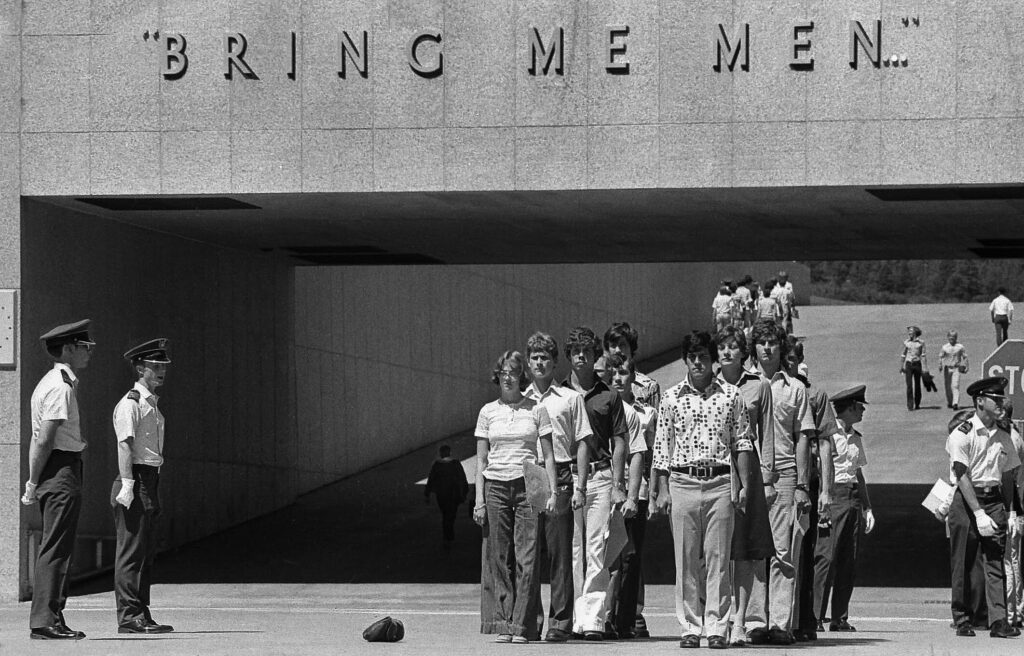
Fifty years later, women reflect on first coed class at the Air Force Academy, struggle for equality
Mary Shinn
mary-shinn@coloradopolitics.com
Updated 1 day ago
When the first female Air Force Academy cadets arrived 50 years ago this summer, they stood in front of an enormous sign on campus that read “Bring me men.” In the shadow of that sign, Kathleen Utley Kornahrens, one of...

As Lake Powell shrinks, marinas are having to adapt to dwindling water levels | OUT WEST ROUNDUP
The Associated Press
the-associated-press@coloradopolitics.com
Updated 4 days ago
ARIZONA Reservoirs near record lows PAGE — The Colorado River’s Lake Powell, the second largest reservoir in the U.S., is shrinking. A record-dry winter and extreme heat — as well as decades of overuse, chronic drought and climate change —...

A new day? Colorado’s troubled guardianship office pursues ‘cultural reset’
Marianne Goodland
marianne.goodland@coloradopolitics.com
Updated 3 days ago
Colorado’s guardianship program, long criticized for mismanagement and high staff attrition, is undergoing a “cultural reset,” as its new director works to repair partnerships and prepare for a major expansion under recent legislation. Created by lawmakers in 2017, the Office...
U.S. Senate OKs funding bill to avoid government shutdown
Wire Services
wire-services@coloradopolitics.com
Updated 1 day ago
Hemp provision became point of contention WASHINGTON • The U.S. Senate in an overnight vote Saturday approved a short-term measure to fund federal agencies into early December and avoid a government shutdown during the middle of campaign season. The late-summer...
The relevance of Watergate more than a half-century later | SONDERMANN
By Eric Sondermann
by-eric-sondermann@coloradopolitics.com
Updated 4 days ago
It was the scandal for which all other scandals are now named. In June 1972, a small group of Cuban burglars with high-level connections broke into the headquarters of the Democratic National Committee. Those headquarters were located in the Watergate...
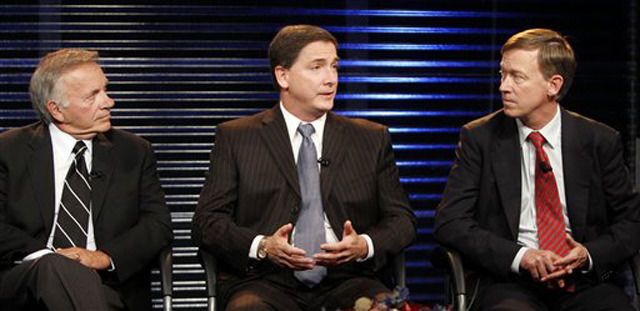
Wirth downplays Social Security disaster talk | A LOOK BACK
Rachael Wright, Special to Colorado Politics
rachael.wright@coloradopolitics.com
Updated 3 days ago
Forty-five years ago this week: “As time goes on,” said Democratic U.S. Rep. Tim Wirth, of the 2nd Congressional District, “we are finding that the safety net, which was proposed earlier this year, has some very large holes in it,”...
Colorado Politics Calendar Aug. 10-16
Rachael Wright, Special to Colorado Politics
rachael.wright@coloradopolitics.com
Updated 3 days ago
CoPo’s weekly political calendar will help you find political and public-policy events throughout Colorado. It includes candidate and issue campaign events, public policy meetings, court hearings, state and local party conventions, assemblies, debates, rallies, parades, speaking engagements, traveling dignitary appearances,...

Democratic group aims Spanish-language TV ad at Gabe Evans in Colorado’s battleground 8th CD
Ernest Luning
ernest.luning@coloradopolitics.com
Updated 2 days ago
A national group tied to House Democratic leadership launched a six-figure Spanish-language TV ad in Colorado this week targeting Republican U.S. Rep. Gabe Evans and the GOP’s signature budget legislation. The 30-second spot is part of $15 million in new...

Colorado School of Mines lands major share in Trump’s $100M mining-education plan
Thelma Grimes
thelma.grimes@coloradopolitics.com
Updated 2 days ago
President Donald Trump on Friday named the Colorado School of Mines among roughly a dozen institutions that will share in a $100 million commitment “to train the next generation of American miners.” Paul Johnson, the university’s president, said he is...
Local party leaders, incoming judge among members of judicial performance commission that violated law
Michael Karlik
michael.karlik@coloradopolitics.com
Updated 1 day ago
A local Democratic leader and 2024 presidential elector. A legislative aide and leader in the Young Republicans. An incoming county court judge freshly appointed by the governor. They are among the eight members of the northeastern Colorado judicial performance commission...
PREV
PREVIOUS

Riverbeds, virtual court, sex abuse and more: The Colorado Supreme Court's biggest decisions of 2022-23 | COVER STORY
The Colorado Supreme Court this week wrapped up its calendar of oral arguments and weekly releases of decisions until the fall, leaving behind a roster of major rulings and edicts affecting the administration of justice. Chief Justice Brian D. Boatright said at a lawyers-and-judges conference in May that during the past year, the state’s highest court […]

Colorado leaders cautious about altering anti-discrimination law following SCOTUS decision
After the U.S. Supreme Court ruled that a Christian website designer, along with businesses that create speech, do not have to serve LGBTQ customers if the desired message violates their beliefs, policymakers in Colorado are pondering whether changes to the state’s anti-discrimination law are warranted. Currently, the Colorado Anti-Discrimination Act (CADA) makes it unlawful for businesses […]