

Too much religion at the Colorado Capitol? | DUFFY
Is there too much religion at the Colorado Capitol?
That was the focus of an interesting and provocative piece in Colorado Politics examining the religious beliefs (or lack thereof) among the 100 Colorado legislators, finding 24% identify as non-religious, compared to the estimated 34% of all Coloradans. The contention is that, therefore, religious faith could be considered “overrepresented” at the Capitol.
This important piece raises two vital questions.
First, does a 10-percentage point gap between legislative non-religious and the general population create a disproportionate dominance of religious influence? And, much more significantly, is faith in public life a net good or something to be diminished, pushed to the margins, or expunged altogether?
Though the comparison of the composition of the Legislature to the general population is interesting, it is ultimately of little significance – unless we believe proportionate representation in the General Assembly will create better government.
If that’s the desire, the Colorado Legislature has some problems.
Stay up to speed: Sign-up for daily opinion in your inbox Monday-Friday
For example, if you are an unaffiliated voter – along with 45% of all registered voters in the state – you are completely unrepresented in the Legislature. Exactly zero legislators are unaffiliated, with all 100 belonging to either the Democratic or Republican parties.
Or look at LGBTQ legislators. According to one media report, 13 legislators (or 13% of the General Assembly) identify as LGBTQ. This is nearly double the 2022 Gallup estimate of 7% of Americans who are LGBTQ.
A headline would get howls if it suggested there is “too much gay” under the Dome.
The undercurrent in the contention of disproportionate religious dominance is that a legislator’s faith can be donned or discarded depending on the circumstances, and that it perhaps is best left in one’s car in the Capitol parking lot.
But would anyone suggest that, for example, LGBTQ members not bring that defining aspect of their lives to the Capitol even though they are vastly “overrepresented?” No, because they would say it’s bedrock to their identity and inseparable from their ability to weigh key issues.
So it is with those serious about their faith. Far from something limited to services at a church, synagogue, or mosque, one’s faith is at the very core of one’s worldview. And their worldview – their concept of how society should be properly ordered – informs how they view their votes.
Part of the atheists’ brief against faith in public life is that the religious are seeking to “impose their morality” on others.
In fact, the craft of legislating is all about morality.
The top issues facing Colorado, and the responses to them, are at their base moral questions about how we treat, and care for, our fellow citizens, our neighborhoods, and our environment.
Take the issue of car theft, where Colorado is a national leader. Tougher laws on car theft are needed because it is wrong to steal cars, it creates injury to victims, and we have allowed it to become too easy to steal cars without strong and just punishment that deters this crime.
That is legislating behavior to enforce a consensus on morality.
And when we fail to enforce this consensus, which at its best transcends ideology, and instead allow a relativistic lawlessness in the name of compassion, we see the inevitable decay in our cities, including in Colorado’s capital city.
An equally concerning canard is that faith among elected officials is the province of conservatives. In fact, there is a long legacy of left-leaning public figures being deeply committed to their faith here in Colorado and throughout American history.
Rev. Dr. Martin Luther King – a man of the left – delivered some of his most important and lasting oratory in his drive for political and societal transformation in the form of sermons, often from the pulpit of his home church in Atlanta.
Without a moral basis to legislating, often found in the fundamentals of faith, governing becomes a self-centered, isolated will to power by political majorities, running roughshod over the needs and concerns of those without power, or influence, or enough votes in the Legislature.
And, ironically, far from being dominant and domineering, we increasingly see the values of Coloradans of deep religious faith being steamrolled or marginalized by those in power at the Capitol. So, is there too much religious influence at the Capitol?
I’d argue there is not enough.
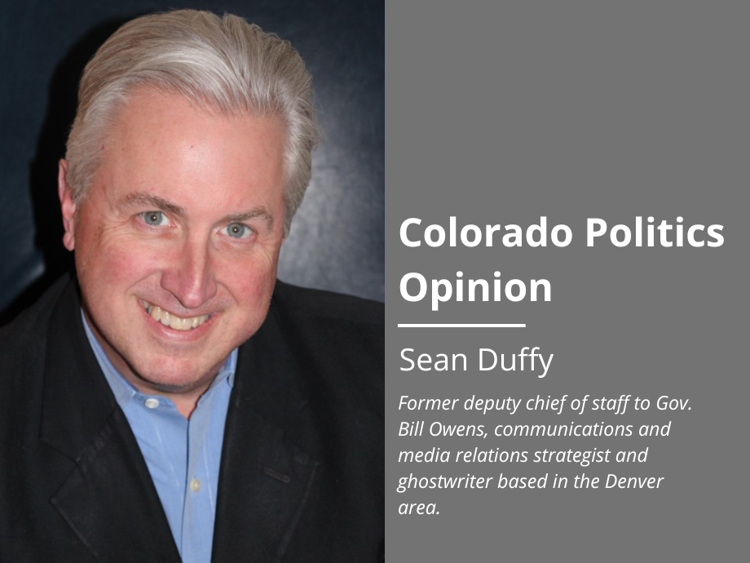
Sean Duffy, a former deputy chief of staff to Gov. Bill Owens, is a communications and media relations strategist and ghostwriter based in the Denver area.

Colorado has a playbook for youth mental health — our next governor must use it | GUEST COLUMN
Colorado Politics
colorado-politics@coloradopolitics.com
Updated 5 hours ago
By Karen Ron-Li Liaw From the rural communities on the western slope to the eastern plains, to the major urban regions on the Front Range, Colorado families are navigating an all-too-familiar crisis: kids are struggling, and Colorado’s mental health system...

Pigs engineered to fight alpha-gal syndrome | Rachel Gabel
Rachel Gabel
rachel-gabel@coloradopolitics.com
Updated 16 hours ago
If I were an evil genius trying to hamstring animal agriculture, I would create a fly that eats livestock alive and a tick whose bite and spit causes some people to have an allergic reaction to meat. (Insert evil laugh...
Registered voters on the eve of the 2026 primaries | Cronin & Loevy
Tom Cronin Bob Loevy
tom-cronin-bob-loevy@coloradopolitics.com
Updated 3 days ago
The Colorado Secretary of State’s Office has published the latest voter registration figures for the state and its counties as of June. Colorado ranks among the highest states for independent, or unaffiliated, voters. Only Alaska and Massachusetts have more. New Hampshire, New Jersey, Maine and Oregon also rank highly. So here...

A room for Sundance, a reality check for big-government Boulder | Jon Caldara
Jon Caldara
jon-caldara@coloradopolitics.com
Updated 4 days ago
There are few things more satisfying to watch than socialists getting mugged by reality. The Sundance Film Festival is invading my hometown of Boulder early next year. Sundance drew 85,000 attendees last year in Park City, Utah. Boulder’s hotel room...
Rep. Jeff Crank thinks Democrats are too focused on Trump, not enough on Colorado Springs | Vince Bzdek
Vince Bzdek
vince.bzdek@gazette.com
Updated 2 days ago
For U.S. Rep. Jeff Crank, who’s unopposed in the Republican primary for the 5th Congressional District but the main target of both candidates in the lively Democratic primary, the big question in the midterms is not who will stand up...
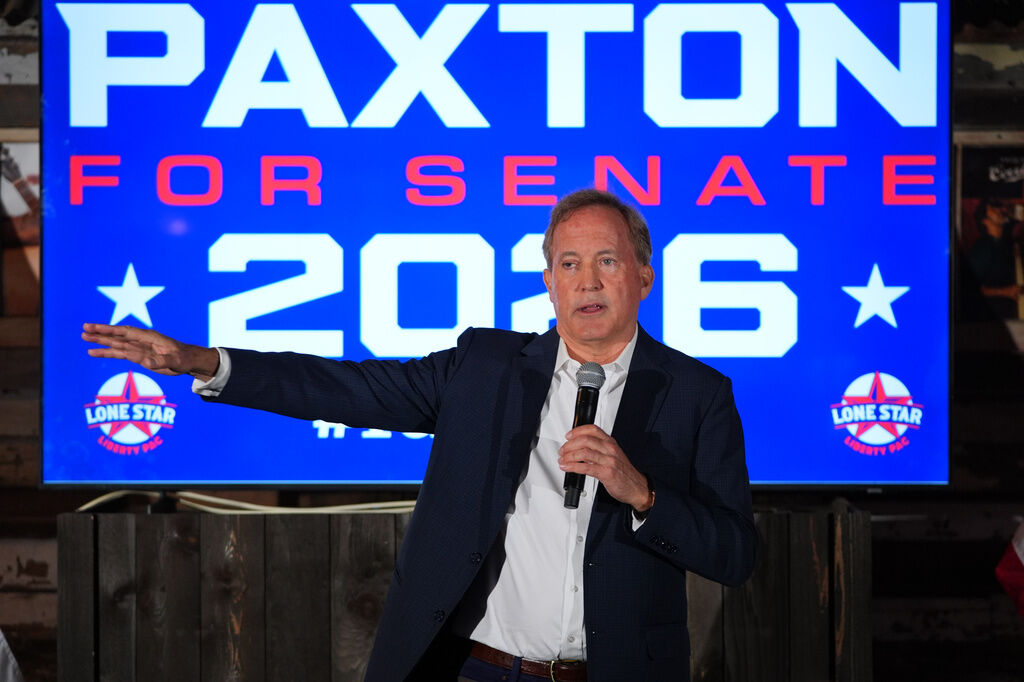
Does character matter anymore? | SONDERMANN
By Eric Sondermann
by-eric-sondermann@coloradopolitics.com
Updated 6 days ago
The last few weeks have been illuminating in the manner of a headlamp pointing the way to some deep, dark, murky netherworld. Graham Platner, a hero to the populist set on the Democratic side, became his party’s Senate nominee in...

Private equity has no place in health care | GUEST COLUMN
Colorado Politics
colorado-politics@coloradopolitics.com
Updated 4 days ago
By Miah Ntepp Of all the financial pressures placed on working people in this country, the skyrocketing costs of health care rank near the top. As families struggle under the cuts to Medicaid made by the Trump administration, they are...
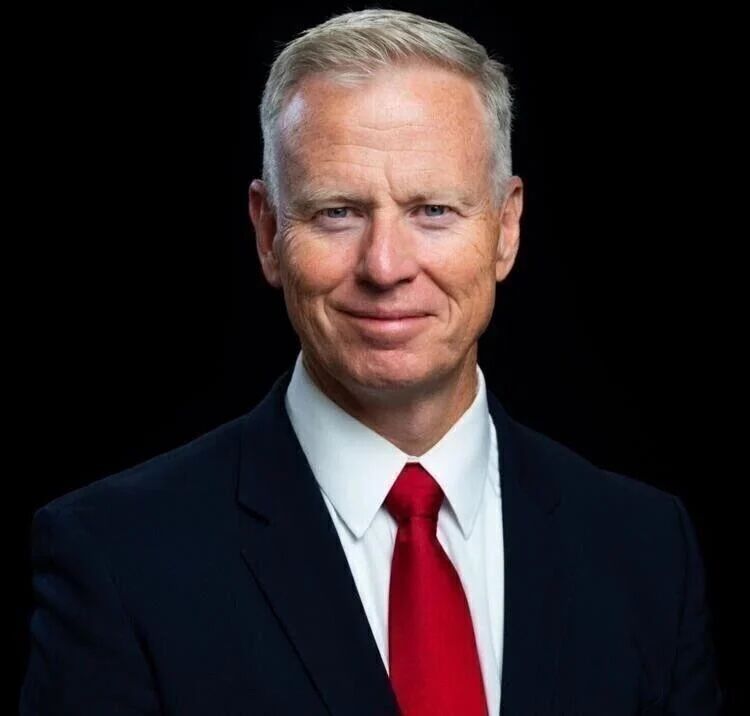
Some pointed questions for the gubernatorial hopefuls | George Brauchler
George Brauchler
george-brauchler@gazette.com
Updated 5 days ago
Earlier this month, the Republican and Democratic candidates for governor participated in a televised interview moderated by well-known, left-leaning legacy media folks. Predictably, the questions asked of the GOP candidates were more aggressive, pointed, biographical and almost entirely disconnected from...
Chaotic funding throws monkey wrench into governor’s-race money madness | Paula Noonan
Paula Noonan
paula-noonan@coloradopolitics.com
Updated 5 days ago
Chaos Monkey, Inc., gave a trifle $20,000 donation to Rocky Mountain Way (RMW), the independent expenditure committee (IEC) supporting U.S. Sen. Michael Bennet for Colorado governor. But why, Coloradans should ask, would a guy who has assigned his contributor name...
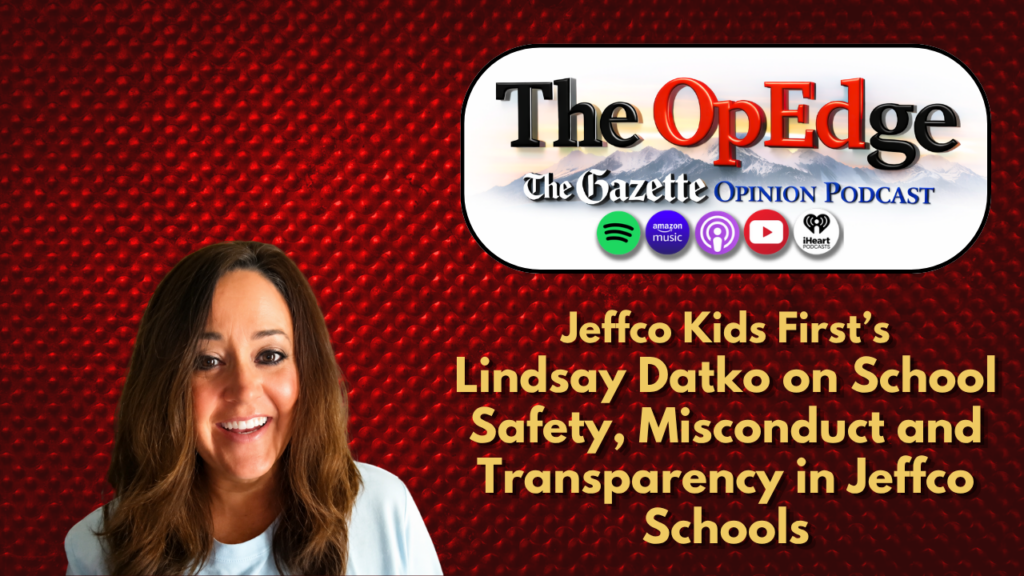
Lindsay Datko on school safety, misconduct and transparency in Jeffco schools | The OpEdge Podcast
Tony Olivero
tony.olivero@gazette.com
Updated 7 days ago
Jeffco Kids First founder Lindsay Datko joins The OpEdge to explore concerns about school safety, staff misconduct and transparency in Jefferson County Schools. Datko tells host and investigative columnist Jimmy Sengenberger why she believes Colorado’s second-largest district has too often...
PREV
PREVIOUS
The most important, but boring, thing in government | BIDLACK
Hal Bidlack Before I begin today’s rant, I mean bombast, I mean column, I need to clear up a bit of confusion I created in my last one. Colorado Politics ace reporter Ernest Luning emailed me to point out that I had been unclear and at least a bit confusing when I was trying to […]

Let’s welcome a colorblind Colorado | Colorado Springs Gazette
Thursday’s landmark U.S. Supreme Court ruling striking down race-based college admissions prompted a predictable flinch and yet also implicit acceptance from higher ed in Colorado. It is that latter reaction – a willingness, however grudging, to move forward in heeding the high court’s groundbreaking and long-overdue decision – that will best serve college-bound kids. The […]