

New members to Colorado’s judicial discipline commission could mean new direction

Half the membership of Colorado’s judicial discipline commission is expected to be replaced by new appointees as early as Friday, a move that could put the panel on a new path during a crucial transition to how it does its work.
The appointments of six of the panel’s 10 members expire July 1, leaving Gov. Jared Polis and Supreme Court Chief Justice Brian Boatright to name their replacements.
In the past three years, the commission has faced push-back and threats during one of its most unprecedented inquiries into allegations of misconduct by members of the state’s highest court. They have included the loss of funding and office space, fear of sanction to their law licenses, and repeated challenges to their work.
Colorado voters to see constitutional amendment on judicial discipline reform in 2024

Much of that became public when the commission appeared before legislative hearings into the discipline process last summer, culminating with legislation for a new, more-transparent system that will go before voters in November 2024 as part of a state constitutional amendment.
The most prevalent of the voices speaking out about what was happening – and the key focus of the challenges put against the commission’s work because of that – was its chairman, Denver attorney Elizabeth Espinosa Krupa, and its vice-chairman, El Paso County District Court Judge David Prince.
They became the outward face of the commission and, by extension, its easiest targets.
“There was a perception that David and I were leading the cause of change. We took the flak that we were the ones pushing something contrary to what (the Supreme Court) wanted. All of it stemming from us looking at one of their own,” said Krupa, who’s been on the commission for 8 years. “It’s unprecedented for members of the commission to have to face the level of opposition we did. We were unprepared for that and we didn’t fully understand the value of the work until then.”
An additional concern is that new appointees might not “reflect the geographic, ethnic and racial diversity of the Colorado community” as it does now, according to the commission’s 2022 annual report.
And although one of two judges whose term expires has been re-appointed, Boatright has replaced the other – Prince – this week with a judge who has already vocalized her own criticisms about how the commission operates, several people said.
Prince consistently urged greater transparency and change to how the discipline process works. His replacement, El Paso County District Court Judge Jill Brady, at a meeting of judges not long ago, challenged the commission’s investigation methods during a presentation by Krupa, people who attended the gathering confirmed.
“I look forward to serving the residents of Colorado as a new appointee to Colorado Commission on Judicial Discipline,” Brady said in an email to The Gazette. “I hope I can do good work for the Commission, and I take my responsibility as a member very seriously.”
Prince was the commission’s vice-chairman and has served a 4-year term after filling in the final two years of his predecessor. He stands firm on the commission’s accomplishments.
“These volunteer members of the (commission) rose to the challenges,” he wrote in an email to The Denver Gazette. “They have earned praise, not the attacks they have sometimes had to endure, for their efforts to enforce ethics rules without fear or favor to strengthen the integrity of Colorado’s judiciary.”
Similarly, three other citizen members of the commission and Krupa are unlikely to be reappointed by Polis despite a request to his office to extend their time in order to complete their work at reforming the discipline system and continuing any investigations that might be outstanding.
Polis’ office has told members of the commission that the governor is keeping with a tradition of allowing appointees to serve only two terms despite no prohibition on serving longer.
“Basically his office called to say I wasn’t to be reappointed, that they’d be keeping with that two-term tradition,” Krupa said in an interview. “I appreciate that and am hopeful the change to the top of the commission will result in a more successful transition without those who the court perceived as the most contrary.”
Krupa said she stands ready to help with any transition or committee that might be created after the 2024 vote.
She added: “If our legacy was only to get this reform over the hump and work our butts off to get the legislation to make the commission more independent, then I’m okay with that.”
Polis’ office on Thursday said the appointments haven’t been decided.
“No decisions have been made yet for appointments for the Commission on Judicial Discipline but they will be made soon,” spokesman Conor Cahill said in an emailed statement. “All eligible candidates that apply will be reviewed.”
Replacing half of the commission could conceivably jeopardize the tenure of Christopher Gregory, the commission’s executive director who was ousted as its appointed chairman in 2021 after only a single four-year term.
The commission hired Gregory only months after he stepped aside – the executive director serves at the panel’s pleasure -as it continued its work investigating allegations the Supreme Court was mired in a scandal that allegedly involved coverup and misconduct, work that Gregory had begun.
Gregory had no comment for this story.
Changes to the commission’s makeup could theoretically slam the brakes on any work it could still be doing in relation to that scandal, if that’s where it wanted to go.
The panel last month recommended to the Supreme Court the public censure of its former Chief Justice Nathan “Ben” Coats for his role in approving a multi-million-dollar contract in 2019 to a former Judicial Department official despite her being fired over financial improprieties. The commission also wants Coats to be sanctioned for violations of the state’s judicial code of conduct.
It was the first time in state history that a member of the high court ever faced investigation or sanction by the commission.
Colorado discipline commission accuses legal system’s discipline chief of illegal intimidation
In its recommendation, the commission made clear Coats’ approval of the contract to former Chief of Staff Mindy Masias was also authorized by the rest of the Supreme Court.
It is unclear whether the commission is looking into any role other justices – six of them were on the court at the time of the Masias deal – might have had in the scandal, but a change in commission leadership could have that effect.
The commission’s work, by law, is secret.
The commission’s diversity – its membership extends from Fort Collins to Pueblo, from Eagle to Centennial – is one of its prideful points and any changes to the membership should reflect that, members said.
“In what other country would you find a physicist, a social worker, a lawyer, and a human-resources professional as volunteers entrusted with bringing accountability to one of our most powerful institutions,” Prince wrote The Denver Gazette. “These diverse individuals acting in unity reflect the best our society has to offer.”
The other citizen members to be replaced include:
? Bruce Casias of Lakewood is a Native American physicist who in 2015 took on his employer, Raytheon, in federal court. As a test manager, he was told to falsify data for a ground system that communicates with satellites in space. A jury awarded him $1 million.
? Yolanda Lyons of Monument is Black and works in human resources.
? Drucilla Pugh of Pueblo was director of Court Appointed Special Advocates (CASA) for children.
Gregory has previously written Boatright to ask that any appointments reflect that diversity. In October 2022, when Boatright was to consider replacing outgoing commissioner Rachel Olguin-Fresquez, an Eagle County court judge – she had been promoted to a district court judge and had to step down – Gregory appealed on several levels.
“Traditionally, the Commission has been composed with mindfulness of diversity, including representation of both urban and rural jurisdictions. The Commission’s discussions have benefitted from these differing perspectives,” Gregory wrote Boatright, according to a copy of that correspondence obtained by The Denver Gazette in an open-records request. “Judge Fresquez is currently the only member of the Commission who resides on the Western Slope and outside the Front Range urban corridor.”
He asked Boatright to “consider maintaining the tradition of appointing at least one judge member from a rural jurisdiction.”
After Brady in Colorado Springs, the other judges on the commission are Arapahoe County District Judge Bonnie McLean and Jefferson County Court Judge Sara Garrido.
Judge Fresquez similarly wrote Boatright asking that he appoint someone from a rural district, even suggesting two judges by name, according to copies obtained by The Denver Gazette.
Boatright appointed Brighton County Court Judge Mariana Vielma.
That means there is no judge on the commission representing a rural county.

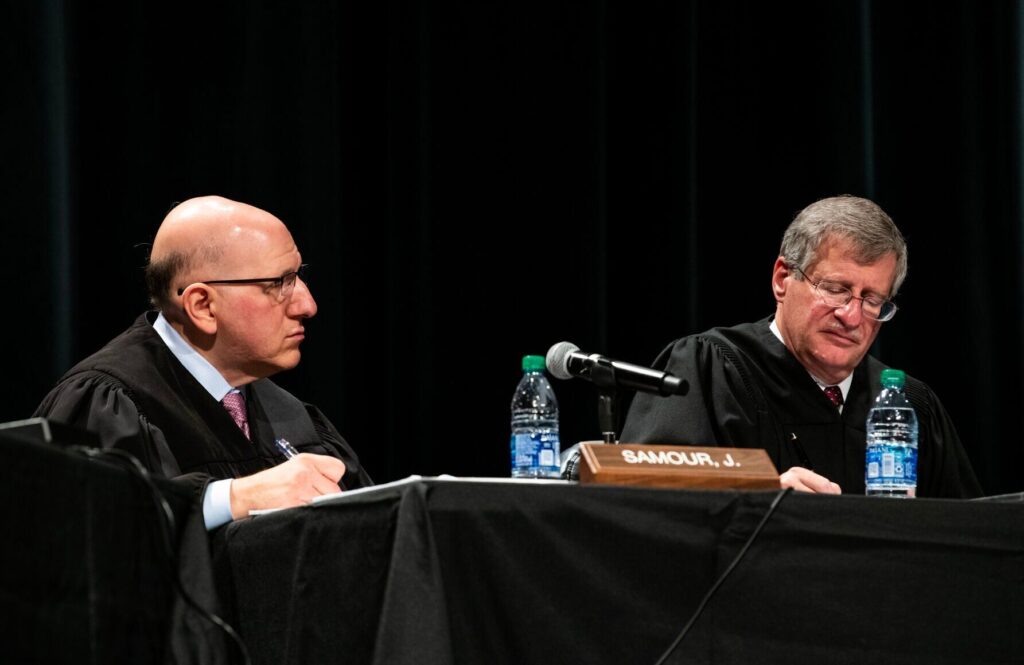
Colorado justices concerned about retrying defendant after jury signaled acquittal
Michael Karlik
michael.karlik@coloradopolitics.com
Updated 1 hour ago
Some members of the Colorado Supreme Court appeared uncomfortable on Tuesday with allowing a criminal defendant to stand trial a second time after a Larimer County jury signaled it was deadlocked on some counts but found him not guilty of...
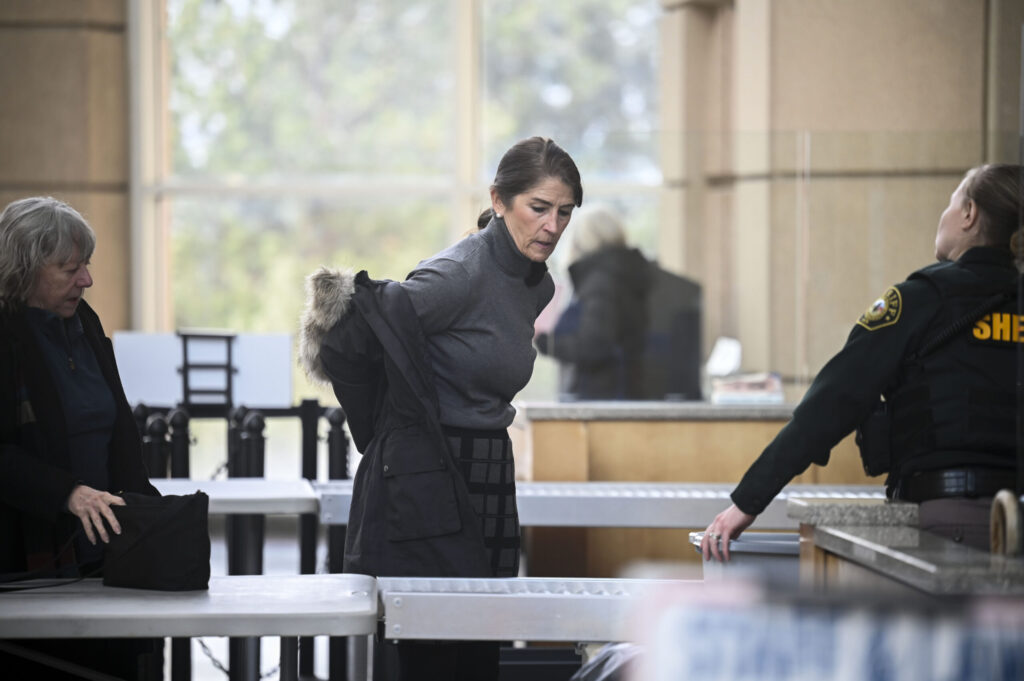
Missy Woods pleads not guilty; trial set for fall
Jenny Deam
jenny-deam@coloradopolitics.com
Updated 2 hours ago
The former Colorado Bureau of Investigation DNA expert charged with more than 100 felonies entered a plea of not guilty to all of them Wednesday in a packed Jefferson County courtroom. The plea was entered by her defense attorney Tom...
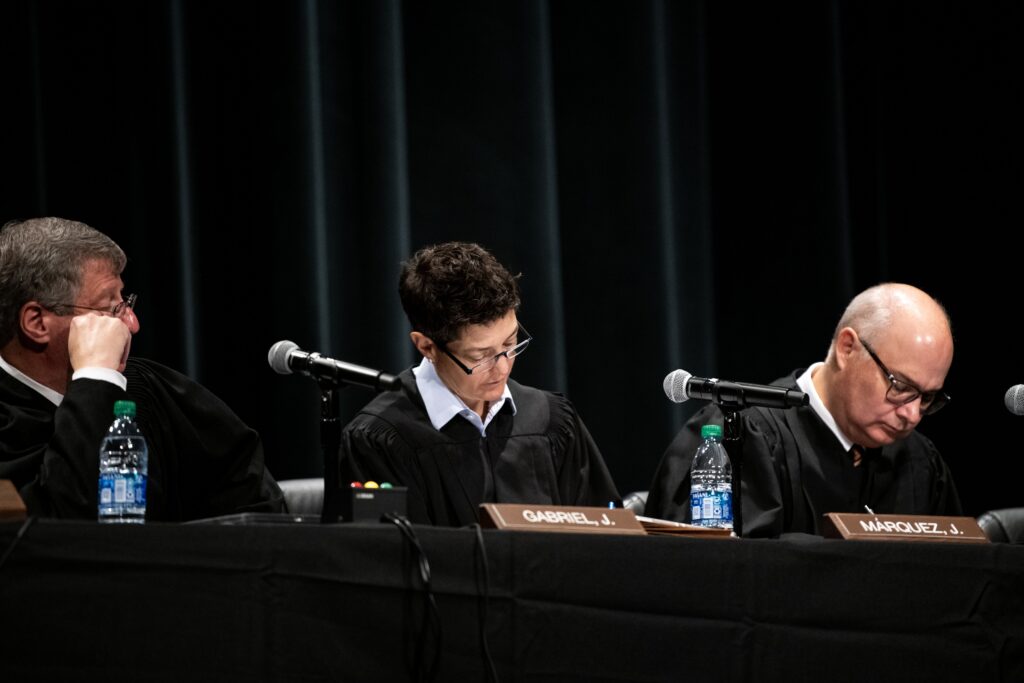
Colorado justices question process for parole board appeals
Michael Karlik
michael.karlik@coloradopolitics.com
Updated 4 hours ago
The Colorado Supreme Court considered on Tuesday whether criminal defendants whose parole is revoked must appeal the decision internally to the state’s parole board before seeking review by a judge. The process for returning someone to incarceration for violating the...
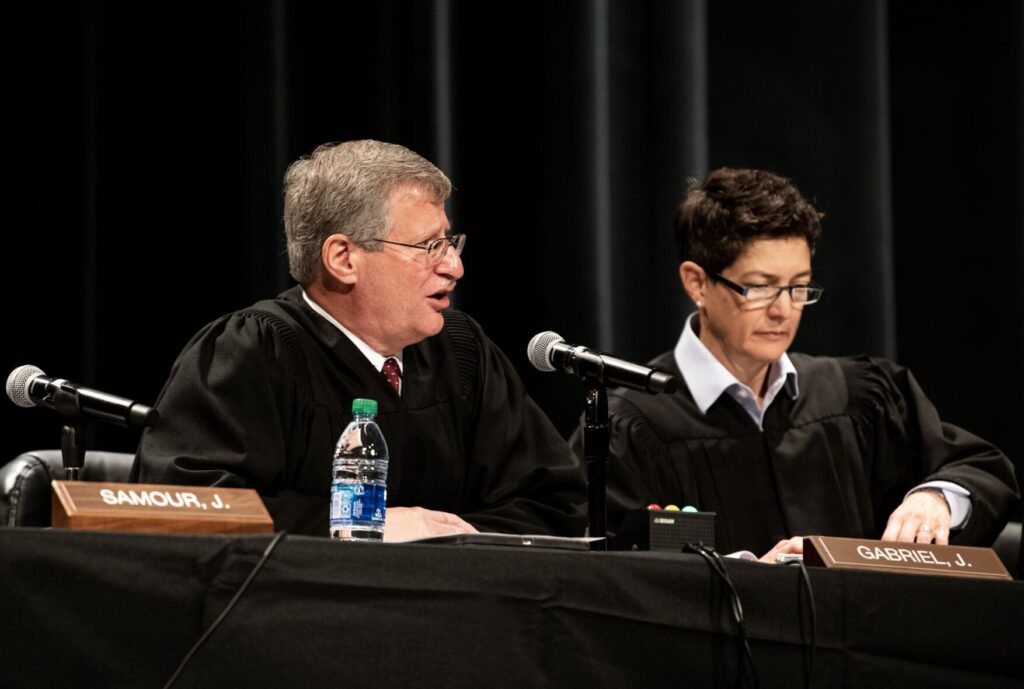
Colorado justices weigh potentially faulty jury instruction in child abuse case
Michael Karlik
michael.karlik@coloradopolitics.com
Updated 6 hours ago
Members of the Colorado Supreme Court questioned on Tuesday whether a San Miguel County jury convicted a defendant of child abuse resulting in death, even though the instructions potentially allowed jurors to avoid finding that the child abuse resulted in...

Federal judge sanctions Pueblo for destroying evidence in lawsuit
Michael Karlik
michael.karlik@coloradopolitics.com
Updated 22 hours ago
A federal judge imposed sanctions on the city of Pueblo last week after it disposed of a key piece of evidence shortly after the plaintiffs filed suit seeking damages for the destruction of their home. On June 25, 2022, a...
10th Circuit orders lawyer to pay $1,000 for faulty AI citations
Michael Karlik
michael.karlik@coloradopolitics.com
Updated 1 day ago
The Denver-based federal appeals court ordered a lawyer on Monday to pay $1,000 to the opposing side for submitting a legal filing with fake case citations generated by artificial intelligence. A three-judge panel of the U.S. Court of Appeals for...

Supreme Court finalists selected, federal judges slash backlogs | COURT CRAWL
Michael Karlik
michael.karlik@coloradopolitics.com
Updated 2 days ago
Welcome to Court Crawl, Colorado Politics’ roundup of news from the third branch of government. Coloradans learned who the three finalists are for a state Supreme Court vacancy, and new data show that Colorado’s federal trial judges reduced their backlog...
Federal judge blasts government for violating court order, confiscating man’s property
Michael Karlik
michael.karlik@coloradopolitics.com
Updated 3 days ago
A federal judge gave the government three hours on Friday to return the property of a man released from immigration detention, which it allegedly retained in violation of her previous order. “At its most benign, this failure is an unforced...
DA’s withdrawal from veterans treatment court not judge’s problem, ethics panel says
Michael Karlik
michael.karlik@coloradopolitics.com
Updated 5 days ago
There are no ethical concerns from a judge continuing to participate in a specialty veterans treatment court if the district attorney’s office has withdrawn from the program, the Colorado Supreme Court’s ethics committee advised on Wednesday. Colorado law permits chief...
Divided appeals court orders insurance company to pay $35,600 for delayed disclosure of policy
Michael Karlik
michael.karlik@coloradopolitics.com
Updated 5 days ago
Colorado’s second-highest court concluded on Thursday that an insurance company violated state law when it refused to disclose an automobile policy to an injured motorist for nearly one year after she requested it. By 2-1, a three-judge Court of Appeals...
PREV
PREVIOUS
Colorado universities signal modifying DEI approach after Supreme Court strikes down affirmative action
Colorado universities signaled they would modify their approach to diversity goals following the U.S. Supreme Court’s decision to strike down the race-based components of the admissions programs at Harvard College and the University of North Carolina. Education officials said their commitment to “diversity, inclusion, equity and access” will “not diminish.” But the overarching question facing […]

Questions arise about 'fake' customer in SCOTUS anti-discrimination case
On Friday, the U.S. Supreme Court will likely hand down a decision in a case out of Colorado that could permit artistically oriented businesses to decline service to LGBTQ customers. On June 29, however, The New Republic reported that part of the evidence submitted in the lawsuit of 303 Creative v. Elenis references a purportedly gay customer who sought […]